
Aflac has grown from a small family startup in Columbus, Georgia, in 1955 into a powerhouse in supplemental insurance. Its memorable brand and clear value proposition have made it a household name, supported by a long history of disciplined growth and customer-focused innovation. The company’s footprint spans the United States and Japan, two of the world’s largest insurance markets.
Aflac targets individuals and families, as well as employees through workplace benefits programs. It focuses on supplemental coverage that pays cash benefits to help with expenses that health insurance may not cover, such as accidents, critical illness, and hospital stays. Employers choose it for affordable, voluntary benefits that can boost retention without adding to core medical costs.
Positioned as a specialist in voluntary benefits, Aflac is popular for straightforward policies, strong brand recognition, and a reputation for reliable claims service. Its distribution through brokers and employers, combined with digital claims and enrollment tools, makes it easy to implement and manage. Financial strength and a broad product portfolio further reinforce its appeal with both HR teams and individual buyers.
Key Criteria for Evaluating Aflac Competitors
Choosing an alternative to Aflac starts with understanding what matters most to your employees and your budget. Look beyond headline premiums to compare coverage quality, claims experience, and long term value. The criteria below can help you build a fair, apples to apples evaluation.
- Pricing and value: Compare premiums, rate stability over time, and total cost after wellness incentives or bundling. Assess how benefits paid stack up against expected claims.
- Coverage breadth and depth: Review policy types offered, benefit amounts, definitions, exclusions, and waiting periods. Check for preexisting condition rules and how benefits coordinate with medical plans.
- Claims experience and turnaround: Evaluate filing methods, documentation requirements, and average approval speed. Look for transparent status updates and flexible payment options such as direct deposit.
- Employer integration and enrollment technology: Confirm integrations with benefits admin platforms, EDI, and payroll. Consider open enrollment support, billing accuracy, and consolidated administration.
- Portability and flexibility: Determine whether employees can keep coverage after changing jobs and how easily they can adjust benefits. Examine available riders and life event changes.
- Customer service and satisfaction: Compare support channels, response times, and multilingual availability. Review complaint ratios and third party satisfaction scores where available.
- Financial strength and reputation: Check insurer ratings from AM Best, S&P, or Moody’s. Longevity, reserves, and regulatory standing indicate the ability to pay claims through economic cycles.
- Digital tools and ecosystem: Assess mobile apps, online portals, wellness programs, and communications. Strong broker tools and APIs can streamline quoting, enrollment, and reporting.
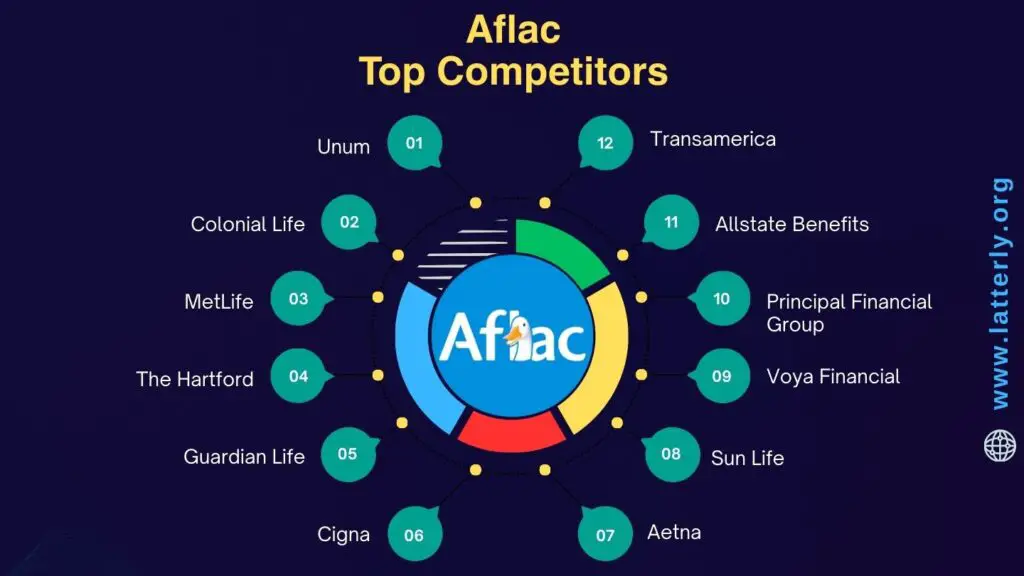
Top 12 Aflac Competitors and Alternatives
Unum
Unum is widely recognized for its leadership in group disability and leave management, complemented by a robust suite of voluntary benefits. Employers that want a single partner for disability, life, and supplemental health often shortlist Unum. Its national footprint and employer-focused services make it a credible rival to Aflac for worksite programs.
- Strong presence in employer-sponsored benefits, including short term and long term disability, life, accident, critical illness, and hospital indemnity. Unum also offers absence management and leave solutions that integrate with HR systems.
- Considered an alternative to Aflac because it provides comparable voluntary products with payroll deduction and worksite enrollment support. Employers can consolidate benefits administration under one carrier.
- Market scale and name recognition help with employee trust during enrollment. Unum’s education resources and decision support tools improve participation rates.
- Differentiates with deep expertise in disability insurance and claims management. Coordinated leave and disability services reduce administrative complexity for HR teams.
- Enrollment options include on site counselors, digital self service, and call center support. The carrier can align with broker led strategies or bundled benefits approaches.
- Technology integrations with leading HRIS and ben admin platforms streamline eligibility and billing. This reduces errors and accelerates evidence of insurability workflows.
- Appeals to employers seeking compliance support, especially around ADA and FMLA. Unum’s clinical resources and return to work programs add measurable value beyond cash benefits.
Colonial Life
Colonial Life, a Unum company, is a long standing name in worksite voluntary benefits with a strong broker and enroller network. It focuses on employee paid coverage that complements medical plans. Many organizations compare Colonial Life directly with Aflac for accident, cancer, and critical illness policies.
- Core product set includes accident, critical illness, cancer, hospital indemnity, disability, and life. Plans are designed for payroll deduction and simplify employer administration.
- Seen as an alternative to Aflac due to similar product categories and worksite enrollment models. Colonial Life’s counselors offer one to one education that can raise participation.
- Large field force supports multi location employers and complex enrollment schedules. This makes it practical for annual and off cycle enrollments.
- Flexible plan designs allow tiering and rider options that mirror or exceed typical Aflac configurations. Employers can tailor benefits to specific workforce risks.
- Claims processes emphasize quick benefits decisions, with digital submission and tracking. Employees value the ease of uploading documentation from mobile devices.
- Competitive pricing structures help maintain affordability at various benefit levels. Colonial Life often pairs wellness features with critical illness benefits.
- Strong broker partnerships provide consistent service and post enrollment support. Reporting and billing options align with popular benefits administration platforms.
MetLife
MetLife brings one of the broadest catalogs of group benefits, from dental and vision to accident and hospital indemnity. Its scale and brand equity resonate with large and midmarket employers. Companies often compare MetLife to Aflac when seeking voluntary benefits backed by expansive networks.
- Product portfolio spans accident, critical illness, hospital indemnity, disability, life, dental, vision, legal, and more. This breadth enables comprehensive bundling under a single carrier.
- An alternative to Aflac because it offers similar supplemental health options with strong employer integration. MetLife’s voluntary benefits can be layered onto core medical plans seamlessly.
- Advantages include competitive dental and vision networks, which pair well with worksite products. Employees often appreciate network depth and provider access.
- Digital enrollment and decision support tools help employees compare costs and payouts. The experience reduces confusion around voluntary plan choices.
- MetLife’s claims infrastructure is built for high volume and rapid processing. Employees can submit and track claims online with clear status updates.
- Market presence spans multiple industries and geographies, aiding multi state employers. Consolidated billing and eligibility files simplify administration.
- Value added services such as financial wellness and legal plans increase employee engagement. Employers can build a broader total rewards strategy without adding vendors.
The Hartford
The Hartford is known for group disability, life, and absence management, with a growing suite of voluntary health benefits. Its reputation for claims expertise attracts employers that prioritize employee experience. The carrier is frequently evaluated alongside Aflac for accident, critical illness, and hospital indemnity coverage.
- Offers accident, critical illness, hospital indemnity, disability, life, and absence solutions. This combination supports both income protection and supplemental cash needs.
- Considered an Aflac alternative because of overlapping voluntary products and strong worksite enrollment capabilities. The Hartford’s employer services complement benefit offerings.
- Claims and clinical resources support recovery and return to work outcomes. Employees receive guidance that goes beyond cash benefits.
- Integration with HRIS and benefits platforms reduces manual processes. File feeds, EOI workflows, and consolidated billing enhance efficiency.
- Competitive plan designs feature wellness benefits and flexible payouts. Employers can align coverage with workforce demographics and budgets.
- Trusted brand recognition builds confidence during open enrollment. Marketing materials and employee education are tailored to varied learning styles.
- Risk management heritage helps with underwriting complex groups. The Hartford often provides stable pricing and multi year strategies.
Guardian Life
Guardian Life is a leader in dental benefits, supported by a full suite of group and voluntary products. Employers value its network strength and service model. When comparing supplemental options, many look to Guardian as a credible stand in for Aflac.
- Product categories include dental, vision, life, disability, accident, critical illness, and hospital indemnity. The scope enables broad benefits packaging under one carrier.
- Alternative to Aflac due to similar voluntary products delivered through payroll deduction. Guardian’s enrollment support suits both small and large employers.
- Dental network breadth and member experience are key differentiators. Strong ancillary lines pair naturally with accident and critical illness offerings.
- Digital tools help employees estimate costs and select coverage levels. Clear plan comparisons reduce friction during enrollment.
- Claims service emphasizes accuracy and timeliness across product lines. Members can manage benefits and submit claims through user friendly portals.
- Flexible plan design allows employers to set benefit tiers and add wellness incentives. Guardian can tailor benefits to industry specific risks.
- Financial strength and long tenure in group benefits provide stability. Brokers often cite Guardian’s service consistency as a reason for retention.
Cigna
Cigna brings medical, dental, vision, and supplemental health together under one ecosystem for many employers. Its integrated approach appeals to organizations that want data driven benefits strategies. Cigna often competes with Aflac on accident, critical illness, and hospital indemnity plans.
- Voluntary lineup includes accident, critical illness, hospital indemnity, life, disability, dental, and vision. Integration with medical plans enables coordinated communications.
- Viewed as an Aflac alternative because it pairs similar supplemental benefits with broad health plan capabilities. Employers can leverage a single carrier relationship for multiple lines.
- Advantages include wellness programs and health engagement tools. These can unlock incentives embedded in supplemental policies.
- Claims and care management resources can support faster recovery and reduced absenteeism. Members gain guidance on navigating both health and supplemental coverage.
- Data insights and reporting help HR teams measure utilization and outcomes. This supports continuous improvement in benefits strategy.
- National networks and multi state coverage suit distributed workforces. Consolidated eligibility and billing simplify administration.
- Flexible enrollment methods include digital self service and counselor assisted options. Cigna supports communications that fit each employer’s culture.
Aetna
Aetna, a CVS Health company, blends medical coverage with voluntary benefits and pharmacy resources. Employers that prefer integrated programs often evaluate Aetna against Aflac. The carrier’s supplemental portfolio complements high deductible health plans effectively.
- Product categories include accident, critical illness, hospital indemnity, life, disability, dental, and vision. These offerings can be paired with Aetna medical or stand alone.
- Alternative to Aflac because it delivers similar supplemental cash benefits through worksite programs. Payroll deduction and simplified claims make adoption easy.
- Integration with pharmacy and wellness tools can enhance engagement. Members receive cohesive messaging about preventive care and financial protection.
- Digital portals and mobile apps support enrollment, ID cards, and claims. Employees experience a unified interface across lines of coverage.
- Plan flexibility allows employers to adjust benefit amounts, waiting periods, and riders. This helps align coverage with workforce risk profiles.
- National presence and provider networks support multi location employers. Aetna’s administrative efficiencies appeal to HR teams seeking fewer vendors.
- Bundling discounts and coordinated implementation can reduce total cost of benefits. Brokers often leverage Aetna’s scale for competitive pricing.
Sun Life
Sun Life is a major player in group benefits, particularly known for stop loss and voluntary benefits in the United States. Its portfolio covers income protection and supplemental health for diverse industries. Employers frequently compare Sun Life with Aflac for worksite accident and critical illness solutions.
- Broad offerings include accident, critical illness, hospital indemnity, disability, life, dental, and vision. Stop loss expertise adds credibility with self funded employers.
- Competes with Aflac by delivering similar voluntary benefits with strong employer integration. Sun Life’s absence and disability programs complement supplemental plans.
- Claims capabilities are supported by clinical and vocational resources. Employees benefit from coordinated support during recovery.
- Technology integrations with leading benefits platforms streamline administration. Employers gain reliable eligibility, billing, and reporting.
- Customizable plan designs allow flexible payouts, wellness benefits, and portability where available. This helps match coverage to workforce needs.
- Market presence includes partnerships with large brokers and consultants. Sun Life is equipped to handle national implementations and complex enrollments.
- Value added services like health navigation and financial wellness enhance engagement. These programs can improve perceived value of voluntary coverage.
Voya Financial
Voya Financial focuses on workplace solutions that combine retirement, financial wellness, and voluntary benefits. Its approach helps employees connect day to day finances with protection needs. Voya often competes with Aflac on accident, hospital indemnity, and critical illness plans.
- Voluntary benefits include accident, critical illness, hospital indemnity, disability, and life. Pairing with retirement plan education creates a holistic employee experience.
- Seen as an Aflac alternative due to similar product categories and strong worksite support. Payroll deduction and multi channel enrollment are standard.
- Decision support tools emphasize cost comparison and benefit fit. This can drive higher, more informed participation.
- Financial wellness resources link emergency savings and protection products. Employees understand how cash benefits support out of pocket costs.
- Flexible plan design with options for dependent coverage and wellness incentives. Employers can tailor offerings to meet budget and risk goals.
- Data driven insights assist HR teams with engagement strategies. Reporting highlights utilization patterns across benefits.
- Service model supports both small and large groups with scalable onboarding. Voya coordinates with brokers and ben admin partners for smooth implementation.
Principal Financial Group
Principal Financial Group delivers a balanced suite of group insurance and retirement solutions. Its voluntary benefits align well with employers seeking a single vendor for multiple lines. Principal is frequently on the same shortlist as Aflac for accident and critical illness coverage.
- Product array includes accident, critical illness, hospital indemnity, disability, life, dental, and vision. Retirement plan leadership complements employee benefits.
- Considered an Aflac alternative because it offers similar supplemental health policies with payroll deduction. Employers can bundle benefits to streamline administration.
- Advantages include strong dental and vision options that pair with voluntary health. Employees appreciate network depth and predictable costs.
- Enrollment support spans self service portals, group meetings, and counselor assistance. Communication materials are designed for clear comparisons of plan tiers.
- Claims processing emphasizes speed and transparency with online tracking. Consistent service is a primary driver of employer retention.
- Flexible plan design with optional riders and wellness features. Principal can structure benefits to support diverse workforce needs.
- Stable underwriting and multi year pricing strategies aid long term planning. Brokers often cite Principal’s reliability during renewals.
Allstate Benefits
Allstate Benefits specializes in worksite supplemental health, extending the Allstate consumer brand into the workplace. Its policies are built to deliver cash benefits for common medical events. Many employers assess Allstate Benefits alongside Aflac for accident and cancer coverage.
- Key products include accident, critical illness, cancer, hospital indemnity, disability, and life. Plans are optimized for payroll deduction and easy enrollment.
- Alternate to Aflac because it provides comparable worksite coverage with strong brand recognition. Employees often respond to familiar household names during enrollment.
- Claims submission is streamlined with digital tools and mobile access. Members can check status updates and receive benefits quickly.
- Flexible benefit structures allow tiered payouts and optional riders. Employers can calibrate premiums to budget constraints.
- Communication materials focus on real life scenarios and claim examples. This helps employees understand how cash benefits offset medical and household costs.
- National broker partnerships support implementation across multiple sites. Allstate Benefits can coordinate on site and virtual enrollment campaigns.
- Pricing and plan competitiveness make it suitable for both small groups and large employers. The carrier supports off cycle installs and midyear adds.
Transamerica
Transamerica delivers a blend of insurance and workplace benefits with a strong presence in voluntary health. It is known for flexible plan designs and extensive worksite experience. Employers often compare Transamerica with Aflac for accident, critical illness, and hospital indemnity coverage.
- Product suite includes accident, critical illness, hospital indemnity, cancer, disability, and life. Plans are engineered for payroll deduction and benefit portability where available.
- Considered an Aflac alternative due to similar supplemental offerings and strong enrollment support. Transamerica works closely with brokers and enrollment firms.
- Advantages include customizable benefits that fit various industry risks. Employers can choose coverage levels, riders, and wellness features.
- Digital tools assist with quoting, enrollment, and claims tracking. Employees gain clarity on benefits and payout timelines.
- Market reach spans small business to large national accounts. The carrier is equipped for complex eligibility and multi site implementations.
- Claims education emphasizes when and how to file for covered events. Clear guidance reduces delays and increases employee satisfaction.
- Bundling with life and disability can produce pricing efficiencies. Employers value the ability to manage multiple lines with one vendor.
Top 3 Best Alternatives to Aflac
Colonial Life
Colonial Life stands out for its focus on voluntary benefits distributed at the workplace, supported by strong benefits education and on-site or virtual enrollment capabilities. Key advantages include a broad supplemental portfolio that spans accident, hospital indemnity, critical illness, cancer, and short term disability, plus streamlined payroll deduction and account management for employers. It suits HR teams and brokers that want hands on enrollment support, as well as mid market employers seeking consistent employee engagement and simple administration.
MetLife
MetLife is a top tier group benefits carrier with national scale, trusted brand recognition, and an extensive suite that includes accident, hospital indemnity, critical illness, dental, vision, life, and disability. Advantages include strong network access for dental and vision, modern digital tools for enrollment and claims, and the ability to bundle multiple lines for pricing and administrative simplicity. It is a great fit for larger employers and growing mid sized companies that want an integrated benefits strategy with broad coverage options and reliable service.
Allstate Benefits
Allstate Benefits offers competitive supplemental health products with clear plan designs and flexible portability that employees can often keep if they change jobs. Notable advantages include comprehensive accident, critical illness, cancer, and hospital indemnity plans, straightforward billing options, and user friendly self service tools for employees and brokers. It suits small to midsize employers that want easy to understand voluntary benefits, as well as organizations that value portability and a familiar consumer brand.
Final Thoughts
There are many strong alternatives to Aflac, and each offers distinct strengths in product depth, enrollment support, digital experience, and account service. The best choice depends on your priorities, including company size, budget, desired product mix, and how much help you want with employee education. Comparing carrier capabilities side by side can reveal meaningful differences in costs, features, and ongoing service.
Start by defining must have benefits, such as accident, hospital indemnity, or critical illness, and decide whether dental and vision networks matter for your team. Then weigh enrollment support, portability, and claims experience to narrow the list to a few finalists. With a clear checklist and a structured review process, you can select a confident Aflac alternative that fits your workforce and delivers long term value.
