
Apple is one of the most valuable and influential technology companies in history, founded in 1976 in Cupertino by Steve Jobs, Steve Wozniak, and Ronald Wayne. From the Macintosh to the iPod and iPhone, its product launches have repeatedly reset consumer expectations. The company’s focus on pairing hardware and software has shaped entire categories.
Apple targets consumers and professionals who want premium devices that are easy to use, secure, and reliable. Its scale, supply chain mastery, and global retail footprint make it a dominant player across smartphones, computers, wearables, and services. With iOS, macOS, and custom silicon, Apple controls the experience end to end.
The brand is popular for elegant design, long software support, and a cohesive ecosystem that connects iPhone, Mac, iPad, Apple Watch, and services. Strong privacy positioning, standout performance from Apple silicon, and seamless features like iMessage and AirDrop keep users loyal. Retail experiences and customer care through the Genius Bar reinforce trust and satisfaction.
Key Criteria for Evaluating Apple Competitors
Choosing the right alternative to Apple requires clear criteria that reflect how people actually use their devices. The list below helps you compare brands across value, experience, and long term ownership. Use these points to match features to your budget and priorities.
- Price and total value: Evaluate upfront cost, financing, trade in, and resale trends. Consider accessories, repairs, and subscription bundles over the device lifespan.
- Features and performance: Judge speed, battery life, camera quality, display, and chip efficiency. For wearables and services, weigh sensor accuracy and reliability in daily use.
- Ecosystem and interoperability: Check cross device continuity, app availability, and seamless handoff between phone, computer, tablet, and TV. Look for tight integration with cloud, smart home, and car systems.
- Software updates and longevity: Review update cadence, years of support, and security patch reliability. Longer support reduces risk and improves total value.
- Privacy and security: Compare default encryption, data collection policies, and on device processing. Transparent settings and minimal tracking inspire trust.
- Design, build quality, and repair options: Assess materials, durability certifications, and ergonomics. Availability of parts, authorized repair, and fair warranties keeps downtime low.
- Customer support and service network: Consider chat, phone, and in person help, plus turnaround times. Retail presence and mail in options matter when something breaks.
- Ease of use and accessibility: Evaluate setup flow, migration tools, and interface consistency. Robust accessibility features can be decisive for many users.
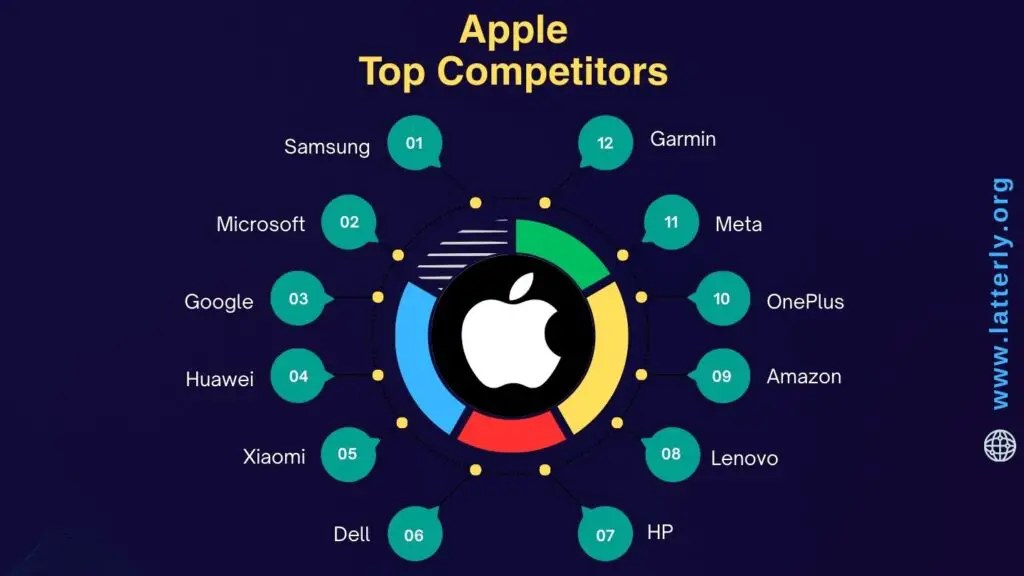
Top 12 Apple Competitors and Alternatives
Samsung
Samsung commands a broad portfolio that mirrors Apple across phones, tablets, wearables, TVs, and services. The brand reaches premium and midrange buyers, pairing high end hardware with a wide price ladder. Its integration across Galaxy devices offers a cohesive alternative to Apple’s ecosystem.
- Global smartphone leader by shipments, with strong presence in North America, Europe, and Asia. This scale fuels rapid innovation and wide retail availability.
- Galaxy S and Z series target premium users, while A series covers value tiers. Consumers can match budgets without sacrificing core features.
- Android based, with One UI focused on usability, customization, and multitasking. Many users prefer this flexibility over iOS constraints.
- Category strengths include displays, cameras, and battery life. Samsung’s AMOLED panels set quality standards for brightness and color accuracy.
- Foldables like Galaxy Z Fold and Z Flip offer form factors Apple does not yet ship. Early leadership here appeals to early adopters and power users.
- S Pen support on flagship phones and tablets suits note taking and design workflows. Artists and students find it productive and precise.
- Galaxy Watch and Buds integrate tightly with phones and tablets. Health tracking and audio features rival Apple Watch and AirPods for most buyers.
- SmartThings connects appliances, TVs, and smart home devices. This ecosystem gives users one app to tie together daily routines.
- Enterprise readiness with Knox security and long update policies. Businesses view Galaxy as a secure and manageable fleet option.
- Samsung Pay, DeX desktop mode, and multi device continuity add differentiated value. These features make switching from Apple less daunting.
Microsoft
For productivity first buyers, Microsoft positions Windows PCs and Surface hardware as premium alternatives to Mac. The company’s software stack runs from OS to Office to Azure, ensuring deep work and enterprise integration. Creative professionals also consider Surface devices for pen enabled workflows.
- Surface Laptop, Pro, and Studio compete directly with MacBook and iPad Pro. Pen, touch, and 2 in 1 designs favor sketching, note taking, and presentations.
- Windows powers a massive hardware ecosystem from many OEMs. This choice lets buyers optimize for performance, portability, or budget.
- Microsoft 365 spans Word, Excel, PowerPoint, Teams, and OneDrive. It rivals iWork and iCloud for collaboration and cloud storage.
- Strong enterprise management, security, and identity features. IT teams can deploy and govern devices at scale with existing tools.
- Copilot brings generative AI into Windows and Microsoft 365. Users gain integrated writing, analysis, and automation across apps.
- Gaming leadership through Xbox, PC Game Pass, and accessories. Entertainment value extends beyond what ships on macOS.
- Extensive peripheral compatibility and upgrade options. Many users value serviceability and port variety compared with thinner Mac designs.
- Well developed virtualization and developer tooling. Engineers and data teams often prefer Windows or WSL for workflow flexibility.
- Global retail and channel presence supports small businesses and education. Buyers can find local service plans and configuration choices.
- Competitive pricing across tiers makes switching more accessible. Total cost of ownership can be lower for certain workloads.
From Android to AI, Google delivers a software first vision that anchors many Apple alternatives. Pixel hardware showcases the best of Google’s camera, Assistant, and on device intelligence. Services like YouTube, Maps, Drive, and Photos form a daily use ecosystem independent of iOS.
- Pixel phones emphasize computational photography and helpful AI. Features like Night Sight and Magic Eraser set imaging expectations.
- Android offers customization, openness, and diverse app distribution. Users who value flexibility often prefer it over iOS.
- Wearables and tablets, including Pixel Watch and Pixel Tablet, integrate across Google services. Cross device continuity improves over time.
- ChromeOS on Chromebooks competes with Mac and iPad for education and lightweight work. Fast boot, sandboxing, and web centric design appeal to schools.
- Google One, Drive, and Photos provide cloud storage and backup. Automatic syncing simplifies migration from Apple devices.
- Assistant and Gemini bring voice and generative AI to daily tasks. Contextual help across apps increases productivity and convenience.
- Fitbit, part of Google, strengthens health and fitness offerings. This combination pressures Apple Watch in coaching and sleep tracking.
- Play Store offers broad app availability and alternative billing options in some regions. Developers and users appreciate platform choice.
- Nest smart home products tie into Google Home automation. Users can build a cohesive household setup without HomeKit.
- Competitive pricing on Pixels and Chromebooks lowers entry barriers. Buyers can sample Google’s ecosystem without premium premiums.
Huawei
In many international markets, Huawei remains a heavyweight in smartphones, wearables, and laptops. The company has pivoted to HarmonyOS and AppGallery to power its ecosystem. Strong imaging and battery technology keep it in premium shoppers’ consideration sets.
- Flagship phones like the P and Mate series emphasize camera innovation. Large sensors and advanced processing deliver detailed photos and low light performance.
- HarmonyOS links phones, tablets, watches, and smart home gear. Cross device collaboration provides continuity similar to Apple’s Handoff.
- MateBook laptops with sleek designs compete with MacBook. Metal builds, color accurate displays, and solid keyboards attract mobile professionals.
- Long battery life and rapid charging are core strengths. Travelers and power users appreciate fewer charging stops.
- Wearables such as Watch GT focus on endurance and health tracking. Multi week battery life is a notable differentiator against Apple Watch.
- AppGallery continues to expand regional app availability. Local partnerships help offset limited access to some Western services.
- Strong presence in China, the Middle East, and parts of Europe. Retail partnerships and carrier deals sustain market share.
- Proprietary chip and antenna research support connectivity and performance. Network expertise translates to dependable cellular features.
- Robust device to device file sharing and peripheral pairing. Users enjoy quick connections without extra software.
- Value across price tiers with Honor heritage influences. Shoppers can find high end build quality at competitive prices.
Xiaomi
Value driven shoppers know Xiaomi for delivering strong specs at aggressive prices. The brand spans smartphones, TVs, wearables, and smart home devices. Its ecosystem strategy gives buyers many Apple like conveniences without a premium price tag.
- Mi and Redmi phones cover flagship to entry levels. High refresh displays, capable cameras, and fast charging are common across tiers.
- HyperOS builds on Android with performance tuning and customization. Power users enjoy granular control over UI and battery behavior.
- Mi Band and Watch options offer affordable fitness tracking. Long battery life and essential health metrics compete well for budgets.
- Smart home lineup includes vacuums, sensors, lights, and cameras. The Mi Home app coordinates routines similar to HomeKit scenes.
- Strong presence in India, Southeast Asia, and Europe. Competitive pricing and online sales drive rapid adoption.
- TVs, tablets, and audio accessories round out the ecosystem. Buyers can assemble a coherent multi device setup under one brand.
- Fast charging leadership with high wattage wired and wireless options. Quick top ups reduce downtime throughout the day.
- MIUI security and update cadence continue to improve. Users see more frequent patches on popular models.
- Community driven feedback influences features and priorities. Enthusiast forums help refine software builds at scale.
- Lower total cost of ownership encourages switching from Apple. The gap in price to performance is a frequent deciding factor.
Dell
Among Windows PC makers, Dell stands out for its premium XPS lineup and deep enterprise services. Creative and business users compare XPS directly with MacBook for design, power, and display quality. Customization and after sales support often tip the scale for organizations.
- XPS laptops feature thin bezels, color accurate panels, and premium materials. They target professionals who need portable performance.
- Latitude and Precision lines serve business and workstation needs. IT friendly features and vPro options simplify fleet management.
- Windows and Linux configuration options suit developers and data scientists. Flexibility appeals to technical teams that need specific stacks.
- ProSupport and on site service reduce downtime. Enterprises value predictable service level agreements.
- Wide port selection and docking solutions streamline desk setups. Users can drive multiple monitors and peripherals with ease.
- High performance thermals and component choices, including discrete GPUs, aid creative workloads. Video, 3D, and data tasks benefit.
- Monitors and accessories complement the PC lineup. Color calibrated UltraSharp displays rival creative grade panels used with Macs.
- Competitive pricing and frequent configurations sales. Buyers can tailor RAM, storage, and CPU to budget and needs.
- Global logistics and channel partners ensure availability. This reach supports large rollouts and standardized procurement.
- A clear alternative for Mac users who require Windows native applications. Compatibility often decides platform adoption.
HP
HP appeals to home and business users with a wide range of laptops, desktops, and printers. The Spectre and Elite lines bring premium finishes and security to Windows. Education and hybrid work buyers value the mix of affordability and features.
- Spectre x360 and Envy models compete with MacBook on design and battery life. 2 in 1 hinges and touch add flexibility Apple does not offer on Mac.
- EliteBook and Z by HP cater to enterprise and creators. Security suites and ISV certifications support professional workflows.
- Chromebooks provide simple, secure computing for schools. Fast boot and manageable fleets are a strong Apple alternative in classrooms.
- HP Presence and conferencing features enhance remote work. Integrated privacy shutters and noise reduction improve calls.
- Strong printer ecosystem with Smart App integration. This pairing streamlines home offices where AirPrint alone may not suffice.
- OLED and high refresh display options address media and gaming. Visual quality helps content creators and students alike.
- B&O tuned audio and spacious trackpads elevate user experience. Comfort matters in daily productivity.
- Ample ports, including USB A and HDMI on many models. Users avoid dongles that some Mac setups require.
- Global service coverage and warranties support long term use. Businesses can standardize on HP across regions.
- Competitive pricing across configurations, often with bundled accessories. This lowers switching costs from Apple hardware.
Lenovo
As the world’s largest PC vendor, Lenovo offers breadth from budget to flagship. ThinkPad, Yoga, and Legion families cover business, hybrid work, and gaming. The company’s ownership of Motorola also extends its reach into smartphones.
- ThinkPad is synonymous with durability and keyboards. IT departments trust it for reliability and serviceability.
- Yoga 2 in 1s rival iPad and Mac setups with touch and pen input. Creative users benefit from flexible postures and displays.
- Legion focuses on gaming performance at competitive prices. High refresh screens and robust thermals double for creative workloads.
- Windows, ChromeOS, and Linux support deliver platform choice. Developers and students can tailor systems to their stack.
- Smart docking and conference features target hybrid work. Integrated privacy and AI based noise suppression aid meetings.
- Motorola phones like the Edge and Razr complement PC offerings. Cross device experiences continue to improve for notifications and sharing.
- Strong global channel presence, especially in enterprise and education. Volume procurement and consistent SKUs help standardization.
- Rapid iteration of form factors, including dual screen experiments. Early adoption attracts users seeking novel productivity setups.
- Value options in IdeaPad bring capable computing to tight budgets. This expands the accessible alternative to Apple devices.
- Comprehensive accessories, monitors, and services ecosystem. Buyers can build end to end workstations under one brand.
Amazon
Amazon competes through affordable devices and sticky services that anchor entertainment and smart homes. Fire tablets and TV sticks are go to options for streaming and casual use. Alexa powered Echo speakers present a credible alternative to HomePod in voice control.
- Fire tablets target media consumption and family use. Parental controls and profiles make them popular for households.
- Fire TV devices bring streaming and smart home dashboards to any screen. Integration with Prime Video and major apps is seamless.
- Echo speakers and displays provide voice control and home automation. Alexa Skills ecosystem offers extensive third party integrations.
- Kindle e readers excel at long battery life and sunlight readability. They serve a focused use case that iPad often overdelivers for.
- Amazon Appstore supports apps on Fire OS and some Android devices. This creates an alternative distribution channel to Apple’s App Store.
- Prime membership bundles shipping, video, music, and photo storage. Service packaging increases value compared with à la carte Apple services.
- Aggressive pricing and frequent sales lower entry costs. Budget conscious buyers can outfit homes without premium spend.
- Household friendly features like Drop In and announcements. Simple intercom functions appeal to families.
- Expanding smart home standards support, including Matter and Thread. Interoperability reduces lock in concerns.
- Retail reach and easy returns simplify trial and adoption. This convenience nudges switchers to test Amazon devices.
OnePlus
Enthusiast smartphone users often look to OnePlus for speed and value. The brand balances flagship performance with approachable pricing. OxygenOS emphasizes smoothness, minimal bloat, and rapid updates on high profile models.
- Flagship phones deliver top tier chipsets, fast RAM, and responsive displays. High refresh rates and tuning keep interactions fluid.
- Charging is a hallmark, with very fast wired speeds on many devices. Short top ups change daily habits for heavy users.
- Cameras have improved with sensor choices and partner tuning. Recent flagships focus on color accuracy and low light performance.
- Nord series brings core features to midrange shoppers. This makes switching from an older iPhone more affordable.
- Close to stock Android experience with useful tweaks. Many users prefer this clarity over heavier skins.
- Alert slider and clean industrial design stand out. Small usability touches foster brand loyalty.
- Strong community and early adoption of new Android versions. Enthusiasts value transparency and beta access.
- Good compatibility with global 5G bands on higher end models. Travelers and expats benefit from broader coverage.
- Accessories like Buds and Watch extend the ecosystem. Pairing remains simple with quick discovery and stable connections.
- Competes with Apple on speed and feel, often at lower prices. Performance per dollar is a central draw.
Meta
In spatial computing, Meta challenges Apple with an accessible headset portfolio and a growing content library. Quest devices anchor VR gaming, fitness, and collaboration experiences. Developers view Meta’s platform as a large installed base for immersive apps.
- Quest headsets offer standalone VR at consumer friendly prices. No PC or console is required for most experiences.
- Mixed reality passthrough and room mapping enable new use cases. Fitness, design, and productivity apps leverage spatial anchors.
- Meta’s ecosystem includes social presence through Horizon. Multiplayer and co working tools differentiate from traditional screens.
- Frequent software updates add features and improve tracking. Users see continued value without upgrading hardware immediately.
- Expansive content catalog with games, media, and learning. A healthy marketplace encourages developer investment.
- Hand tracking and controller options cater to different preferences. Accessibility increases for casual users and newcomers.
- Enterprise offerings explore training and remote assistance. Businesses test VR for onboarding and simulations as laptop complements.
- Competitive hardware pricing broadens adoption relative to premium headsets. Entry barriers are lower for households.
- Partnerships in fitness and entertainment build mainstream appeal. Branded workouts and concerts create recurring engagement.
- Provides a lower cost pathway into spatial computing than Vision Pro. Many consumers trial MR here before committing to Apple.
Garmin
Fitness focused consumers consistently consider Garmin when evaluating smartwatches. The brand built credibility with athletes through GPS accuracy and battery endurance. Health coaching and training metrics aim at performance rather than general lifestyle.
- Watches like Fenix, Forerunner, and Epix target runners, cyclists, and outdoor enthusiasts. Purpose built features guide structured training.
- Multi week battery life outlasts Apple Watch for most use cases. This endurance benefits ultramarathons and travel.
- GPS accuracy and multi band support are core strengths. Route guidance, maps, and elevation data are reliable on device.
- Robust hardware with buttons, water resistance, and durable materials. Glove friendly controls suit extreme conditions.
- Advanced metrics, including VO2 max, training load, and recovery. Athletes fine tune plans without third party apps.
- Garmin Connect provides deep analytics and community challenges. Data export and platform integrations serve coaches and teams.
- Specialized sensors and accessories, such as chest straps and bike power meters. The ecosystem covers niche performance needs.
- Offline maps and music on higher end models. Users can leave phones behind while retaining navigation and playlists.
- Works with Android and iOS, easing platform switching. Cross compatibility reduces lock in to any one phone.
- A clear alternative to Apple Watch for endurance sports. Buyers prioritize battery life and metrics over broad app catalogs.
Sony
Sony blends audio, imaging, and entertainment into premium hardware that overlaps Apple’s lifestyle appeal. Xperia phones focus on camera fidelity and creator tools. The company’s headphones and earbuds regularly set benchmarks for noise cancellation.
- WH and WF series headphones deliver industry leading ANC and sound quality. Listeners compare them directly with AirPods Max and Pro.
- Xperia phones emphasize manual camera controls and 4K displays. Creators value accurate color and pro grade video options.
- BRAVIA TVs integrate streaming and gaming features. Paired with PlayStation, they anchor home entertainment alongside Apple TV.
- High resolution audio support across devices serves audiophiles. LDAC codec and tuning appeal to discerning ears.
- Alpha camera ecosystem and mobile imaging pipelines. Cross compatibility benefits hybrid shooters who also need a phone.
- PlayStation competes for entertainment time with Apple Arcade and TV+. Exclusive titles and controllers add draw.
- Elegant industrial design and premium materials reinforce brand identity. Buyers see Sony as a lifestyle upgrade similar to Apple.
- Strong presence in Japan and Europe with selective US distribution. Retail partnerships keep premium lines visible.
- Apps and services like Headphones Connect and Imaging Edge extend functionality. Software ties hardware together for creators.
- Offers best in class audio accessories that pair well with any phone. Many iPhone users still choose Sony for sound.
OPPO
OPPO has grown rapidly with camera forward smartphones and fast charging leadership. Its Find X and Reno series target style conscious buyers. The company’s audio and wearables portfolio rounds out an Android based alternative to Apple.
- Find X brings premium materials, curved displays, and refined design. Reno focuses on balanced performance in the upper midrange.
- SuperVOOC charging remains among the fastest in the industry. Quick top ups reduce anxiety and power bank reliance.
- Imaging hardware and software prioritize portrait and low light. Dedicated algorithms improve skin tones and detail retention.
- ColorOS offers customization and smooth performance. Features like Smart Sidebar and flexible windows aid multitasking.
- Foldable models in select markets expand form factor choice. Large screen productivity options rival tablet plus phone setups.
- OPPO Watch and Enco earbuds integrate tightly with phones. Health tracking and audio controls keep experiences cohesive.
- Strong retail presence in Asia, the Middle East, and parts of Europe. Carrier partnerships drive brand visibility and trust.
- Competitive pricing compared with flagship iPhones. Consumers can access premium design at lower outlay.
- Consistent updates on hero devices improve longevity. Security patches and feature drops arrive on predictable schedules.
- Appeals to users who value charging speed and design flair. These differentiators make it a popular Apple alternative in many regions.
Top 3 Best Alternatives to Apple
Samsung
Samsung stands out as Apple’s closest end to end rival across phones, tablets, wearables, and TVs, fueled by rapid hardware innovation such as foldables and industry leading displays. Key advantages include a wide device range at multiple price points, strong cameras, deep cross device connectivity with Galaxy features and SmartThings, and expanding software support timelines.
It suits Android users who want premium hardware and customization, creative professionals who benefit from S Pen and DeX, and households building a cohesive multi device smart home.
Google excels with Pixel devices that deliver clean Android, fast updates, and AI first features that make everyday tasks simpler. Key advantages include superb computational photography, call and transcription tools, tight integration with Gmail, Drive, and Meet, and competitive pricing for flagship level experiences.
It suits users who value simplicity and timely updates, remote workers and students invested in Google Workspace, and anyone who wants a reliable camera phone with minimal software clutter.
Microsoft
Microsoft stands out with the Windows ecosystem and Surface hardware that rival Macs and iPads for productivity and versatility. Key advantages include broad app compatibility, strong multitasking and peripheral support, enterprise grade security and management, and access to the Xbox gaming ecosystem.
It suits professionals who rely on Windows only tools, developers and students who need flexible form factors, and gamers or creators who want high performance laptops or desktops with upgrade options.
Final Thoughts
There are many strong alternatives to Apple, from Android powerhouses to Windows productivity platforms, and each offers its own blend of hardware, software, and services. The best choice depends on what you value most, such as camera quality, productivity apps, gaming performance, price, openness, or cross device convenience.
Start by listing your must have features, then match them to the ecosystem that fits your daily work and lifestyle. With clear priorities and a bit of hands on testing, you can choose confidently and build a setup that feels fast, dependable, and genuinely enjoyable to use.
