
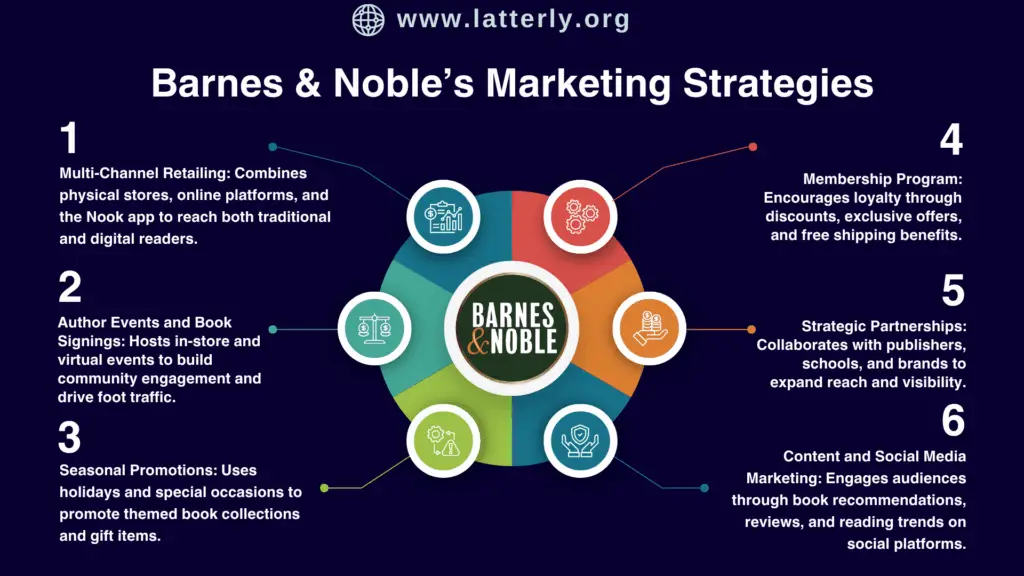
Barnes & Noble has transformed from a struggling bookstore chain into a revitalized retail powerhouse through strategic marketing initiatives that blend traditional bookselling with innovative customer experiences. After Elliott Management Corporation’s acquisition in 2019, the company implemented a comprehensive marketing overhaul that focuses on community engagement, digital integration, and personalized customer experiences. The retailer’s marketing strategy centers on positioning stores as cultural hubs while leveraging data-driven personalization and omnichannel approaches to compete effectively against digital-first competitors like Amazon.
The company’s approach encompasses everything from targeted email promotions and author events to sophisticated digital marketing campaigns and merchandise diversification strategies. Barnes & Noble has successfully adapted to changing consumer behaviors by creating experiences that cannot be replicated online, including book clubs, community gatherings, and curated local inventory selections.
This marketing transformation demonstrates how traditional retailers can reinvent themselves through strategic customer engagement and operational efficiency improvements. The company’s evolution from a standard bookstore to a community-focused cultural destination offers valuable insights for businesses navigating the challenges of modern retail competition.
Core Principles of Barnes & Noble’s Marketing Strategy
Barnes & Noble’s marketing approach centers on positioning itself as a community-focused cultural destination while implementing targeted loyalty programs and differentiating from digital competitors through experiential retail.
Brand Positioning and Value Proposition
Barnes & Noble positions itself as more than a traditional bookstore by creating community hubs and cultural centers that offer experiences unavailable online. The company emphasizes its role as a gathering place for book lovers and local communities.
The brand’s value proposition combines extensive book selection with curated experiences. Each location hosts author events, book clubs, and educational initiatives that strengthen community connections.
Key positioning elements include:
- Physical browsing experience with comfortable seating areas
- Expert bookselling knowledge from trained staff
- In-store cafes that encourage longer visits
- Local community event programming
The retailer leverages its brand recognition and physical presence to create unique value in an increasingly digital marketplace. This positioning helps justify premium pricing compared to online alternatives.
Differentiation in a Competitive Market
Barnes & Noble differentiates itself through local tastes and community-focused inventory management. Store managers receive empowerment to customize product selections based on their specific market demographics.
The company expanded beyond books to include toys, games, gifts, and multimedia products. This diversification creates multiple revenue streams while attracting broader customer segments.
Differentiation strategies include:
- Personalized local inventory management
- Extended product categories beyond books
- Experiential retail environments
- Author collaboration programs
Physical store advantages remain central to their competitive strategy. The ability to browse, discover new titles, and participate in live events provides experiences that online retailers cannot replicate.
Barnes & Noble’s smart strategy focuses on leveraging physical retail strengths rather than competing directly on digital convenience or pricing.
Customer Loyalty Initiatives
Barnes & Noble implements targeted loyalty programs designed to encourage repeat visits and increase transaction values. The membership program offers discounts, exclusive access to events, and personalized recommendations.
Community engagement plays a central role in building customer loyalty through local author events and educational programming. These initiatives create emotional connections beyond transactional relationships.
Loyalty program features:
- Member discounts on purchases
- Exclusive event invitations
- Personalized book recommendations
- Early access to new releases
The retailer uses customer data to deliver personalized marketing campaigns tailored to individual reading preferences and local demographics. This approach helps maintain market share despite intense competition from online retailers.
Digital integration supports loyalty efforts through mobile apps, online ordering with in-store pickup, and social media engagement that extends community connections beyond physical locations.
The Evolution of Barnes & Noble’s Brand
Barnes & Noble transformed from a modest printing business into America’s largest bookstore chain through strategic partnerships, innovative retail concepts, and adaptive business models that reshaped how Americans buy and experience books.
Heritage and Founders: Charles M. Barnes and William Barnes
Charles M. Barnes established the foundation of what would become Barnes & Noble in 1886 with a small book-printing business in Wheaton, Illinois. His modest home-based operation focused on printing and selling books locally.
The company’s trajectory shifted dramatically when Charles’s son, William Barnes, moved to New York City in 1894. William partnered with G. Clifford Noble to open their first official bookstore, combining their expertise and resources.
The Barnes & Noble name became official in 1917 when the partners opened their flagship store on Fifth Avenue in Manhattan. This location established the company’s reputation for extensive inventory and competitive pricing.
The flagship store differentiated itself through:
- Comprehensive book selection across multiple genres
- Competitive pricing strategies
- Prime Manhattan location attracting diverse customers
- Professional service standards
This foundation period established Barnes & Noble’s core identity as a destination for serious book buyers. The company’s early focus on textbooks and academic materials created strong relationships with educational institutions that would prove valuable for decades.
Growth through Book Superstores
Leonard Riggio’s acquisition of Barnes & Noble in 1971 marked a pivotal transformation in the company’s growth strategy. Riggio brought experience from founding the Student Book Exchange and envisioned national expansion beyond the original New York market.
Barnes & Noble introduced the revolutionary concept of the “book superstore” in the 1970s. These large-format retail spaces offered unprecedented book selections combined with comfortable amenities.
Key superstore features included:
- Massive inventory spanning 100,000+ titles
- Comfortable seating areas for browsing
- In-store cafes creating social spaces
- Author events and book signings
- Extended operating hours
The superstore model revolutionized bookselling by treating books as lifestyle products rather than simple commodities. Customers could spend hours browsing, reading, and socializing in these spaces.
Barnes & Noble went public in 1993, providing capital for aggressive expansion. The company acquired smaller bookstore chains and established presence in college markets, creating a comprehensive retail network across America.
Business Model Shifts
The rise of online retail forced Barnes & Noble to adapt its traditional brick-and-mortar approach. The company launched its e-commerce website in 1997 to compete with Amazon’s growing influence in book sales.
Barnes & Noble diversified beyond books to include toys, games, gifts, and multimedia products. This expansion helped offset declining print book sales and attracted broader customer demographics.
Major business model changes:
| Period | Strategy | Focus |
|---|---|---|
| 1990s-2000s | Digital expansion | E-commerce launch |
| 2009 | Technology entry | Nook e-reader |
| 2010s | Experience focus | Community events |
| 2019+ | Local approach | Store-specific curation |
The 2009 introduction of the Nook e-reader represented Barnes & Noble’s attempt to compete directly with Amazon’s Kindle. While initially successful, the Nook struggled against rapid technological changes and strong competition.
Elliott Management Corporation’s acquisition in 2019 brought new ownership focused on operational efficiency and brand revitalization. The company shifted toward empowering local managers to tailor inventory and events to specific community needs.
Modern Barnes & Noble emphasizes its role as a cultural hub rather than just a retailer. Stores now function as community gathering spaces hosting book clubs, educational events, and author appearances that cannot be replicated online.
Target Audience and Customer Segments
Barnes & Noble focuses on women who value reading and have leisure time, while also targeting families and adapting to digital preferences. The company segments customers based on shopping behaviors, reading habits, and demographic characteristics to maintain relevance in a changing market.
Identifying Key Demographics
Barnes & Noble’s primary target market consists of women who value reading and have time for leisurely activities. This demographic represents the traditional family model and utilizes the relaxing atmosphere associated with reading.
The company targets multiple customer segments with distinct characteristics:
- Primary shoppers: People who prefer physical bookstores over online purchases
- Experience seekers: Customers who enjoy touching books before buying
- Advisory dependent: Shoppers who need expert recommendations from staff
- Social readers: Individuals who use bookstores as social gathering spaces
Barnes & Noble targets people who like buying at bookstores and want the tactile experience of handling books. Many customers also seek the combination of book browsing with coffee from in-store Starbucks locations.
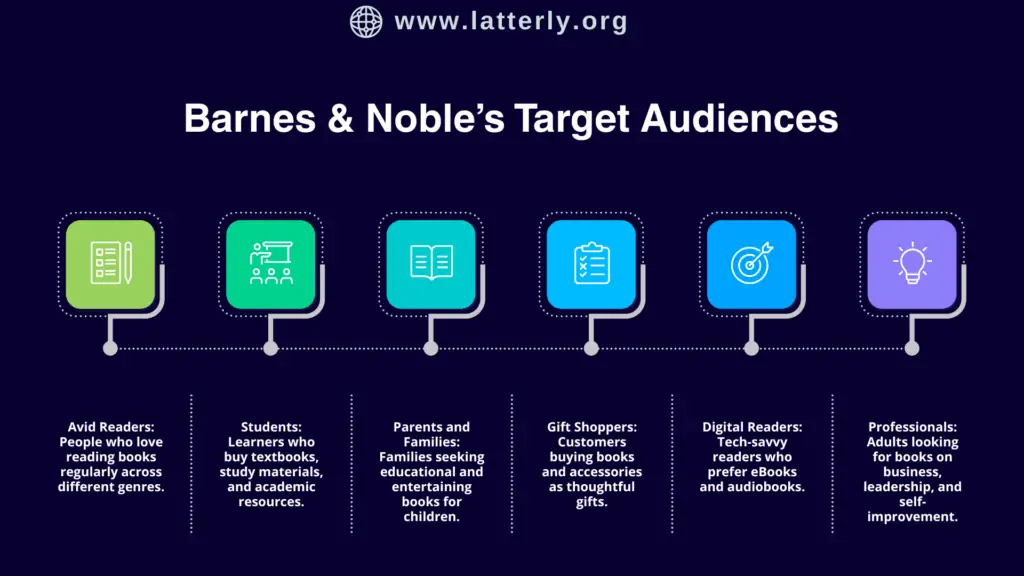
The retailer employs cross-market segmentation strategies. This approach defines and targets the same consumer types across different geographic markets and store locations.
Appealing to Book Lovers and Families
Book lovers represent Barnes & Noble’s core customer base across all age groups. The company employs targeted email promotions offering discounts on popular titles to attract these dedicated readers.
Family-oriented marketing focuses on creating welcoming environments for parents and children. Stores feature dedicated children’s sections with interactive displays and comfortable reading areas.
The retailer positions its locations as community hubs rather than simple retail spaces. Author events, book clubs, and literary gatherings create social experiences that appeal to book enthusiasts.
Customer loyalty programs reward frequent shoppers with exclusive discounts and early access to new releases. These initiatives strengthen relationships with dedicated readers who visit stores regularly.
Barnes & Noble’s cafe areas serve as social spaces where customers can relax and escape everyday stresses. This atmosphere encourages longer visits and increases the likelihood of additional purchases.
Adapting to Changing Reading Habits
The rise of digital reading has forced Barnes & Noble to expand beyond traditional print customers. The company launched the Nook e-reader in 2009 to compete in the digital marketplace.
Modern customers increasingly blend physical and digital reading preferences. Barnes & Noble now serves hybrid readers who purchase both print books and digital content.
Younger demographics show different shopping patterns than traditional customers. They often research books online before visiting physical stores or prefer immediate digital downloads.
The retailer has adapted its customer segmentation to include digital-first readers. These customers may visit stores less frequently but engage with Barnes & Noble’s online platforms regularly.
Product diversification beyond books attracts broader customer segments. Toys, games, and gifts appeal to shoppers who might not primarily identify as book lovers but visit for other merchandise.
In-Store Experience and Community Building
Barnes & Noble transforms traditional bookstores into community hubs through carefully designed physical spaces, integrated café environments, and regular programming that encourages customer interaction and loyalty.
Physical Retail Experiences
Barnes & Noble has embraced the concept of book superstores with curated layouts and themed tables to create immersive shopping environments. The company empowers local store managers to act as brand managers for their specific locations.
Each general manager customizes their store’s book selection based on neighborhood preferences and local community interests. This localized approach allows stores to reflect the reading habits and cultural interests of their immediate customer base.
The retailer has moved away from centralized buying strategies in favor of community-based curation. Store layouts feature comfortable seating areas where customers can browse books before purchasing.
Beyond books, stores stock carefully selected games and gifts that complement the literary experience. These additional products create opportunities for impulse purchases while maintaining the bookstore’s cultural atmosphere.
The physical retail strategy focuses on creating experiences that online competitors cannot replicate. Customers can discover new titles through in-person browsing and receive personalized recommendations from knowledgeable staff members.
Cafes and Social Spaces
Barnes & Noble integrates cafés into most store locations to extend customer visit duration and create natural gathering spaces. These café areas serve as transition zones between retail and community spaces.
The cafés offer customers a place to read newly purchased books or sample potential purchases over coffee. This combination encourages longer store visits and increases the likelihood of additional purchases.
Store designs now feature expanded seating areas that accommodate both individual readers and small groups. These spaces function as informal meeting locations for customers who want to discuss books or work quietly.
The café integration supports the company’s strategy to position stores as cultural centers rather than purely transactional retail locations. Customers often use these spaces for studying, working, or socializing around shared literary interests.
Book Clubs and Community Events
Barnes & Noble stores regularly host book clubs and author events to strengthen community connections and drive customer engagement. These programs create recurring reasons for customers to visit specific store locations.
Author readings and book signings serve as promotional events for new releases while providing unique experiences for local readers. The company’s stores have historically served as important launching platforms for authors promoting their work.
Community events extend beyond traditional literary programming to include writing workshops, children’s storytimes, and seasonal celebrations. These activities attract diverse customer segments and build long-term store loyalty.
The events calendar varies by location based on local interests and demographics. Store managers coordinate with local schools, libraries, and community organizations to develop relevant programming that serves their specific neighborhoods.
Regular programming helps establish Barnes & Noble locations as community spaces that develop strong relationships distinct from online shopping experiences.
Events and Author Engagement
Barnes & Noble leverages thousands of annual events to drive customer engagement and book sales through direct author interactions, community partnerships, and educational initiatives. These in-person experiences create exclusive opportunities that online retailers cannot replicate.
Author Events and Book Signings
Barnes & Noble hosts thousands of events every year both in physical stores and virtually online. These range from author visits to book club meetings and children’s storytimes.
The company creates exclusive editions and signed copies available only at their locations. This strategy drives foot traffic and generates excitement around new releases.
Social media promotion plays a vital role in these events. Barnes & Noble posts about book signings, tags authors, and creates exclusivity around events.
Authors like Andrea Delucia have found success by making personalized connections with Barnes & Noble representatives. She visited locations in person rather than relying solely on emails or phone calls.
Key success factors for author partnerships include:
- Multiple follow-ups with decision-makers
- Emphasizing the book’s positive impact on readers
- Creating promotional materials for social media
- Building personal relationships with store managers
The company collaborates with BookTok influencers for joint events and author signings that resonate with literature-focused TikTok users.
Literary Community Partnerships
Barnes & Noble transforms physical spaces into gathering points for book lovers through structured community programming. The company hosts author meet-ups, runs book drives, and helps local schools.
These initiatives create deep community connections that online-only sellers cannot easily replicate. Local author events and book club meetings foster customer loyalty and repeat visits.
The bookstore chain empowers local store managers to curate events based on community preferences. This approach allows each location to tailor programming to regional interests and demographics.
Community engagement is central to Barnes & Noble’s brand identity, involving local author events and personalized marketing geared toward local demographics.
Partnership activities include:
- Local book club meetings
- Author meet-and-greet sessions
- Community reading challenges
- Literary discussion groups
Educational Outreach and Book Fairs
Barnes & Noble extends its reach through educational partnerships with schools and libraries. These relationships create long-term customer development opportunities while supporting literacy initiatives.
The company organizes children’s storytimes as regular programming in stores nationwide. These events introduce young readers to books while creating family-friendly shopping experiences.
School partnerships include book fair programs that bring Barnes & Noble selections directly to educational institutions. This approach captures sales while supporting educational goals.
Educational programming benefits:
- Early reader development
- Family engagement opportunities
- Teacher and librarian relationships
- Curriculum support initiatives
The retailer’s educational outreach creates pipeline customers who develop reading habits and brand loyalty from an early age. These programs complement in-store events while expanding market reach beyond traditional retail locations.
Omnichannel Strategy and Online Presence
Barnes & Noble has developed an integrated approach that connects their physical stores with digital platforms through seamless e-commerce functionality, pickup services, and mobile technology. The company focuses on creating unified customer experiences across all touchpoints while leveraging their extensive retail network.
Website and E-Commerce Integration
Barnes & Noble operates BN.com as their primary digital storefront, serving as a comprehensive e-commerce platform that mirrors their in-store inventory. The website features over one million book titles alongside games, toys, and gift items.
The company has enhanced its online presence through strategic SEO initiatives that increased non-branded traffic significantly. Their digital platform integrates with physical store systems to provide real-time inventory updates.
Key Website Features:
- Personalized book recommendations
- Customer reviews and ratings
- Author event listings
- Digital content downloads
- Membership program integration
The e-commerce site connects directly with their loyalty program, allowing customers to earn and redeem rewards across channels. Barnes & Noble has also implemented advanced search functionality that helps customers discover new titles based on reading preferences.
Buy Online, Pickup In-Store Services
The retailer has implemented a robust buy-online-pickup-in-store (BOPIS) system that leverages their network of approximately 600 physical locations. This service bridges the gap between online shopping convenience and immediate product availability.
Customers can reserve items online and collect them the same day at participating stores. The system provides real-time inventory checks across multiple locations, allowing shoppers to find the nearest store with their desired items in stock.
BOPIS Benefits:
- Same-day availability
- No shipping costs
- Inventory verification
- Store location flexibility
The service particularly appeals to customers who want immediate access to books, educational materials, or gifts. Store associates receive electronic notifications when orders are placed, ensuring items are ready for quick pickup upon arrival.
Mobile App Experience
Barnes & Noble’s mobile application extends their omnichannel approach to smartphones and tablets. The app provides access to the full product catalog, store locator functionality, and exclusive mobile offers.
Users can browse books, read sample chapters, and make purchases directly through the app. The mobile platform includes barcode scanning capabilities that allow customers to check prices and availability while browsing in physical stores.
The app integrates with their membership program, displaying personalized coupons and rewards balances. Push notifications alert users to new releases, special promotions, and local store events.
Mobile Features:
- Digital wallet integration
- Store event notifications
- Wishlist synchronization
- Social sharing options
The company targets avid readers and families through their mobile platform, providing educational resources and children’s content alongside traditional bestsellers.
Marketing Mix of Barnes & Noble
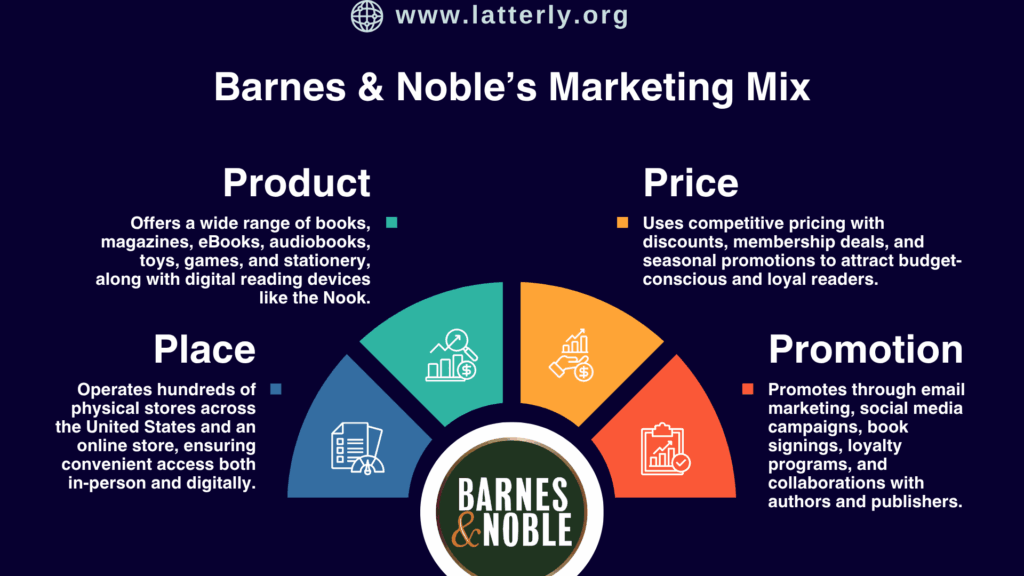
Barnes & Noble’s marketing mix showcases how the company balances traditional retail strength with modern innovation to remain a leading name in the bookselling industry. By strategically managing its product offerings, pricing, distribution channels, and promotions, the company continues to attract both long-time book lovers and a new generation of digital readers.
Product
Barnes & Noble has built its brand around a diverse product portfolio that extends beyond books. While printed books remain the cornerstone of its business, the retailer also offers e-books through the NOOK platform, toys and games, stationery, gifts, and educational materials. This diversification strengthens the company’s position as a lifestyle brand rather than just a bookstore. Each store also emphasizes the in-store experience through comfortable seating, cafés, and community spaces for readings or author signings, creating an atmosphere that fosters connection and discovery. The combination of physical and digital products reflects Barnes & Noble’s commitment to evolving with changing consumer behaviors while maintaining its literary roots.
Price
Barnes & Noble employs a value-based pricing strategy that balances competitiveness with perceived quality. The company often sets prices slightly higher than online rivals like Amazon to reflect its superior in-store experience, personalized service, and exclusive editions. However, it compensates with the Barnes & Noble Membership Program, which offers discounts, free shipping, and exclusive deals. Additionally, periodic promotions, clearance events, and student discounts make the brand accessible to a broader audience. This balanced pricing approach reinforces Barnes & Noble’s image as a premium yet approachable destination for readers seeking both value and experience.
Place
The company uses an omnichannel distribution model that integrates its nationwide network of brick-and-mortar stores with a robust online platform. Its physical stores serve as community hubs, providing immersive environments that encourage browsing and impulse purchases. Meanwhile, the online store offers convenience, extensive selection, and fast delivery options. The Buy Online, Pick Up In Store (BOPIS) system bridges the gap between physical and digital channels, allowing customers to combine the convenience of online shopping with the immediacy of in-store collection. This seamless integration enhances customer satisfaction and loyalty across all touchpoints.
Promotion
Barnes & Noble’s promotional strategy focuses on engagement, loyalty, and storytelling. The company leverages social media platforms like Instagram, TikTok, and Facebook to highlight trending titles, seasonal recommendations, and author events. Collaborations with BookTok influencers and digital reading communities have rejuvenated its appeal among younger audiences. In-store promotions, email marketing, and the member rewards system further reinforce customer retention. Additionally, the company organizes book clubs, readings, and local literary events to strengthen emotional ties with its audience, turning shopping into an experience rather than a transaction.
People, Process, and Physical Evidence
Trained staff who are passionate about books play a central role in delivering exceptional service, reflecting the brand’s commitment to knowledgeable and friendly interactions. Efficient processes such as inventory management and personalized recommendations enhance the shopping journey. Finally, the inviting store design – with wooden bookshelves, reading nooks, and cafés – serves as tangible evidence of the brand’s identity and quality.
Digital Marketing and Social Media Initiatives
Barnes & Noble has strategically embraced digital platforms to connect with modern readers, particularly through TikTok’s BookTok community and targeted online advertising campaigns. The retailer combines social media trend integration with SEO optimization to maintain competitiveness in the digital marketplace.
BookTok and Social Trend Integration
Barnes & Noble has positioned itself at the forefront of the BookTok phenomenon on social media platforms. The company actively monitors TikTok trends to identify books gaining viral popularity among younger readers.
Physical stores now feature dedicated BookTok displays that showcase trending titles. These displays bridge the gap between digital buzz and in-store experiences, creating seamless customer journeys.
The retailer tracks which books gain traction through viral TikTok videos. When titles surge in popularity online, Barnes & Noble ensures prominent placement both digitally and physically within 24-48 hours.
Key BookTok Integration Strategies:
- Real-time trend monitoring
- Rapid inventory adjustments
- Cross-platform content promotion
- Youth-focused merchandising
This approach has helped Barnes & Noble capture sales from social media-driven book discoveries in the competitive digital marketplace.
Influencer Collaborations
The company has developed strategic partnerships with BookTok influencers and literary content creators. These collaborations extend beyond simple promotional posts to include joint events, author signings, and curated content creation.
Barnes & Noble works with micro-influencers who have dedicated book-loving audiences. This strategy proves more effective than partnering with mega-influencers who lack specific literary credibility.
Collaboration Types:
- Virtual book launch events
- Exclusive author interviews
- Reading challenge partnerships
- Store takeover content
The retailer provides influencers with early access to new releases and exclusive content. This creates authentic recommendations that resonate with followers who trust these literary voices.
SEO and Online Advertising
Barnes & Noble has invested heavily in search engine optimization to compete with online retailers like Amazon. The company optimizes product pages, blog content, and category listings for book-related keywords.
Their digital advertising strategy includes targeted Google Ads campaigns and social media advertising. These campaigns focus on specific book genres, author names, and trending literary topics.
The retailer uses data analytics to track customer behavior across digital platforms. This information guides both SEO strategies and paid advertising investments.
Digital Marketing Focus Areas:
- Local SEO for store locations
- Book recommendation content marketing
- Retargeting website visitors
- Genre-specific ad campaigns
Barnes & Noble leverages customer purchase data to create personalized email marketing campaigns. These efforts complement their broader digital marketing initiatives in the competitive digital age landscape.
Products and Merchandise Diversification
Barnes & Noble has expanded beyond its traditional book-focused model to include electronic reading devices, games, toys, and specialty gifts. This diversification strategy helps the company compete in multiple retail categories while maintaining its core identity as a literary destination.
Books and Physical Books
Physical books remain the cornerstone of Barnes & Noble’s product strategy. The company stocks over 200,000 unique titles across fiction, non-fiction, children’s literature, and academic texts.
Barnes & Noble has implemented a books-first merchandising approach under CEO James Daunt’s leadership. This strategy emphasizes curated layouts and themed display tables that highlight staff recommendations and seasonal selections.
The retailer partners directly with publishers to secure exclusive editions and early releases. These partnerships create competitive advantages that online retailers cannot easily replicate.
Local store managers now have increased autonomy to customize their book selections based on community preferences. This approach mirrors successful independent bookstore models while leveraging the chain’s purchasing power.
NOOK and E-Books
Barnes & Noble launched the NOOK e-reader in 2009 to compete with Amazon’s Kindle in the digital reading market. The device featured touchscreen navigation and color displays on later models.
The NOOK struggled to maintain significant market share against established competitors. Amazon’s ecosystem advantages and aggressive pricing made it difficult for Barnes & Noble to gain traction.
Despite hardware challenges, Barnes & Noble continues to offer digital books through its NOOK platform. The company focuses on providing e-book access rather than competing primarily on device sales.
Digital content integration allows customers to purchase e-books in physical stores. Staff can assist with digital purchases and technical support, bridging the gap between online and offline experiences.
Games, Gifts, and Non-Book Products
Barnes & Noble has significantly expanded its non-book merchandise to increase revenue per customer visit. Games, puzzles, and educational toys now occupy substantial floor space in most locations.
Key non-book categories include:
- Board games and card games
- Literary-themed gifts and accessories
- Journals and stationery products
- Children’s toys and educational materials
- Pop culture collectibles and merchandise
The company targets gift-buyers and parents seeking educational products for children. These categories typically offer higher profit margins than traditional book sales.
Seasonal merchandise drives significant revenue during holidays and back-to-school periods. Barnes & Noble adjusts its product mix throughout the year to capitalize on shopping trends and gift-giving occasions.
Data-Driven Marketing and Personalization
Barnes & Noble harnesses customer data analytics to understand reading preferences and shopping behaviors across their 614 stores. The company implements targeted email campaigns and personalized promotions to drive customer engagement and increase sales conversions.
Leveraging Customer Data Analytics
Barnes & Noble collects extensive customer data through their membership program and online platform interactions. The company tracks purchase history, browsing patterns, and demographic information to build comprehensive customer profiles.
Store managers receive data insights about local reading preferences and seasonal trends. This information enables them to make informed decisions about inventory selection and merchandising strategies.
The company’s analytics platform identifies high-value customers and frequent buyers. Barnes & Noble uses this segmentation to tailor marketing messages and promotional offers to specific customer groups.
Key Analytics Metrics:
- Purchase frequency and average transaction value
- Genre preferences and author interests
- Seasonal buying patterns
- Geographic reading trends
Digital analytics from their e-commerce platform, which represents 9% of total sales, provides insights into online customer behavior. This data helps optimize the website experience and product recommendations.
Personalized Promotions and Email Marketing
Barnes & Noble develops targeted email campaigns based on individual customer reading histories and preferences. The company sends personalized book recommendations that align with previous purchases and browsing behavior.
Their email marketing system delivers genre-specific newsletters featuring new releases and bestsellers. Customers receive curated content based on their demonstrated interests in fiction, non-fiction, or specialty categories.
The company creates time-sensitive promotional offers for members, including early access to sales and exclusive discounts. These personalized promotions drive higher engagement rates compared to broad-spectrum marketing campaigns.
Barnes & Noble’s marketing team segments customers by reading frequency and spending patterns. High-value customers receive premium offers and invitations to exclusive author events and book signings.
Mobile marketing integration allows the company to send location-based promotions when customers visit physical stores. This omnichannel approach connects digital engagement with in-store experiences.
Competitive Landscape and Future Outlook
Barnes & Noble faces intense competition from Amazon’s dominance in online book sales and must adapt to shifting consumer preferences toward digital reading while identifying growth opportunities in physical retail spaces. The company’s survival depends on differentiating itself from digital competitors and capitalizing on emerging market trends.
Competing with Amazon and Online Retailers
Amazon controls approximately 50% of all book sales in the United States, creating significant pressure on Barnes & Noble’s market share. The e-commerce giant’s competitive advantages include lower prices, faster delivery, and extensive customer data analytics.
Barnes & Noble competes by emphasizing the in-store experience that online retailers cannot replicate. The company hosts author events, book clubs, and community gatherings that create social connections around reading.
Physical stores allow customers to browse, discover new titles, and make impulse purchases. This tactile experience remains valuable for many book buyers who prefer examining books before purchasing.
The retailer has improved its online presence to compete more effectively. However, Amazon’s infrastructure and logistics capabilities continue to present formidable challenges for traditional bookstore chains.
The shift toward e-books and audiobooks has fundamentally altered reading habits. Digital formats now represent roughly 20% of total book sales, though print books have shown resilience in recent years.
Barnes & Noble’s Nook e-reader struggled to compete with Amazon’s Kindle ecosystem. The company has largely retreated from hardware manufacturing while maintaining its digital bookstore.
Audiobook consumption has grown dramatically, particularly among younger demographics. Barnes & Noble has partnered with audiobook platforms to offer digital content alongside physical books.
The company leverages its physical locations to promote digital products. Staff recommendations and in-store displays help drive both physical and digital sales through integrated marketing approaches.
Opportunities and Challenges Ahead
Barnes & Noble plans to open over 60 new stores in 2025 with ambitions to reach 1,000 locations. This expansion strategy reflects confidence in physical retail’s continued relevance.
Smaller store formats between 10,000 and 25,000 square feet enable flexibility in various locations. These right-sized stores reduce overhead costs while maintaining essential book inventory and community spaces.
Key challenges include:
- Rising commercial real estate costs
- Competition from independent bookstores
- Changing consumer shopping patterns
- Supply chain disruptions
The company’s acquisition by Elliott Management in 2019 provided financial stability and strategic direction. New ownership has emphasized operational efficiency and community-focused merchandising strategies.
