
Dunkin’ Donuts, widely known as Dunkin’, is a leading coffee and baked goods brand with a deep footprint across the United States and select international markets. The chain competes in a fast evolving quick service coffee segment where convenience, value, and consistency decide daily traffic. A structured SWOT analysis reveals how the brand can protect its core and accelerate growth.
Understanding strengths, weaknesses, opportunities, and threats is timely as consumers shift routines, rivals invest in premium beverages, and digital engagement reshapes loyalty. The exercise clarifies which assets deliver durable advantages and where disciplined investment matters most. It also frames realistic choices for portfolio, pricing, and experience design.
You may also find these guides helpful:
1. Dunkin’ Donuts Marketing Strategy
2. Dunkin’ Donuts Business Model
3. Dunkin’ Donuts Marketing Mix
4. Dunkin’ Donuts Competitors
Company Overview
Founded in 1950 in Quincy, Massachusetts, Dunkin’ Donuts built its reputation on coffee and donuts served fast at an accessible price point. The company modernized its positioning in 2018 by emphasizing a beverage led strategy and adopting the simplified Dunkin’ name in many touchpoints. In 2020, Dunkin’ Brands was acquired by Inspire Brands, joining a scaled restaurant platform.
Dunkin’ operates a primarily franchised system, enabling rapid unit growth with an asset light model and strong local operator expertise. Its core menu centers on hot and iced coffee, espresso drinks, donuts, and breakfast sandwiches designed for on the go consumption. Digital ordering, drive thru formats, and a robust rewards program support speed and repeat visits.
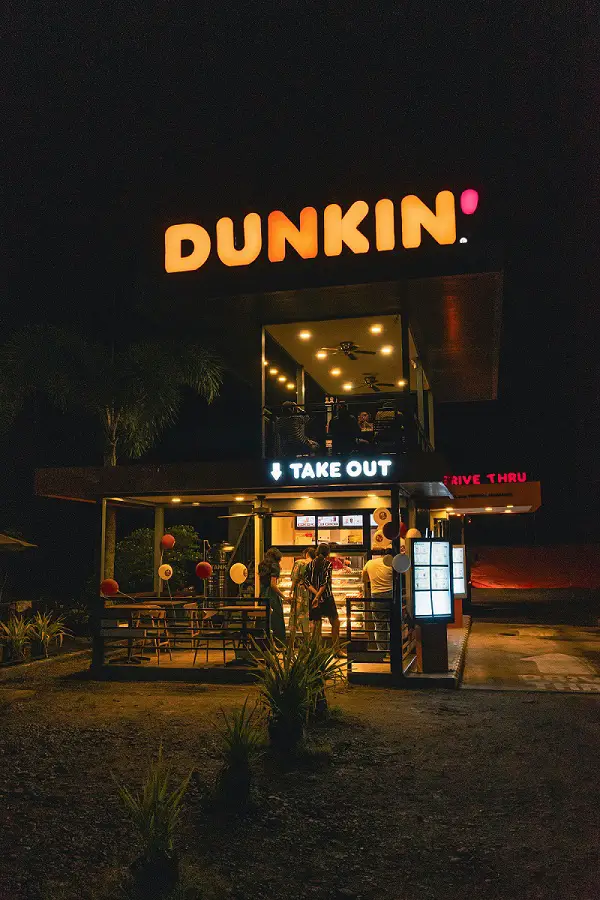
In the United States, the brand maintains a leading share of the quick service coffee occasion, particularly in morning dayparts and commuter corridors. It is known for value, reliability, and throughput rather than lounge oriented experiences. Internationally, Dunkin’ maintains a presence in select markets, tailoring assortments to local tastes while keeping core beverage platforms consistent.
Strengths
Dunkin’ benefits from enduring assets that are difficult for rivals to replicate quickly. These strengths compound through scale, brand memory, and operational discipline. Together they support traffic resilience and margin durability across economic cycles.
Powerful brand recognition and loyalty
With roots dating to 1950, Dunkin’ enjoys high awareness and an everyday value reputation that resonates with habitual coffee buyers. Its slogan and campaigns have reinforced a ritual based connection that turns routine stops into brand preference. This equity lowers acquisition costs and strengthens promotional effectiveness.
Familiar flavors, seasonal favorites, and consistent store experiences deepen emotional salience over time. Guests know what they will get, at a price point that feels dependable. That predictability helps sustain frequency even as competitors rotate offers.
Scaled, asset light franchise model under strong parent
Dunkin’ grows primarily through franchising, leveraging franchisee capital and local market knowledge to expand efficiently. The model converts fixed corporate costs into variable partner investments, supporting faster new unit openings and market infill. It also encourages operational ownership at the store level.
As part of Inspire Brands, Dunkin’ accesses shared procurement, technology, and analytics capabilities. Systemwide scale can lower input costs and accelerate innovation across equipment, menu, and marketing. These advantages reinforce unit economics and franchisee returns.
Robust digital ecosystem and rewards program
Dunkin’s mobile app enables order ahead, customized beverages, and integrated payment, reducing friction at busy times. A reimagined rewards program focuses on attainable benefits and flexible redemption. Personalization tools help target offers that boost visit frequency and ticket.
Digital ordering also increases throughput by shifting transactions out of the front counter queue. Data from app usage informs product development and daypart promotions. Over time, this closed loop feedback strengthens loyalty and marketing efficiency.
Speed focused operations and convenient formats
Dunkin’ optimizes for fast service with streamlined prep, batch brewing, and repeatable station layouts. Many restaurants feature drive thru lanes and compact footprints positioned along commuter routes. The result is high capacity to serve peak morning demand predictably.
Operational muscle around throughput is hard to copy without redesigning kitchens and workflows. Consistent training and simplified builds help maintain service times as menus evolve. This speed advantage directly supports the brand promise of quick, reliable coffee.
The brand leads with coffee while keeping a tight set of donuts, bakery items, and breakfast sandwiches. That focus limits complexity and protects consistency across thousands of restaurants. Seasonal beverages and limited time flavors add excitement without overwhelming operations.
Platform based innovation lets Dunkin’ extend core beverages with syrups, toppings, and temperature formats. Bundled value offers encourage add ons that raise check while reinforcing affordability. The balance of familiarity and novelty keeps the assortment fresh and executable at scale.
Weaknesses
Dunkin’ faces several internal constraints that can hinder performance in a fast-changing beverage and quick-service landscape. While the brand remains popular and convenient, structural and perception issues limit pricing power and differentiation. Addressing these gaps is essential to sustain momentum and protect market share.
Perceived Quality Gap in Coffee and Espresso
Dunkin’ is often positioned as value and convenience, which can create a perceived quality gap versus premium specialty coffee competitors. Despite investments in espresso equipment and training, consumer sentiment frequently ranks Dunkin’s espresso-based beverages as less complex and crafted. This perception constrains premium mix, limits upsell potential on seasonal beverages, and can reduce relevance among younger consumers who gravitate to experiential, barista-led formats.
Franchise Variability and Inconsistent Execution
The heavily franchised model enables rapid scale but can lead to inconsistent service speed, beverage accuracy, and product availability by market. Variability in training, staffing, and adherence to operational standards affects guest satisfaction and loyalty. These inconsistencies are amplified during peak morning rush, where throughput and execution determine repeat visits and app adoption, ultimately weakening brand reliability.
Nutrition and Health Perception Challenges
Dunkin’s core menu skews toward indulgent donuts, sweetened beverages, and carb-heavy breakfast sandwiches, which can deter health-conscious customers. Even with availability of dairy alternatives and reduced-sugar options, the brand is still widely associated with sugar-forward choices. This perception narrows consideration for routine, daily occasions and limits participation in wellness-oriented trends driving growth in lower-calorie, functional, and high-protein offerings.
Geographic Concentration and Limited Global Scale
Dunkin’ maintains strong density in the Northeastern United States, but its international footprint trails global coffee leaders. In many overseas markets, brand awareness and supply chain scale are insufficient to deliver the speed, value, and flavor consistency that define the U.S. business. This concentration exposes Dunkin’ to regional demand cycles and real estate saturation while constraining diversified growth engines abroad.
Loyalty Program Backlash and App Friction
The transition to Dunkin’ Rewards in 2022 sparked ongoing consumer complaints about point value, redemption clarity, and fewer perceived freebies. App store feedback highlights friction around earning rules, personalized offers, and out-of-stock items at pickup, which undermines digital frequency. These issues weaken a critical competitive moat, as rivals increasingly use data-driven rewards to drive ticket size, repeat rate, and cross-daypart engagement.
Opportunities
Market shifts in beverages, digital, and retail channels present multiple pathways for Dunkin’ to accelerate growth. By leaning into innovation and selective expansion, the brand can extend reach beyond morning coffee occasions. Strategic partnerships and data capabilities can compound these gains across channels.
Expansion of Cold and Energy Beverages
Cold beverages lead incrementally for the category, and Dunkin’ can deepen its lineup with flavored cold foam, nitro, and premium iced espresso builds. The growing energy segment creates room to scale offerings like Refreshers and new platforms such as SPARKD’ Energy to capture afternoon and evening traffic. Strong marketing around functional benefits and bold flavors can drive mix and attract younger demographics.
Healthier, Plant-Forward, and Better-For-You Innovation
Dunkin’ can broaden appeal with lower-sugar syrups, zero-calorie sweeteners, and protein-rich breakfast options that meet macro-friendly and clean-label preferences. Expanding plant-based sandwiches and bakery alternatives, alongside oat and almond milk defaults, can reduce vetoes within groups. Transparent nutrition cues and portion-right sizing would support repeat purchases from wellness-focused consumers without diluting value positioning.
Digital Personalization and Rewards Optimization
Recalibrating Dunkin’ Rewards with clearer earn-and-burn economics and more attainable freebies can restore goodwill and frequency. Personalizing offers by daypart, weather, and past behavior, layered with On-the-Go Mobile Ordering, can lift conversion and order value. Leveraging Inspire Brands’ shared data and tech stack enables cross-brand experimentation, more efficient media, and faster test-and-learn cycles.
Selective International Expansion with Strong Franchise Partners
Targeted growth in coffee-emerging regions across the Middle East, Southeast Asia, and parts of Latin America can diversify revenue. Prioritizing partners with proven multi-brand operations and robust supply chains will protect speed and consistency. Format flexibility, including compact kiosks, drive-thru, and airport venues, can tailor the model to local real estate and traffic patterns.
CPG and Retail Channel Growth
Dunkin’ can extend brand presence through ready-to-drink iced coffee, packaged beans, and K-Cups in grocery and convenience, building on its distribution partnerships. New flavors, limited-time seasonal rotations, and zero-sugar variants can capture incremental occasions beyond the restaurant. Prominent in-aisle branding and QR-linked rewards can create a feedback loop that drives trial in-store and repeat visits in restaurants.
Threats
External forces are reshaping the competitive and operating context for Dunkin’ Donuts. Macroeconomic uncertainty, regulatory shifts, and evolving customer habits can compress margins and reduce traffic. Vigilant monitoring and agile response will be essential to defend share and brand equity.
Intensifying Competitive Landscape
Rivals are scaling loyalty ecosystems, seasonal beverage calendars, and breakfast platforms that overlap Dunkin’ Donuts core strengths. Global coffee chains, quick service value players, convenience stores, and independents are all targeting the same morning and afternoon occasions.
Price promotions, rewards wars, and delivery-exclusive offers raise customer acquisition costs and erode profitability. As competitors expand drive-thru and mobile order infrastructure, trade area saturation increases, making differentiation and local marketing effectiveness harder to sustain.
Commodity and Supply Chain Volatility
Weather shocks and climate change continue to disrupt arabica supply, while robusta spikes influence overall coffee markets and hedging costs. Dairy, sugar, and cocoa price swings further pressure cost of goods, with packaging inflation adding compounding effects.
Geopolitical tensions and shipping disruptions can delay green coffee and equipment, tightening inventory and elongating lead times. Currency fluctuations affect international sourcing and franchisee purchase power, creating uneven cost structures across markets.
Evolving Regulatory and Public Health Pressure
Policymakers are advancing sugar-sweetened beverage taxes, stricter marketing standards, and expanded calorie transparency that could dampen demand for indulgent beverages and bakery items. Waste, plastics, and PFAS-related packaging bans increase compliance complexity and conversion costs.
Labor legislation, including higher minimum wages and scheduling rules, elevates unit-level expenses and complicates staffing models. Emerging data privacy and consumer consent requirements raise risks for digital marketing and loyalty, with penalties for missteps.
Digital Platform Dependence and Cyber Exposure
Dependence on app stores, third-party delivery marketplaces, and paid media algorithms creates exposure to policy changes and rising fees. If performance marketing costs outpace ticket gains, digital channels may dilute margins rather than accrete.
Cyber threats, from credential stuffing to ransomware, pose brand and operational risks across POS, loyalty, and payment systems. Any breach can damage trust, drive churn, and trigger costly remediation and legal obligations.
Shifting Consumer Behaviors and Traffic Patterns
Hybrid work has structurally reduced morning commute routines in many markets, softening peak-hour coffee demand. Inflation and home-brewing upgrades also encourage at-home consumption, challenging frequency growth.
At the same time, consumers are seeking more protein-forward, lower sugar, and functional beverage options, shifting mix away from legacy sweets. Sustainability expectations are rising, with scrutiny of sourcing, packaging, and carbon footprints influencing brand choice.
Challenges and Risks
Within this environment, Dunkin’ Donuts faces operational and strategic hurdles that can limit growth. Execution discipline is crucial to protect speed, value, and convenience. Misalignment across systems can quickly erode guest experience.
Franchisee Economics and Alignment
Rising labor, utilities, and occupancy costs compress franchisee margins, making reinvestment decisions harder. Royalty, ad fund obligations, and equipment mandates require visible ROI to sustain support.
Differences in market density and sales mix create uneven unit economics across the system. Without transparent data sharing and joint planning, tensions can slow initiatives and local marketing effectiveness.
Throughput, Menu Complexity, and Operations
Expanded espresso, cold beverages, and customization raise prep times and training needs. Drive-thru congestion risks lower order accuracy and guest satisfaction during peaks.
Equipment reliability, from espresso to ice and holding units, directly affects beverage consistency. Inconsistent execution across dayparts undermines brand promises of speed and value.
Digital Integration and Data Quality
Integrating loyalty, POS, delivery, and inventory in real time remains technically challenging. Data gaps reduce personalization accuracy and campaign ROI.
Order throttling, quote time accuracy, and menu parity across channels require rigorous governance. App performance issues or outages can immediately impact sales and reputation.
Brand Positioning and Marketing Effectiveness
Perceptions of Dunkin’ Donuts as value-first can limit premium beverage trade-up. Regional variance in brand equity complicates national messaging.
Overlapping promotions across channels may confuse guests and dilute margins. Inconsistent creative or offer cadence weakens loyalty engagement and new product adoption.
International Execution and Localization
Select master franchise partners may lack capabilities in supply chain, real estate, or digital marketing. Menu localization must balance taste fit with operational simplicity.
Currency volatility and regulatory differences add cost and timing risks to rollouts. Misjudged formats or site selection can stall brand traction in new markets.
Strategic Recommendations
To convert headwinds into momentum, Dunkin’ Donuts should double down on speed, value, and digitally enabled convenience. A focused roadmap that aligns franchisees and sharpens differentiation can protect traffic and mix. The following priorities link directly to the SWOT findings.
Balance Value, Premium, and Loyalty Personalization
Build a clear barbell strategy with national value bundles for breakfast while showcasing premium cold espresso and seasonal flavors. Use A/B tested price points and attach rates to tune offer structures by daypart and trade area.
Leverage first-party data to personalize rewards, targeting commuter reactivation, afternoon treat occasions, and lapsed guests. Deploy targeted win-back offers and multi-item boosts that protect margin, prioritizing frequency over deep blanket discounts.
Build Resilient, Sustainable Supply Chains
Expand multi-origin and multi-supplier hedging for arabica, and secure forward contracts for dairy, sugar, and cocoa. Add regional roasting or finishing capacity where feasible to reduce lead times and logistics risk.
Accelerate PFAS-free and recyclable packaging transitions with supplier co-innovation and phased market pilots. Invest in farm-level climate resilience and traceability programs that support ESG commitments and provide credible stories for marketing.
Elevate Drive-Thru and Digital Operations
Optimize drive-thru with AI-enabled suggestive selling, dynamic menu boards, and kitchen display systems tied to real-time prep. Pilot dual-lane or order-ahead priority lanes in high-volume sites to reduce abandonment.
Unify loyalty, stored payment, and order status across app, web, and kiosks with robust uptime SLAs. Improve delivery and pickup accuracy via order throttling, item availability sync, and post-order service recovery offers.
Expand Health-Forward Menu and New Occasions
Introduce protein-forward breakfast, reduced-sugar syrups, and non-dairy innovations while keeping operational builds simple. Use limited-time runs to validate demand, then scale proven items with supply certainty.
Grow afternoon and evening with refreshers, snacking bundles, and shareable boxes for groups, workplaces, and events. Test compact urban kiosks and campus formats, plus catering and subscription coffee to diversify traffic sources.
Competitor Comparison
Dunkin’ Donuts competes across quick service coffee, breakfast, and snack occasions, straddling the line between value and convenience. Its competitive set ranges from premium coffeehouses to fast food players that leverage scale and drive-thru strength. The brand succeeds by focusing on speed, familiar flavors, and a simplified experience that resonates with habitual morning customers.
Brief comparison with direct competitors
Starbucks emphasizes a premium cafe experience, broader beverage customization, and a third place ambiance, while Dunkin’ Donuts prioritizes fast throughput and value-forward offerings. Tim Hortons overlaps on breakfast and coffee value, particularly in Canada, but Dunkin’ Donuts holds stronger equity in several U.S. regions. McDonald’s competes through McCafe and bundled breakfast deals, offering aggressive pricing and ubiquitous accessibility.
Where Starbucks often wins on specialty beverages and global brand cachet, Dunkin’ Donuts wins on everyday coffee, donuts, and breakfast sandwiches delivered quickly. Compared with Tim Hortons, Dunkin’ Donuts maintains a more beverage-led identity outside Canada and a larger U.S. drive-thru push. Relative to McDonald’s, Dunkin’ Donuts offers deeper coffee variety and baked goods expertise that help retain habitual coffee drinkers.
Key differences in strategy, marketing, pricing, innovation
Dunkin’ Donuts leans on a franchise-heavy model, tight kitchen execution, and high morning daypart penetration, whereas Starbucks invests in experiential retail and premium positioning. Marketing for Dunkin’ Donuts centers on everyday value, humor, and on the go convenience, contrasting with Starbucks focus on craft and lifestyle. Pricing typically skews more accessible, supporting frequent visits and multi-item check building.
Innovation at Dunkin’ Donuts prioritizes operational simplicity and scalable flavor news, such as seasonal beverages, cold platforms, and snacking tie-ins. Digital investments emphasize order ahead, drive-thru lane efficiency, and a streamlined loyalty program that rewards frequency. Starbucks pushes deep customization and equipment innovation in stores, while McDonald’s deploys systemwide technology to speed service and bundle value.
How Dunkin’ Donuts’s strengths shape its position
Dunkin’ Donuts benefits from strong morning rituals, fast service, and high brand recognition in core markets, which collectively drive repeat visits. Its franchise system enables rapid format updates and localized promotions that can respond to neighborhood demand. The menu balance of coffee, donuts, and breakfast sandwiches supports consistent traffic across weekdays and weekends.
Operational discipline and menu simplicity protect margins under cost pressure and allow reliable execution at speed. The brand’s value orientation and loyalty incentives reinforce frequency without overcomplicating the experience. Together, these strengths position Dunkin’ Donuts as a dependable, accessible choice that competes effectively against premium cafes and value-led quick service rivals.
Future Outlook for Dunkin’ Donuts
Dunkin’ Donuts enters the next phase with momentum in digital ordering, drive-thru efficiency, and cold beverages. The brand faces inflation variability and fierce competition, but its value and speed positioning remains resilient. Continued investment in loyalty, store formats, and menu news will be pivotal to sustaining traffic and ticket growth.
Digital growth and loyalty optimization
Expect deeper personalization within the loyalty program, using data to tailor offers by time of day and flavor preferences. Order ahead, curbside, and dedicated drive-thru lanes should improve throughput during peak morning hours. Better integration with delivery partners can unlock incremental afternoon and evening occasions.
App-centric bundles and targeted add on prompts can nudge larger checks without eroding value perceptions. Streamlined menus paired with smart substitution prompts will help maintain speed while delivering choice. As adoption rises, digital share of sales can stabilize visit frequency and smooth demand volatility.
Menu innovation and daypart expansion
Growth will hinge on broadening cold coffee, refreshers, and specialty beverages that appeal to younger consumers. Limited time flavors and seasonal donut tie ins can create repeat trial while keeping operations simple. Portable savory items and protein-forward options can strengthen lunch and late afternoon snacking.
Health leaning choices, smaller indulgences, and plant-based alternatives can expand reach without diluting the brand’s core treats. Smart pricing tiers for add ons like espresso shots or flavor swirls can lift mix without sticker shock. Iterative testing should balance novelty with back-of-house simplicity to preserve speed.
Cost pressures, competition, and global growth
Commodity swings in coffee, sugar, and dairy will require disciplined contracting, selective pricing, and menu engineering. Labor availability and wage trends reinforce the need for automation, simplified prep, and efficient equipment. Competitors will intensify promotions, making value communication and loyalty benefits crucial.
Internationally, the franchise model can scale in markets receptive to American coffee culture and breakfast snacking. Smaller footprint stores, drive-thru where viable, and high-density urban kiosks can optimize returns by market. Measured expansion with strong local partners can diversify revenue while protecting brand standards.
Conclusion
Dunkin’ Donuts holds a durable position by marrying value, speed, and familiar flavors, especially in the morning daypart. Against premium cafes and quick service giants, its operational simplicity and franchise agility create a consistent experience customers trust. Digital enhancements and loyalty personalization will be key levers to defend frequency and lift average check.
Looking ahead, the brand’s prospects improve with disciplined menu innovation, cold beverage growth, and drive-thru optimization. Prudent pricing and cost management should offset commodity and labor volatility while protecting value perception. With focused execution and selective global expansion, Dunkin’ Donuts can sustain steady growth and reinforce its everyday coffee leadership.
