
Garmin has grown from a 1989 startup founded by Gary Burrell and Min Kao into a global leader in GPS technology. Born in Lenexa, Kansas, the company first made its mark with dependable navigation for aviation and automotive customers. Over three decades, it has built a reputation for precision, durability, and category defining innovation.
Today, Garmin serves endurance athletes, outdoor adventurers, pilots, mariners, drivers, and enterprise teams that require reliable positioning and performance insights. Its portfolio spans wearables, bike computers, marine and aviation avionics, and automotive navigation, which gives the brand unmatched breadth. That scale, paired with consistent engineering quality, keeps Garmin a major player across fitness and outdoor markets.
Consumers gravitate to Garmin for accurate sensors, long battery life, rugged hardware, and rich mapping. The Garmin Connect ecosystem ties devices, apps, and accessories together, unlocking coaching, analytics, and seamless data sync. Flagship lines like Fenix, Forerunner, Edge, and Venu showcase premium build materials, crisp displays, and features that work in the real world.
Key Criteria for Evaluating Garmin Competitors
Selecting the right alternative comes down to real performance, long term ownership experience, and total value. The criteria below help you compare options on what matters most, not just spec sheets. Use them to align features with your sport, lifestyle, and budget.
- Price and value: Consider upfront cost, included features, and recurring expenses such as map subscriptions or premium app tiers.
- GPS and sensor accuracy: Look for multi-band GNSS support, reliable heart rate and elevation tracking, and consistent performance in challenging environments like forests and cities.
- Battery life and durability: Check claimed hours in GPS and smartwatch modes, power saver tools, water resistance ratings, and any MIL-STD-810 testing.
- Training and health features: Evaluate sport profiles, coaching, recovery metrics, sleep and stress tracking, and the quality of insights for your goals.
- Mapping and navigation: Assess offline maps, turn by turn guidance, route creation, rerouting, and clarity of on-device map visuals.
- Ecosystem and integrations: Review app quality, data sync reliability, compatibility with sensors and accessories, and connections to platforms like Strava or TrainingPeaks.
- Privacy and data ownership: Look for transparent data policies, granular sharing controls, and options for on-device storage or local exports.
- Support, warranty, and updates: Consider customer service responsiveness, repair or replacement policies, and the cadence of firmware improvements and bug fixes.
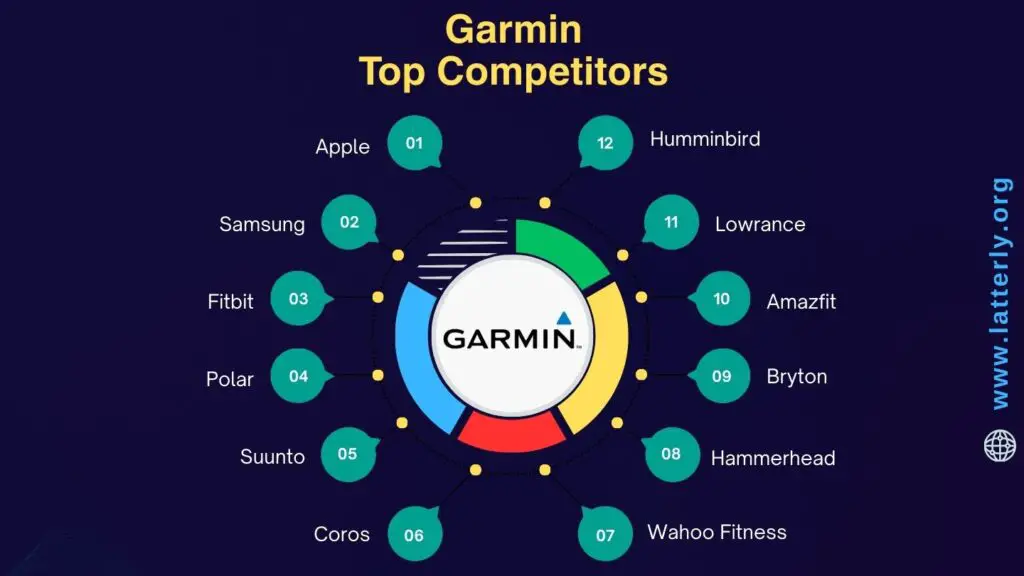
Top 12 Garmin Competitors and Alternatives
Apple
Apple remains a dominant force in wearables, especially with the Apple Watch family that blends health, fitness, and smart features. The brand draws users who prioritize seamless smartphone integration and polished software. With Apple Watch Ultra targeting outdoor and endurance buyers, Apple increasingly overlaps with Garmin’s higher end segments.
- Strong product lineup covers everyday users to adventurers, including Apple Watch SE, Series, and Ultra models with rugged builds and enhanced GPS performance.
- Deep ecosystem integration with iPhone, Apple Health, Fitness+, and App Store makes the experience cohesive, convenient, and highly extensible.
- Advanced health features such as ECG, heart rhythm notifications, SpO2 readings, and detailed sleep tracking appeal to wellness focused consumers.
- Robust navigation options with dual frequency GPS on Ultra, downloadable maps via third party apps, and reliable location accuracy in urban environments.
- Premium materials, bright displays, and fluid interfaces create a polished user experience that feels intuitive during workouts and daily life.
- Safety tools like Fall Detection, Crash Detection, and Emergency SOS provide peace of mind for runners, cyclists, and hikers.
- Users consider Apple an alternative to Garmin when smart features, messaging, and app compatibility matter as much as sports metrics.
- Regular software updates extend device longevity, adding training features, improved routing, and new watch faces over time.
Samsung
Samsung’s Galaxy Watch line targets Android users who want a balanced mix of fitness tracking and smartwatch capabilities. The brand is known for vivid AMOLED screens and solid health sensors. With Wear OS and tight Galaxy ecosystem ties, Samsung competes strongly in everyday fitness and lifestyle use.
- Galaxy Watch models offer multi band GPS, heart rate monitoring, body composition analysis, and ECG in select regions for comprehensive health tracking.
- Wear OS delivers a broad app ecosystem, including popular fitness and mapping apps that extend native capabilities.
- Bright, high resolution displays enhance map readability, workout metrics, and safety alerts in changing light conditions.
- Integration with Galaxy phones, Buds, and SmartThings simplifies notifications, music control, and device handoffs during training.
- Appeals to users choosing Samsung over Garmin when rich smartwatch features, voice assistants, and mobile payments are priorities.
- Training profiles cover running, cycling, swimming, HIIT, and gym modes, with auto detection for common activities.
- Competitive pricing and frequent promotions make the devices accessible, especially for Android centric households.
- Continuous software improvements bring better battery management, sleep coaching, and recovery insights to support long term wellness.
Fitbit
Fitbit remains a household name in approachable fitness wearables with strong sleep and wellness insights. The brand caters to users who value simplicity, lightweight designs, and actionable guidance. With Google integration, Fitbit bridges everyday health tracking and smartwatch convenience.
- Product range spans trackers and smartwatches, including Charge, Versa, and Sense lines, offering GPS, heart rate, and stress monitoring features.
- Fitbit Premium adds guided programs, readiness scores, and deeper analytics that help users interpret data without expert knowledge.
- Sleep tracking is a standout, with detailed staging, snore detection on select models, and coaching recommendations that improve habits.
- Easy to use app and friendly UX appeal to beginners and casual athletes, making Fitbit a common alternative to Garmin for simplicity.
- Battery life is solid across trackers, and light form factors make all day wear comfortable for step counting and workouts.
- Integration with Google services, Android notifications, and contactless payments enhances day to day practicality.
- Community challenges and badges encourage consistency, offering motivation beyond raw metrics and charts.
- Value oriented pricing brings GPS and health features to more budgets, though advanced training tools are lighter than Garmin’s.
Polar
Polar is respected for sports science leadership, with watches and sensors trusted by coaches and endurance athletes. The company focuses on training load, recovery, and heart rate accuracy across wrist and chest strap products. Its ecosystem centers on Polar Flow, a robust platform for analysis and planning.
- Devices like Grit X, Vantage, and Pacer families deliver strong GPS, barometric altimeters, and durable designs for outdoor training.
- Training Load Pro and Recovery Pro provide detailed strain and rest guidance, aligning workouts with physiology and goals.
- Polar pioneered features like wrist based Running Power, giving runners advanced insights without extra pods on compatible models.
- H10 and Verity Sense sensors are highly regarded for heart rate accuracy, pairing easily with watches, bike computers, and apps.
- Polar Flow offers in depth charts, route planning, and coaching tools, making it a serious alternative to Garmin Connect.
- Athletes consider Polar when they want evidence based metrics, clear guidance, and a less smartwatch heavy experience.
- Battery life supports long runs and ultras, while lightweight builds maintain comfort for daily training.
- Competitive pricing across tiers helps athletes find focused performance tools without paying for unrelated features.
Suunto
From its Finnish roots, Suunto is known for rugged multisport and adventure gear that excels outdoors. The brand balances durability, practical design, and dependable navigation. With strong battery life and clean interfaces, Suunto appeals to hikers, mountaineers, and endurance athletes.
- Watches like Suunto Vertical and Suunto 9 Peak Pro bring offline maps, dual band GPS on select models, and barometric altimeters for accurate elevation.
- Long endurance battery profiles support multi day treks, races, and expeditions with power saving strategies.
- Suunto app provides route planning, heatmaps, and training analysis, integrating with Strava, Komoot, and TrainingPeaks.
- Rugged builds with titanium and sapphire options withstand harsh conditions, making them competitive with Garmin’s adventure lines.
- Navigation is a highlight, with breadcrumb routing, waypoints, and turn alerts that work reliably away from cellular coverage.
- Users choose Suunto when they want minimalistic interfaces, solid mapping, and durable hardware without heavy smartwatch features.
- Dive computers and compasses extend the brand’s credibility in technical environments beyond running and cycling.
- Regular firmware updates refine GPS performance, add sport modes, and improve route handling for real world use.
Coros
Coros has carved out a loyal following with ultra long battery life and athlete centric design. The company partners with elite runners and climbers to refine features that matter on the mountain and trail. Its lineup emphasizes value and performance without bloated software.
- Watches like Apex, Vertix, and Pace focus on endurance, offering exceptional battery life and reliable dual frequency GPS on select models.
- EvoLab training metrics track fatigue, fitness trends, and race predictions, delivering insights comparable to higher priced competitors.
- Lightweight builds with strong durability suit long races and daily wear, providing comfort across training blocks.
- Offline maps and breadcrumb navigation on supported models keep routes accessible, with clear screen layouts for quick glances.
- Coros app is clean and fast, integrating with Strava and coaching platforms for seamless data sharing.
- Users pick Coros over Garmin for simpler menus, predictable performance, and impressive stamina between charges.
- Frequent feature updates add sport modes and analytics, demonstrating a community driven roadmap.
- Compelling pricing undercuts many premium watches, bringing high end metrics to more athletes.
Wahoo Fitness
Wahoo is a leader in cycling technology with a complete ecosystem that spans bike computers, trainers, and sensors. The ELEMNT series competes directly with Garmin Edge devices for road, gravel, and indoor training. Its streamlined setup and app driven configuration win fans who want less friction.
- ELEMNT Bolt and Roam deliver clear navigation, structured workouts, and reliable GPS, packaged in aerodynamic, easy to mount designs.
- KICKR smart trainers and accessories create immersive indoor setups, integrating with SYSTM training and third party platforms.
- Companion app simplifies configuration, data fields, and route syncing, reducing on device menu complexity.
- Strong integrations with Strava, TrainingPeaks, Komoot, and power meters make Wahoo a plug and play alternative to Garmin.
- Turn by turn directions, Summit segments, and rerouting keep rides on track without constant phone reliance.
- LED indicators and tactile buttons provide glanceable cues and reliable control with gloves or rain.
- Wahoo sensors for heart rate, cadence, and speed build a cohesive system that is easy to pair and maintain.
- Riders choose Wahoo for intuitive workflows, stable firmware, and focused cycling feature sets that avoid overload.
Hammerhead
Hammerhead has disrupted cycling computers with its Karoo platform that emphasizes mapping and a smartphone like interface. The brand is praised for high resolution screens and responsive routing. Backed by SRAM, Hammerhead iterates quickly to serve performance and adventure cyclists.
- Karoo devices use an Android based system, enabling rich maps, rapid reroutes, and app like interactions that feel modern.
- Crystal clear touch displays improve readability of climbs, cues, and power targets, even under bright sun.
- Climber and route intelligence features anticipate gradients and help riders pace efforts on unfamiliar terrain.
- Frequent over the air updates add integrations, data fields, and navigation improvements, keeping the devices fresh.
- Open platform supports ANT+ and Bluetooth sensors for power, cadence, heart rate, and radar, offering broad compatibility.
- Cyclists consider Hammerhead over Garmin when map centric riding, UI polish, and fast rerouting are top priorities.
- Strava Live Segments and training app sync support structured intervals and race day execution.
- Robust mounting and build quality handle gravel and weather, maintaining performance in tough conditions.
Bryton
Bryton delivers budget friendly cycling computers that still pack navigation and training features. The brand is popular with value oriented riders who want simplicity and long battery life. Its Rider series competes with midrange Garmin Edge models on features and price.
- Rider computers offer turn by turn navigation, offline maps on select units, and reliable GPS tracking for road and gravel.
- Battery life is a strength across the range, supporting long weekends and endurance rides without frequent charging.
- Affordable pricing lowers the barrier to entry, making Bryton an attractive alternative to Garmin for new and intermediate cyclists.
- ANT+ and Bluetooth support covers power meters, cadence, speed, and heart rate sensors from major brands.
- Bryton Active app handles route syncing, activity uploads, and customization with minimal setup time.
- Clear, no nonsense interfaces prioritize essential data pages, reducing distractions during training.
- Weather resistance and sturdy mounts suit year round commuting and adventure riding.
- Regular firmware updates add metrics, page layouts, and navigation tweaks that extend device value.
Amazfit
Amazfit, from Zepp Health, focuses on high value wearables with long battery life and broad sport modes. The brand serves casual athletes who want attractive designs and essential metrics at accessible prices. Its lineup includes the GTR, GTS, and T-Rex families for lifestyle and outdoor use.
- Excellent battery life across most models reduces charging hassle, supporting multi day trips and consistent sleep tracking.
- Built in GPS, SpO2, heart rate, and stress scoring deliver well rounded wellness features for everyday training.
- Zepp app provides clean dashboards, watch face customization, and integrations with popular fitness platforms.
- Rugged T-Rex models offer military standard durability, making them appealing for hiking and casual adventure.
- Attractive pricing positions Amazfit as a practical Garmin alternative for users who do not need advanced performance analytics.
- Bright AMOLED screens on many models improve outdoor readability and interface fluidity.
- Wide sport mode coverage supports running, cycling, pool swims, and gym activities with simple summaries.
- Lightweight designs and varied styles suit office wear and workouts, blending fitness and lifestyle needs.
Lowrance
Lowrance is a marine electronics specialist that competes with Garmin in fish finders and chartplotters. The brand is popular with freshwater and inshore anglers who demand accurate sonar and charting. Its product lines range from entry to tournament grade systems.
- HDS and Elite series units deliver high resolution sonar, mapping, and networking, suitable for serious fishing setups.
- ActiveTarget live sonar provides real time views of fish movement and structure, aiding precise presentations.
- C-MAP chart integration offers detailed coastal and inland coverage, with route planning and depth shading tools.
- Rugged displays and intuitive UIs withstand tough environments, salt spray, and vibration on small craft.
- Anglers choose Lowrance over Garmin when they prioritize live sonar interpretation and specific mapping packages.
- Networking options support NMEA 2000 sensors, trolling motors, and radar on advanced installations.
- Regular software updates refine target separation, mapping layers, and waypoint management for practical gains.
- Accessory ecosystem includes transducers, mounts, and networking hubs that scale from kayaks to bass boats.
Humminbird
Humminbird is a powerhouse in fish finding technology with strong brand loyalty in North America. The company is known for MEGA Imaging and integration with Minn Kota trolling motors. Its chartplotters compete head to head with Garmin on inland lakes and shallow water.
- HELIX and SOLIX units deliver MEGA Side and Down Imaging for exceptionally detailed structure views and target separation.
- LakeMaster charts provide high resolution inland mapping, depth contours, and water level adjustments for precise navigation.
- One-Boat Network integrates Humminbird with Minn Kota and Talon, enabling spot lock, follow the contour, and advanced boat control.
- Clear menus and programmable keys support quick access to sonar views and waypoints during fast paced fishing.
- Anglers consider Humminbird when they want superior imaging clarity and tight trolling motor integration versus Garmin setups.
- Rugged builds handle impacts and weather, with bright screens readable in full sun and spray.
- Networking supports multiple screens, Ethernet sharing, and accessories across larger rigs.
- Frequent firmware enhancements improve mapping layers, sonar tuning, and usability, preserving value across seasons.
Top 3 Best Alternatives to Garmin
Apple
Apple Watch stands out for its polished smartwatch experience, seamless iPhone integration, and extensive health features. The Ultra models add rugged build quality, dual frequency GPS, and longer battery life for outdoor use.
Key advantages include a rich app ecosystem, bright and responsive display, ECG and safety features like fall and crash detection. It suits iPhone users who want a daily smartwatch that excels at notifications and lifestyle features, while still delivering reliable fitness and training tools.
Coros
Coros is known for exceptional battery life, strong GPS accuracy, and athlete focused design at competitive prices. Models like Pace, Apex, and Vertix offer long runtimes, quick satellite lock, and durable hardware with simple controls.
Key advantages include native wrist based running power, EvoLab training analytics, efficient sync, and capable breadcrumb navigation on higher tier watches. It suits endurance athletes, ultrarunners, and trail explorers who prioritize long battery life, straightforward operation, and high value performance.
Polar
Polar stands out for science based coaching, accurate optical heart rate, and balanced recovery guidance. The Polar Flow platform connects Training Load Pro, Sleep Plus Stages, and Nightly Recharge into clear, actionable insights.
Key advantages include trusted HR tracking, structured workouts, and excellent chest strap compatibility for precision. It suits data driven runners and triathletes who want deep training and recovery metrics, strong multisport support, and guidance that keeps workouts aligned with long term goals.
Final Thoughts
There are many strong Garmin alternatives, each with clear strengths in battery life, training analytics, navigation, or smart features. Apple, Coros, and Polar demonstrate how different priorities reshape the experience and value.
The best choice depends on what you need most, whether that is all day smarts, ultra endurance battery, or science backed coaching. Define your goals, then match the device to your budget, preferred ecosystem, and training style.
Any of these brands can support serious fitness progress and everyday health tracking. Focus on comfort, usability, and features you will rely on weekly, and you will choose with confidence.
