
Olipop turned a retro soda idea into a fast-growing functional beverage brand after its 2018 founding, propelled by precise, culture-led marketing. The company pairs nostalgic flavor profiles with a prebiotic formula, then uses storytelling that bridges health science and classic soda joy. Distribution expanded from natural retailers to national chains, while digital demand pushed repeat purchases through subscriptions and retail pickups.
Investors and retailers backed the momentum as stores increased and velocities improved across mainstream grocery. Industry analysts estimate Olipop’s 2024 net revenue at approximately 250 million dollars, given multi-year triple-digit growth and expanded nationwide availability. The team credits brand design, flavor innovation, and community-driven content as the engine that converts trial into loyalty.
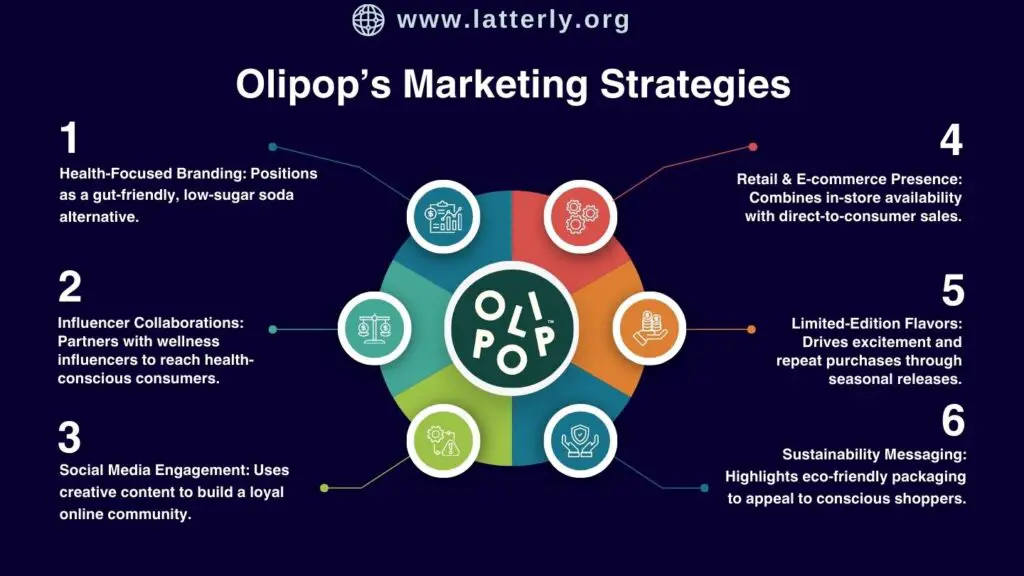
This article maps the Olipop marketing framework across positioning, audience, channel execution, and measurement. The approach blends nostalgic branding with prebiotic education to build a sticky community that trades soda calories for fiber-forward refreshment.
Core Elements of the Olipop Marketing Strategy
In a crowded beverage aisle, category winners anchor on a memorable promise, then scale it through disciplined execution. Olipop focuses on a simple message: real soda taste with digestive health benefits. The strategy fuses classic Americana design with a modern functional claim, creating clear shelf interruption and strong digital recall.
Olipop organizes growth around a small set of controllable levers that compound across channels. The company codifies these levers as repeatable plays for launches, retail expansions, and seasonal moments.
Go-to-Market Pillars
- Positioning: Retro soda taste paired with prebiotic fiber, framed as a switch from legacy cola to a better-for-you option.
- Product-led storytelling: Flavor nostalgia upfront, OLISMART prebiotic blend explained simply, benefits reinforced through credible voices.
- Omnichannel reach: DTC subscriptions, major grocers, convenience growth, and quick-commerce for impulse occasions.
- Creative system: Distinct can design, color-coded flavors, and playful copy that travels across retail, social, and OOH.
- Retail excellence: Display wins, cold-box placement, and retail media to lift velocity during resets and promotions.
- Community engine: Micro-influencers, dietitians, and creators who normalize soda swapping and share daily habit content.
Execution depends on consistent launch playbooks and tight feedback loops with trade partners. The brand tests flavors in DTC and limited grocers, then scales nationally once velocity clears threshold. Retail media and shopper incentives support each wave, while creative refreshes keep discovery high.
- Estimated 2024 distribution in 30,000+ retail doors across Walmart, Target, Kroger, Whole Foods, and Publix.
- Repeat-focused DTC with bundles and subscriptions that feature variety packs and discovery kits.
- Measured lift from retail media on Instacart and Walmart Connect during seasonal promotions.
- Estimated 2024 net revenue near 250 million dollars, reflecting strong velocities and door expansion.
The core playbook creates a consistent path from awareness to trial to repeat, turning flavor curiosity into habitual swaps. This disciplined structure keeps the brand distinct while scaling efficiently in a competitive functional soda category.
Target Audience and Market Segmentation
Consumers continue to reduce sugar while seeking indulgent taste, creating a new lane for functional sodas. Olipop targets shoppers who want classic cola moments without the downside, then segments messaging by need state and channel. The brand blends health, flavor, and fun to fit both pantry stock-ups and on-the-go treats.
Segmentation prioritizes motivations over broad demographics to build precise creative and retail plans. The framework ties flavor selection, education depth, and promotional cadence to each group’s purchase triggers.
Primary Segments and Need States
- Gut-health seekers: Wellness-oriented shoppers who value fiber intake and ingredient transparency, often shopping natural and premium grocers.
- Better-for-you switchers: Mainstream soda drinkers reducing sugar who respond to taste-first messages and price promotions.
- Nostalgia enjoyers: Consumers drawn to root beer, cola, and cream soda flavors, motivated by retro cues and limited editions.
- Active lifestyle: Fitness-minded buyers who treat Olipop as a post-workout or afternoon pick-me-up with functional benefits.
- Family moderators: Parents managing household sugar who stock multipacks and favor reliable flavors and promotions.
Personas inform channel choices and shelf strategy. Gut-health shoppers meet longer-form education in email and landing pages. Switchers and nostalgia enjoyers encounter taste-forward creative in paid social, store displays, and cold-box placements that drive impulse buys.
- Message matrix maps flavor nostalgia to top-of-funnel and benefit education to mid-funnel retargeting.
- Pack sizes vary by segment: single cans for trial, 12-packs for families, and variety packs for explorers.
- Price sensitivity indexed higher for switchers, suggesting frequent temporary price reductions and multipack deals.
- Education depth increases for gut-health seekers, reinforced with creator explainers and RD content.
Functional soda continues to outpace conventional soft drinks, with specialty retail data indicating strong double-digit category growth into 2024. Olipop’s segmentation ensures messages resonate across motivations, which increases conversion and repeat across both DTC and mass retail.
Digital Marketing and Social Media Strategy
Attention shifts toward short-form video and community-powered storytelling, favoring brands with clear visual codes. Olipop leans into colorful cans, flavor reveals, and simple benefit framing that converts in seconds. Paid and organic work together to move customers from curiosity to cart across retail and DTC.
The team aligns creative testing with platform algorithms and retail moments. Content scales through a modular system that swaps flavors, hooks, and benefit lines without losing brand identity.
Platform-Specific Strategy
- TikTok: Creator-led taste tests, retro skits, and swap challenges that highlight flavor and fiber in under 10 seconds.
- Instagram: Reels for launches, carousels for ingredient education, and Stories for polls, giveaways, and retail callouts.
- YouTube Shorts: Snackable education featuring dietitian explainers and behind-the-scenes flavor development.
- Email and SMS: Welcome flows, restock nudges, and flavor drops tied to limited runs and retail exclusives.
- Retail media: Instacart, Walmart Connect, and Amazon ads that capture high-intent shoppers and lift on-shelf velocity.
Performance management relies on disciplined experimentation. Creative variants test hooks like taste-first versus benefit-first, with weekly roll-ups to shift spend. Landing pages mirror ad promises, reducing friction and supporting fast add-to-cart decisions.
- Always-on content calendar with weekly flavor spotlights and monthly education themes.
- Paid social optimizes toward video views for reach, then retargets on clicks and conversions near retail promos.
- Shoppable links route users to the nearest retailer, DTC, or quick-commerce based on inventory and location.
- UTM hygiene and post-purchase surveys attribute influence across channels to refine budget allocation.
The digital system turns colorful storytelling into measurable demand, matching platform patterns while reinforcing taste and function. This approach protects efficiency and sustains momentum as new flavors and retail doors enter the mix.
Influencer Partnerships and Community Engagement
Creator-led discovery defines modern beverage adoption, especially for habitual items like soda. Olipop builds trust through credible voices who make healthy swaps feel normal and enjoyable. The brand scales micro and mid-tier creators, then layers select marquee partners for cultural reach.
Partnerships follow a test-and-expand model with clear attribution and evergreen rights. Community programs extend online energy into real-world sampling and gatherings that encourage repeat behavior.
Influencer Tiers and Formats
- Registered dietitians and health educators: Simple gut-health explainers, label walkthroughs, and myth-busting content.
- Lifestyle and nostalgia creators: Retro taste skits, flavor rankings, and fridge restocks that spotlight packaging and convenience.
- Fitness and wellness voices: Post-workout routines and afternoon pick-me-up clips featuring low sugar and fiber callouts.
- Local micro-creators: Store-find videos and neighborhood events that drive sampling and retail velocity.
- Affiliate partners: Trackable codes, bundles, and recurring commissions that reward sustained advocacy.
Community activation connects content to physical experiences. Store samplings and pop-ups convert curiosity into trial, while run clubs and campus ambassadors drive word of mouth. Limited flavor drops and co-created merch reward loyal fans and keep social buzz steady.
- Structured briefs encourage authenticity while protecting key claims and brand tone.
- Creator whitelisting extends top-performing content into paid, improving click-through and purchase intent.
- Event playbook combines sampling, geo-targeted ads, and retailer partnership funding for efficient lift.
- Community KPIs track cost per trial, repeat rates among code users, and geographic velocity gains post-event.
The influencer and community engine turns advocates into a distributed media network that educates, entertains, and sells. This sustained grassroots presence deepens trust and keeps Olipop visible at the exact moments shoppers consider a soda swap.
Product and Service Strategy
Olipop positions its portfolio at the intersection of nostalgic flavor and clinically informed function, creating a clear point of difference in soda. The brand treats formulation as a growth engine, refining taste to compete head-on with legacy colas while delivering measurable fiber. Strong retail velocities and repeat purchase rates reflect a product system built around flavor variety, digestive benefits, and convenient access.
The product architecture prioritizes flavor authenticity, digestive wellness, and clean-label standards that withstand scrutiny. This structure gives shoppers a simple promise, better-for-you soda that tastes familiar and supports gut health. Consistent delivery across flavors reinforces trust and expands household penetration with each additional variety.
Flavor Architecture and Formulation
- Signature build features 9 grams of prebiotic fiber per 12-ounce can, less than 5 grams of sugar, and 35 calories or fewer.
- Hero flavors replicate classics, including Vintage Cola, Classic Root Beer, Orange Squeeze, and Strawberry Vanilla, supporting taste-first trial and trade-up.
- Functional ingredients include chicory root, Jerusalem artichoke, nopal cactus, and marshmallow root, aligned with a clean-label positioning.
- Rotating limited editions create urgency, stimulate social chatter, and inform permanent-line decisions through measured sell-through and review mining.
- Quality control and sensory panels maintain flavor parity with traditional soda, safeguarding repeat purchase and channel expansion.
Packaging supports both discovery and pantry loading with singles for trial, 4-packs for weekly use, and 12-packs for online replenishment. Retro-inspired design cues signal soda credentials, while clear fiber and sugar callouts convey function at shelf distance. Variety packs reduce decision friction, increase basket size, and introduce shoppers to underpenetrated flavors.
Services amplify the product’s value through education, flexible fulfillment, and personalization. A content-led approach answers common questions about fiber, sweeteners, and digestive comfort, reducing perceived risk during trial. Subscription tools simplify reorders and encourage flavor exploration without commitment fatigue.
Services, Education, and Subscription Experience
- DTC subscription offers estimated 10 to 15 percent savings, flexible delivery windows, and easy flavor swaps to maintain novelty.
- Site content and email series explain prebiotics, gut health basics, and serving contexts, improving product understanding and usage frequency.
- Bundle builder and quiz reduce choice overload, mapping taste preferences to flavor recommendations that lift conversion and retention.
- Proactive customer support, fast refunds, and delivery tracking protect satisfaction, a critical driver of repeat for functional beverages.
- CRM flows segment users by flavor affinity and order cadence, surfacing timely restock prompts and limited edition alerts.
This combined product and service approach converts curiosity into habit, strengthening loyalty as the category matures. Olipop’s flavor-first, fiber-forward system continues to differentiate within crowded shelves and deliver sustainable retail performance.
Marketing Mix of Olipop
Olipop’s marketing mix balances disciplined retail execution with data-informed digital tactics that compound awareness and velocity. The brand treats product quality and flavor cadence as the primary levers, then amplifies them through targeted pricing and promotions. Distribution and communication synchronize to reduce trial barriers while building premium perception.
The product component centers on authentic taste, measurable fiber, and clean ingredients that withstand shopper comparison. Consistent flavor quality reduces regret, a key retention driver in functional categories. Packaging and messaging reinforce soda cues, translating quickly across national retail environments and online marketplaces.
Olipop aligns price with a premium-yet-accessible strategy, typically positioned above conventional soda and below many kombuchas or probiotic tonics. Strategic discounts appear in short windows, protecting brand equity while supporting key resets and seasonal pushes. This approach maintains margin health and funds sustained media support.
4Ps Summary and Strategic Levers
- Product: Nostalgic flavors, 9g fiber, low sugar; seasonal drops to generate demand spikes and inform future mainline decisions.
- Price: Everyday single-can pricing typically ranges from $2.49 to $2.99, with controlled TPRs during feature-display periods.
- Place: Estimated 30,000 plus retail doors in 2024, spanning Target, Walmart, Kroger, Whole Foods, Publix, and Costco rotations.
- Promotion: Blended mix across retail media, paid social, influencer seeding, PR, and sampling that maps to retailer priorities.
- People and Process: Field teams and broker partners manage planogram placement, cold-box access, and display execution at scale.
Place drives trial volume, with cold-box placement and secondary displays proving especially influential for flavored soda alternatives. Retailer partnerships prioritize category education, cross-merchandising with better-for-you snacks, and frequent shopper marketing programs. Data sharing with buyers strengthens reset arguments and unlocks incremental facings.
Promotional investment follows a balanced, performance-minded model that adapts to channel elasticity. Estimates for 2024 indicate a diversified split that limits risk and maximizes compounding awareness across platforms. Allocation flexes by season and flavor launch cadence.
- Retail media networks approximately 30 percent, including Walmart Connect, Roundel, Kroger Precision Marketing, and Albertsons Media Collective.
- Paid social around 25 percent across Meta and TikTok, optimized for new-to-brand reach and retailer locator actions.
- Influencer and creator programs near 15 percent, weighted to taste tests, recipes, and gut health explainers.
- Sampling and demos roughly 10 percent, concentrated around resets, new regions, and club rotations for rapid trial conversion.
- OOH and PR approximately 20 percent combined, used for flavor launches and market-level storytelling.
The resulting mix converts flavor innovation into sustained velocity, reinforcing Olipop’s leadership within the prebiotic soda set.
Pricing, Distribution, and Promotional Strategy
Olipop’s commercial engine balances premium pricing with wide distribution and high-intent promotions that drive fast household penetration. The brand prices for quality perception while ensuring accessible entry points across single cans, 4-packs, and online cases. Channel-specific promotions compress time to trial and improve repeat through timely reminders and localized storytelling.
Pricing signals value through taste and function while protecting margin for media and trade. Single cans typically range from $2.49 to $2.99 in conventional retail, with 4-packs often positioned between $7.99 and $9.99. DTC cases commonly range from $35.99 to $39.99 for 12-packs, with subscriptions offering estimated 10 to 15 percent savings.
Distribution strategy focuses on national availability, cold placement, and secondary displays that elevate impulse conversion. Retail doors expanded substantially since 2021, supported by strong velocities and collaborative planning with buyers. The 2024 footprint, estimated above 30,000 locations, provides dependable coverage across grocery, mass, natural, and select club rotations.
Retail Footprint and Channel Priorities
- Key retailers include Target, Walmart, Kroger, Albertsons, Whole Foods, Publix, Sprouts, and periodic Costco club rotations.
- Regional strengths persist in California, Texas, and the Southeast, supported through community events and localized creator partnerships.
- Natural distributors such as UNFI and KeHE enable depth in independents, while direct partnerships manage national planograms.
- Convenience pilots expand single-can trial, testing price thresholds and package formats near front-of-store coolers.
- Cold-box and endcap displays accelerate takeoff during resets, sustaining velocity beyond introductory windows.
Promotions combine retailer-funded trade with performance-led media that narrows the path from awareness to purchase. Temporary price reductions and digital coupons reduce friction for first purchase, while sampling translates curiosity into confident adoption. Coordinated campaigns maintain brand consistency across store formats and digital channels.
Offer mechanics apply discipline, balancing brand guardrails with shopper excitement. Short, high-visibility events compress trial while protecting premium perception across key accounts. This framework sustains growth and supports expansion into new regions and channels.
Campaigns and Offer Mechanics
- Feature and display programs with BOGO or 2-for promotions during seasonal flavor drops to spur incremental baskets.
- Retail media bundles combining search, on-site display, and off-site social retargeting that drive locator clicks and store visits.
- DTC welcome offers between 10 and 20 percent, paired with quizzes and variety packs that streamline first purchase decisions.
- Referral and loyalty incentives that reward repeat orders, increasing LTV through predictable reorders and flavor exploration.
- Geo-targeted OOH near priority doors, supporting endcap runs and cold-box expansions with neighborhood-level awareness.
The combined pricing discipline, expansive distribution, and precise promotions deliver strong velocities and rising household penetration, supporting an estimated 2024 revenue range of 220 to 280 million dollars.
Brand Messaging and Storytelling
In a carbonated soft drink market filled with performance claims and bold flavors, Olipop elevates story before science. The brand positions itself as a retro soda revival that tastes familiar, yet supports digestive wellness. Messaging centers on the promise of soda joy with functional benefits, rather than clinical nutrition talk. This approach keeps taste as the hero, while weaving fiber and botanicals into a relatable narrative.
Olipop’s core line communicates clear proof points that aid decoding on crowded shelves. Cans highlight 2 to 5 grams of sugar, approximately 9 grams of fiber, and botanicals in the proprietary OLISMART blend. The company reinforces trust with plain-language copy, verified claims, and responsible comparisons to legacy soda. The result is an accessible wellness story that reduces friction for first-time purchasers and increases brand confidence.
Olipop structures its messaging engine around distinct storytelling pillars. These pillars shape packaging, social content, and retail signage, creating a cohesive experience across touchpoints.
Narrative Pillars and Copy Strategy
- Taste-first promise: Headlines prioritize flavor nostalgia, then support benefits with fiber amounts and ingredient transparency.
- Accessible science: Simple language explains prebiotics, gut microbiome, and digestive support without medicalized jargon or overclaims.
- Everyday swap: Side-by-side sugar comparisons against conventional sodas frame Olipop as a practical daily alternative.
- Founder credibility: Origin stories from 2018 emphasize long-form R&D, lending authenticity to a fast-growing category.
- Community voice: User quotes, recipe pairings, and retailer reviews validate taste and repeatability across occasions.
Visual storytelling amplifies the narrative with consistent cues across media and retail. Vintage typography, soda shop color palettes, and heritage flavor names strengthen the brand’s throwback aura. Photography favors tabletop settings, glassware, and textures that suggest fountain-service rituals. The design language invites shoppers to reconnect with familiar soda memories while trying a healthier option.
Packaging choices reinforce this look-and-feel with high legibility and strong shelf blocking. Design hierarchy pushes flavor names, then fiber and sugar metrics, then OLISMART as a supporting badge. Seasonal drops and limited editions add freshness without drifting from the core identity. This balance sustains recognition while enabling news cycles that spark incremental trials in retail and online.
Packaging and Visual Language
- Front-of-can clarity: Flavor first, then sugar and fiber metrics, then functional blend callouts for fast shelf reads.
- Consistent motifs: Pastel hues, cream backdrops, and retro iconography connect across packs, shippers, and digital ads.
- In-store theater: Endcaps, stack displays, and cooler clings mirror the can design to lift stopping power and conversion.
- Limited releases: Time-bound flavors drive urgency while retaining the same typography grid and color system.
- Shipper storytelling: Secondary packaging repeats proof points and taste cues to educate quickly in high-traffic aisles.
Olipop’s storytelling earns trust because it speaks like a soda brand first and a wellness brand second. The consistent taste-first narrative reduces perceived trade-offs and fuels trial, while simple science builds credibility. That mix helps the company scale distribution and turn nostalgia into a modern, repeatable purchase habit.
Competitive Landscape
The better-for-you soda set has intensified as consumers seek low sugar without sacrificing flavor. Olipop operates against direct prebiotic rivals, natural zero-sugar sodas, sparkling waters, kombucha, and legacy cola giants. Each competitor group brings distinct strengths in pricing, reach, or cultural fame. Olipop competes through flavor nostalgia, fiber-led functionality, and strong velocities in natural and conventional grocery.
Direct prebiotic competitors, most notably Poppi, increased mainstream visibility through creator-led TikTok, mass retail, and bold fruit-led flavors. Natural soda players like Zevia leverage zero-calorie formulations and long-established shelf space. Sparkling water brands such as Spindrift and LaCroix defend occasion share with broad household penetration. Large CSD companies counter with Zero Sugar lines, heavy promotions, and unmatched distribution muscle.
Key dynamics shape category performance and set benchmarks for Olipop. Industry estimates suggest the U.S. better-for-you soda segment surpassed one billion dollars in 2024 retail sales. Public filings indicate Zevia generated roughly mid-100-million-dollar net sales in 2023, showing steady but modest growth. Analyst commentary and retailer data show rapid velocities for prebiotic sodas, with strong repeat rates in urban natural and conventional grocery.
Competitor Profiles and Differentiators
- Poppi: Aggressive social-led growth, mainstream fruit flavors, and broad big-box placement; estimated 2024 retail sales in the high hundreds of millions.
- Zevia: Zero-calorie positioning, long-tenured grocery presence, and multipack strength; price-effective but lighter on functional storytelling.
- Legacy CSDs: Coke, Pepsi, and Dr Pepper deliver unmatched promotions and distribution; Zero Sugar lines protect share through scale and price.
- Sparkling waters: Spindrift and LaCroix defend refreshment occasions; low sugar but limited soda nostalgia and functional cues.
- Kombucha players: Health-Ade and GT’s communicate fermentation benefits; higher tang narrows mass-market taste appeal.
Olipop’s defense centers on flavor credibility and benefits consumers can feel. The brand pairs classic profiles like Vintage Cola and Root Beer with fiber counts that resonate during label checks. Estimated 2024 distribution exceeds 25,000 doors, which supports trial and household penetration against entrenched rivals. This positioning gives Olipop a defendable niche that balances taste, function, and availability.
Strategic Response to Market Pressures
- Price-pack architecture: Singles, 4-packs, and club formats protect value perception across channels and missions.
- Velocity focus: Core SKUs anchor sets, while limited flavors add incremental news without fragmenting supply.
- Selective promotions: TPRs and loyalty deals target lift without damaging premium cues or long-term price integrity.
- Education at shelf: Simple benefit callouts counter heavy promo noise from legacy cola sets.
- Social proof: Ratings, reviews, and community content build confidence for shoppers trading in from high-sugar soda.
Olipop’s competitive strength grows from disciplined taste-first marketing and a clear function story. The brand trades on nostalgia while delivering measurable benefits, helping it carve share even as larger players intensify promotions. This balance positions Olipop to hold pricing power and earn repeat in a crowded refreshment landscape.
Retail Partnerships and Omnichannel Execution
Winning in beverages requires smart placement across grocery, mass, club, and digital storefronts. Olipop scales through strategic retailer partnerships that align flavor sets, formats, and promotions with each channel’s mission. The company combines strong brick-and-mortar visibility with a responsive DTC and marketplace footprint. This blend supports trial, repeat, and data-driven learning across the full customer journey.
Distribution expanded rapidly in 2023 and 2024, with placements across Target, Walmart, Kroger, Whole Foods, Publix, H-E-B, and regional banners. Club packs and seasonal variety cases entered warehouse chains, improving household penetration among family buyers. Amazon and DTC provide nationwide access for flavor discovery and subscriptions. Based on accelerated door growth and steady velocities, 2024 retail sales are reasonably estimated to surpass 250 million dollars.
Channel execution follows a clear framework that ties formats and messaging to trip types. Retailers receive laddered price-packs, disciplined assortment, and education-forward merchandising. Digital channels capture higher-intent shoppers and long-tail flavor demand. The model balances scale and intimacy without diluting brand distinctiveness.
Placement, Assortment, and Merchandising
- Assortment logic: Core flavors secure everyday shelf; limited editions rotate to spark discovery without overextending SKU count.
- Pack strategy: Singles drive trial in coolers; 4-packs anchor pantry loading; club variety packs reach value-driven households.
- In-store theater: Endcaps, aisle blades, and shippers repeat fiber and sugar proof points to convert browsing shoppers.
- Regional tailoring: Retailers receive top-flavor mixes informed by velocity data and local taste preferences.
- Measured promotion: Targeted TPRs, loyalty offers, and demos stimulate trial while protecting premium positioning.
Digital storefronts deepen engagement and capture data that informs retail decisions. The brand’s website and Amazon presence offer flavor quizzes, bundles, and subscribe-and-save options. Reviews and Q&A sections provide social proof and education at the moment of consideration. Insights flow back into retailer presentations and assortment resets.
DTC and Marketplace Growth Levers
- Subscription value: Flexible delivery windows and bundle discounts raise repeat rates and stabilize demand planning.
- Trial kits: Mixed packs reduce risk for first-time buyers and increase cross-flavor attachment.
- Performance media: Search, PDP optimization, and retail media networks lift findability and conversion across key retailers.
- Ratings and reviews: High-volume feedback loops surface winning flavors and inform future launches.
- Geo-targeting: Store locator and localized ads direct shoppers to nearby retailers, supporting omnichannel lift.
Olipop’s omnichannel system turns distribution into a marketing engine. Smart assortment, consistent storytelling, and thoughtful promotions raise velocities while preserving brand equity. That discipline helps the brand win shelf space, sustain repeat, and expand availability without sacrificing identity.
Advertising and Communication Channels
In a crowded beverage aisle dominated by legacy budgets, efficient communication determines whether trial converts into habit and category penetration expands. OLIPOP unites nostalgic creative, precise retail media, and creator storytelling to outperform spendier competitors with measurable, incremental retail lift. The brand prioritizes channels that compress discovery to purchase, linking media to store availability, digital carts, and retailer-specific promotional calendars. Estimated 2024 retail sales above $300 million signal effective reach efficiency, sustained awareness, and strong return on creative assets across placements.
Media planning balances national visibility with local retail activation, ensuring flavor availability aligns with impressions and promotional windows. Creative refresh cycles mirror seasonal displays and feature ads tailored to regional preferences, retailer partners, and flavor distribution footprints. This disciplined approach builds frequency without fatigue, strengthening recall exactly where purchase decisions occur most often.
Media Mix and Channel Allocation
- Paid social and creator amplification represent an estimated 35 to 45 percent of spend, optimized toward short-form video with retail-tagged calls-to-action and geo-qualified audiences.
- Retail media networks capture approximately 25 to 30 percent, prioritizing sponsored products, seasonal features, and basket-building promotions across Walmart Connect, Amazon, Instacart, and Kroger Precision Marketing.
- Connected TV and streaming video receive about 10 to 15 percent, focusing on indexed audiences like better-for-you shoppers and households purchasing sparkling water and diet beverages.
- Out-of-home near retail clusters accounts for roughly 5 to 8 percent, emphasizing geo-fenced panels within two miles of high-velocity doors and high-frequency commuting corridors.
- Audio and podcasts round out 5 to 8 percent, using creator reads tied to unique links and retailer-specific promotional codes to verify attributable sales lift.
OLIPOP activates retail media platforms as primary conversion engines, linking product detail pages to coupons, store pickup, and suggested complementary items. Sponsored product placements secure top-of-search visibility during flavor and functional keyword bursts, while display units highlight limited editions and TPR windows. Incrementality studies typically indicate stronger ROAS ranges than social prospecting campaigns, reflecting lower-funnel intent and shopper-mode contexts at the point of decision.
Out-of-home and experiential tactics reinforce brand memory near stores, using tasting events, market takeovers, and sampling that supports on-shelf velocities. Audio placements drive captive attention and narrative depth, pairing nostalgic storytelling with gut health education and simple product claims. This integrated channel architecture ensures consistent reach where shoppers discover, evaluate, and buy, helping OLIPOP scale awareness into repeatable retail outcomes.
Sustainability, Innovation, and Technology Integration
Consumers increasingly expect clean labels, packaging responsibility, and credible science behind functional promises. OLIPOP structures innovation around prebiotics, low sugar, and scalable circularity improvements that resonate with ingredient-conscious shoppers. The brand pairs product science with modern commerce technology, delivering personalization, education, and loyalty without sacrificing operational efficiency.
Product development emphasizes fiber density, digestive support, and nostalgic flavors that satisfy cravings without excessive sugar. Packaging choices favor aluminum cans and reduced secondary materials, aligning with retailer sustainability scorecards and shopper expectations. Commerce technology centralizes data, enabling lifecycle messaging, retail availability cues, and service experiences that build long-term trust.
Product and Packaging Innovation
- Each 12-ounce can delivers 9 grams of prebiotic fiber and 2 to 5 grams of sugar, supporting better metabolic and digestive balance with familiar soda taste.
- The prebiotic blend sources chicory root, Jerusalem artichoke, and cassava fiber, aligning ingredient provenance with transparent supplier quality documentation and safety testing.
- Aluminum cans remain infinitely recyclable, while secondary packaging uses FSC-certified paperboard and soy-based inks to improve total material circularity and recoverability.
- Manufacturing partners implement water recapture, high-efficiency boilers, and line sanitization improvements, reducing energy intensity per case shipped against 2022 baselines.
- Limited-edition flavors validate demand through fast small-batch pilots, then scale into national rotations when velocities sustain target levels across six consecutive weeks.
Technology integration spans ecommerce, operations, and growth marketing, connecting the stack across Shopify, a CDP, and lifecycle platforms for email and SMS. Dynamic content introduces flavors based on browsing behavior, geographic distribution, and prior purchase recency, improving relevance without over-messaging subscribers. Retail cues appear within emails, enabling carting to Amazon, Instacart, or Walmart, which simplifies purchase for shoppers preferring existing retailer relationships.
Innovation governance aligns legal, regulatory, and scientific advisors to maintain claim accuracy and consumer safety while preserving creative expression. Cross-functional review processes standardize stability testing, sensory evaluation, and shelf-life protocols prior to broad commercialization. This balanced commitment to science, sustainability, and technology advantages OLIPOP in a category seeking credible function alongside beloved flavor experiences.
Omnichannel Strategy
Shopper journeys increasingly jump between digital inspiration and physical convenience, requiring consistent pricing logic, unified storytelling, and frictionless fulfillment. OLIPOP sells through national grocers, natural channels, ecommerce marketplaces, and a growing direct store, ensuring broad availability and flavor choice. The company coordinates promotions and inventory across channels, protecting brand equity while expanding reach into new households and baskets.
Distribution scale supports discovery and repeat, with expanded cold-box placements improving impulse conversion in high-traffic stores. Estimated 2024 availability spans more than 30,000 doors across Target, Walmart, Kroger, Whole Foods, Publix, and regional leaders. Strong shelf execution, endcaps, and secondary displays help translate awareness into velocities that outperform many better-for-you beverage benchmarks.
Path-to-Purchase Integration
- Store Locator integrates real-time retailer inventory feeds, enabling shoppers to filter flavors and confirm availability before driving, reducing friction for immediate trial.
- Shoppable posts and landing pages auto-detect retailer preferences, offering Amazon, Instacart, Walmart pickup, or direct checkout, depending on historical behavior signals.
- QR codes on cans link to flavor pages, recipes, dietary information, and add-to-cart buttons for top retailers, shortening discovery loops during consumption moments.
- DTC subscription bundles feature rotating variety packs and seasonal releases, boosting retention while insulating margins from volatile promotional calendars across retail.
- Same-day delivery partnerships convert impulse demand during media flights, using lightweight discounts and tags that attribute orders back to channel-level performance.
Retail media anchors omnichannel measurement, connecting ad exposure to carted items and repeat purchases within marketplace ecosystems. Store-level tactics such as digital shelf coupons, loyalty-card activations, and sampled cold cans create convertible moments near point of purchase. Coordinated price strategy protects perceived value, ensuring multipack deals and temporary reductions reinforce trial without training shoppers to wait for discounts.
Assortment harmonization reduces confusion across retailers, featuring core flavors with local favorites and occasional exclusives to excite high-frequency shoppers. Direct ecommerce fills discovery gaps with mixed packs and seasonal experiments, then signals winning flavors back to retail buyers. This omnichannel architecture compounds reach, velocity, and household penetration, reinforcing OLIPOP as a reliable choice wherever modern shoppers prefer to purchase.
Future Outlook and Strategic Growth
Functional soda continues expanding as consumers trade legacy colas for flavorful options with meaningful health benefits. OLIPOP targets responsible scale, balancing household penetration growth with distribution depth and margin stability across retailers. Estimated 2024 retail sales surpassing $300 million suggest growing category leadership and momentum against both conventional and better-for-you competitors.
Competitive pressure from incumbents and challenger brands will intensify, raising media prices and shelf-space thresholds. OLIPOP plans to advance science-backed differentiation, packaging efficiency, and retail partnerships that reward velocity and category expansion. International opportunities remain promising, with disciplined pilots likely preceding broader entry to protect focus and ensure operational readiness.
Strategic Priorities 2025–2027
- Expand distribution toward 40,000 doors, emphasizing geographic depth at Walmart, Target, Kroger, and Costco, supported through data-backed assortment and shelf adjacency improvements.
- Accelerate household penetration with multipacks, club formats, and incremental cold-box placements, translating higher in-home availability into increased weekly consumption occasions.
- Invest in clinical validation, microbiome research, and education partnerships, strengthening claims literacy and category authority while differentiating beyond flavor and packaging aesthetics.
- Scale connected TV, retail media, and experiential sampling, linking media directly to retailer availability and measuring incrementality against matched-market controls.
- Improve gross margins through co-manufacturing redundancy, ingredient hedging, and freight optimization, supporting sustainable pricing architecture and greater promotional flexibility.
Capital deployment will prioritize working capital, packaging advancements, and velocity-driving placements rather than aggressive above-the-line bursts detached from sell-through. Analyst estimates for modern beverage valuations often range three to five times revenue, implying meaningful enterprise value if growth and margins stay resilient. OLIPOP’s disciplined roadmap, community credibility, and proven retail performance position the brand to scale without diluting identity or consumer trust.
Category education remains essential, particularly around fiber benefits and sugar literacy for mainstream households. Partnerships with retailers, universities, and healthcare-aligned organizations can normalize prebiotic language and increase confidence at shelf. This strategy supports durable growth and reinforces OLIPOP’s role as the nostalgic soda that delivers modern function with credible delight.
