
Roku transformed how people watch TV, moving streaming from a laptop to the center of the living room. Founded in 2002 by Anthony Wood, the company released its first streaming player in 2008 as on demand video began to explode. That timing, paired with a relentless focus on simplicity, helped Roku become a household name.
Roku targets cord cutters, families, and anyone who wants affordable, app driven television without cable complexity. Its neutral platform approach, with broad support for major streaming services, makes it an easy choice for mixed households with different viewing habits. By powering both standalone players and Roku TV sets through OEM partners, it reaches price sensitive buyers and premium shoppers alike.
What sets Roku apart is a clean interface, quick setup, and a deep channel store that includes leading services plus the free, ad supported Roku Channel. The company pairs low cost hardware with an ad and subscription platform, so viewers get value while Roku sustains ongoing innovation. Consistent software updates, strong universal search, and widely compatible features like AirPlay 2 and private listening round out its appeal.
Key Criteria for Evaluating Roku Competitors
Choosing a Roku alternative starts with matching features to your budget and viewing habits. The best device is the one that delivers the content you want, reliably, with minimal friction.
- Price and total cost: Weigh the device price alongside possible subscription fees, premium app costs, and accessories.
- Content and app support: Confirm your must have services are available in your region, with 4K, HDR, Dolby Vision, or Dolby Atmos when needed.
- Performance and reliability: Look for fast navigation, stable playback, strong Wi Fi or Ethernet options, and capable processors.
- User experience and ease of use: Consider setup steps, remote design with TV controls, voice search accuracy, and accessibility features.
- Ecosystem and integrations: Check casting and control options like AirPlay or Chromecast, plus compatibility with Alexa, Google Assistant, or Siri.
- Search and recommendations: Favor platforms with broad, unbiased universal search, clear price comparisons, and helpful watchlists.
- Privacy and controls: Review data collection policies, opt outs for ad personalization, kid modes, and guest or privacy settings.
- Updates and support: Evaluate OS update cadence, security patches, customer support quality, and warranty or return terms.
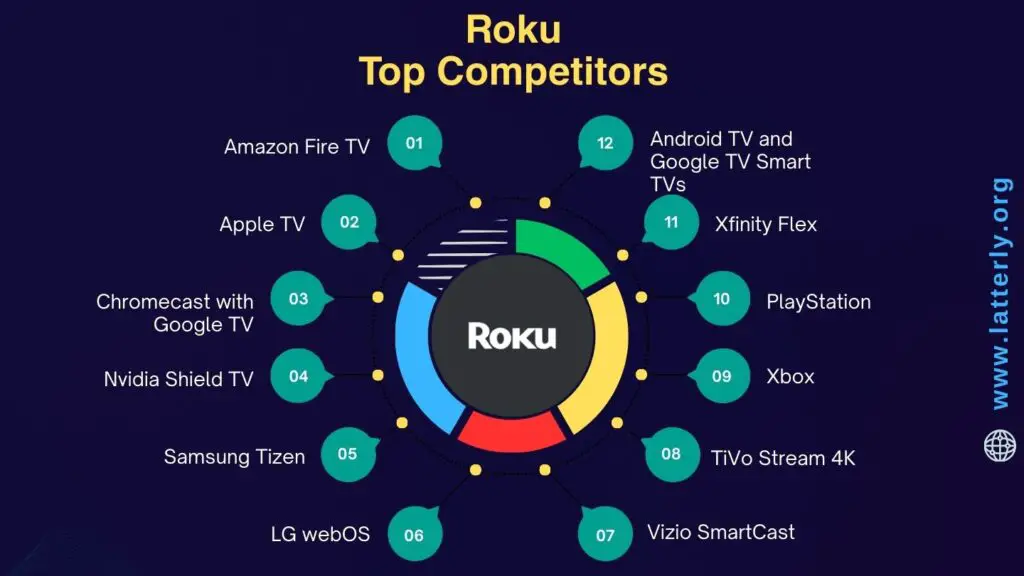
Top 12 Roku Competitors and Alternatives
Amazon Fire TV
Amazon Fire TV is a heavyweight in streaming, powered by deep Alexa integration and tight links to Prime Video. Its device family spans ultra affordable sticks and high performance cubes, appealing to a wide range of buyers. The platform benefits from Amazon’s retail reach and frequent promotions.
- Strong market presence with tens of millions of active users, which drives broad developer support and quick app updates across services.
- Multiple product categories, including Fire TV Stick Lite, Fire TV Stick 4K, Fire TV Cube, and Fire TV built-in smart TVs, let shoppers match features to budget.
- Alexa voice control is built in, enabling hands free search, home automation, and routines, which attracts smart home users who want a centralized setup.
- Prime Video, Amazon Music, and Freevee are deeply integrated, so subscribers see personalized rows and easy access to exclusive content.
- Fire TV features a robust app store with nearly all major streaming apps, competitive gaming apps, and regional services, matching Roku’s breadth.
- The interface provides a content forward home screen with profiles and personalized recommendations, which many viewers prefer for discovery.
- Regular discounts make Fire TV one of the most aggressive value plays, turning it into a go to Roku alternative for budget minded households.
- Premium models add Wi Fi 6E, fast processors, and Dolby Vision plus Atmos support, delivering smooth performance for 4K home theaters.
Apple TV
Apple TV is known for premium hardware and polished software, built on tvOS with deep ties to the Apple ecosystem. It targets buyers who value performance, privacy, and seamless integration across devices. The result is a high end experience that doubles as a smart home hub for Apple users.
- Strong position in the premium segment, with Apple TV 4K delivering fast navigation, long OS support, and top tier build quality.
- tvOS offers a refined interface with universal search, multi user profiles, and strict privacy controls, which appeals to households that prioritize data protection.
- Dolby Vision and Dolby Atmos are supported on Apple TV 4K, pairing well with high end TVs and receivers for cinematic playback.
- AirPlay enables instant casting and screen mirroring from iPhone, iPad, and Mac, a convenience that rivals and often surpasses Roku’s casting options.
- Integration with Apple services, including Apple TV+, Apple Music, Fitness+, and Arcade, creates a unified entertainment package within one box.
- The Siri Remote provides accurate voice search and touch enabled controls; the latest version improves ergonomics and charging convenience.
- HomeKit and Matter support, with Thread on select models, let the device serve as a smart home hub, centralizing automation for Apple households.
- Although priced above many sticks, Apple TV is an alternative to Roku for viewers who want a premium, low friction experience with long term updates.
Chromecast with Google TV
Chromecast with Google TV blends Google’s recommendation engine with a familiar, affordable streaming dongle. It is popular among Android and Google ecosystem users who want a smart, content driven interface. Casting remains a core strength, now complemented by a full remote and on device apps.
- Strong market share in Android centric households, boosted by aggressive pricing and frequent bundles with major services.
- Google TV curates content across apps into personalized rows and a Live tab, improving discovery versus app centric menus.
- Supports popular video standards such as 4K HDR, HDR10+, and Dolby Vision on the 4K model, plus Dolby Atmos passthrough for immersive audio.
- Google Assistant voice search is woven into the experience, delivering fast queries, smart home control, and natural language requests.
- Chromecast protocol allows direct casting from Android, Chrome, and hundreds of supported apps, which many users find simpler than traditional mirroring.
- Google Play access ensures a wide app catalog, including YouTube, YouTube TV, and regional services, making it a capable Roku alternative.
- Multiple user profiles and kid friendly modes tailor recommendations, watchlists, and content controls to each viewer.
- Compact hardware, USB C power options, and travel friendly dimensions make it easy to move between TVs or take on the road.
Nvidia Shield TV
Nvidia Shield TV caters to enthusiasts who want power, flexibility, and long term support. It is built on Android TV with premium processing and advanced media features. Gamers and home theater fans often gravitate to Shield for its AI upscaling and robust connectivity.
- Well regarded for longevity, with years of firmware updates and steady performance that outlasts many competing streamers.
- Tegra X1 based hardware delivers fast navigation and strong decoding, while AI enhanced upscaling improves HD content clarity on 4K displays.
- Supports Dolby Vision and Dolby Atmos on compatible apps and content, making it an excellent match for advanced AV setups.
- Runs full Android TV with Google Assistant, sideloading capability, and broad app support, providing more customization than most platforms.
- Acts as a powerful Plex client and can serve as a Plex media server, a unique advantage for personal media libraries.
- GeForce NOW cloud gaming and Steam Link expand entertainment beyond video, which sets it apart from Roku devices focused on streaming.
- Two form factors, the compact tube and the Pro model with more storage and ports, let buyers choose the right balance of size and expandability.
- Although priced higher than entry level sticks, Shield is a top Roku alternative for users who want maximum performance and features.
Samsung Tizen
Samsung Tizen powers one of the largest smart TV ecosystems, removing the need for an external streaming device. Its presence across Samsung’s TV lineup gives it massive reach and strong developer attention. For many households, the TV’s built in platform becomes the default streaming hub.
- Global market leader in TV shipments, which ensures timely app support for Netflix, Disney+, Prime Video, and regional services.
- No extra hardware required, since Tizen is integrated into Samsung TVs, reducing clutter and setup complexity compared with standalone streamers.
- Samsung TV Plus delivers hundreds of free ad supported channels, giving viewers a live TV experience without subscriptions.
- Supports 4K HDR, HDR10+, and advanced picture modes on compatible models, providing high quality streaming out of the box.
- SmartThings integration ties into a broad smart home ecosystem, while Bixby, Alexa, or Google Assistant support offers flexible voice control options.
- Game Hub aggregates cloud gaming apps such as Xbox and GeForce NOW on select models, which expands entertainment choices beyond video.
- AirPlay 2 compatibility eases casting from Apple devices, a convenience for mixed device households considering alternatives to Roku.
- Regular interface refinements focus on content discovery and a customizable home screen, keeping pace with standalone platforms.
LG webOS
LG webOS is recognized for its clean design and the intuitive Magic Remote that simplifies navigation. It ships across LG’s TV range, creating a wide installed base with first class app availability. Many buyers find webOS sufficient for daily streaming without an external device.
- Strong presence in premium OLED and midrange LED TVs, which puts webOS in living rooms that prioritize picture quality and modern features.
- Wide app library includes top global services and local favorites, comparable to Roku’s breadth, with frequent updates from major providers.
- Supports 4K HDR, Dolby Vision, and Dolby Atmos on compatible sets, producing excellent home theater performance with minimal setup.
- Magic Remote enables point and click navigation, universal control, and voice commands, reducing friction for channel surfing and search.
- ThinQ AI, Google Assistant, and Alexa support provide flexible voice options, while AirPlay 2 and HomeKit simplify use with Apple devices.
- Game Optimizer prioritizes latency and VRR on supported models, and cloud gaming apps extend functionality beyond streaming video.
- Free LG Channels deliver FAST programming, making webOS a viable alternative to Roku for cord cutters who want live content.
- Because webOS is built in, it saves a device purchase and HDMI port, a practical advantage for minimal setups.
Vizio SmartCast
Vizio SmartCast emphasizes value, combining competitive TV pricing with built in casting and popular apps. The platform is common in the United States, especially among cost conscious shoppers. For many households, SmartCast’s lightweight approach is all they need for streaming.
- Strong foothold in the value TV segment, which ensures widespread availability and growing app support across major services.
- Apple AirPlay and Chromecast Built in support make it simple to cast content from phones and laptops, a convenience that rivals external dongles.
- WatchFree+ offers hundreds of free ad supported channels with a dedicated guide, appealing to cord cutters who want live programming.
- 4K HDR playback is supported on modern sets, with Dolby Vision available on many Vizio models, delivering a solid cinema experience.
- Voice control works via compatible assistants, including Alexa, Google Assistant, and Siri shortcuts, providing flexibility for mixed ecosystems.
- Because the platform is integrated, there is no extra hardware cost, which positions SmartCast as a practical alternative to Roku sticks.
- Mobile app control and casting centric workflows suit households that prefer phone first navigation over a traditional app grid.
- While the app catalog can be more curated than others, frequent firmware updates continue to improve speed and stability.
TiVo Stream 4K
TiVo Stream 4K brings TiVo’s discovery heritage to a compact Android TV dongle. It targets viewers who want aggregation and an affordable price. The experience blends a traditional grid with curated rows that surface shows across multiple apps.
- Backed by the TiVo brand, the device focuses on unified search and personalized recommendations, which simplifies finding content across services.
- Runs Android TV with access to the Google Play store, ensuring a wide selection of apps comparable to leading platforms.
- Supports 4K HDR and Dolby Atmos passthrough on compatible apps, which is competitive with Roku’s higher end devices.
- Tight integration with Sling TV provides a live TV guide experience, helping cord cutters replace cable style navigation.
- The included remote features dedicated buttons and TiVo shortcuts, making it easy for longtime TiVo users to adapt.
- Usually priced aggressively, it is an appealing Roku alternative for buyers who want modern features at a budget friendly cost.
- Google Assistant voice control and Chromecast built in casting add convenience for search and mobile centric households.
- Periodic software updates continue to refine performance and stability, improving the out of box experience over time.
Xbox
Xbox consoles double as capable media hubs, bringing premium streaming to devices many gamers already own. The platform’s app catalog rivals dedicated streamers and benefits from powerful hardware. For households that game and stream on the same screen, Xbox can replace a separate box.
- Robust app library includes Netflix, Disney+, Apple TV, Prime Video, YouTube, and regional services, with 4K streaming on supported apps.
- Xbox Series X and Series S support Dolby Vision for streaming and Atmos on compatible setups, delivering top tier audio and video.
- Fast processors enable smooth navigation, quick app switching, and responsive voice commands through connected assistants.
- Game Pass, cloud gaming, and console titles add non streaming value, which can justify skipping an extra Roku device.
- Blu ray playback on Xbox Series X provides physical media support, consolidating entertainment into one HDMI input.
- Comprehensive HDMI 2.1 features and automatic low latency modes integrate well with modern TVs for both gaming and video.
- While the console costs more than a stick, it is a compelling alternative when a household already owns or plans to buy Xbox.
- Regular system updates improve media apps and add features, keeping pace with standalone streaming platforms.
PlayStation
PlayStation consoles offer mainstream streaming features alongside a strong gaming library. Many entertainment apps arrive on PS4 and PS5 quickly due to the large installed base. For fans of Sony’s ecosystem, the console can anchor both games and streaming.
- Major apps such as Netflix, Prime Video, Apple TV, Crunchyroll, and Spotify are available, with 4K HDR playback on PS5 where supported.
- PS5 emphasizes smooth performance and fast loading, which makes app switching and content browsing feel snappy.
- The optional Media Remote and integrated controls simplify living room use, reducing reliance on a game controller for navigation.
- UHD Blu ray support on PS5 disc models adds physical media playback, consolidating entertainment into a single device.
- Surround audio formats can pass through to receivers on compatible content, though exact app support varies by service and region.
- For households that already own a PlayStation, using it for streaming eliminates the need to purchase a separate Roku or dongle.
- Frequent firmware updates and app refreshes maintain compatibility and bring new media features over time.
- Parental controls and profile features help tailor content access, a benefit for families consolidating devices.
Xfinity Flex
Xfinity Flex is a streaming box provided to eligible Comcast internet customers, designed to unify streaming apps and free channels. It appeals to households that want a straightforward, low cost entry into streaming. The device integrates deeply with Comcast services while supporting popular third party apps.
- Strong presence in Comcast markets due to bundling, which places the device in millions of homes without a large upfront cost.
- Aggregates major apps and a large catalog of free ad supported channels, giving cord cutters a simple way to watch live style programming.
- The Xfinity Voice Remote enables natural voice search, app launching, and content control, a convenience that rivals dedicated streamers.
- Setup is streamlined for Xfinity internet customers, making Flex a practical Roku alternative for those already in the Comcast ecosystem.
- Supports 4K HDR on compatible services and TVs, delivering modern picture quality for streaming content.
- Parental controls and content filters are integrated, helping families manage access across multiple apps.
- While availability is limited to Comcast regions and accounts, eligible customers appreciate the low total cost of ownership.
- Regular updates refine the interface and expand app support, improving the experience without requiring new hardware.
Android TV and Google TV Smart TVs
Many TV brands ship with Android TV or Google TV built in, eliminating the need for a separate streaming box. This platform enjoys extensive app support and tight Google Assistant integration. Buyers appreciate getting a unified smart experience as soon as the TV is powered on.
- Broad market presence across Sony, TCL, Hisense, Philips, and others ensures developer attention and timely app releases.
- Google Play provides a large catalog, from global heavyweights to regional apps, rivaling Roku’s selection.
- Google TV’s content centric home screen with profiles and watchlists streamlines discovery across services.
- Hands free or remote based Google Assistant enables voice search, smart home control, and contextual recommendations.
- Standards support includes 4K HDR, Dolby Vision on many models, and Dolby Atmos passthrough, matching modern AV expectations.
- No extra hardware or HDMI port is required, making these TVs a simple alternative to adding a Roku.
- Chromecast built in allows quick casting from Android devices and Chrome, which many users prefer over third party mirroring.
- Frequent firmware updates from TV makers and Google add new features and refine performance over the product life.
Vizio SmartCast
Vizio SmartCast emphasizes value, combining competitive TV pricing with built in casting and popular apps. The platform is common in the United States, especially among cost conscious shoppers. For many households, SmartCast’s lightweight approach is all they need for streaming.
- Strong foothold in the value TV segment, which ensures widespread availability and growing app support across major services.
- Apple AirPlay and Chromecast Built in support make it simple to cast content from phones and laptops, a convenience that rivals external dongles.
- WatchFree+ offers hundreds of free ad supported channels with a dedicated guide, appealing to cord cutters who want live programming.
- 4K HDR playback is supported on modern sets, with Dolby Vision available on many Vizio models, delivering a solid cinema experience.
- Voice control works via compatible assistants, including Alexa, Google Assistant, and Siri shortcuts, providing flexibility for mixed ecosystems.
- Because the platform is integrated, there is no extra hardware cost, which positions SmartCast as a practical alternative to Roku sticks.
- Mobile app control and casting centric workflows suit households that prefer phone first navigation over a traditional app grid.
- While the app catalog can be more curated than others, frequent firmware updates continue to improve speed and stability.
onn. Google TV
Walmart’s onn. Google TV devices focus on ultra low pricing without sacrificing core features. The lineup delivers the full Google TV interface with a simple remote and voice search. For budget buyers, it is an easy entry point into modern streaming.
- Highly competitive pricing, often well below many sticks, makes onn. a compelling alternative to Roku for cost sensitive shoppers.
- Runs Google TV with profiles, watchlists, and a Live tab, so users get a content forward experience usually found on pricier devices.
- Supports 4K HDR on the 4K model and Dolby Atmos passthrough on compatible apps, ensuring solid home theater basics.
- Google Assistant voice control and Chromecast built in casting simplify search and mobile centric streaming.
- Access to the Google Play store brings a broad app catalog, including major services and regional offerings.
- Compact hardware and straightforward setup make it suitable for secondary TVs, dorm rooms, and travel.
- Despite the low cost, performance is adequate for everyday streaming, especially for viewers focused on mainstream apps.
- Frequent retail availability and easy returns through Walmart add convenience for first time cord cutters testing the waters.
Top 3 Best Alternatives to Roku
Amazon Fire TV (Stick and Cube)
Amazon Fire TV stands out for tight Alexa integration, broad app support, and aggressive pricing across multiple models. The interface leans into voice search and content discovery, which makes finding shows simple and fast. It suits Amazon households, cord cutters who want live TV aggregation, and anyone who prefers voice-first control.
- Wide device range, from affordable 1080p sticks to powerful 4K hardware with Dolby Vision and Atmos.
- Excellent Alexa voice control, hands free on the Fire TV Cube for true smart home synergy.
- Strong app library plus deep Prime Video and Freevee integration for free and paid content.
- User profiles, robust parental controls, and convenient Live tab for channel style browsing.
- Frequent sales and bundles, good value for secondary TVs and budget upgrades.
Apple TV 4K
Apple TV 4K stands out for premium performance, a clean ad light interface, and best in class ecosystem polish. Navigation feels smooth, apps launch quickly, and audiovisual quality is consistently excellent. It suits Apple device owners, home theater enthusiasts who care about fidelity, and privacy minded users.
- Top tier picture and sound with Dolby Vision and Dolby Atmos on supported content.
- Seamless integration with iPhone, iPad, and Mac for AirPlay, HomeKit, and private listening with AirPods.
- Long software support windows and a refined tvOS experience.
- Access to Apple Arcade and Fitness Plus, plus easy family sharing and parental controls.
- Minimal clutter and strong privacy controls compared with many smart TV interfaces.
Chromecast with Google TV
Chromecast with Google TV stands out for excellent Google Assistant search, personalized recommendations, and easy casting from phones and browsers. The interface unifies streaming services into a single watchlist and home screen. It suits Android users, Google ecosystem fans, and anyone who values simple casting and affordability.
- Low cost HD and 4K models, good value for primary or secondary TVs.
- Voice search that understands genres, actors, and specific titles across apps.
- Built in casting from Android and Chrome, plus wide app support via Google Play.
- Google TV home screen with tailored suggestions and a universal watchlist.
- Compact design that travels well, useful for apartments or dorms.
Final Thoughts
There are many strong Roku alternatives, and the best fit depends on your ecosystem, budget, and interface preferences. Amazon Fire TV excels at value and voice control, Apple TV 4K delivers premium polish, and Chromecast with Google TV offers smart recommendations and simple casting. Each of these options covers the core streaming apps while adding unique strengths.
Start by deciding what matters most, whether that is price, picture and sound quality, or deep integration with your phone and smart home. Consider the services you watch, the features you will actually use, and how many TVs you need to outfit. With clear priorities, you can pick confidently and enjoy a smooth, personalized streaming experience.
