
Sports Direct has dominated value-led sporting goods since 1982, scaling from a single shop to a nationwide powerhouse inside Frasers Group. The brand’s growth engine blends aggressive everyday pricing, deep assortment, and high-frequency campaigns that convert browsing into baskets. Powerful retail execution aligns with a relentless digital push, which keeps the brand top of mind across search, social, and marketplaces. This combination positions Sports Direct as the discount-powered anchor in a fragmented UK sporting retail market.
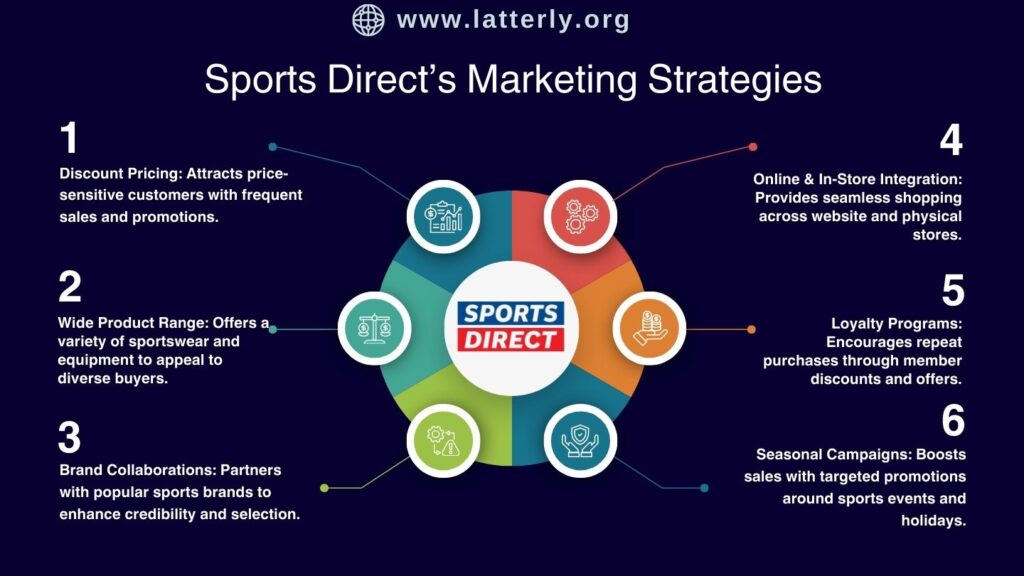
Frasers Group reported strong multi-banner momentum in 2024, with group revenue estimated at approximately £5.8 billion, supported by Sports Direct’s resilient UK retail performance. The brand operates more than 400 UK stores and a growing European footprint, supported by a unified online platform and app ecosystem. Marketing integrates pricing, promotions, and partnerships to elevate perceived value without eroding brand equity. The framework outlined below details how Sports Direct orchestrates strategy, audience focus, digital acceleration, and community activation to build durable retail demand.
Core Elements of the Sports Direct Marketing Strategy
In a retail climate shaped by inflation and shifting category preferences, Sports Direct anchors its marketing on value clarity and broad accessibility. The strategy ties sharp pricing to brand-led storytelling, ensuring discounts reinforce trust rather than dilute positioning. Omnichannel convenience, real-time merchandising, and seasonal bursts in high-intent categories create dependable traffic and transaction velocity.
The brand synchronizes promotions with supplier calendars, major sporting events, and school terms to maximize conversion at peak interest. Digital and retail teams coordinate campaign assets, hero bundles, and vendor-funded media to amplify reach at efficient costs. Assortment depth allows localized pricing ladders, while online content simplifies product discovery with size guidance and comparison cues.
Sports Direct organizes its value proposition into several operational pillars that translate consistently across channels. These pillars guide brand messaging, merchandising rhythm, and investment focus to sustain profitable share gains.
Value-Led Retail Pillars
- Everyday low pricing with seasonal doorbuster events that create urgency without permanent margin compression.
- House-of-brands assortment featuring leading labels, outlet exclusives, and private-label value tiers for price-sensitive shoppers.
- Omnichannel convenience through click and collect, ship-from-store, and flexible returns unified under a single inventory view.
- Vendor co-marketing that leverages partner assets, athlete content, and cooperative media to extend paid reach efficiently.
- Localized merchandising that adapts to community sports, weather patterns, and school calendars to improve store productivity.
- Performance creative system that refreshes price points, bundles, and social-first formats on a weekly optimization cycle.
Execution converts strategy into measurable outcomes across trade, traffic, and loyalty indicators. Digital media prioritizes high-intent formats, while in-store theater, signage, and hero walls reinforce promotional clarity. CRM nurtures repeat purchases, particularly in running, football, and youth categories, where lifecycle needs drive frequent replenishment.
- Group revenue estimated at approximately £5.8 billion in 2024, with Sports Direct underpinning UK retail momentum.
- Online share of Sports Direct sales estimated at 28 to 32 percent in 2024, supported by faster page speeds and better product findability.
- Click and collect participation estimated near 30 percent of online orders, improving basket economics and attachment rates.
- Promotional sell-through uplift typically ranging from 8 to 12 percent during synchronized supplier campaigns.
- Repeat purchase gains concentrated in running and school PE categories, reflecting effective CRM replenishment journeys.
The disciplined focus on value, access, and execution enables Sports Direct to defend traffic, protect margin, and extend brand relevance. Consistent application of these pillars sustains the brand’s leadership in discount-powered sporting retail.
Target Audience and Market Segmentation
In a cost-conscious UK retail environment, household budgets prioritize value, durability, and multi-use purchases. Sports Direct addresses these needs through clear price ladders, big-brand credibility, and private-label options that stretch spend. Segmentation maps align with activity intensity, age brackets, and seasonal rhythms to guide campaign timing and range curation.
The brand serves both style-driven and performance-driven shoppers, from teens seeking trend sportswear to adults focused on running or gym improvement. Parents shop bundled offers for school terms, while grassroots athletes look for reliable kit at accessible prices. These groups share sensitivity to promotions, but differ in channel preferences and content triggers.
Sports Direct structures its audience model around behavioral signals and life-stage milestones, then activates through channel-specific creative. Personas guide product storytelling, onsite navigation, and store planograms, improving discovery and conversion.
Segmentation Map and Priority Personas
- Value Family Outfitters: Parents buying PE kits and multi-sport footwear, responsive to bundles, click and collect, and calendar-timed promotions.
- Everyday Athletes: Runners and gym-goers seeking performance footwear, apparel, and accessories, influenced by reviews and fit guidance.
- Trend Seekers: Teens and students prioritizing brand badges and style drops, engaged through short-form video and influencer edits.
- Grassroots Teams: Local clubs purchasing kits and balls in volume, motivated by bulk pricing and community support initiatives.
- Deal Hunters: Price-first shoppers comparing across retailers, converted through outlet exclusives and flash events.
Lifecycle segmentation captures predictable triggers that drive higher intent and larger baskets. Back-to-school peaks, new season kit changes, and marathon calendars anchor promotional waves and email cadences. Store clusters mirror local sports participation, enabling targeted endcap features and window messaging.
- Back-to-school campaigns emphasize multi-buy offers, shoe fitting help, and essentials checklists to increase average order value.
- Running seasonality pivots toward gait advice, sock bundles, and hydration accessories to lift attachment rates.
- Football cycles highlight boot trade-ins, replica price breaks, and team kit personalization services for clubs.
- Student events prioritize limited-time vouchers and social-first launches to accelerate early-term wardrobe building.
This segmentation approach aligns product, price, and content to distinct needs, strengthening conversion while preserving the brand’s value leadership.
Digital Marketing and Social Media Strategy
Digital discovery drives a material share of Sports Direct demand, with paid and organic search guiding high-intent traffic into category landing pages. The brand combines SEO investments with smart bidding across shopping ads to defend on branded and non-branded terms. Social channels extend reach, spark trends, and funnel audiences into shoppable edits and bundles.
Sportsdirect.com attracted significant traffic throughout 2024, with monthly visits estimated in the 20 to 25 million range across the UK and EU. Faster site performance, clearer size filters, and richer product pages improved conversion. Email and app push reinforced promotions, with personalized recommendations tied to recent browsing and purchase history.
Channel strategies tailor creative to format, audience behavior, and buying stage. Always-on search captures intent, while pulse campaigns add cultural relevance around sporting moments and holidays.
Platform-Specific Strategy
- SEO: Technical hygiene, schema for product availability, and content hubs for running, football, and training queries to grow non-branded visibility.
- Google Shopping and Performance Max: Price-led creatives and feed optimization, prioritizing margin-positive SKUs and vendor-funded hero lines.
- Paid Social: Short-form video, creator whitelisting, and catalog ads to move users from inspiration to product within a single session.
- TikTok and Reels: Challenge-style content, staff picks, and budget breakdowns that demystify performance features at accessible price points.
- Affiliates: Loyalty and voucher partners managed to incrementality guardrails, protecting margins while recovering otherwise lost baskets.
Owned channels reinforce frequency and loyalty through personalized content and replenishment nudges. CRM journeys address runners’ mileage replacement windows, size-up reminders for kids, and kit refresh cycles for teams. App-exclusive drops and early-access promotions stimulate engagement without discount overexposure.
- 2024 blended ROAS on paid search estimated between 6.0 and 8.0, reflecting disciplined bidding against contribution margin.
- Social community estimated above 1.5 million cumulative followers, delivering efficient reach for seasonal pushes and launches.
- Email program sustained double-digit open rates, with triggered flows outperforming batch promotions on revenue per send.
- Site conversion improved on mobile following UX refinements, with incremental gains concentrated on category and product pages.
The orchestration of performance channels, creator content, and CRM personalization turns digital attention into measurable retail outcomes, reinforcing Sports Direct’s commercial edge.
Influencer Partnerships and Community Engagement
Trust and authenticity matter in value retail, where audiences expect proof that low prices do not compromise performance. Sports Direct blends elite athlete moments with creator storytelling and grassroots support, creating a credible ladder from inspiration to purchase. Partnerships extend reach, while community programs deepen local relevance and sentiment.
Seasonal campaigns activate football, running, and training communities through athlete-led hero films and creator cutdowns. Micro-influencers translate technical benefits into everyday use cases, closing the gap between pro performance and recreational needs. Community grants and kit donations convert goodwill into store traffic and long-term loyalty.
The partnership model prioritizes fit, frequency, and measurable outcomes. Contracts favor multi-format usage rights, enabling efficient re-cutting of assets across paid and owned.
Partnership Architecture
- Elite talent for tentpole moments, aligned with supplier launches and key retail periods such as holidays and back to school.
- Mid-tier creators who produce repeatable how-to content, product trials, and budget builds for running, football, and gym categories.
- Micro-creators activated locally for store openings, club events, and community challenges with strong in-person participation.
- Supplier collaborations that extend athlete access and co-fund paid amplification to improve efficiency and reach.
- Usage-rights frameworks enabling whitelisting, performance retargeting, and CRM re-use without creative fatigue.
Governance addresses brand safety, disclosure, and measurement, improving consistency across platforms. UTM frameworks and product-specific landing pages tie creator content to sales, while coupon tagging validates incremental impact. Store teams collaborate on local events, turning creator appearances into measurable footfall and attachment.
- Cost per engagement reduced year over year as micro-creator programs scaled and creative testing improved.
- Campaigns featuring multi-athlete casts delivered higher completion rates and stronger assisted conversions in paid social.
- Community initiatives provided kits and equipment to schools and clubs, generating positive sentiment and repeat store visits.
- Local events supported sign-ups for loyalty and financing tools, improving downstream purchase frequency.
The combined force of credible partners and meaningful community investment builds brand warmth at scale, strengthening Sports Direct’s value proposition and long-term customer relationships.
Product and Service Strategy
Sports Direct concentrates on breadth, value, and availability to maintain leadership in UK sporting goods. The brand curates a wide assortment that blends global performance labels with powerful owned brands, protecting margins while signaling everyday affordability. Flagship locations showcase elevated storytelling for premium partners, while regional stores emphasize essentials and fast-moving seasonal categories. This balance sustains volume, supports profitable mix, and reinforces the retailer’s discount-powered proposition.
The assortment strategy relies on a multi-tiered approach that aligns price points with customer intent: start, improve, and perform. Owned labels such as Everlast, Karrimor, Slazenger, Lonsdale, and Donnay deliver competitive entry and mid-tier offers across apparel, footwear, and equipment. Partner brands including Nike, Adidas, Puma, and Under Armour anchor premium choice, particularly in football, running, and training. This structure allows agile promotions without diluting perception of hero categories or key seasonal capsules.
Sports Direct uses owned brands and exclusive ranges to stabilize gross margin during aggressive promotional events. These labels provide control over product cycles, packaging, and replenishment, which improves availability during demand spikes. Furthermore, exclusive colorways and teamwear bundles support differentiating search visibility and drive repeat trips. The result creates a resilient portfolio that absorbs promotional pressure while sustaining category authority.
Sports Direct deepens value delivery through service layers that increase convenience and trust. Team shirt printing, racket stringing in select stores, and footwear fitting create reasons to visit physical locations. Click and collect, easy returns, and flexible payments through Frasers Plus strengthen conversion during sales peaks. These practical services convert discount seekers into habitual customers who appreciate reliable fulfillment and consistent stock depth.
This subsection describes how assortment and brand ownership power the value equation while preserving long-term pricing flexibility. It also highlights how exclusivity and seasonal planning strengthen discoverability across search and marketplaces. Together, these factors tie product to positioning with clear commercial logic.
Assortment Architecture and Private-Label Leverage
- Owned labels contribute an estimated 30 percent of Sports Direct category sales in 2024, supporting higher blended margins during heavy promotional periods.
- The online store lists over 60,000 SKUs across footwear, apparel, and equipment, ensuring depth for size runs and replenishment-sensitive categories.
- Seasonal capsules align to back-to-school, winter outdoor, and tournament cycles, creating predictable waves for content, merchandising, and paid performance.
- Exclusive colorways and teamwear bundles differentiate product detail pages, increasing organic visibility and reducing direct price comparability.
- Partner brand elevation in flagship stores enhances premium perception, while regional locations emphasize everyday value and quick-turn essentials.
Service innovation reinforces the proposition through convenience and reassurance at the point of need. Football shirt personalization drives attachment sales and encourages store visits aligned with matchday calendars. Extended sizes and inclusive ranges broaden relevance for families, grassroots clubs, and returning exercisers. These improvements keep Sports Direct useful across multiple purchase occasions, not only during peak discount windows.
This subsection explains how omnichannel services reduce friction, increase confidence, and accelerate repeat purchases. It also clarifies how fulfillment speed and flexible payments complement discount-led demand. The focus remains on predictable delivery and straightforward returns that support promotional intensity.
Omnichannel Services and Post-Purchase Support
- Click and collect typically fulfills within one to three days across the UK network, improving reliability during major sale events and new kit launches.
- A 28-day return window, easy label printing, and store drop-off options reduce perceived risk for first-time and gift purchasers.
- Frasers Plus offers staged payments and promotional financing, lifting average order values during high-ticket footwear and outerwear purchases.
- Store services such as printing and basic equipment setup create incremental revenue and strengthen in-store conversion on busy weekends.
- Order tracking through app and email reduces customer service contacts and improves satisfaction during peak promotional periods.
Sports Direct aligns product depth, owned-label power, and service convenience to fuel its discount-led positioning without sacrificing profitability. The strategy builds everyday value into the range while reinforcing trust through predictable fulfillment and useful extras. This disciplined approach keeps the brand relevant for both price-sensitive families and performance-driven athletes seeking dependable choice.
Marketing Mix of Sports Direct
The marketing mix integrates price leadership, deep assortment, and widespread availability to deliver consistent value. Product breadth reaches casual and committed participants, while pricing ladders simplify trade-up opportunities within categories. Distribution blends destination flagships and community stores with an efficient online platform. Promotion focuses on timely offers, event tie-ins, and sharp retail media execution that converts intent quickly.
Sports Direct treats the 4Ps as a synchronized engine that supports the elevation of brand partners and the acceleration of owned labels. Product anchors range authority, price expresses the discount promise, place ensures access, and promotion drives traffic during key moments. This coherence reduces wasted spend and improves unit economics across channels. The result delivers volume and margin resilience in a competitive retail environment.
This subsection summarizes how the classic 4Ps operate together in the Sports Direct model. It emphasizes range design, discount signals, store and digital coverage, and commercial communication. The points illustrate how the brand converts attention into transactions efficiently.
4Ps Summary: Product, Price, Place, Promotion
- Product: Multi-tiered assortment spanning owned labels and global brands, with exclusives and seasonal capsules supporting differentiation and replenishment stability.
- Price: Everyday low pricing amplified through frequent tactical discounts, multibuys, and bundles that protect perceived savings while managing margin mix.
- Place: Approximately 430 UK stores plus European locations, supported by a Shirebrook distribution hub exceeding one million square feet for faster fulfillment.
- Promotion: Always-on performance marketing, retail media, and CRM, complemented by event-led campaigns around tournaments, back-to-school, and winter sports transitions.
- Performance: Frasers Group 2024 revenue reached an estimated £5.7 billion, with Sports retail remaining the largest contributor to group sales momentum.
Execution quality across the mix determines whether value messages translate into profitable growth. Store teams prioritize density for key sizes, while digital merchandising keeps hero products visible across search and recommendations. Pricing teams coordinate markdown cadence with inbound flows to avoid stockouts on core lines. This discipline ensures promotions build share without eroding long-term category credibility.
This subsection explains how the extended 7Ps sharpen retail execution beyond product and price. People, process, and physical evidence create confidence during decision moments and reinforce brand equity. These elements support conversion and lifetime value across both store and digital journeys.
Extended 7Ps for Retail Execution
- People: Category specialists and service teams manage fittings, personalization, and problem-solving that raise conversion and average basket values.
- Process: Streamlined checkout, click and collect, and returns processes reduce friction during peak events and stabilize customer satisfaction scores.
- Physical Evidence: Flagships deliver elevated fixtures and digital screens for brand storytelling, while community stores prioritize clear navigation and price communication.
- Partnerships: Premium brand shop-in-shops complement owned-label zones, improving perception and expanding cross-sell opportunities in footwear and apparel.
- Productivity: Space planning and RFID-enabled accuracy in select locations improve stock integrity and speed to shelf for high-velocity styles.
Sports Direct applies the marketing mix as an operational system that scales value messaging across formats and channels. The 4Ps define the strategic offer, and the extended 7Ps hardwire executional consistency. This alignment keeps the brand prominent in a crowded market that rewards clarity, convenience, and credible price signals.
Pricing, Distribution, and Promotional Strategy
Sports Direct relies on disciplined pricing, dense distribution, and timely promotions to convert demand at scale. The pricing model communicates savings clearly while protecting mix through owned brands and exclusives. Distribution reaches most UK shoppers quickly through stores and a high-capacity fulfillment hub. Promotions synchronize with seasonal and event calendars to maximize relevance and return on ad spend.
Pricing operates as a strategic signal that validates the discount promise without undermining category value. Entry points anchor affordability, while promotion layers incent trade-up into better specifications. Bundles, multibuys, and tiered discounts simplify decisions for families and teams. This structure keeps savings understandable across channels and devices during time-pressured shopping moments.
This subsection details the pricing architecture and the mechanisms that keep offers compelling while safeguarding margin. It outlines markdown cadence, competitive monitoring, and promotional constructs that shoppers understand quickly. The structure supports repeatable results during high-traffic retail events.
Pricing Architecture and Promotion Mechanics
- Everyday low prices pair with planned markdown waves that align to inventory turns, seasonal transitions, and tournament-related demand spikes.
- Competitor monitoring informs dynamic price moves on traffic-driving styles, while owned labels absorb depth discounts without eroding partner brand equity.
- Multibuy offers on socks, base layers, and accessories raise units per transaction and protect category profitability despite headline price cuts.
- Bundles around football kits, boots, and training essentials simplify outfitting and increase attachment rates during peak sport seasons.
- Black Friday and end-of-season events leverage clear savings ladders, supported by email, app push, and affiliates to scale traffic efficiently.
Distribution underpins availability and speed, which are critical for conversion when promotions surge. The Shirebrook hub consolidates inventory for rapid pick, pack, and ship across the UK. Regional stores function as collection points and discovery venues for fit-dependent categories. This network ensures shoppers can secure correct sizes quickly, even during intense demand peaks.
This subsection explains the footprint, last-mile options, and fulfillment practices that translate demand into delivered orders. It highlights coverage, store utility, and shipping choices that support customer expectations for speed and reliability. The framework provides resilience when order volumes fluctuate sharply.
Distribution Footprint and Fulfillment Speed
- Approximately 430 UK stores place the brand within convenient reach of a large share of households, improving access to try-on and immediate needs.
- The Shirebrook distribution center manages national eCommerce flows with scalable capacity that absorbs promotional spikes without extended delays.
- Click and collect reduces delivery costs and increases store traffic, while standard courier options balance speed and affordability for most orders.
- Inventory pooling across channels improves size availability for high-velocity footwear and kits, limiting lost sales during tournament cycles.
- Simple return pathways through stores and mail maintain trust and encourage robust gift purchasing during holiday periods.
Sports Direct links sharp pricing, extensive distribution, and practical promotions into a repeatable retail system. Customers see transparent savings, find sizes easily, and receive orders promptly, which reinforces loyalty during future events. This operational consistency supports the brand’s discount-powered growth while safeguarding profitability across changing market conditions.
Brand Messaging and Storytelling
In a value-led retail market defined by price comparison and instant discovery, a memorable message creates an immediate reason to choose. Sports Direct positions value as a strength, then elevates it with energy, inclusivity, and sport-first ambition. The brand speaks to everyday athletes, families, and fans who chase affordability without sacrificing excitement. Marketing frames discounts as access, transforming low price into a positive, community-facing promise.
Sports Direct tells stories through seasonal tentpoles, athlete cameos, and store experiences that feel social and high tempo. Campaigns frame sport as joyful, affordable, and accessible, while the store environment delivers proof through choice and price. The approach balances brand heat with transactional urgency, supported by category authority across football, running, training, and outdoor. This combination builds recall quickly, then converts demand through daily deals and exclusives.
The most visible expressions show up in hero campaigns and fast-paced social edits that celebrate grassroots sport. These moments tie back to store activations, app offers, and retail theater, which helps convert attention into measurable sales.
Creative Platforms and Signature Campaigns
- Go All Out holiday films featured elite athletes and creators, driving mass reach and positioning the retailer as the home of giftable sport.
- Football-first storytelling highlighted boots, replica kits, and entry-price training gear, reinforcing authority during tournament peaks and club seasons.
- Women’s performance stories showcased inclusive sizing and supportive fittings, aligning content with in-store bra fit zones and expert advice.
- Back-to-school and pre-season bursts combined price leadership with kit bundles, improving basket size during predictable, high-intent periods.
- In-store digital screens mirrored social creative, linking short-form edits with aisle-level calls to action and timed promotional drops.
Messaging leans on an energetic tone, clean product focus, and clear price anchors. Content shows movement, team spirit, and real users, while copy emphasizes immediacy and action. Discount language stays confident and simple, supported by brand badges and trust marks that signal authenticity. Visual consistency across store, site, and social builds a single, recognizable value system.
- Value leadership appears as everyday low prices, timed promos, and multibuy offers across hero categories.
- Access for all emphasizes inclusive ranges, junior sizes, and starter-level equipment for new participants.
- Category authority anchors stories in football, running, and training, supported by expert services and brand range depth.
- Energy and fun uses pacey edits, athlete cameos, and seasonal moments to keep discovery exciting and frequent.
This storytelling playbook turns discounting into identity, then links identity to service and selection. The result increases brand salience at the exact moments shoppers search for kits, shoes, and gifts, which supports Sports Direct growth targets inside a competitive, price-aware market.
Competitive Landscape
UK sports retail blends specialist chains, value players, and brand-direct channels, creating constant price and assortment pressure. JD Sports drives fashion-led performance across global banners, while Decathlon scales private label and utility. Nike and Adidas expand direct-to-consumer reach, compressing wholesale margins and accelerating product cycles. Marketplaces add frictions and opportunities through convenience and endless aisle expectations.
Sports Direct competes through breadth, private labels, and aggressive value. The retailer leverages owned brands such as Everlast, Slazenger, Karrimor, and Lonsdale to stabilize margin and control entry price points. Exclusive ranges and bulk buying create consistent promotional capacity without eroding core credibility. Store refits and House of Sport formats elevate perception while preserving sharp price signals.
Competitor performance provides useful benchmarks, especially on scale and channel mix. Financial disclosures and trading updates show where demand concentrates and where experience advantages develop fastest.
Key Competitors and Positioning Signals
- JD Sports reported revenue above £10 billion in FY2024, focusing on sneaker culture, curated drops, and premium athleisure partnerships.
- Decathlon exceeded €15 billion in recent global revenue, using private labels and large-format utility to lead on function and price clarity.
- Nike delivered roughly $51 billion in FY2024 revenue, with continued DTC expansion that tightens wholesale allocations and intensifies launch calendars.
- Amazon captures intent-led searches in equipment and accessories, raising the bar on speed, availability, and ratings-driven trust.
- Foot Locker pivots toward community concepts and brand storytelling, reinforcing launch moments while recalibrating store portfolios.
Sports Direct differentiates on discount power at scale, category depth, and geographic reach across the UK. Owned brands provide predictable supply and promotional flexibility, while marquee partners sustain credibility. The business benefits from Frasers Group purchasing leverage, technology investment, and multibrand cross-traffic. This structure supports price leadership without losing access to hero franchises.
- Assortment breadth satisfies family missions, club needs, and entry-level starters within a single shopping trip.
- Exclusive and owned labels protect margin, enable evergreen promotions, and fill gaps created by DTC shifts.
- Elevated formats improve experience and conversion, reinforcing authority during key sporting calendars and back-to-school periods.
- Group ecosystem unlocks shared data, media efficiency, and cross-promotional reach across Frasers banners.
This competitive posture prioritizes scale plus value, then layers elevation where it lifts mix and lifetime value. The balance enables Sports Direct to win frequent, price-sensitive missions while defending authority against premium and DTC-led rivals.
Customer Experience and Retention Strategy
In a retail category with little switching cost, experience quality drives repeat purchase and word of mouth. Sports Direct invests in store theater, service zones, and omnichannel utility that reduces friction. The approach links high-energy merchandising with practical services, creating momentum from search to checkout. Clear prices and fast fulfillment reinforce trust, which strengthens retention for families and fans.
Large-format House of Sport sites demonstrate the experience ambition with immersive displays and trial spaces. Refitted core stores introduce brighter navigation, stronger brand storytelling, and richer category signposting. Digital screens update offers quickly, aligning with social creative and local demand patterns. Associates focus on fit guidance and product confidence that shortens decision time.
Service design integrates convenience features that help shoppers complete missions efficiently. These features connect in-store discovery with app alerts, email journeys, and post-purchase support. Consistent returns handling and delivery options reduce uncertainty and support gift seasons. Simple finance choices increase accessibility for higher-ticket baskets.
Omnichannel Services and Experience Enhancements
- Click and collect availability across major towns streamlines pickup for families and teams managing last-minute kit needs.
- Next-day delivery options and transparent shipping thresholds align with price-sensitive expectations for speed and clarity.
- Customization stations, including shirt printing and boot personalization, turn store visits into memorable, shareable moments.
- Fit services, such as running gait checks and bra fitting in select locations, translate expertise into confident purchases.
- Frasers Plus credit and flexible payments, rolled out across the group, support affordability for multi-item or seasonal baskets.
Lifecycle marketing reinforces retention with targeted replenishment prompts, event-led bundles, and back-in-stock alerts. Football calendars, school terms, and weather triggers drive relevant nudges without overloading inboxes. App and email programs highlight price drops and category stories that match browsing behavior. The result improves repeat frequency while protecting margin through curated offers.
- Mission-based journeys cluster communication around football, running, training, and outdoor to match intent windows.
- Post-purchase care includes order tracking, care tips, and accessory suggestions that extend product satisfaction.
- Loyalty through value relies on predictable low prices, bundled savings, and exclusive access to limited releases.
- Store-to-digital handoff uses QR prompts and staff recommendations to save wish lists and enroll customers in updates.
This experience model pairs energetic retail with pragmatic convenience and finance flexibility. The combination sustains strong repeat behavior in a price-aware audience, positioning Sports Direct as the dependable first stop for everyday sport.
Advertising and Communication Channels
In a competitive UK athletic retail market, advertising must balance reach, precision, and value messaging. Sports Direct invests across the full funnel, matching high-intent search activity with brand-building around major sporting moments. The approach promotes price leadership while showcasing breadth across football, running, training, and outdoor categories. Consistent discount signaling supports conversion, while partnerships with global brands sustain credibility with performance shoppers.
The media plan concentrates on channels that convert intent and amplify price-led offers. Tactical bursts align to tentpole events such as Black Friday, back-to-school, and tournament periods. Investment favors formats that display assortment, pricing clarity, and near-store availability with measurable outcomes.
Channel Mix and Investment Priorities
- Paid Search and Shopping: Planning ranges indicate 35 to 45 percent of media budget towards high-intent queries; product feeds highlight price drops and stock.
- Paid Social and Video: Roughly 25 to 30 percent emphasizes short-form creative, creator placements, and deal countdowns, timed to weekly drops.
- Affiliates and Price Comparison: Cost-effective distribution through cashback, student programs, and deal forums drives incremental volume during peak.
- OOH and BVOD: Ten to 15 percent funds proximity-based billboards and on-demand video around stadiums and commuter corridors during sport seasons.
- CRM and App Messaging: Zero-media-cost channels deliver weekly deal cycles, returns prompts, and back-in-stock alerts that lift repeat purchase rates.
Communication cadence prioritizes clarity: price, availability, and brand authentication. Creative rotations feature hero offers, club kits, and seasonal bundles, with geo-targeting near high-traffic stores. Localized assets highlight click-and-collect speed and store-only exclusives, which redirect demand to inventory-rich locations. This rhythm turns promotional intensity into predictable footfall and online conversion, especially in football and running.
Creative architecture must adapt across formats while preserving value cues and brand partners. Assets follow a consistent hierarchy of product, price, and proof, reinforced through social proof and limited-time tags.
Creative Strategy and Message Architecture
- Hero Deal Framework: Lead with best-known brands, credible MSRPs, and visible savings; reinforce legitimacy with price-match badges where permitted.
- Sports Calendars: Align ads to fixture lists, race seasons, and kit launches to capture intent surges and maintain relevance.
- Brand Collaborations: Co-op budgets with Nike, adidas, and Under Armour enable elevated storytelling without diluting discount clarity.
- User and Creator Content: Short-form try-ons, sizing guidance, and footwear tests reduce returns and improve paid social efficiency.
- Retail Media Onsite: Sponsored placements on category and search pages monetize traffic and improve range visibility for partners.
This channel mix keeps Sports Direct visible to value-conscious athletes at the exact moment of need, while creative discipline converts attention into sales at scale.
Sustainability, Innovation, and Technology Integration
Retailers that blend operational efficiency with responsible practices earn trust and repeat custom. Sports Direct advances this through store modernisation, logistics improvements, and digital tooling that reduces waste while speeding service. Frasers Group has identified carbon, packaging, and energy as priority areas, with capital allocation tied to its elevation strategy. Investments focus on measurable impact across stores, distribution, and last mile.
Operational programs connect sustainability with cost control and customer outcomes. Initiatives target energy use, packaging reduction, and delivery density, which support both margins and environmental goals. Store and warehouse upgrades create durable benefits that scale across the network.
Operations and Environmental Initiatives
- Energy Efficiency: LED retrofits, optimized HVAC scheduling, and smart metering reduce store energy intensity across high-footfall locations.
- Logistics Optimization: Consolidated routing and fuller loads from regional hubs cut transport emissions and improve delivery reliability.
- Packaging Reduction: Lighter mailers, right-sized cartons, and reduced void fill limit material use and shipping costs.
- Returns Stewardship: Digital returns portals encourage drop-off methods with lower emissions, improving resale and refurbishment rates where viable.
- Supplier Engagement: Vendor scorecards encourage recyclable packaging and compliance with product stewardship standards.
Technology integration supports a seamless shopping journey that reduces friction and unnecessary miles. Unified stock visibility enables endless aisle orders and ship-from-store, keeping inventory productive. Personalised recommendations and size guidance cut return rates, especially in footwear and apparel. Mobile point-of-sale in elevated stores speeds checkout and improves attachment of accessories.
Payments and fulfilment also evolve to suit convenience-minded shoppers while controlling risk. Flexible credit and account options increase conversion for basket sizes common in footwear and equipment.
Payments, Fulfilment, and Service Innovations
- Account and Credit Options: A unified account experience across banners encourages higher-frequency shops and greater lifetime value.
- Click-and-Collect Expansion: Broad coverage across hundreds of stores offers fast pickup while lowering last-mile costs and emissions.
- Locker and Pick-up Points: Partnerships with national networks increase choice and reduce failed deliveries in dense urban areas.
- Service Automation: Chat and self-serve portals handle order updates and returns labels, freeing agents for complex cases.
- Digital Receipts: Electronic proofs simplify returns and support product care guidance, reinforcing trust after purchase.
This integrated approach aligns cost discipline with better experiences, positioning Sports Direct as both efficient and responsible in everyday retail operations.
Omnichannel Strategy and Store-Digital Integration
Shoppers plan online, try in store, and purchase wherever convenience peaks. Sports Direct treats stores as fulfilment hubs, media spaces, and service centers that strengthen online economics. Elevated locations showcase premium assortments while supporting same-day collection for urgent needs. The strategy links inventory, media, and service into a single, value-led journey.
Fulfilment options sit at the heart of the model. Click-and-collect, ship-from-store, and in-store returns shorten time to product and lower delivery costs. These capabilities depend on consistent stock accuracy and staff tools that simplify picking and customer handover.
Click-and-Collect and Ship-from-Store
- Adoption at Peak: Internal estimates indicate click-and-collect can account for 30 to 40 percent of UK online orders during peak weeks.
- Proximity Advantage: A large store footprint places most UK shoppers within a short drive of a pickup point, improving reach versus pure-play rivals.
- Faster Delivery: Ship-from-store reduces standard delivery times to one or two days in many areas, raising satisfaction and repeat intent.
- Returns to Exchanges: In-store returns frequently convert to exchanges or add-on purchases, protecting margin and reducing refund leakage.
- Inventory Productivity: Unified stock pools move sizes quickly across channels, limiting markdowns on seasonal footwear and kit lines.
Media and local search fuel store visitation for priority categories. Location extensions, store inventory ads, and accurate opening-hour data raise conversion on mobile. Events like boot fittings or kit personalisation attract teams and families, creating higher basket sizes. Staff apps support endless aisle orders when sizes sell through on the shop floor.
Clear measurement connects omnichannel behaviours to outcomes. Teams monitor pickup-ready times, substitution rates, and local conversion from map listings to ensure reliable service.
Omnichannel KPIs and Customer Outcomes
- Value of Omnichannel Shoppers: Customers who use both store and online often spend 1.5 to 2.0 times more annually than single-channel shoppers.
- Pickup Conversion: Basket attachment at collection increases when associates recommend care kits, socks, or training aids.
- Lower Acquisition Cost: Store-enabled fulfilment improves paid efficiency, since proximity and speed lift click-through and conversion.
- Service Quality: Faster pickup confirmation and accurate sizing guidance reduce cancellations and late-stage churn.
- Local Loyalty: Community team sales and school partnerships strengthen repeat visitation and word-of-mouth in catchment areas.
This integrated network turns Sports Direct’s scale into a service advantage, converting store access into measurable growth online and offline.
Future Outlook and Strategic Growth
UK demand for performance footwear and athleisure continues to rise, supported by wellness trends and strong brand pipelines. Frasers Group, Sports Direct’s parent, reported approximately £5.6 billion in revenue for FY2024, with Sports Direct remaining the largest fascia. Management continues its elevation strategy, combining premium store environments with value-led campaigns. The brand targets volume leadership while deepening credibility with top global suppliers.
Growth will rely on operational excellence, customer value, and premium partnerships. The roadmap prioritises profitable scale in the UK while expanding in select European markets. Digital capabilities will sharpen pricing, assortment, and fulfilment speed as shoppers expect convenience without premium costs.
Strategic Priorities 2025–2027
- Store Elevation: Open and refurbish flagship locations with improved storytelling, digital fixtures, and expanded footwear testing zones.
- European Expansion: Enter or deepen in markets where brand recognition and logistics support a discount-plus-premium assortment model.
- Assortment and Exclusives: Win allocations on footwear heat, club kits, and exclusive colourways that defend traffic and margin.
- Pricing Science: Enhance markdown cadence, bundle logic, and competitor monitoring to protect value perception every week.
- Retail Media: Grow onsite sponsored placements and co-op campaigns, creating a new income stream while improving partner visibility.
- Responsible Operations: Advance energy, packaging, and returns initiatives that reduce cost and environmental impact at scale.
Financially, the group targets durable growth tied to mix improvement and disciplined capital deployment. Analyst commentary indicates potential for low to mid single-digit revenue growth in FY2025, with operating leverage from logistics and technology. Sports Direct can outpace category growth through store productivity and improved full-price sell-through on premium lines. The brand’s scale and supplier relationships remain core advantages against fragmented competition.
Execution depends on stable supply, consistent service, and precise marketing. Risk factors include macro softness, supplier allocation constraints, and evolving privacy standards that affect ad efficiency.
Risk Management and Watchpoints
- Supplier Dynamics: Maintain compliance and brand elevation to secure allocations from Nike, adidas, and other top labels.
- Cost Inflation: Offset logistics and wage pressures with automation, fulfilment density, and attachment strategies.
- Economic Volatility: Protect entry-price architecture and promotions to defend traffic during income pressure.
- Data and Privacy: Strengthen first-party data and media mix models as signal loss reduces targeting precision.
- Supply Chain Resilience: Diversify carriers, hold strategic safety stock on core sizes, and refine demand forecasting.
Anchored in value, scale, and trusted brands, Sports Direct holds a clear path to discount-powered growth while elevating the experience across every channel.
