
Spotify’s journey from startup to global streaming giant with over 551 million users represents one of the most successful marketing transformations in the digital age. The platform has revolutionized how people discover and consume music by building a comprehensive strategy that extends far beyond traditional advertising into personalized user experiences and data-driven engagement.
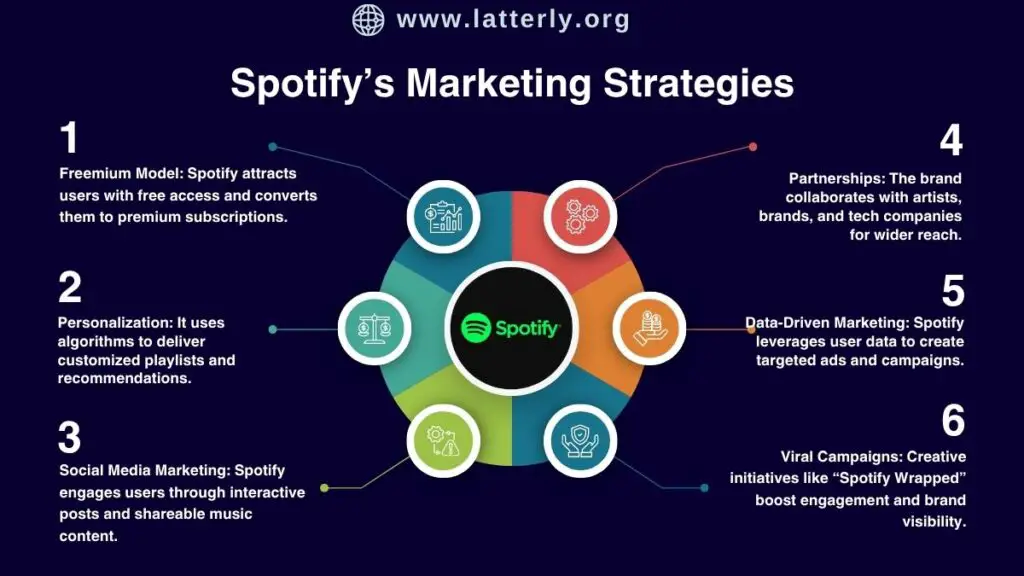
Spotify’s marketing success stems from three core pillars: advanced personalization through AI-powered recommendations, a strategic freemium model that converts 46% of free users to premium subscribers, and viral campaigns like Spotify Wrapped that turn user data into shareable social media moments. This approach has allowed the company to maintain market leadership while competing against tech giants like Apple and Amazon.
The platform’s marketing evolution demonstrates how modern companies must balance technology innovation with emotional connection. From targeting millennials and Gen Z demographics to expanding globally through localized content partnerships, Spotify has created a blueprint for building lasting customer relationships in the streaming economy while navigating profitability challenges and intense competition.
You may also find these Spotify guides helpful:
1. Spotify Business Model
2. Spotify Branding Strategy
3. Spotify Marketing Mix
4. Spotify SWOT Analysis
5. Top Spotify Competitors
Core Elements of the Spotify Marketing Strategy
Spotify’s marketing success stems from three fundamental pillars that work together to create an unparalleled user experience. The platform combines advanced artificial intelligence with emotional storytelling and comprehensive data analysis to build lasting brand loyalty among its 551 million users.
Personalization and Recommendation Algorithms
Spotify leverages machine learning and reinforcement learning to create highly personalized experiences for each user. The platform’s AI analyzes listening patterns, skip rates, and user interactions to predict future preferences with remarkable accuracy.
The Discover Weekly playlist exemplifies this approach. Updated every Monday, it delivers 30 personalized song recommendations based on individual listening history and collaborative filtering techniques.
Spotify’s recommendation algorithms extend beyond music discovery. The platform curates mood-specific playlists, creates Blend Playlists that merge two users’ musical tastes, and offers the AI DJ feature that continuously learns from user feedback.
Key Personalization Features:
- Daily Mix playlists tailored to specific genres
- Release Radar for new music from followed artists
- Spotify Radio stations based on selected songs
- Customized homepage layouts
Internal surveys reveal that 81% of Spotify users cite personalization as their favorite platform feature. This data-driven approach transforms casual listeners into engaged subscribers who feel understood by the platform.
Data-Driven Insights and User Analytics
Spotify collects extensive user data to inform marketing decisions and campaign strategies. The platform analyzes demographics, listening behaviors, geographic patterns, and engagement metrics to create targeted marketing initiatives.
User analytics drive playlist curation during peak listening times. The algorithms identify when users are most active and deliver personalized recommendations to maximize engagement and platform usage.
Spotify’s data collection enables precise audience segmentation. The platform targets millennials aged 18-24, students, and young professionals across North America, Europe, and Latin America with tailored content and advertising strategies.
Data Applications:
- Campaign optimization based on user preferences
- Geographic targeting for regional music trends
- Behavioral analysis for churn prevention
- A/B testing for feature improvements
The platform’s freemium model benefits from data insights, achieving a 46% conversion rate from free to premium subscribers. This high conversion rate demonstrates how data-driven personalization creates value that users are willing to pay for.
Emotional Branding and Storytelling
Spotify understands music’s emotional power and creates marketing campaigns that resonate on a personal level. The brand positions itself as a companion in users’ daily emotional journeys rather than just a technology platform.
Spotify Wrapped represents the pinnacle of emotional marketing. This annual campaign transforms user data into shareable stories about personal music journeys. The 2021 campaign generated a 461% increase in related tweets and engaged 120 million users.
The platform creates features that foster emotional connections. Playlist in a Bottle allows users to create musical time capsules, evoking nostalgia and strengthening long-term engagement with the platform.
Spotify’s humorous campaigns humanize the brand by highlighting quirky user-generated playlist names. These campaigns encourage community participation and generate organic word-of-mouth marketing through social media sharing.
Emotional Marketing Tactics:
- Valentine’s Day campaigns with curated love playlists
- Artist collaboration content that tells compelling stories
- User-generated content that celebrates individual music taste
- Nostalgic features that connect music to memories
Personalization at Scale
Spotify transforms individual listening experiences through sophisticated machine learning systems that analyze billions of data points daily. The platform’s AI-driven recommendation algorithm processes user behavior patterns to deliver tailored content across multiple touchpoints, from automated playlist generation to real-time music suggestions.
Machine Learning and AI-Driven Features
Spotify’s personalization engine processes over 70 billion data points daily from its 299 million subscribers worldwide. The platform’s machine learning models analyze listening history, skip rates, playlist additions, and time-spent metrics to understand individual preferences.
Teams across Spotify leverage AI and machine learning to apply personalization capabilities on a large scale. This technological foundation powers features that users have come to expect from their streaming experience.
The AI DJ feature represents Spotify’s most advanced personalization technology. This feature combines generative AI with editorial expertise to create contextualized listening experiences. Xavier Jernigan’s voice delivers personalized commentary that connects listeners to both familiar and unfamiliar music.
The AI DJ utilizes real-time feedback mechanisms to adjust recommendations instantly. When users skip tracks or request different moods, the system adapts its suggestions accordingly. This creates a dynamic experience that evolves throughout each listening session.
Music Recommendations and Music Taste
Spotify’s recommendation algorithm operates across multiple surfaces including Home, Search, and playlist generation. The system identifies patterns in user behavior to predict music preferences with increasing accuracy over time.
The platform analyzes audio features like tempo, key, and energy levels alongside collaborative filtering data. This dual approach enables recommendations that match both sonic preferences and behavioral patterns from similar users.
Music taste profiling extends beyond individual tracks to encompass genre preferences, artist discovery patterns, and seasonal listening habits. The algorithm recognizes that user preferences shift based on time of day, activity context, and mood states.
User engagement increases significantly when recommendations align with established taste profiles while introducing appropriate novelty. Spotify balances familiar content with discovery opportunities through calculated recommendation diversity.
Discover Weekly and Personalized Playlists
Discover Weekly originated as a Hack Week project and became Spotify’s first successful algorithmically driven playlist. This feature delivers 30 fresh song recommendations every Monday, tailored to each user’s listening history and similar user preferences.
The playlist combines collaborative filtering with natural language processing of music blogs and reviews. This approach identifies emerging tracks that align with individual taste profiles before they reach mainstream popularity.
Personalized playlists extend beyond Discover Weekly to include Daily Mix, Release Radar, and mood-based compilations. Each playlist serves specific listening contexts while maintaining the user’s core musical preferences.
Blend playlists demonstrate social personalization by combining multiple users’ taste profiles into shared listening experiences. This feature analyzes compatibility between different musical preferences to create collaborative playlists that satisfy multiple listeners simultaneously.

Target Audience and Demographics
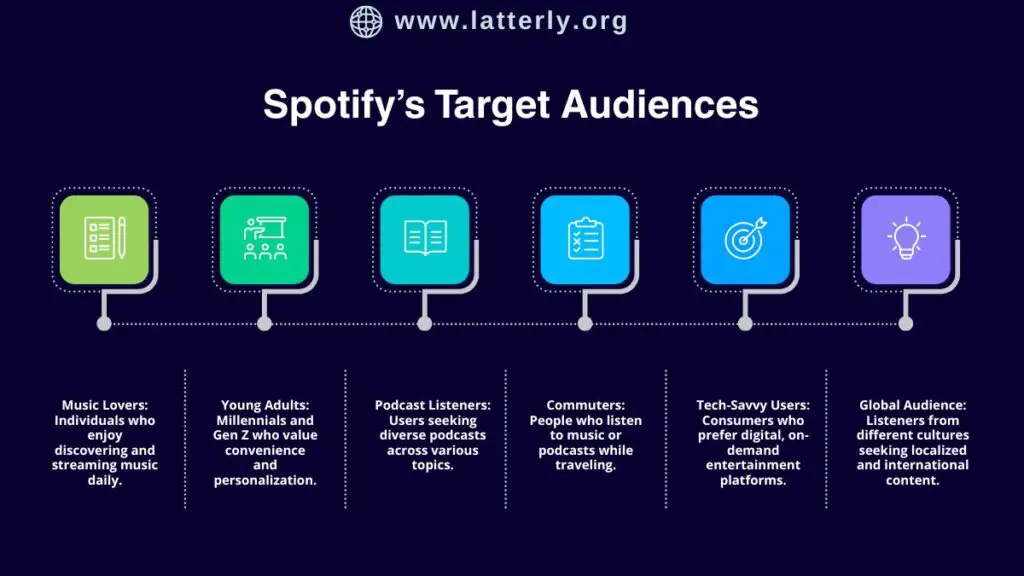
Spotify primarily targets millennials aged 18-24, students, and young professionals across key markets in the USA, Europe, Latin America, and North America. The platform focuses on music enthusiasts and podcast listeners who value personalized experiences and are highly engaged with digital content.
Millennials and Gen Z
Spotify’s core demographic consists of millennials and Gen Z users who grew up with digital technology. These age groups represent the platform’s most active users, with millennials aged 18-24 forming the primary target segment.
Gen Z users particularly appreciate Spotify’s social features and sharing capabilities. They frequently use playlist sharing and social media integration to express their musical identity.
The platform’s interface draws inspiration from popular social media platforms like TikTok and Instagram. This design approach creates a familiar browsing experience that resonates with younger audiences.
Key characteristics of this demographic:
- Tech-savvy and mobile-first
- Value personalization and discovery
- Active on social media platforms
- Willing to share musical preferences publicly
Students and Young Professionals
Students represent a significant portion of Spotify’s user base, often attracted by discounted subscription rates and extensive music libraries. The platform offers student-specific pricing to capture this price-sensitive segment.
Young professionals in their early careers form another crucial demographic. They typically upgrade from free to premium subscriptions as their disposable income increases.
This group values convenience and portability in their music consumption. They use Spotify during commutes, work sessions, and social activities.
The conversion rate from free to paid subscribers stands at 46 percent among these demographics. This high conversion rate demonstrates the effectiveness of Spotify’s freemium model in targeting students and young professionals.
Music Enthusiasts and Podcast Listeners
Music enthusiasts who actively seek new artists and genres form a dedicated user segment. These users engage heavily with Spotify’s discovery features like Discover Weekly and personalized recommendations.
Spotify has significantly expanded its podcast offerings to attract podcast listeners. The platform acquired production houses and signed exclusive deals with notable figures like Joe Rogan and Michelle Obama.
User engagement patterns:
- Create and share custom playlists
- Follow artists and receive new release notifications
- Explore mood-specific and genre-based playlists
- Listen to both music and podcast content regularly
Internal surveys reveal that 81% of Spotify users cite personalization as their favorite platform feature. This preference drives high engagement among music enthusiasts who appreciate tailored content recommendations.
Global Audience: USA, Europe, Latin America
The USA serves as Spotify’s primary market, generating substantial revenue and user growth. North America represents the platform’s most mature market with high premium subscription rates.
Europe constitutes another major market where Spotify maintains strong penetration across multiple countries. The platform adapts its content and marketing strategies to accommodate diverse European languages and cultural preferences.
Latin America represents a growing market with significant expansion potential. Spotify tailors its offerings to include regional artists and culturally relevant content for Latin American users.
Regional market characteristics:
| Region | Market Status | Key Features |
|---|---|---|
| USA | Primary market | High premium conversion rates |
| Europe | Established market | Multi-language support |
| Latin America | Growth market | Regional content focus |
The platform maintains over 551 million users globally, accessing a library of over 100 million tracks across these key geographic regions.
Freemium Model and Premium Subscriptions
Spotify’s freemium model creates a carefully balanced ecosystem where free users generate advertising revenue while serving as conversion prospects for premium subscriptions. The company achieves a 40% conversion rate from free to paid users through strategic limitations and value propositions that far exceed industry averages.
Basic Service vs Ad-Free Premium
Spotify’s free tier provides genuine value while creating strategic friction points that encourage premium upgrades. Free users access the full music catalog but encounter audio advertisements between songs and experience lower sound quality at 160 kbps.
The basic service restricts mobile users to shuffle-only playback for playlists and albums. Users cannot skip more than six tracks per hour or download music for offline listening.
Premium subscribers receive significant advantages:
- Ad-free streaming with no interruptions
- 320 kbps audio quality for enhanced listening experience
- Unlimited skips and on-demand playback control
- Offline listening with downloadable playlists
- Cross-device connectivity for seamless switching
These limitations create natural conversion incentives without destroying the free tier’s utility. The ad-free premium service addresses specific pain points that users experience during regular usage.
Localized Pricing Strategies
Spotify implements region-specific pricing to maximize subscription adoption across different economic markets. Premium subscriptions range from $1.99 per month in countries like India to $10.99 in the United States.
The company offers multiple subscription tiers:
| Plan Type | Features | Target Market |
|---|---|---|
| Individual | Single user access | Core demographic |
| Family | Up to 6 accounts | Households |
| Student | Discounted individual plan | Educational institutions |
| Duo | Two accounts | Couples |
Student discounts typically offer 50% reductions with verification requirements. Family plans provide per-user savings while increasing household penetration and reducing churn through shared playlists and social features.
Conversion Rate Optimization
Spotify employs data-driven strategies to maximize freemium-to-premium conversion rates. The platform identifies behavioral signals that indicate conversion readiness, such as playlist creation frequency and daily listening duration.
Targeted conversion messaging emphasizes personally relevant benefits rather than generic features. Users who create multiple playlists receive offers highlighting offline listening capabilities.
The company optimizes conversion timing through machine learning algorithms. Premium trials typically launch after users demonstrate consistent engagement patterns over several weeks of usage.
Key conversion drivers include:
- Personalized upgrade prompts based on listening habits
- Strategic ad placement that highlights premium benefits
- Social features that demonstrate collaborative playlist limitations
- Mobile-specific friction that emphasizes premium convenience
Conversion rate improvements from 26.6% to 40% over recent years demonstrate the effectiveness of these behavioral targeting approaches.
Social Sharing and Virality
Spotify has transformed its users into brand advocates through campaigns designed specifically for social media sharing. The platform leverages user data to create personalized, shareable content that generates millions of organic impressions across social networks.
Spotify Wrapped and #SpotifyWrapped
Spotify Wrapped represents one of digital marketing’s most successful viral campaigns. Launched in 2016, this annual initiative transforms user listening data into colorful, personalized summaries designed for social media sharing.
The campaign generated over 60 million shares in 2020 alone. Each Wrapped slide features bold fonts, bright colors, and sharp graphics optimized for screenshots and social media stories.
Users receive personalized statistics including top artists, songs, genres, and total listening minutes. The content feels exclusive and personal while remaining highly shareable.
The #SpotifyWrapped hashtag becomes a trending topic annually. Users eagerly anticipate the campaign’s December release, creating anticipation that extends Spotify’s marketing reach organically.
The campaign essentially weaponizes Spotify’s hundreds of millions of listeners as free advertisers. Each share exposes the Spotify brand to new potential users through trusted personal networks.
Spotify creates multiple touchpoints for social sharing beyond Wrapped. Features like Playlist in a Bottle allow users to create musical time capsules, encouraging nostalgic sharing and emotional connections.
Blend Playlists combine multiple users’ music tastes into shared playlists. This feature strengthens social connections while naturally promoting Spotify across friend networks.
The platform optimizes content formats for different social media platforms. Instagram Stories, TikTok videos, and Twitter posts each receive platform-specific design considerations.
Spotify’s interface includes built-in sharing buttons that reduce friction between discovery and sharing. Users can instantly share songs, playlists, or artists without leaving the app.
User-Generated Content and Playlists
User-created playlists serve as powerful social sharing tools. Playlist titles often reflect personal experiences, inside jokes, or cultural moments that resonate with specific communities.
Spotify recognized the viral potential of quirky playlist names in 2017. The company launched campaigns featuring artists reacting to unusual user-generated playlist titles, humanizing the brand while celebrating user creativity.
These user-generated playlists create network effects. Friends discover new music through shared playlists, leading to increased platform engagement and user retention.
The platform amplifies interesting user listening habits through targeted campaigns. Highlighting unique musical preferences creates community feeling and encourages users to embrace their individuality through sharing.
Influencer and Social Media Marketing
Spotify leverages strategic partnerships with content creators across TikTok and Instagram to amplify brand awareness and drive user acquisition. The platform’s social media strategy focuses on authentic collaborations and user-generated content campaigns.
TikTok and Instagram Integrations
Spotify maintains a strong presence across major social platforms with 8.4 million Instagram followers and significant TikTok engagement. The company integrates seamlessly with these platforms through features that allow users to share music discoveries directly to their social feeds.
TikTok serves as a powerful discovery engine for Spotify content. Users can easily add trending TikTok songs to their Spotify playlists through integrated sharing features. This creates a direct pipeline from viral social content to streaming revenue.
Instagram integration focuses on visual storytelling and playlist sharing. Spotify users frequently share their music tastes through Instagram Stories, creating organic promotional opportunities. The platform encourages this behavior by making sharing tools easily accessible within the app.
Influencer Partnerships and Campaigns
Spotify collaborates with diverse creator categories including music critics, lifestyle vloggers, podcast personalities, and micro-niche curators. These partnerships focus on long-term relationships rather than one-time promotional posts.
The company partners with creators who shape online culture across multiple platforms. Featured Curators represents a key initiative where selected influencers create trending playlists that receive platform promotion.
Influencer campaigns center around playlist curation and music discovery. Creators review albums from emerging artists and help users discover new tracks through personalized recommendations. This approach provides value to both audiences and artists.
Partnership Benefits:
- Authentic content creation
- Extended reach to niche audiences
- Enhanced playlist engagement
- Artist promotion opportunities
Social Media Trends and Engagement
Spotify’s social media strategy emphasizes user-generated content and community participation. The platform encourages users to share their music preferences organically across social networks.
Spotify Wrapped generates massive annual social media engagement with over 120 million participants. Users voluntarily share their listening statistics across platforms, creating widespread brand visibility without paid promotion.
The company monitors social media trends to identify emerging music and cultural movements. This social listening approach helps curate relevant playlists and connect with current conversations.
Interactive social content includes polls, music challenges, and collaborative playlists. These formats encourage active participation rather than passive consumption, strengthening user connections to the platform.
Strategic Partnerships and Exclusive Content
Spotify has strategically positioned itself as more than just a music platform through high-profile partnerships with major creators and exclusive content deals. The company has invested heavily in podcast exclusivity and artist collaborations to differentiate itself from competitors and drive subscriber growth.
Collaborations with Artists and Podcasters
Spotify actively partners with musicians and content creators to produce original content and enhance platform exclusivity. These collaborations range from artist-hosted podcasts to behind-the-scenes content that provides fans unique access to their favorite performers.
The platform creates artist-centric experiences through features like Spotify Singles and exclusive album releases. Artists benefit from Spotify’s global reach and data insights, while the platform gains content that cannot be found elsewhere.
Podcast creators receive production support, marketing assistance, and monetization opportunities through Spotify’s creator programs. These partnerships help emerging podcasters build audiences while providing Spotify with diverse content across multiple genres and demographics.
The company also facilitates collaborations between artists through playlist features and joint promotional campaigns. This approach creates cross-promotional opportunities that benefit all parties involved.
Exclusive Podcasts and Content
Spotify has made substantial investments in exclusive podcast content to compete with traditional media and other streaming platforms. The company acquired Gimlet Media and other production houses to build its podcast content library and production capabilities.
High-profile exclusive deals include partnerships with Joe Rogan and Michelle Obama, which attracted millions of listeners to the platform. These signings demonstrate Spotify’s commitment to becoming the primary destination for podcast consumption.
The platform produces original podcast series across various categories including true crime, comedy, news, and educational content. These exclusives serve as key differentiators that encourage users to choose Spotify over competitors.
Spotify’s exclusive content strategy extends beyond individual shows to include entire podcast networks and production companies. This approach ensures a steady pipeline of original content while building long-term competitive advantages.
Major Event Sponsorships and Partnerships
Spotify leverages high-profile events and sponsorships to increase brand visibility and connect with target audiences. The annual Stream On event showcases new features and partnerships while generating significant media coverage and user engagement.
The company sponsors major music festivals, award shows, and cultural events to align its brand with premium entertainment experiences. These partnerships provide valuable marketing exposure and reinforce Spotify’s position as a music industry leader.
Strategic partnerships with brands and media companies expand Spotify’s reach into new markets and demographics. Collaborations with telecommunications providers, device manufacturers, and other technology companies help distribute Spotify’s services to broader audiences.
Spotify also partners with educational institutions and organizations to provide specialized content and services. These relationships help the platform build credibility in specific sectors while creating additional revenue streams.
Marketing Mix of Spotify
Product
Spotify offers a digital music streaming service that provides access to millions of songs, podcasts, and audiobooks across various genres. Users can enjoy personalized playlists, curated recommendations, and features like Discover Weekly that enhance their listening experience. The platform is available on multiple devices, including smartphones, computers, smart TVs, and gaming consoles. Spotify’s key strength lies in its user-friendly interface and advanced algorithms that tailor content to individual preferences, making it a leader in digital entertainment.
Price
Spotify follows a freemium pricing strategy that combines free and premium tiers. The free version allows users to stream music with ads and limited control over playback, while the premium subscription removes ads and offers offline listening and better audio quality. The premium plans are available for individuals, students, and families, catering to different user segments. This model encourages free users to upgrade while maintaining a broad audience through accessibility.
Place
Spotify’s distribution is entirely digital, accessible through its app and website worldwide. Its global presence is supported by availability in over 180 countries, ensuring easy access for users regardless of location. The platform’s partnerships with device manufacturers, telecom companies, and car systems like Android Auto and Apple CarPlay expand its reach and convenience.
Promotion
Spotify uses a mix of digital marketing, social media engagement, influencer collaborations, and data-driven campaigns. Creative initiatives like Wrapped encourage user participation and sharing, turning listeners into brand promoters. The brand also uses targeted ads, podcasts, and collaborations with artists to attract and retain users. By focusing on personalization and community engagement, Spotify effectively positions itself as a lifestyle-driven entertainment brand that connects people through music and culture.
Global Expansion and Market Localization
Spotify’s international growth strategy centers on deep localization across 180+ markets, tailoring content curation and user experiences to regional preferences. The platform leverages data-driven insights to adapt its offerings for specific cultural contexts while maintaining consistent core functionality.
Localized User Experience and Content
Spotify operates in 73 languages with dedicated localization teams managing cultural adaptation across regions. The platform creates region-specific playlists that reflect local music preferences and cultural events.
Each market receives customized playlist curation based on listening patterns and regional music trends. Spotify’s algorithm identifies emerging local artists and incorporates them into discovery features for users in specific geographic areas.
The company employs local market experts who understand cultural nuances and music consumption habits. These specialists ensure that promotional campaigns and content recommendations align with regional sensibilities.
Cultural relevance extends beyond language translation to include local pricing strategies and payment methods. Spotify adjusts subscription costs based on regional economic conditions and purchasing power.
The platform’s “Wrapped” feature adapts to highlight locally popular genres and artists alongside global trends. This approach creates personalized experiences that feel authentic to users in each market.
Expanding in Latin America and Europe
Latin America represents a key growth market where Spotify has invested heavily in local content partnerships. The platform launched in Brazil, Mexico, and other Latin American countries with dedicated marketing campaigns featuring regional artists.
Spotify established partnerships with Latin record labels to expand its catalog of regional music. These agreements provide exclusive content and early access to new releases from popular Latin artists.
The European expansion strategy focused on Nordic countries first, then expanded to major markets like Germany, France, and the UK. Each market entry included partnerships with local telecom providers and device manufacturers.
Premium subscriber growth in these regions exceeded expectations due to targeted pricing strategies and localized content offerings. Spotify adapted its freemium model to match regional digital payment preferences and banking systems.
Adaptation to Regional Music Trends
Reggaeton became a focal point for Spotify’s Latin American strategy, with dedicated playlists and promotional campaigns highlighting the genre’s artists. The platform created region-specific reggaeton playlists that drove significant engagement.
Spotify’s data analytics identify emerging genres before they achieve mainstream recognition. This early identification allows the platform to create curated content and promote local artists to global audiences.
The company adapts its recommendation algorithms to weight regional preferences more heavily for local users. European users receive different algorithmic suggestions compared to Latin American users, even for similar listening patterns.
Music streaming platforms compete intensely for market share in developing regions. Spotify differentiates through superior localization and partnerships with local artists and labels.
Regional music festivals and cultural events receive dedicated playlist support and promotional campaigns. These initiatives strengthen Spotify’s connection to local music communities and drive user acquisition.
User Experience and Platform Innovation
Spotify’s platform innovation centers on seamless multi-device integration and immersive user experiences. The company has developed cutting-edge mobile interfaces, ventured into virtual worlds, and optimized audio streaming across all platforms.
Mobile Interface and Smart Speakers
Spotify’s mobile interface prioritizes intuitive navigation and quick access to personalized content. The app features a dark theme design that reduces eye strain during extended listening sessions.
Smart speaker integration allows users to control playback through voice commands across Amazon Echo, Google Home, and Apple HomePod devices. Users can request specific songs, playlists, or ask for music recommendations without touching their phones.
The Car Thing device, though discontinued, demonstrated Spotify’s commitment to expanding beyond traditional interfaces. The platform now integrates with automotive systems from Tesla, BMW, and other manufacturers.
Cross-device synchronization ensures seamless transitions between mobile, desktop, and smart speakers. Users can start listening on one device and instantly switch to another without interruption.
Spotify Island and Interactive Campaigns
Spotify Island launched on Roblox as the platform’s first virtual world experience. The interactive space features virtual concerts, games, and exclusive artist merchandise for users to explore.
Players can create their own music-themed islands and interact with beats from artists like K-pop group SUNMI and Hip Hop artist ROYAL & the Serpent. The platform regularly hosts live virtual events and artist meetups.
Interactive campaigns extend beyond virtual worlds through gamified playlists and music discovery challenges. Users earn badges and unlock exclusive content by completing listening milestones.
The AI DJ feature provides personalized commentary and music selections, creating an interactive radio experience tailored to individual preferences.
Audio Streaming and Offline Listening
Spotify delivers 320 kbps audio quality for Premium subscribers, while free users receive 160 kbps streams. The platform uses Ogg Vorbis compression to maintain sound quality while minimizing bandwidth usage.
Offline listening allows Premium users to download up to 10,000 songs across five devices. Downloaded content expires after 30 days without internet connection to protect artist royalties.
The streaming technology adapts to network conditions, automatically adjusting quality to prevent buffering. Users can manually select streaming quality in settings to control data usage on mobile networks.
Spotify Connect enables users to control playback remotely across compatible devices, turning smartphones into universal remote controls for their entire audio ecosystem.
Challenges, Opportunities, and Future Outlook
Spotify operates in an increasingly competitive landscape while pursuing sustainable profitability and long-term growth. The company faces pressure from established competitors and must adapt to changing user behaviors in music streaming and discovery.
Competition in the Music Streaming Industry
The music streaming industry remains fiercely competitive with multiple platforms vying for market share. Apple Music, Amazon Music, and YouTube Music pose significant threats to Spotify’s dominance through their integrated ecosystems and competitive pricing strategies.
Apple Music leverages its hardware ecosystem to create seamless user experiences. Amazon Music benefits from Prime membership bundling and competitive pricing. YouTube Music capitalizes on its vast video content library and Google’s advertising infrastructure.
Spotify must differentiate itself through superior music discovery algorithms and personalized recommendations. The platform’s data-driven approach provides advantages in understanding user preferences and creating targeted playlists.
Network effects become crucial as more users generate better recommendations for everyone. Spotify’s large user base creates competitive moats through improved algorithm performance and artist attraction.
The company faces ongoing pressure from music streaming platforms that offer exclusive content deals with major artists. These exclusivity agreements can temporarily shift user loyalties and market dynamics.
Evolving User Preferences and Trends
User expectations in music streaming continue to evolve rapidly. Listeners increasingly demand high-quality audio formats, with lossless streaming becoming a standard expectation rather than a premium feature.
Podcast consumption has grown significantly, creating opportunities for content diversification. Spotify’s investments in podcast exclusives and original content reflect this trend toward audio entertainment beyond music.
Music discovery preferences shift toward social features and community-driven recommendations. Users seek authentic connections with artists and fellow listeners through shared playlists and social interactions.
Younger demographics expect seamless integration across devices and platforms. They value personalized experiences that adapt to their daily routines and contextual listening situations.
The rise of short-form video content influences how users discover music. TikTok and similar platforms create viral music moments that streaming services must capitalize on quickly.
Sustaining Growth and Brand Loyalty
Spotify’s growth strategy focuses on geographic expansion, product innovation, and improved monetization. The company must balance user acquisition costs with lifetime value across diverse global markets.
Brand loyalty remains challenging in the subscription economy where switching costs are relatively low. Spotify must continuously demonstrate value through exclusive content, superior recommendations, and user experience improvements.
The freemium model creates conversion challenges as the company seeks to transform free users into premium subscribers. Ad revenue from free users must offset infrastructure costs while encouraging upgrades.
Digital marketing efforts must adapt to increasing customer acquisition costs across all channels. The company’s data advantages enable more precise targeting but require sophisticated attribution models.
International expansion presents opportunities in emerging markets with growing smartphone adoption. However, these markets often require localized content and competitive pricing strategies that may impact profitability.
