
Starbucks turned a single 1971 Seattle store into a global coffee leader recognized for premium experiences and everyday rituals. The company operates more than 38,000 stores worldwide in 2024, with brand equity anchored in quality, convenience, and community. Marketing remains the engine behind its scale, turning seasonal demand, digital engagement, and local relevance into repeatable growth.
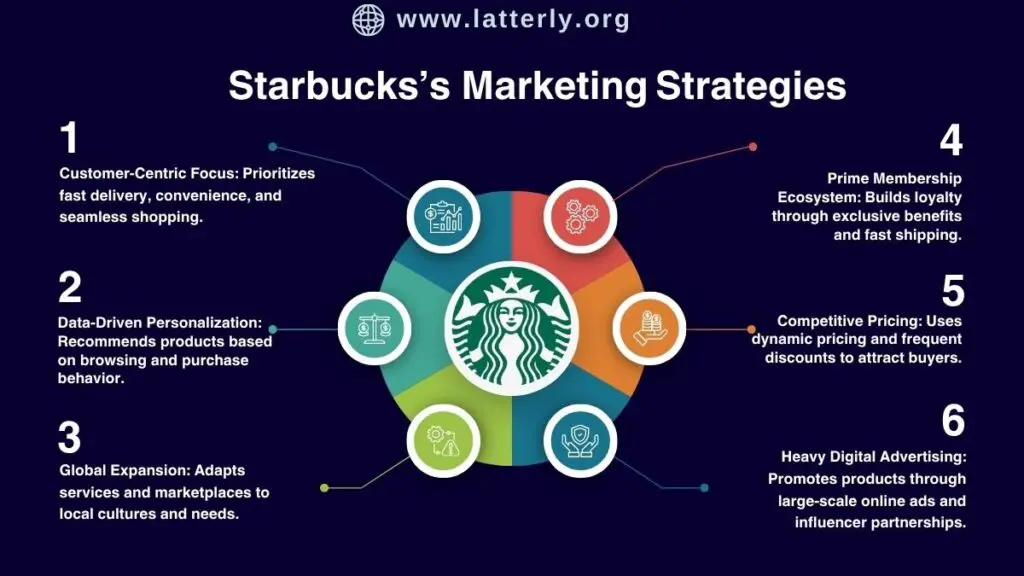
Starbucks generated an estimated 2024 revenue near 36 to 37 billion dollars, based on recent performance trends and guidance commentary. The brand’s loyalty ecosystem, distinctive product storytelling, and omnichannel execution strengthen customer frequency and ticket size. Consistent innovation across beverages, formats, and technology gives Starbucks pricing power and meaningful differentiation.
This article presents the marketing framework that guides Starbucks toward durable loyalty and profitable expansion. The analysis explores core strategic elements, audience segmentation, digital acceleration, and the role of creators and community, with practical examples and data.
You may also find these guides helpful:
1. Starbucks Branding Strategy
2. Starbucks Marketing Mix
3. Starbucks SWOT Analysis
4. Starbucks Business Model
5. Starbucks Competitors
Core Elements of the Starbucks Marketing Strategy
In a crowded beverage marketplace, Starbucks relies on a disciplined framework that blends product theater, digital utility, and brand purpose. The strategy elevates everyday occasions with distinctive beverages, curated experiences, and localized storytelling. Integrated execution across stores, delivery, and the app turns cultural moments into measurable sales outcomes.
- Starbucks Rewards anchors loyalty, with an estimated 34 to 35 million active U.S. members in 2024, driving a majority of tender.
- Mobile Order & Pay streamlines convenience, contributing roughly one third of U.S. transactions, improving throughput during peak morning and afternoon dayparts.
- Seasonal icons like the Pumpkin Spice Latte create urgency, inspire social conversation, and define a dependable commercial calendar.
- Data-led personalization aligns offers, tastes, and timing, lifting conversion rates and encouraging incremental food attachment.
- Premium yet accessible positioning supports pricing resilience, while value plays target competitive pressure without diluting brand perception.
The company integrates merchandising, store design, and digital signals to coordinate national campaigns and local availability. Product pipelines emphasize cold beverages, flavor innovation, and customizations that photograph well and encourage sharing. Rewards-based challenges and limited drops stimulate repeat visits and participation. Consistent alignment between marketing and operations sustains brand consistency across thousands of neighborhoods.
Starbucks connects strategy to daily execution through clear planning rhythms and empowered field teams. Leaders set seasonal themes, while markets localize content and assortments based on demand patterns. Digital insights inform merchandising shifts, staffing, and inventory planning. This operating model enables fast iteration while protecting the brand’s premium feel.
Strategy-to-Execution Cadence
The brand converts high-level priorities into weekly actions with test markets, cross-functional squads, and playbooks. Teams evaluate product performance, offer design, and content resonance, then scale successful elements. The cadence balances creativity and discipline to maintain relevance at speed.
- Seasonal calendars coordinate product, creative, and media, aligning national storytelling with local store readiness and supply availability.
- Test-and-learn markets validate new beverages, packaging, and rewards mechanics, producing clear thresholds for national rollouts.
- Cross-functional pods link marketing, supply chain, and operations, reducing friction and protecting guest experience during promotions.
- Partner training and toolkits standardize execution, ensuring consistent recipes, visual standards, and program compliance across formats.
This system produces reliable commercial impact, even as tastes evolve and channels fragment. Estimated 2024 results suggest modest revenue growth, supported by cold beverage mix and loyalty frequency improvements. Strong operational coordination underpins every campaign, transforming brand love into sustained performance. Starbucks wins through a repeatable model that balances innovation with disciplined execution.
Target Audience and Market Segmentation
In a global beverage market defined by customization and convenience, Starbucks organizes demand around occasions, lifestyles, and regional preferences. The brand segments for taste, time of day, and digital behavior, then designs journeys that feel personal. This approach ensures relevance across urban centers, college towns, and international capitals.
- On-the-go professionals seek fast morning solutions, favoring Mobile Order & Pay, breakfast pairings, and reliable store proximity.
- Students and creators value customization, social sharing, and value days, engaging heavily with cold beverages and limited flavors.
- Health-oriented guests choose lower-sugar, dairy-alternative, and protein-forward options, supported through transparent nutrition and clear menu navigation.
- Value-conscious families respond to promotions, bundled offers, and refillable cup programs, stretching spend without sacrificing quality.
- Global locals prefer regional beverages and localized flavors, reflecting cultural tastes while retaining Starbucks signature craft.
Cold beverages represent a major growth engine, appealing to younger cohorts and warmer climates. Starbucks reported a dominant cold mix in the United States in recent years, and 2024 demand likely remained near three quarters of beverage sales. That mix enables premium pricing, accessory toppings, and visually compelling social content. The result strengthens average ticket and creates merchandising flexibility.
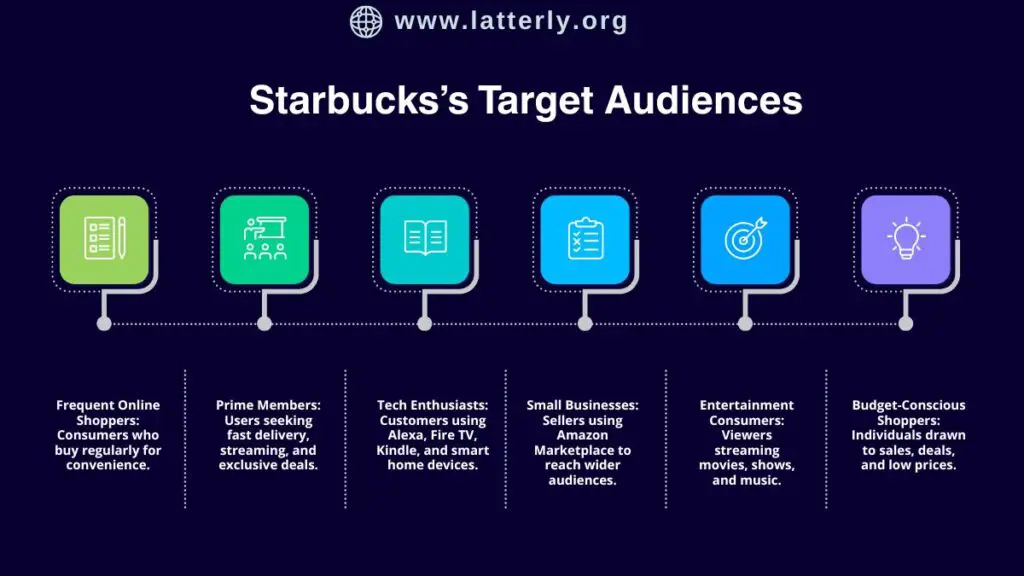
Segmentation also reflects digital intensity across cohorts and markets. Rewards members engage with personalized offers, tiered challenges, and suggested pairings that suit habitual orders. Internationally, mobile adoption, store density, and payment preferences shape channel emphasis. Starbucks calibrates messaging and benefits to match local expectations for speed, value, and discovery.
Occasion-Based Journeys
Occasions structure how Starbucks plans assortments, content timing, and offer design. Teams map morning, afternoon, and evening needs, then assign products and channels accordingly. This discipline supports coherent storytelling and higher conversion.
- Morning ritual focuses on hot espresso, breakfast sandwiches, and pre-ordering, reducing friction during the commute window.
- Afternoon treat features cold beverages, refreshers, and bakery items, anchoring social breaks and study sessions with sharable options.
- Evening pickup prioritizes delivery and convenience, meeting lighter traffic with targeted offers and limited-time flavor interest.
- Weekend leisure highlights seasonal experiences, reusable cups, and community moments, deepening connection and basket size.
China, EMEA, and Latin America adapt these journeys to local culture and climate, reinforcing familiarity while showcasing regional specialties. Store formats, including drive-thru, pickup, and Reserve, match neighborhood needs and traffic flows. Loyalty structures then amplify the journeys with tailored incentives that reward frequency and exploration. Segmentation precision translates directly into repeatable demand across diverse markets.
Digital Marketing and Social Media Strategy
Digital discovery shapes beverage choices, so Starbucks invests in owned platforms and high-reach social channels. The app, website, and CRM deliver personalized offers, order status, and frictionless payment. Social media amplifies seasonal moments, encourages participation, and directs traffic to purchase.
- Owned app engagement remains central, with push campaigns that lift same-day transactions and strengthen tender share among members.
- Instagram and TikTok spotlight limited flavors, barista craft, and UGC trends, reinforcing brand desirability and immediacy.
- SEO and menu landing pages capture intent around seasonal searches, converting curiosity into orders and store visits.
- Email and in-app messages coordinate with local availability, preventing stockouts and improving guest satisfaction during high demand.
Starbucks uses iterative testing across creative, timing, and segmentation to improve efficiency. Teams sequence content from teaser to drop to reminder, building anticipation and clarity. Dynamic offers align with weather, time of day, and location, improving relevance without overwhelming customers. The result increases conversion while protecting brand equity.
Owned and earned media link directly to commerce through Mobile Order & Pay and delivery integrations. Content always points to a next action that respects context, whether a coupon, a game, or a recipe tutorial. Measurement connects impressions to orders using unique offer codes and geolocation windows. Marketing and operations collaborate to ensure readiness during planned spikes.
Platform-Specific Strategy
Each platform receives a distinct role within a unified creative system. Teams assign formats, KPIs, and cadence based on audience behavior and storytelling fit. This approach maximizes reach without duplicating effort.
- TikTok emphasizes creator-led recipes and challenges, encouraging customization culture and timely participation around seasonal launches.
- Instagram prioritizes Reels and Stories for visual craft, store ambiance, and countdowns that build urgency before limited drops.
- YouTube hosts longer features on sourcing and sustainability, strengthening brand depth and trust among discerning audiences.
- LinkedIn highlights partner growth, innovation, and hiring, supporting employer brand and stakeholder reputation.
- The Starbucks app runs gamified challenges, offering bonus stars and streaks that translate engagement into measurable sales.
Consistent voice, rapid community moderation, and accessibility standards protect the brand while scaling conversation. Estimated 2024 campaign tests show meaningful click-through and order conversion improvements from weather-triggered offers and localized creatives. A strong bridge between storytelling and transaction turns attention into loyalty. Starbucks treats digital as the primary front door for discovery and purchase.
Influencer Partnerships and Community Engagement
The creator economy rewards brands that empower authentic voices and local credibility. Starbucks builds relationships across macro, micro, and barista creators to reflect real usage and craft expertise. Community programs complement influencers, translating goodwill into participation and store traffic.
- Micro creators demonstrate customization tips and seasonal first sips, driving high comment rates and actionable saves among younger audiences.
- Barista storytellers showcase technique and hospitality, reinforcing quality signals and human connection at the counter.
- Macro lifestyle partners expand reach during tentpole launches, pairing aspirational content with clear calls to order or visit.
- Localized creators in markets like China use Douyin and Xiaohongshu, matching platform norms and cultural preferences.
Influencer briefs prioritize brand safety, disclosure, and measurable outcomes such as tagged orders or store finder clicks. Creative latitude encourages genuine recipes and hacks that reflect local trends. Performance dashboards track view-through, saves, and redemptions, informing talent selection and budget allocation. Partnerships extend beyond posts into live tastings and community events.
Community engagement adds trust and purpose that pure advertising cannot deliver. Starbucks partners mobilize employees, customers, and nonprofits around neighborhood priorities, including youth opportunity and environmental stewardship. Community Stores and volunteer initiatives create local equity that compounds with every activation. The brand translates impact into loyalty without resorting to cause fatigue.
Community Programs and Social Impact
Starbucks connects marketing with tangible programs that strengthen neighborhoods and partner pride. These initiatives reinforce brand values and create repeatable storytelling with measurable outcomes. Participation scales through local leadership and national support.
- The Starbucks Foundation funds grants for community resilience, youth empowerment, and small business growth across key markets.
- Community Stores dedicate profits and programming to local organizations, advancing education, job training, and inclusion.
- Inclusive hiring initiatives support veterans, refugees, and opportunity youth, aligning talent strategy with social impact.
- Environmental days coordinate cleanups and tree plantings, linking sustainability commitments with visible local action.
Influencers frequently join these programs, adding credible reach and narrative depth to impact stories. The combined effect increases advocacy and lowers acquisition costs through earned attention and word of mouth. Authenticity, transparency, and measurable benefits sustain community trust over time. Starbucks strengthens loyalty when marketing and community work in concert with everyday store experiences.
Product and Service Strategy
Starbucks builds its product strategy on beverage leadership, culinary quality, and nimble seasonal innovation. The portfolio centers on espresso and brewed coffee, while cold beverages, customization, and plant-based options expand relevance across dayparts. The company aligns menu development with store formats and digital journeys to raise frequency and ticket.
Seasonal limited-time offers, localized flavors, and iterative extensions provide a steady cadence that keeps the brand culturally relevant. Cold beverages now dominate mix, with U.S. cold drinks accounting for roughly 75 percent of beverage sales in 2023 and holding strong in 2024. This shift informs equipment investments, bar flow, and training priorities that enable faster throughput and consistent quality.
Product development follows a clear architecture that balances core, seasonal, and platform-led innovation. The approach protects iconic beverages, extends platforms like Cold Foam and Refresha, and adds culinary pairings that elevate perceived value. The result sustains pricing power while widening appeal to younger consumers and afternoon occasions.
Innovation Pipeline and Menu Architecture
Starbucks scales ideas that combine craveable flavor with efficient execution. The brand then adapts platforms regionally to reflect taste preferences and ingredient availability.
- Platform extensions: Cold Foam, Nitro Cold Brew, and Refresha provide repeatable canvases for seasonal flavors and limited drops.
- Signature launches: Oleato, introduced in 2023, broadened the premium layer and continued selective expansion in 2024 markets.
- Customization engine: Hundreds of millions of unique beverage combinations allow personalization without sacrificing speed or quality.
- Plant-forward choices: Oat, almond, and soy alternatives, plus meatless breakfast items, address dietary preferences and sustainability goals.
- Operational fit: New items target simplified builds, fewer steps, and improved consistency during peak periods.
Food strategy complements beverages with warm breakfast sandwiches, protein boxes, and bakery items that raise attachment. Expanded savory choices aim to lift afternoon traffic and check size, supported by warming equipment and display improvements. Sourcing standards remain central, with 99 percent of coffee ethically verified through C.A.F.E. Practices, reinforcing trust and brand mission.
- Attachment drivers: Breakfast sandwiches and bakery pairings increase average ticket and improve morning conversion.
- Daypart expansion: Protein-forward snacks and sweet bakery features support mid-day and late afternoon visits.
- Sourcing credibility: C.A.F.E. Practices and farmer support programs strengthen brand equity around quality and ethics.
The ready-to-drink and at-home portfolio extends the brand beyond stores and strengthens mental availability. Through the Global Coffee Alliance with Nestlé, Starbucks packaged coffee and RTD beverages reach more than 80 markets, reinforcing menu cues seen in stores. This integrated product system keeps Starbucks top of mind across occasions, which supports loyalty and sustained premium positioning.
Pricing, Distribution, and Promotional Strategy
Starbucks connects premium pricing with value moments, omnichannel access, and targeted promotions. The company prices for quality and experience, then uses digital offers and bundles to protect frequency during macro volatility. Distribution spans drive-thru, cafes, pickup-only formats, delivery, and consumer packaged goods, ensuring reach across use cases.
Omnichannel scale multiplies marketing efficiency and reduces friction. Store formats match local demand patterns, while the app orchestrates ordering, payment, and personalized incentives. This system drives repeat visits and higher attachment with minimal incremental media spend.
Omnichannel Distribution Footprint
Starbucks optimizes store mix to capture convenience-led growth and urban pickup needs. Partnerships extend the brand into homes and workplaces through delivery and grocery channels.
- Format diversity: Drive-thru leads new U.S. development; pickup-only and smaller-footprint cafes serve dense trade areas efficiently.
- Delivery access: National partnerships with Uber Eats and DoorDash expand on-demand coverage and unlock new occasions.
- CPG reach: The Global Coffee Alliance with Nestlé distributes Starbucks packaged coffee and RTD beverages in 80-plus countries.
- Global scale: The company operated approximately 38,000 stores worldwide in 2024, based on public filings and year-to-date updates.
Pricing combines premium positioning with selective value engineering. Starbucks introduced a national Pairings Menu in 2024, offering a hot or iced coffee with a croissant for around 5 dollars, or with a breakfast sandwich for about 6 dollars. This platform protects traffic while maintaining brand quality cues and margin discipline.
- Personalized deals: Starbucks Rewards members receive targeted offers, star boosts, and daypart nudges that increase frequency.
- Seasonal activations: Games such as Starbucks for Life, holiday drops, and bonus star challenges create habit loops and social sharing.
- Localized pricing: Market-level adjustments reflect labor, commodity costs, and competitive intensity, with careful guardrails on brand perception.
- Revenue mix: U.S. 90-day active Rewards members reached an estimated 34 to 35 million in 2024, driving a majority of company-operated sales.
Promotional design favors digital-first, measurable mechanics that reward behavior without diluting core price. The approach amplifies limited-time products, supports off-peak traffic, and protects brand equity across channels. This integrated pricing and distribution strategy sustains premium margins while keeping Starbucks accessible and top of mind in daily routines.
Brand Messaging and Storytelling
In a global beverage market shaped by lifestyle and identity, Starbucks uses narrative to elevate a daily ritual into a meaningful moment. The brand’s messaging centers on human connection, the craft of coffee, and a consistent “third place” promise between home and work. Seasonal rituals, local community stories, and ethical sourcing add layers that deepen relevance. With an estimated $36.5 billion in fiscal 2024 revenue and about 38,000 stores, the company scales storytelling without losing a personal voice.
Starbucks frames its purpose through themes of belonging and progress, then translates those themes into product-led stories. Cold beverages dominate conversation and sales, with roughly 75 percent of U.S. beverage sales now cold, so creative leads with texture, visuals, and customization. The brand balances functionality with feeling, pairing clear product benefits with emotive social content. This approach keeps innovation grounded in everyday moments that customers share and repeat.
Core narrative ingredients guide campaign choices and ensure consistency across markets and channels. These pillars appear in national creative, local community posts, and long-form editorial on the Starbucks Stories platform. The result aligns positioning with day-to-day experiences that customers recognize.
Narrative Pillars and Campaign Themes
- Third Place: Stores and content highlight connection, warmth, and consistency, positioning Starbucks as a reliable social anchor.
- Personalization: Customization and name-cup moments celebrate individuality, building relatable, shareable micro-stories.
- Ethical Sourcing: C.A.F.E. Practices and farmer stories communicate quality, traceability, and long-term impact.
- Seasonal Rituals: Red Cup Day and Pumpkin Spice Latte drive anticipation, user content, and incremental frequency.
- Community: Local partnerships and service projects reinforce neighborhood roots and broaden brand meaning.
- Premium Craft: Reserve Roasteries and small-lot features elevate coffee authority while inspiring mainstream product ideas.
Visual identity remains simple, modern, and green-forward, supporting high recognition across packaging and digital media. Barista voices, store textures, and behind-the-scenes craft footage bring authenticity to short-form video. Editorial features on Starbucks Stories add depth, combining product education with human profiles. These layers create a consistent tone that travels easily from in-app banners to cinematic brand film.
- Owned channels, including the app, email, and Starbucks Stories, carry the bulk of narrative depth and utility.
- Social platforms reach over 70 million combined followers in 2024, amplifying rituals and product drops at speed.
- UGC surges during seasonal moments, especially summer cold launches and holiday gifting events.
- Localized content leverages neighborhood stores, regional flavors, and market-specific cultural moments.
This storytelling system turns everyday purchases into branded experiences, reinforcing loyalty and pricing power. Consistent themes, distinctive visuals, and community-first content keep the brand meaningful at scale. Starbucks sustains memorability and trust because its narrative speaks to both craft and connection. That balance converts attention into repeat visits and long-term brand equity.
Competitive Landscape
Global coffee retail now blends premium craft with value pricing and speed, pressuring brands to win on convenience and distinctiveness. Starbucks leads the category on brand equity and digital engagement, while competitors accelerate expansion and promotions. In the United States, quick-service rivals court value-seeking consumers as inflation resets expectations. Internationally, regional leaders localize menus and formats to match culture and price sensitivity.
Dunkin, McCafé, Tim Hortons, Costa Coffee, Peet’s Coffee, and Dutch Bros anchor competition across price tiers and occasions. Dutch Bros expands rapidly with drive-thru formats and flavor-forward beverages, reaching hundreds of locations and strong youth appeal. In China, Luckin surpassed Starbucks in store count, offering aggressive discounts and hyperlocal digital operations. Starbucks counters with premium positioning, localized beverages, and an expanding footprint exceeding 7,000 stores in China.
Scale and technology shape the competitive edge, particularly through loyalty ecosystems and order-ahead convenience. Starbucks continues to focus on differentiated beverage innovation and store formats that create experiential separation. The company also leverages the Global Coffee Alliance with Nestlé to extend reach in consumer packaged goods and ready-to-drink. That multi-channel presence reinforces awareness beyond cafes and sustains trial across new occasions.
Starbucks Competitive Advantages
- Brand Equity: High recognition and premium cues support category leadership and pricing resilience.
- Digital Flywheel: Over 34 million active U.S. Starbucks Rewards members in 2024 integrate payment, personalization, and order-ahead.
- Format Diversity: Drive-thru, pickup, and Reserve formats adapt to traffic patterns and occasion needs.
- Sourcing and Supply: Long-term farmer partnerships and C.A.F.E. Practices secure quality and continuity.
- Innovation Pipeline: Cold foam, refreshers, and seasonal platforms maintain cultural relevance and frequency.
- CPG Scale: Nestlé partnership extends the brand into homes, workplaces, and travel channels worldwide.
Competitive risks include value wars, cold-beverage imitators, convenience from c-stores, and rising operating costs. Labor dynamics and macro shifts in key markets, especially China, add volatility. Starbucks manages these pressures with localized pricing, improved throughput, and targeted promotions that protect brand equity. Strategic discipline maintains differentiation while addressing near-term demand headwinds.
- Localized value plays, including a Pairings Menu in 2024, protect traffic without diluting premium positioning.
- Expansion prioritizes drive-thru and pickup stores to improve speed and capacity during peaks.
- Data-driven personalization increases relevance and reduces promotional waste.
- International growth focuses on high-potential markets with strong urban density and rising coffee adoption.
Starbucks sustains leadership by leaning into premium experience, digital convenience, and multi-channel reach rather than pure price competition. Clear advantages in brand, data, and innovation create separation that rivals find difficult to replicate. The company’s ability to flex formats and messaging across markets keeps the proposition strong. That balanced strategy underpins continued share resilience across changing market cycles.
Customer Experience and Retention Strategy
In specialty beverage retail, repeatable delight drives lifetime value more than one-time promotions. Starbucks builds retention through a connected ecosystem of store design, service routines, and digital tools. The brand positions every visit as a customizable, reliable ritual that rewards frequency. That system turns a simple order into a cycle of anticipation, convenience, and recognition.
Starbucks Rewards anchors the experience with clear benefits and frequent touchpoints. U.S. active members surpassed 34 million in 2024, accounting for an estimated 60 percent of U.S. company-operated tender. Mobile Order and Pay contributed roughly 30 percent of U.S. transactions, improving speed and predictability. Cold beverage leadership and customization amplify reasons to return throughout the day.
A clear set of mechanics powers the digital flywheel: earn, personalize, and accelerate convenience. The program blends immediate value with gamified challenges that nudge behavior. Machine learning surfaces timely offers while reducing noise for members.
Starbucks Rewards and Digital Flywheel
- Value Exchange: Stars accrue through purchases, with redemptions for food and beverages that customers understand at a glance.
- Personalization: Targeted offers, challenge streaks, and birthday rewards increase relevance and frequency.
- Stored Value: Preloaded cards and app balances created over $1.5 billion in stored value at peak 2024 holiday periods, enhancing predictability.
- Convenience: Order-ahead, curbside, and drive-thru integrations reduce friction and shorten dwell times during rushes.
- Omnichannel: The Nestlé partnership keeps the brand present at home, reinforcing habit loops between retail and CPG.
In-store routines support digital gains with consistent service and throughput improvements. Beverage stations, warming ovens, and handoff areas aim to protect quality during high volume. Training and station design reduce bottlenecks while preserving friendliness at the bar. Seasonal playbooks prime teams for peak windows tied to limited-time offers.
- Customization choices reach well over 170,000 combinations, making personal expression a recurring loyalty driver.
- Store formats expand to drive-thru and pickup-only footprints that match commuter and urban needs.
- Limited-time beverages and merch drops create collection moments that encourage visits and sharing.
- Service recovery tools in the app resolve issues quickly, preserving trust after rare misses.
This retention model blends emotion, utility, and routine to keep customers engaged. Starbucks wins repeat business because the experience feels personal, quick, and rewarding. The integration of loyalty, mobile, and store execution compounds over time. That compounding effect turns everyday orders into enduring relationships and resilient sales.
Advertising and Communication Channels
In premium coffee, awareness grows fastest where product stories meet daily rituals. Starbucks uses a tightly integrated mix of owned, earned, and selective paid media to keep seasonal moments top of mind. The company emphasizes its app, in-store theater, and social communities instead of heavy traditional spending. This approach keeps the message consistent while converting attention directly into transactions and loyalty enrollment.
- Starbucks Rewards in the United States counted an estimated 34 to 35 million 90-day active members in 2024, influencing roughly 60 percent of U.S. tender.
- Mobile Order and Pay generated an estimated 30 percent of U.S. transactions in 2024, turning push messaging into immediate point-of-sale action.
- Starbucks maintained large social footprints in 2024, including an estimated 19 million Instagram followers and more than 2 million on TikTok, supporting fast creative testing.
- Seasonal tentpoles like Pumpkin Spice Latte and Red Cup Day anchor content calendars, drive user-generated content, and sustain high year-over-year brand searches.
- Ready-to-Drink campaigns with PepsiCo leverage connected TV, retailer media networks, and in-store merchandising to lift awareness and off-premise sales simultaneously.
Owned channels carry the heaviest load. Email, app inbox, and push notifications deliver personalized offers, product education, and store-specific updates that reinforce habit formation. Store digital menuboards and drive-thru screens align visuals with app placements to maintain creative consistency. The combination moves customers from browsing to ordering within a single, trackable ecosystem.
Starbucks applies a channel-by-channel playbook that blends storytelling with offer science. The strategy calibrates message depth to each touchpoint, from short-form social video to long-form blog and press narratives. This balance keeps the brand aspirational while remaining unmistakably retail-focused.
Channel Roles and Creative System
- App and email: deliver personalized offers, order reminders, and product education tied to time-of-day and weather-based triggers.
- Social platforms: showcase behind-the-bar craft, seasonal drops, and community initiatives that spark saves, shares, and user-generated content.
- OOH and store media: reinforce product availability, speed, and convenience near high-traffic corridors and drive-thru clusters.
- Retail media networks: support Ready-to-Drink growth with audience targeting close to purchase and measurable sales lift.
- Public relations: amplify sustainability milestones, menu innovation, and partner (employee) stories that strengthen corporate reputation.
Selective paid investment, strong owned reach, and reliable earned attention create a compounding effect. Messages travel from social to app to store with minimal creative loss, lifting both frequency and conversion. The disciplined channel architecture preserves premium perceptions while translating cultural moments into measurable sales. Starbucks sustains brand salience without overspending on broad, inefficient media.
Sustainability, Innovation, and Technology Integration
Environmental responsibility increasingly shapes consumer preference and regulatory expectations. Starbucks sets measurable goals while linking sustainability to convenience and product quality. The company targets a 50 percent reduction in carbon, water, and waste by 2030, supported by store standards and packaging innovation. Technology advances accelerate these goals without compromising speed or beverage consistency.
- Greener Stores certification expanded globally, with several thousand locations recognized by 2024 and a stated goal of 10,000 by 2025.
- Personal cup acceptance extended across U.S. drive-thru and mobile orders in 2024, making reuse practical for habitual customers.
- Renewable energy procurement continues to offset a large portion of store electricity needs in key markets with scalable contracts.
- Cold beverages represented roughly 75 percent of U.S. beverage sales in 2024, focusing innovation on energy-efficient ice and refrigeration systems.
- Packaging pilots test lightweight materials, improved recyclability, and deposit-return programs to reduce single-use waste.
Innovation focuses on product platforms aligned with evolving tastes and dayparts. Cold foam, refreshers, and dairy alternatives widen choice sets without slowing operations. Ready-to-Drink lines extend Starbucks beyond the café, carrying brand equity into convenience channels. Equipment upgrades standardize quality at speed during peak traffic periods.
Technology integration supports both sustainability outcomes and guest experience. Starbucks deploys AI-informed labor planning, inventory forecasting, and beverage sequencing to reduce waste and wait times. Store IoT systems monitor energy use and maintenance needs to improve uptime and consumption efficiency. These tools simplify work for baristas while maintaining consistent craft.
Innovation Pipeline and Enablers
- Deep Brew AI: powers personalization, demand forecasting, and operational recommendations that cut waste and elevate throughput.
- Equipment modernization: advanced espresso platforms and cold beverage stations improve reliability and reduce water and energy use.
- Digital ordering: mobile and drive-thru integrations make personal cup and customization journeys intuitive, lifting adoption.
- Supplier partnerships: collaborate on greener materials, dairy alternatives, and RTD packaging that meet quality and recycling standards.
- Greener Stores toolkit: standardizes energy, water, and waste benchmarks for rapid scaling across new and existing locations.
Linking sustainability to convenience ensures programs scale with customer behavior, not against it. Technology removes friction from greener choices, strengthening both brand affinity and operational efficiency. The combination keeps Starbucks competitive while progressing toward climate and waste goals customers can see and trust.
Data Analytics and Performance Measurement
Restaurant leaders now compete on the speed and precision of decisions. Starbucks uses a robust analytics stack to optimize marketing, operations, and product lifecycles. The company blends first-party data from its app with store-level signals to improve relevance and reduce waste. Metrics inform creative, offers, staffing, and inventory with a closed-loop approach.
- First-party identity scales through Starbucks Rewards, which accounted for an estimated 60 percent of U.S. tender in 2024.
- Key performance indicators include comparable sales, average ticket, attach rate, visit frequency, and customer lifetime value.
- Offer engines test discounts, bonus stars, and product recommendations against control groups to quantify incremental transactions.
- Geospatial analysis aligns media placements with store clusters, daypart patterns, and local weather or event triggers.
- Menu analytics track customization patterns to inform seasonal lineups and inventory depth for high-demand modifiers.
Measurement blends experimentation and modeling. Test-and-learn frameworks isolate the impact of creative variants, channel mix, and cadence. Media mix modeling and retail media attribution provide top-down and bottom-up views of effectiveness. These tools guide investment into the highest-return audience cohorts and moments.
Starbucks also integrates operational analytics that affect customer perception. Queue times, order accuracy, and beverage pick-up latency feed into service refinements. Forecasts translate into staffing schedules and batch preparation guidance, protecting quality during rushes. Better execution reduces marketing leakage from poor in-store experiences.
Analytics Capabilities and Tooling
- Personalization models: predict next-best action across email, app, and push to increase order frequency and basket diversity.
- Experimentation platform: runs A/B and multivariate tests across offers, placements, and timing to deliver statistically confident lifts.
- Attribution and modeling: combine media mix modeling with incrementality tests across TV, social, search, and retail media networks.
- Store intelligence: IoT telemetry and POS data inform maintenance, energy management, and product availability to prevent out-of-stocks.
- Brand tracking: continuous surveys monitor preference, consideration, and message recall to validate long-term equity health.
Data discipline turns marketing into a compounding engine rather than a cost center. Starbucks strengthens decisions with controlled tests and operational telemetry, translating insight into repeatable growth. The result is a cycle where each campaign, store improvement, and product launch learns faster and performs better than the last.
Future Outlook and Strategic Growth
Global coffee demand continues to expand, with premium and convenient formats gaining share. Starbucks targets balanced growth across company-operated markets and licensed partnerships. The brand focuses on profitable store formats, digital scale, and diversified product platforms. This direction protects margins while growing reach in high-potential regions.
- Store count approached an estimated 38,000 globally in 2024, with a long-term goal of 55,000 locations by 2030.
- China remains a strategic pillar with thousands of stores and continued city-tier expansion supporting delivery and digital ordering.
- India and Southeast Asia represent outsized runway, with licensed partners accelerating openings in dense urban corridors.
- Ready-to-Drink growth with PepsiCo extends the brand where cafés are not present, complementing retail media investments.
- Starbucks Reserve and premium formats deepen brand equity, tourism appeal, and experiential differentiation in flagship markets.
Format optimization anchors unit economics. Drive-thru and Pickup stores capture high-frequency occasions with faster throughput and lower footprints. Remodels and equipment upgrades expand cold beverage capacity and digital order staging. These improvements raise peak-hour productivity and guest satisfaction.
Financial flexibility supports disciplined reinvestment. While market capitalization fluctuated around the 100 to 120 billion dollar range in 2024, consistent cash generation funds store growth, technology, and shareholder returns. Capital prioritization favors markets with strong digital adoption and supply chain efficiency. The approach balances expansion with resilience during demand shifts.
Strategic Priorities 2025–2030
- Accelerate high-return store formats and modernizations that improve speed, beverage quality, and labor effectiveness.
- Deepen personalization, including predictive reorder journeys and wallet integration that simplify checkout and increase frequency.
- Scale sustainability initiatives, particularly Greener Stores and reusable cup adoption across mobile and drive-thru occasions.
- Expand international partnerships, aligning menu localization and supply chains to regional tastes and regulatory frameworks.
- Broaden product platforms, including plant-forward options and RTD innovations that increase daypart coverage and occasions.
Starbucks enters the next cycle with strong brand equity, trusted convenience, and a proven digital engine. Focused expansion, operational excellence, and sustainability progress position the company to compound loyalty across channels and geographies. The path emphasizes smart growth that protects the customer experience and advances long-term value creation.
