
Tiffany & Co has built a 187-year legacy of craftsmanship, culture, and covetable design since its 1837 founding in New York. The brand sits at the heart of LVMH’s jewelry strategy, with global awareness anchored in the Tiffany Blue identity and a leadership position in engagement rings. Marketing fuels that success through iconic storytelling, star-powered collaborations, and a retail theater that converts admiration into purchase intent. Under LVMH ownership, the brand has accelerated product elevation, digital reach, and clienteling discipline.
Tiffany now operates approximately 320 stores across more than 25 countries, with The Landmark on Fifth Avenue redefining luxury retail as an experiential flagship. While LVMH does not disclose standalone figures, industry estimates place Tiffany’s 2024 revenue in the 6.5 billion to 7.5 billion dollar range, reflecting steady post-acquisition growth and improved mix. Engagement remains the growth engine, supported by high jewelry theater, elevated gold and diamond assortments, and culturally relevant campaigns. That mix positions Tiffany to scale desirability while protecting rarity and price integrity.
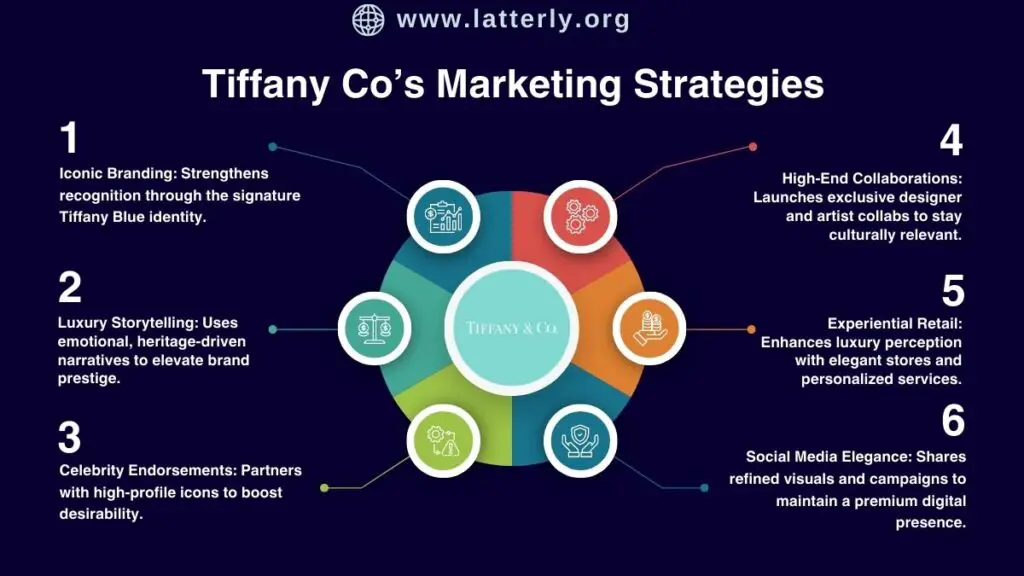
The brand’s marketing framework blends heritage authority, modern celebrity reach, and data-informed precision. Core elements include luxury content orchestration, community-building through ambassadors and causes, and a retail-led halo that amplifies product launches. Together, these pillars support Tiffany’s timeless elegance and its dominance in the engagement ring category.
Core Elements of the Tiffany & Co Marketing Strategy
In a luxury market where provenance, rarity, and emotion drive willingness to pay, Tiffany’s strategy centers on storytelling that proves value. The brand codifies its equity through distinctive assets: the Tiffany Blue hue, the Blue Box, and a heritage archive that legitimizes every innovation. Marketing then connects these codes to modern culture through ambassadors, collaborations, and immersive flagships that showcase craft with theater.
Tiffany prioritizes category leadership in bridal while elevating its mix into higher-value gold and diamond collections. The approach balances accessibility with aspiration, ensuring entry customers see a pathway into fine jewelry while collectors discover high jewelry masterpieces. This equilibrium sustains brand heat without overexposure, supporting pricing power across regions.
Tiffany’s playbook translates heritage into relevant, repeatable actions across channels and moments. The pillars below capture the model that moves admirers from awareness to advocacy with tight brand control.
Brand Pillars and Distinctive Assets
- Iconic codes: Tiffany Blue, the Blue Box, and the T mark deliver instant recognition in content, retail, and packaging.
- Category authority: Engagement ring leadership, supported by diamond provenance programs and expert education, anchors trust.
- Flagship experiences: The Landmark creates an aspirational stage for launches, art, and archival storytelling.
- Cultural collaborations: Projects with artists, athletes, and designers expand reach while preserving luxury framing.
- Clienteling discipline: High-touch service and data-informed outreach deepen lifetime value with top clients.
Product launches, from Lock to HardWear, pair cultural moments with omnichannel reveals and limited editions. Creative centers on craft close-ups, atelier narratives, and celebrity styling that reinforce quality cues. The brand scales this content globally, then localizes for Asia with platform-native formats and K-pop or C-pop ambassadors.
- Examples: About Love with global icons, Nike Air Force 1 x Tiffany capsule, and The Landmark reopening content series.
- Results: Elevated average selling prices, higher premium mix, and expanded earned media visibility.
- Guardrails: Tight color, typography, and tone guidelines keep collaborations within luxury boundaries.
This disciplined system converts heritage into modern desirability, preserving scarcity while compounding brand fame across generations.
Target Audience and Market Segmentation
Luxury jewelry serves multiple intent states: commitment, celebration, and self-purchase. Tiffany organizes its audience around these occasions and the level of craftsmanship sought. The brand aligns messaging and assortment to each segment, sustaining engagement ring dominance while growing high jewelry and men’s categories.
Affluent millennials and Gen Z drive discovery and gifting, especially in Asia, while Gen X and Boomers anchor high jewelry and bespoke commissions. In the United States, independent bridal research consistently ranks Tiffany among the most-considered engagement ring brands. Analysts estimate bridal comprises roughly one quarter to one third of sales, with high jewelry and icons like HardWear and Lock increasing their mix.
Tiffany structures its segmentation across intent, life stage, and region to align product and content with customer needs. The areas below summarize the most active growth cohorts.
Priority Segments and Occasions
- Bridal leadership: Proposal-intent shoppers seeking certification, provenance, and design heritage in solitaire and fancy shapes.
- Self-purchase women: Urban professionals upgrading to gold and diamond icons for daily wear and milestones.
- High jewelry collectors: Global UHNWs seeking rare stones, bespoke pieces, and private previews at The Landmark.
- Male shoppers: Gift-givers and self-purchase clients entering through watches, cufflinks, and modern men’s jewelry.
- Asia growth: Gen Z and millennial consumers in China, Korea, and Japan responding to K-pop and local ambassador content.
Regional focus balances scale in the Americas with momentum in Asia. Historically, the Americas contributed the largest share, with Asia and Japan providing strong margins and faster social adoption. Europe supports tourism flows and halo moments tied to art and fashion calendars.
- Channel preferences: Bridal customers research online and finalize in-store; collectors prefer private appointments and salons.
- Content needs: Educational guides for rings and diamonds, styling inspiration for icons, and archival storytelling for connoisseurs.
- Purchase triggers: Life events, cultural festivals, and limited editions that convey immediacy without discounting.
This segmentation focuses investment on high-intent journeys while seeding long-term aspiration among future collectors.
Digital Marketing and Social Media Strategy
Digital touchpoints now shape luxury consideration as much as storefront windows. Tiffany treats social media, search, and onsite experience as a cohesive funnel, using creative that amplifies craft while guiding high-intent actions. The brand favors platform-native storytelling and precise audience targeting to protect exclusivity as reach scales.
Owned channels lead with cinematic craft visuals, ambassador styling, and product education. Paid media reinforces hero collections and engagement ring discovery with shoppable formats. The ecommerce experience supports ring builders, virtual appointments, and store pickup to capture both urgency and ceremony.
Tiffany operationalizes a platform-specific approach that respects user behavior and local culture. The focus areas below reflect reach, format, and role in the conversion path.
Platform-Specific Strategy
- Instagram: Approximately 16 million followers in 2024; hero for brand codes, ambassador content, and product drops with high save rates.
- TikTok: Roughly 2.5 million followers; short-form craft clips, styling how-tos, and creator stitching sustain discovery among Gen Z.
- WeChat and Xiaohongshu: China CRM, appointment booking, and UGC styling notes drive localized consideration.
- YouTube: Long-form ateliers, gemstone films, and The Landmark features build watch time and premium perception.
- SEO: Ring education hubs and diamond glossaries target high-intent queries to feed boutique appointments.
Technology investment under LVMH strengthens measurement and personalization without diluting privacy. Partnerships with major cloud and analytics providers enable unified IDs, incrementality testing, and media mix modeling that favor quality reach over frequency.
- Onsite tools: Interactive ring builder, appointment scheduling, and concierge chat streamline complex purchases.
- Testing cadence: Creative variants measure craft close-ups against ambassador looks to optimize saves and click-through.
- Commerce signals: Store inventory visibility and pickup options increase confidence for gifting windows.
This digital ecosystem unites content and commerce, turning cultural attention into qualified traffic and showroom-ready demand.
Influencer Partnerships and Community Engagement
Cultural relevance in luxury depends on credible voices, not just paid reach. Tiffany curates long-term ambassador relationships and creator partnerships that mirror its values of artistry and excellence. The brand complements star power with community programs that expand access and nurture future creative talent.
Global icons extend Tiffany’s storytelling into music, film, and fashion, while creators translate high jewelry into everyday styling. Strategic capsules and event dressing keep the brand in conversation without compromising scarcity. Community initiatives, scholarships, and arts education reinforce purpose with measurable outcomes.
Tiffany structures partnerships across a spectrum, from global ambassadors to niche creators who deliver authority in specific markets. The mix below balances fame, credibility, and conversion.
Ambassadors, Creators, and Cultural Collaborations
- Global ambassadors: Beyoncé and Jay-Z for About Love, BLACKPINK’s Rosé, Jimin, Anya Taylor-Joy, and Florence Pugh for jewelry icons.
- Cultural capsules: Nike Air Force 1 x Tiffany, NBA trophy heritage, and artist collaborations that reinforce craftsmanship.
- Event moments: Red carpet styling and The Landmark exhibitions that drive earned media and high search intent.
- Creator programs: Platform-native stylists and jewelers producing educational content on care, fit, and diamond quality.
Community engagement formalizes through The Tiffany Atrium, the brand’s social impact platform launched to empower underrepresented creatives. About Love funding included scholarships for students at Historically Black Colleges and Universities, pairing financial support with mentorship. Local workshops and heritage talks invite communities into the craft, turning education into affinity.
- Programs: Scholarships, internships, and creative grants linked to arts and design institutions.
- Outcomes: Expanded pipeline of diverse talent and authentic narratives that strengthen brand trust.
- Measurement: Participation rates, mentorship hours, and alumni placements tracked against multi-year goals.
This partnership and community model sustains cultural leadership while grounding the brand’s fame in substance and shared opportunity.
Product and Service Strategy
Tiffany & Co builds its product strategy around enduring icons, modern design, and high-touch services that protect desirability. The house elevates its core bridal leadership through the historic Tiffany Setting, then expands lifetime value with fine jewelry, watches, and home objects. Innovation flows through seasonal introductions and the annual Blue Book high jewelry program, which anchors brand heat and editorial reach. This disciplined approach protects pricing power, while newness attracts younger luxury customers without diluting heritage.
Collection Architecture and Iconic Lines
The brand balances proven signatures with fresh interpretations that keep assortments relevant. Hero collections carry clear design codes, strong storytelling, and wide price ladders for global scalability.
- Bridal: The Tiffany Setting, Tiffany True, and Tiffany Soleste lead engagement ring demand with precise cut standards and graded diamond quality.
- HardWear, T, Knot, and Lock: Contemporary lines deliver recognizable silhouettes, modular stacking, and unisex appeal across silver and gold.
- Blue Book: Annual high jewelry chapters showcase rare stones and craftsmanship, reinforcing scarcity and editorial authority for the maison.
- Schlumberger, Elsa Peretti, Paloma Picasso: Design legends provide timeless equity, museum-level credibility, and multigenerational customer affinity.
- Accessories and Home: Sterling silver, objects, eyewear, and fragrance extend gifting and entry price points while amplifying the Blue Box halo.
- High Watchmaking and Trophies: Select timepieces and global sports trophies strengthen masculine reach and institutional prestige.
Product development focuses on modularity, craft visibility, and cross-category storytelling. Limited editions and material innovations refresh icons without erasing historic lines. Editorial imagery highlights artisanship details, such as hand-set pavé or prong geometry, to justify premium positioning. This craft-first narrative sustains long-term desirability and repeat purchase behavior.
Client Services and Omnichannel Experience
Tiffany links products to services that sustain confidence across the ownership journey. Digital and in-store experiences remove friction, deepen education, and elevate gifting moments.
- Personalization: Engraving, monogramming, and bespoke projects extend emotional value, particularly for bridal and anniversary milestones.
- Care and Warranty: Complimentary cleaning, inspections, resizing, and repair programs reinforce lifetime stewardship and authenticity.
- Diamond Transparency: The Diamond Craft Journey shares sourcing and craftsmanship information, increasing trust for responsible luxury buyers.
- Virtual Services: Appointments, size guidance, and AR try-on tools support confident purchase decisions for remote and omnichannel clients.
- Gifting Rituals: The Blue Box, white satin ribbon, and ceremony training standardize memorable unboxing experiences globally.
This product and service system protects bridal dominance and strengthens category expansion. Customers enter through engagement rings, then trade up into design icons, high jewelry, or gifting. Elevated services sustain long tenure and advocate-led referrals. The strategy converts heritage into reliable growth while maintaining the aura of rarity.
Marketing Mix of Tiffany & Co
Tiffany structures its marketing mix to reinforce brand equity while scaling profitable demand. Product leadership, selective distribution, premium pricing, and high-impact promotion work together to drive awareness and conversion. Industry estimates place Tiffany’s 2024 revenue between 6.0 and 6.5 billion dollars within LVMH, reflecting steady growth after the Fifth Avenue Landmark reopening. Consistent investment in creative, clienteling, and retail theater sustains pricing power across regions.
Product and Place Priorities
The house leads with icons and high jewelry, then supports breadth through accessible silver and gifting. Distribution emphasizes flagship experiences and high-potential luxury corridors across key global cities.
- Product: Bridal, design icons, and high jewelry anchor margins; capsule drops and seasonal edits stimulate traffic and social reach.
- Merchandising: Clear price steps create intuitive trade-up paths across metals and stone sizes, improving attachment rates for complements.
- Retail Footprint: Approximately 320 stores worldwide in 2024 prioritize flagship, luxury mall, and travel-retail locations with strong tourist flow.
- E-commerce: A seamless site and remote selling tools support global availability, with online sales estimated at 15 to 20 percent of revenue.
- Visual Standards: Consistent Blue Box equities, polished vitrines, and art-led installations dramatize craftsmanship and amplify shareability.
Store design functions as media, merging gallery-like displays with atelier storytelling. The Landmark in New York operates as brand theater, event venue, and museum, elevating both tourism and local clienteling. Regional flagships in cities such as Shanghai, Seoul, and Paris apply the same playbook with localized art and heritage curation. This approach translates brand authority into measurable footfall and conversion.
Promotion and People
Tiffany invests in campaigns, cultural collaborations, and clienteling expertise to ensure consistent demand. High-profile ambassadors and trophy partnerships extend relevance across fashion, music, and sports.
- Campaigns: Lock, T, and HardWear receive always-on storytelling with ambassadors including Rosé and Jimin, energizing youth segments.
- Cultural Moments: The 2024 Tiffany Wonder exhibition in Tokyo showcased craftsmanship and archives, driving press coverage and education.
- Trophies: Longstanding sports trophy commissions reinforce authenticity, precision, and national-level visibility during major events.
- Clienteling: Appointment selling, wish lists, and event hosting nurture lifetime value, especially for bridal and high jewelry customers.
- Community: Philanthropy and arts partnerships strengthen values alignment, increasing affinity among purpose-driven luxury buyers.
Alignment across product, place, promotion, and people keeps Tiffany’s positioning clear and premium. Strong creative and theater-like retail deliver both awareness and conversion. The integrated mix protects brand equity while supporting consistent, global revenue growth. This disciplined orchestration underpins Tiffany’s reputation for timeless luxury.
Pricing, Distribution, and Promotional Strategy
Tiffany manages pricing, channel control, and communications to preserve scarcity and drive profitable scale. Bridal and high jewelry anchor premium positioning, while entry categories invite new clients. Controlled distribution ensures consistent service standards and packaging rituals worldwide. Promotional investments lean on culture-making campaigns and archival storytelling to maintain relevance and distinctiveness.
Pricing Architecture and Value Signals
The brand uses transparent education and clear ladders to justify premiums. Pricing reflects craftsmanship, materials, provenance, and lifetime care commitments.
- Tiering: Sterling silver entries often begin in the low hundreds of dollars, while gold icons and pavé versions command several thousand dollars.
- Bridal Range: Popular engagement ring configurations often span an estimated 8,000 to 40,000 dollars, depending on carat, color, clarity, and cut.
- High Jewelry: One-of-a-kind creations frequently reach six to seven figures, supporting perceived rarity and global press appeal.
- Value Proof: Diamond education, craft transparency, and lifetime services reinforce long-term ownership value beyond initial price.
- Price Governance: Centralized reviews reflect precious metal and diamond market dynamics, protecting margin and cross-market consistency.
Distribution strategy concentrates on owned stores and e-commerce, limiting third-party exposure. This control protects presentation, pricing integrity, and service quality. Flagships amplify storytelling with exhibitions, archives, and art installations. The result strengthens destination status in gateway cities and luxury malls.
Channel Footprint and Regional Balance
Tiffany maintains a global retail network with disciplined expansion. Regional performance depends on tourism flows, local bridal trends, and high jewelry demand.
- Retail Network: Around 320 stores globally in 2024, with continued upgrades to align with The Landmark’s design and service standards.
- Regional Mix: Internal and industry analyses suggest 2024 sales skew toward the Americas and Asia-Pacific, with Europe and Japan providing balanced support.
- E-commerce Role: Digital contributes an estimated 15 to 20 percent of sales, assisting discovery and appointment booking for flagship experiences.
- Travel Retail: Select airport and tourist corridors capture gifting occasions and international bridal shoppers without diluting exclusivity.
Promotional activity blends iconic branding with performance-minded demand capture. Ambassadors, exhibitions, and trophy moments deliver mass visibility, while search, social, and CRM convert interest into appointments. Partnerships with cultural leaders and high-fashion stylists elevate editorial coverage and aspirational storytelling. This balanced promotion model preserves luxury codes while sustaining strong commercial outcomes.
- Ambassadors: Rosé and Jimin headline jewelry campaigns, broadening reach among younger luxury audiences across Asia and global markets.
- Editorial and Events: Blue Book unveilings, The Landmark programming, and museum-caliber exhibitions drive press and client engagement.
- Performance Marketing: Precision bidding on bridal and gifting keywords, paired with appointment CTAs, supports measurable conversion.
- Heritage Assets: Historic designs and archives provide evergreen content that reinforces authenticity during product launches.
Coherent pricing, selective distribution, and culturally resonant promotion safeguard Tiffany’s premium standing. The strategy compels discovery, secures conversion through trust and service, and sustains advocacy after purchase. Strong control across these levers preserves margin while reinforcing the house’s leadership in engagement and luxury gifting.
Brand Messaging and Storytelling
Luxury jewelry buyers respond to stories that carry heritage, credibility, and emotion. Tiffany and Co, founded in 1837, centers its voice on enduring love, New York sophistication, and artisanal craft. Under LVMH, the house has sharpened its editorial approach with cinematic campaigns and high-profile ambassadors to reach younger luxury audiences. Industry estimates place Tiffany’s 2024 brand value near the upper tier of global jewelry names, reflecting momentum in both bridal and fashion collections.
Iconography and Narrative Platforms
Tiffany builds memory structures with instantly recognizable codes that travel across media, retail, and packaging. The brand highlights origin, provenance, and timeless design to reinforce trust in an emotionally charged purchase. These elements create a consistent narrative that strengthens the brand’s engagement ring leadership.
- Tiffany Blue and the Blue Box function as high-recall assets, with Pantone 1837 anchoring visual consistency across digital, retail, and gifting touchpoints.
- The Landmark on Fifth Avenue acts as a storytelling stage, blending museum-grade curation, contemporary art, and immersive product galleries to elevate desirability.
- The Tiffany Setting, introduced in 1886, anchors modern proposals, linking heritage craft with contemporary romance across video, editorial, and in-store education.
- Brand Finance’s Luxury rankings in 2024 place Tiffany among top global jewelry names, with analysts estimating brand value in the high single-digit billions.
Casting and content strategy balance legacy and modernity. Ambassadors such as Rosé, Jimin, and Gal Gadot extend reach across Asia and the United States, amplifying new product stories like Lock and high jewelry chapters. Editorials use New York street iconography, atelier footage, and proposal moments to convey authenticity without losing polish. This approach ensures storytelling feels lived-in, not staged, preserving the house’s refined aura.
Cultural Moments and Collaborations
Culture-driven drops help the brand enter new conversations while protecting core equity. Collaborations and limited releases create scarcity and signal relevance to younger audiences without diluting bridal authority. These moments bring fresh attention to hero lines and heritage motifs.
- Tiffany x Nike Air Force 1 1837 delivered instant sell-outs and premium resale values, generating broad social discovery and search spikes for the brand.
- NFTiff with CryptoPunks in 2022 sold out 250 passes, validating a luxury-on-chain thesis that still feeds earned media and innovation credentials.
- Titan by Pharrell Williams in 2024 blended maritime motifs with sculptural spikes, expanding unisex appeal and improving collection breadth beyond bridal.
- The Blue Book high jewelry narratives, including 2024’s celestial chapters, present museum-level storytelling that ladders into aspiration for entry segments.
Precise control of symbols, cities, and craft gives Tiffany an enduring story platform that scales from high jewelry to sterling silver. The result maintains cultural currency without eroding the aura needed for proposals and milestone gifting. Strong codes and curated collaborations keep the brand modern while protecting its timeless core.
Competitive Landscape
Global luxury jewelry remains concentrated among heritage maisons with powerful retail footprints and iconic designs. Tiffany competes directly with Cartier, Van Cleef and Arpels, Bulgari, and Harry Winston, while defending bridal share against Signet’s banners and digital natives. The house leans on American luxury positioning, New York flagship theater, and the Tiffany Setting to maintain category leadership. Analysts estimate Tiffany’s 2024 revenue in the 6 to 7 billion dollar range, given its scale within LVMH’s Watches and Jewelry group.
Peers in High Jewelry and Bridal
High jewelry credibility and bridal dominance define long-term brand power. Competitors invest in icons, stones, and network reach to win share across occasion-driven purchases. Tiffany counters with landmark retail, provenance messaging, and strong engagement ring conversion.
- Richemont’s Jewelry Maisons reported approximately €14.2 billion in sales for FY2024, underscoring Cartier and Van Cleef’s strength in hard luxury.
- Signet Jewelers, with Kay, Zales, and Jared, posted roughly 7 billion dollars in FY2024 sales and claims significant U.S. engagement ring share.
- Digital natives like Brilliant Earth generated about 450 million dollars in 2024 net sales estimates, maintaining pressure on price transparency and sustainability claims.
- Bulgari, Harry Winston, Chopard, and Graff compete on diamonds and high jewelry theater, reinforcing the importance of extravagant showcases and VIC programs.
Tiffany’s moat rests on instantly known codes and a clear bridal proposition. The Landmark’s experiential model creates reasons to visit beyond purchase, lifting conversion and media. The brand’s product architecture features lifetime pieces and accessible gifting, which supports recruitment and trade-up paths. That blend of theater, trust, and icons remains difficult for rivals to copy quickly.
Differentiators and Risks
Competitive dynamics evolve as lab-grown diamonds pressure entry pricing and digital discovery fragments attention. Tiffany focuses on quality, provenance, and icon refreshes to defend pricing power. Strategic agility remains essential across geographies and demographics.
- Differentiators: Blue Box equity, Fifth Avenue flagship magnetism, the Tiffany Setting, and curated collabs that refresh relevance without diluting heritage.
- Risks: Lab-grown diamond substitution in entry bridal, currency swings, China demand variability, and intense advertising from rival maisons.
- Mitigations: Provenance storytelling, high jewelry halo investments, omni-service enhancements, and selective cultural partnerships that drive earned media.
- Outlook: Sustained focus on craft and icons positions Tiffany to hold premium share even as lower-priced entrants chase volume.
Strong brand codes, elevated retail, and disciplined storytelling allow Tiffany to compete above price-led players while matching heritage rivals on aspiration. The brand’s distinct American luxury voice keeps it differentiated in a crowded field, supporting durable engagement ring leadership.
Customer Experience and Retention Strategy
In luxury, experience quality determines lifetime value more than one-time transactions. Tiffany builds retention through high-touch clienteling, seamless service, and thoughtful aftercare that protects sentimental purchases. The program turns proposals into long relationships through anniversaries, upgrades, and gifting. This approach increases repeat rates without introducing points-based incentives that can dilute prestige.
Clienteling and Omni-Service
Tiffany integrates digital tools with human service to maintain elegant continuity across channels. Associates use data-informed clienteling to personalize outreach and service moments. Customers receive convenience without sacrificing ceremony or craft storytelling.
- Appointment-based selling includes virtual consultations, private in-store previews, and remote concierge via phone, email, and messaging platforms across key markets.
- Tiffany Concierge supports product discovery, sizing guidance, and bespoke gifting, while store teams orchestrate surprise proposals and event logistics.
- Seamless fulfillment offers click-and-collect, same-day courier in select cities, and discreet shipping in the Blue Box for a signature unboxing moment.
- Personalization services include engraving, monogramming, and made-to-order options that reinforce emotional value and encourage repeat gifting.
Engagement journeys receive structured care paths. Associates schedule regular setting checks, cleanings, and re-sizing windows, transforming maintenance into elegant touchpoints. Content and service scripts reinforce the meaning behind milestones, elevating every visit beyond routine care. These rituals build habit and trust that compounds over time.
After-Sales Programs and Loyalty Economics
Retention relies on policies that reward commitment and protect value. Tiffany avoids a points scheme, choosing benefits that emphasize longevity and craftsmanship. These programs support trade-up behavior while safeguarding the brand’s premium positioning.
- Customers receive lifetime complimentary cleaning and prong inspections for engagement rings, with recommended checkups that drive regular boutique visits.
- The diamond upgrade policy typically credits the original purchase toward a new stone of greater value, encouraging lifecycle progression.
- Warranty coverage addresses manufacturing defects, and diamond certificates support confidence through documented specifications and inscriptions.
- Clear returns windows and considerate holiday extensions reduce friction, building confidence for gifting and bridal purchases.
Service-led retention fits Tiffany’s heritage and premium pricing. High-touch rituals, concierge convenience, and value-protective policies transform first purchases into lasting relationships. The result strengthens advocacy and keeps the brand top of mind for life’s most meaningful occasions.
Advertising and Communication Channels
In luxury marketing, precise channel choreography sustains desire while preserving scarcity. Tiffany & Co blends heritage print, spectacular windows, and high-impact digital video to maintain cultural relevance across generations. The brand calibrates paid, owned, and earned media so hero storytelling assets cascade efficiently across platforms and regions. The following subsection outlines how creative assets adapt across channels while retaining Tiffany signatures that drive recall and intent.
Channel Allocation and Creative Formats
- High-impact OOH: Fifth Avenue Landmark facades, premium airport takeovers, and selective city wraps deliver prestige reach among affluent travelers and urban professionals.
- Print and editorial: Condé Nast flagships and luxury journals provide context-rich placements that frame craftsmanship, heritage, and high jewelry authority with enduring shelf life.
- Digital video: YouTube mastheads, Instagram Reels, and Weibo short video distribute films such as Lock and Titan launches, generating multi-million views globally.
- CTV and premium streaming: Curated placements on ad-supported platforms extend cinematic cuts to targeted households with measurable incremental reach and frequency control.
- Retail theater: Landmark windows, in-store LED walls, and exhibition spaces translate campaign narratives into immersive discovery that amplifies social sharing.
Tiffany prioritizes hero assets with modular edits that local teams can tailor without diluting brand codes. Campaigns pair iconic color, typography, and product macros with contemporary casts to refresh meaning while preserving recognition. Media plans stagger teases, reveals, and social-first clips to sustain conversation through engagement cycles. This orchestration keeps engagement rings, Lock bracelets, and new collections salient across discovery, consideration, and visit intent.
- Market nuances: WeChat Mini Programs, RED seeding, and Tmall Luxury Pavilion placements localize storytelling in Mainland China without fragmenting identity.
- Partnerships: Strategic sports trophy moments and limited cultural collaborations unlock broad earned media while protecting luxury positioning.
- Measurement: Brand lift studies, store traffic modeling, and creative attention diagnostics guide flighting and optimize asset lengths by platform.
- Seasonality: Bridal peaks, holidays, and Lunar New Year receive heavier reach goals; inter-peak periods focus on education and high jewelry authority.
This channel discipline keeps Tiffany omnipresent yet selective, reinforcing premium cues while maximizing efficient reach within priority client segments. Consistency of codes, careful frequency control, and retail theater integration collectively strengthen mental availability for proposals, milestones, and self-purchase moments.
Sustainability, Innovation, and Technology Integration
Responsible luxury increasingly guides purchase decisions, especially for meaningful categories like engagement rings. Tiffany & Co aligns conservation leadership with product transparency and client-facing technology, linking ethics to desirability. The company advances traceability standards while investing in AR, appointment tools, and connected retail. The next subsection details sourcing and transparency practices that support trust at every stage of the journey.
Traceability and Responsible Sourcing
- Diamond provenance disclosure: The Tiffany Diamond Source Initiative provides origin information for newly sourced diamonds, reinforcing accountability and authenticity claims.
- Craftsmanship journey transparency: Documentation outlines cutting, polishing, and setting locations, increasing confidence for high-consideration purchases such as solitaire and three-stone rings.
- Standards and certifications: Participation across industry initiatives and auditing frameworks supports responsible mining, labor practices, and ecosystem protection.
- Conservation philanthropy: The Tiffany & Co Foundation funds coral conservation and landscape preservation, linking environmental impact to brand equity.
Innovation elevates the purchase experience without compromising intimacy or discretion. Clients explore styles through virtual appointments, AR try-on for rings, and guided size tools that reduce uncertainty. Integrated CRM supports continuity across online research and boutique consultations, preserving preferences and wish lists. These capabilities reduce friction while keeping human expertise central to complex decisions.
- In-store tech: Clienteling apps, endless-aisle access, and mobile checkout shorten service times and personalize recommendations based on prior interactions.
- Digital ecosystem: Site speed, localized payment options, and appointment schedulers connect content, commerce, and service into a cohesive path to purchase.
- Security and privacy: Clear consent flows and regional compliance controls protect sensitive profile data for high-net-worth clientele.
- Experiential storytelling: Interactive displays within The Landmark transform sustainability narratives and heritage milestones into tactile learning moments.
This combined focus on ethics and technology strengthens brand trust while enabling modern, data-informed service. Clients receive transparency that supports emotion with facts, creating confidence that endures through upgrades, anniversaries, and generational gifting.
Data Analytics and Performance Measurement
Precise analytics underpin strategic decisions across media, merchandising, and clienteling. Tiffany & Co uses first-party data, privacy-safe modeling, and retail analytics to connect brand building with conversion outcomes. Although LVMH does not disclose Tiffany standalone financials, industry estimates place 2024 revenue near 5.7 to 6.2 billion dollars, reflecting category resilience. The subsection below summarizes the core metrics architecture guiding planning, optimization, and executive reporting.
Commerce, Media, and Client KPIs
- Funnel metrics: Reach, attentive seconds, qualified site visits, product detail views, and appointment bookings quantify progress from awareness to boutique engagement.
- Conversion metrics: E-commerce rate, assisted conversion share, average order value, and bridal lead-to-purchase rates link content quality to transaction impact.
- Media efficiency: Incremental lift, cost per incremental reach point, and platform-specific ROAS support budget reallocation without over-frequency.
- Store productivity: Traffic, dwell time, conversion, and client book activation rates inform staffing, display adjacencies, and appointment cadences.
First-party identity and consented profiles fuel segmentation that respects privacy regulations. A customer data platform normalizes behaviors across web, app, social, and boutique interactions, enabling predictive scores for bridal likelihood or high jewelry propensity. These signals prioritize outreach through client advisors and automated journeys that maintain elegance and restraint. The approach balances personalization with discretion, a critical expectation in fine jewelry.
- Testing framework: Geo experiments, creative splits, and offer sequencing validate causality for media, product storytelling, and appointment prompts.
- Attribution: Unified multitouch models, calibrated with retail holdouts, reconcile brand spend with store outcomes in tourism and local resident segments.
- Quality controls: Bot filtration, attention thresholds, and viewability gates ensure paid reach represents real prospects with luxury purchase intent.
- Executive dashboards: Weekly scorecards align regional leaders on traffic drivers, sell-through risks, and margin implications from pricing or mix shifts.
This discipline converts iconic storytelling into measurable growth while protecting brand equity. Clear KPIs, robust experimentation, and privacy-forward data design help Tiffany concentrate resources where romance, relevance, and revenue intersect most strongly.
Future Outlook and Strategic Growth
Luxury demand is normalizing after post-pandemic peaks, yet bridal fundamentals and high jewelry scarcity continue to support premium brands. Tiffany & Co concentrates on product icons, experiential retail, and Asia recovery while deepening men’s and statement jewelry penetration. Analysts expect LVMH Watches and Jewelry revenue to grow modestly in 2025, with Tiffany contributing a significant share of the division’s profitability. The following focus areas summarize growth pathways built on brand codes and differentiated service.
Growth Pillars 2025–2027
- Bridal leadership: Broader engagement ring assortment, enhanced diamond education, and appointment-led selling defend share among new, younger luxury entrants.
- High jewelry: Limited, museum-level collections and traveling exhibitions create urgency, media heat, and clienteling opportunities across priority capitals.
- Men’s jewelry: Titan and heritage chains expand self-purchase occasions, increasing frequency between milestone events and gifting windows.
- Flagship experiences: The Landmark’s cultural programming and rotating installations keep repeat visitation high among locals and destination travelers.
- APAC acceleration: Mainland China, South Korea, and Southeast Asia boutique upgrades and digital localization rebuild traffic and conversion as tourism stabilizes.
Network optimization will emphasize renovations and immersive formats over rapid footprint expansion. A boutique count near the low 300s across more than 25 countries provides adequate coverage while preserving exclusivity. Digital share should rise through faster sites, richer configurators, and seamless appointments that convert research into store relationships. These investments create compounding effects across engagement, retention, and average client value.
- Financial trajectory: Industry estimates suggest mid-single-digit revenue CAGR potential, supported by mix shift to high jewelry and disciplined pricing.
- Partnerships: Select cultural collaborations and global trophy moments extend reach without overexposure, adding modernity to heritage signals.
- Sustainability edge: Continued leadership in provenance and conservation strengthens differentiation as regulatory and consumer expectations intensify.
- Technology: Scalable clienteling, predictive segmentation, and omnichannel services enhance productivity while keeping human expertise central.
These priorities align creative excellence with operational rigor, positioning Tiffany to compound brand equity while capturing profitable growth. The strategy elevates iconic products, celebrates craftsmanship, and delivers service that earns loyalty across life stages and generations.
