
YouTube transformed online video when it launched in 2005, turning a simple upload and share idea into a global entertainment and education platform. Founded by Steve Chen, Chad Hurley, and Jawed Karim, it quickly outpaced early rivals during the rise of broadband and embeddable web players. Google acquired YouTube in 2006, supplying massive infrastructure, ad technology, and search integration that accelerated growth.
Its target market spans everyone who watches, learns, or sells through video: casual viewers, niche communities, creators, educators, and brands of all sizes. This universal reach makes YouTube a dominant player in digital media and a default destination for discovery. Localized interfaces, closed captions, and support across phones, TVs, and desktops widen access worldwide.
Over the years YouTube positioned itself as the home for creators and audiences with a vast catalog that covers music, gaming, how to content, vlogs, and short form clips. Free access supported by ads, robust monetization programs, and powerful analytics keep both viewers and creators invested. Features like subscriptions, notifications, live streaming, and community posts help channels build loyal followings.
Key Criteria for Evaluating YouTube Competitors
Choosing a YouTube alternative requires more than comparing upload buttons. Consider how well a platform supports your goals as a viewer, creator, or marketer, from reach to revenue. The criteria below help separate nice to have features from real business impact.
- Audience reach and discoverability: Look for total user base, search quality, recommendations, and SEO visibility. Strong on platform discovery and easy embedding can compound growth.
- Monetization and revenue share: Compare ad options, subscriptions, tips, sponsorships, and the revenue split. Transparent payouts, fair CPMs, and reasonable thresholds matter for sustainability.
- Creator tools and analytics: Evaluate editors, live streaming, scheduling, captions, chapters, and A/B testing. Deep analytics and rights management help creators optimize content and protect IP.
- Content policies, rights, and brand safety: Review moderation standards, copyright tooling, and dispute processes. Clear guidelines, age controls, and advertiser suitability safeguards reduce risk.
- Price and business model: Assess free tiers, paid plans, storage limits, and bandwidth costs. Predictable pricing and the absence of hidden fees simplify budgeting.
- Performance and delivery quality: Check upload limits, transcoding speed, 4K or HDR support, and adaptive streaming. Reliable uptime and a global CDN ensure consistent playback.
- Integrations, ecosystem, and support: Consider CMS and app integrations, APIs, and embeddability. Responsive customer support, partner programs, and education resources accelerate success.
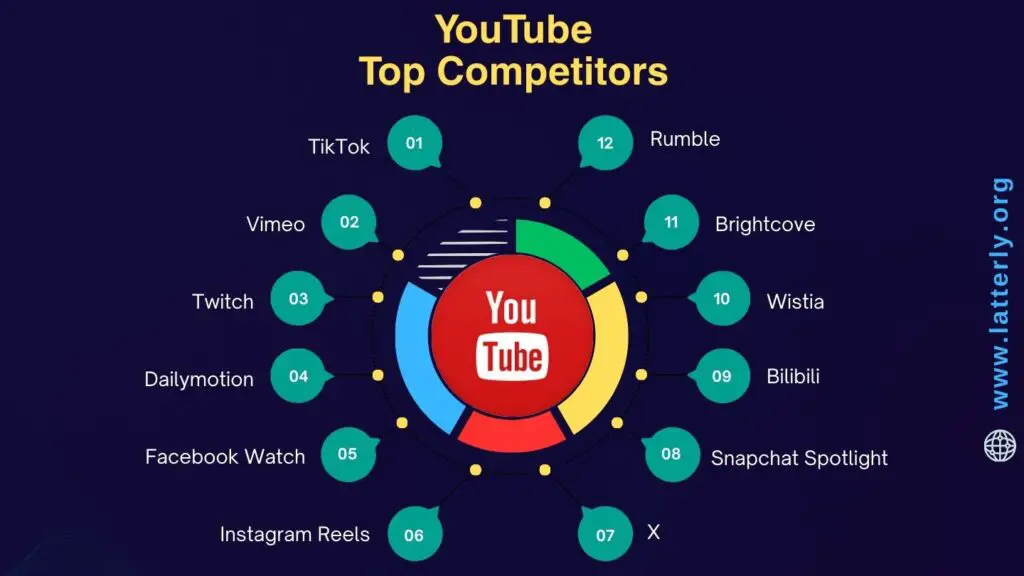
Top 12 YouTube Competitors and Alternatives
TikTok
TikTok commands short form video culture with a recommendation engine that surfaces engaging clips to vast audiences. Its creative tools and sounds library make production fast, playful, and accessible, which helps new creators break through. Brands, entertainers, educators, and news publishers increasingly use it to reach younger audiences in a native format.
- Strength lies in algorithmic discovery, which can propel new accounts to millions of views based on content quality and viewer signals, not just follower counts.
- Massive global reach across entertainment, education, lifestyle, and news creates a broad canvas for niches that also thrive on YouTube.
- Built in editing, effects, captions, and templates compress the production workflow into a mobile first toolkit that lowers barriers to publishing.
- Licensed music, trending sounds, and a vast audio library help creators tap into culture, while commercial music tools support brand safe campaigns.
- Monetization options include revenue sharing for eligible creators, tipping, gifts in live streams, brand sponsorships, and commerce integrations.
- Live streaming and in app shopping position TikTok as a venue for launches, Q&A sessions, and product demos that might otherwise live on YouTube.
- Advertising products, from in feed to premium placements, let businesses buy reach and retarget viewers, offering a paid path to scale.
- As an alternative, it delivers faster feedback loops, trend driven growth, and strong engagement for short vertical formats that complement or replace YouTube Shorts.
Vimeo
Vimeo is known for high quality, ad free video hosting favored by filmmakers, agencies, and brands. It emphasizes control, privacy, and a polished viewing experience that embeds seamlessly on websites and apps. Companies use it to showcase portfolios, webinars, product demos, and documentaries without platform distractions.
- Professional grade hosting with customizable players, branding, captions, and chapters helps creators present work cleanly compared with ad supported platforms.
- Robust privacy options, including domain level restrictions, password protection, and private links, give businesses distribution control that YouTube cannot always match.
- Live streaming with DVR, backup ingest, and audience chat supports events, conferences, and town halls with post event VOD archiving.
- Vimeo OTT enables subscription channels and transactional rentals, offering direct to consumer monetization beyond advertising.
- Team collaboration features, time coded review tools, and asset management streamline production feedback for agencies and in house teams.
- Analytics include engagement heatmaps, play rate insights, and geographic performance to inform creative and placement decisions.
- Integrations with CMS, marketing automation, and social platforms allow centralized media workflows that scale across sites and landing pages.
- As a YouTube alternative, Vimeo prioritizes control, brand safety, and an uncluttered player experience for creators who need ownership over distribution.
Twitch
Twitch leads live streaming for gaming and interactive entertainment, then expands into music, talk shows, and creative arts. Real time chat and community tools create a participatory format that differs from on demand video. Many creators publish highlights and VOD libraries to extend stream life beyond live moments.
- Live first ecosystem with low latency chat fosters ongoing communities, which boosts session length and loyalty compared with typical passive viewing.
- Categories and tags such as gaming, just chatting, and music help audiences browse interests and discover new streamers.
- Monetization includes channel subscriptions, Bits for micro tipping, sponsorships, and advertising, giving creators multiple income streams.
- Extensions, overlays, and alerts add interactivity, polls, and mini apps that make streams feel like events rather than static broadcasts.
- Clips and highlights convert long sessions into shareable moments that travel to other platforms, including YouTube, TikTok, and X.
- Moderation tools, roles, and bots support safer chat environments and professional channel management at scale.
- Brands can run live activations, co streams, and influencer campaigns that deliver measurable engagement, not just impressions.
- As an alternative to YouTube, Twitch excels for creators who prioritize live community engagement, recurring shows, and real time monetization.
Dailymotion
Dailymotion offers a familiar video experience with a European footprint and a mix of publisher catalogues and independent creators. It focuses on curated feeds and partnerships with media brands across news, sports, and entertainment. The platform appeals to viewers who want mainstream content without the scale of YouTube.
- Global distribution with strong ties in France and broader EMEA markets provides regional discovery opportunities for creators and publishers.
- A clean player and straightforward upload process make it easy to mirror content strategies that already work on YouTube.
- Partner programs enable monetization through advertising for qualified channels, including pre roll and mid roll formats.
- Content categories and playlists help viewers navigate topical feeds, while editorial curation reduces reliance on pure algorithmic ranking.
- Embeddable players and APIs support integration into news sites and blogs, aiding publishers that syndicate video.
- Rights management tools assist media owners in protecting and monetizing their libraries across the platform.
- Analytics cover views, watch time, and geographic reach so creators can compare performance with other distribution points.
- As an alternative, Dailymotion gives creators an additional audience and revenue channel with lighter competition in some niches.
Facebook Watch
Built into Facebook, Watch ties video discovery to the social graph and interest groups. Creators and publishers distribute episodic series, news clips, and live broadcasts that benefit from shares and comments. The experience integrates with Pages, Reels, and messaging, which keeps viewers inside the Meta ecosystem.
- Enormous user base and cross device presence deliver reach for creators who optimize for social sharing and community discussion.
- Monetization includes in stream ads for eligible pages, fan subscriptions, branded content, and tipping, providing multiple revenue levers.
- Live video, premieres, and events let publishers run real time programming with comment driven interaction.
- Recommendations in the feed and Watch tab surface content based on friends, follows, and interests, not only on pure search intent.
- Cross posting tools allow media teams to distribute one video to multiple pages and regional handles efficiently.
- Creator studio style dashboards give insights into retention, loyalty, and audience demographics to guide editorial decisions.
- Integration with Instagram and Reels enables short form teasers that funnel viewers into longer episodes.
- As an alternative to YouTube, Facebook Watch blends discovery with community features that can amplify engagement through shares and group conversations.
Instagram Reels
Reels concentrates Instagram’s short form video into a discovery oriented feed with strong creative tools. Fashion, beauty, travel, and creator education thrive thanks to visual storytelling and music. Businesses also use Reels to showcase product use cases and behind the scenes content.
- Explore and Reels tabs provide algorithmic reach that does not require prior followers, helping new creators break through.
- Native editing, templates, AR effects, timed captions, and transitions streamline mobile production for polished vertical videos.
- Music licensing within the app supports trend participation, and brand safe track options assist commercial accounts.
- Shopping tags, links, and product stickers tie content to conversion, making Reels a performance channel as well as a branding tool.
- Cross posting to Facebook extends distribution and can compound reach without duplicative workflows.
- Creator marketplace and branded content tools simplify sponsorship disclosures and partner collaboration.
- Insights include reach, plays, retention, and interactions, enabling iterative optimization comparable to YouTube analytics.
- As an alternative, Reels delivers short form scale and cultural relevance that complements or substitutes for YouTube Shorts.
X
X has expanded into long form and short form video while retaining real time conversation as its core. News, commentary, sports highlights, and creator shows find audiences alongside threads and live updates. Premium features unlock higher upload limits, which supports full length interviews and documentaries.
- Distribution benefits from the timeline, For You recommendations, and reposts, enabling rapid virality around timely topics.
- Creators can stream live, post highlights, and engage audiences in replies, combining video with conversation in one place.
- Monetization options include ad revenue sharing for eligible accounts, subscriptions, tipping, and brand partnerships.
- Video supports vertical and horizontal formats, making it suited for clips, podcasts, and event coverage.
- Native analytics offer insight into reach, completion rate, and engagement that inform content pacing and hook strategies.
- Spaces and community features help hosts build loyal followings that return for recurring shows and discussions.
- Advertisers can align with creators and topical moments, using targeting to reach interest based cohorts.
- As an alternative to YouTube, X is compelling for newsy, conversation driven formats that perform best in real time.
Snapchat Spotlight
Snapchat’s Spotlight showcases short vertical videos to audiences built around interest signals rather than follower graphs. The platform is known for AR lenses and a high share of younger viewers, which shapes both storytelling and tone. Creators can gain traction quickly with authentic, lightweight concepts.
- AR filters, lenses, and creative tools encourage playful formats that feel native to Snapchat culture.
- Spotlight’s recommendation system emphasizes watch time and engagement, giving newcomers a chance to be featured prominently.
- Discover partners and shows add a premium layer for publishers and influencers producing episodic content.
- Monetization varies by market and program, including revenue sharing for eligible creators and brand collaborations.
- Messaging centric design fosters quick feedback loops through replies and shares among friend networks.
- Music and sound integrations support trend participation, similar to TikTok and Instagram Reels.
- Safety and privacy controls, including default friend only profiles, influence how creators manage their presence.
- As an alternative, Spotlight offers reach in youth segments and short form creative tools that differ from YouTube’s public channel model.
Bilibili
Bilibili is a major video community in China, rooted in anime, comics, and gaming, then broadened into education, technology, and lifestyle. Its signature danmu bullet comments overlay the player, creating shared viewing experiences. The platform blends long form uploads, live streams, and high engagement forums.
- Strong youth culture and fandoms drive deep engagement, making it ideal for niche communities that value participation.
- Danmu comments and interactive features turn viewing into a social event, distinct from typical comment sections.
- Monetization includes advertising, tipping, paid memberships, and e commerce partnerships for eligible creators.
- Live streaming supports gaming, concerts, lectures, and events, with chat features that mirror community culture.
- Editorial programs and creator academies help new publishers learn best practices and grow responsibly.
- Mobile first design and super app style navigation keep users within the ecosystem for content, commerce, and community.
- International access depends on licensing and regional rules, which creators should consider when planning distribution.
- As a YouTube alternative, Bilibili offers a highly interactive environment for Chinese speaking audiences and ACG aligned content.
Wistia
Wistia focuses on business video hosting and analytics built for marketers, sales teams, and media style brands. It emphasizes ownership, ad free playback, and lead capture that ties directly to pipelines. Companies use it for product explainers, webinars, customer stories, and podcasts.
- Ad free, customizable players with chapters, calls to action, and brand colors deliver a controlled viewing experience on owned properties.
- Lead capture forms and email gates integrate with HubSpot, Marketo, and other CRMs, turning views into qualified contacts.
- Heatmaps and per viewer analytics reveal engagement by person, which improves nurturing and sales follow up.
- Channels and podcast tools help brands build serialized shows that embed on sites without relying on algorithms.
- SEO features including structured data and sitemaps help videos rank on search engines independent of YouTube.
- Live and webinar workflows feed directly into on demand libraries, streamlining lifecycle content management.
- Team permissions, comments, and media library organization support collaboration across marketing and product teams.
- As an alternative to YouTube, Wistia prioritizes ownership, conversion, and data depth over ad reach and platform discovery.
Brightcove
Brightcove serves enterprises, broadcasters, and publishers with a comprehensive online video platform. It supports large scale live streaming, OTT apps, and advanced monetization models. Media companies, sports leagues, and global brands rely on it for reliability and compliance.
- Enterprise grade uptime, multi CDN delivery, and global ingestion provide consistent quality of experience across regions.
- Server side ad insertion, DRM, and audience segmentation enable AVOD, SVOD, and TVOD strategies without ad blockers.
- Live streaming with redundancy and clipping tools supports newsrooms and sports organizations that publish highlights instantly.
- Studio, player customization, and developer APIs allow tailored experiences across web, mobile, and connected TV apps.
- Analytics include QoE metrics, stream health, and revenue reporting that tie into BI systems for executive visibility.
- Integrations with CMS, marketing automation, and identity platforms streamline governance and user management.
- Content security and compliance options help regulated industries meet policy requirements.
- As a YouTube alternative, Brightcove offers control, scale, and monetization flexibility for organizations that need owned distribution.
Rumble
Rumble positions itself as an open video platform with a growing roster of independent creators and media partners. It attracts audiences seeking different moderation approaches and syndicated shows. The product spans uploads, live streaming, and distribution to connected devices.
- Discovery highlights trending and editorial picks, giving creators exposure even without massive subscriber bases.
- Monetization includes advertising and partner programs for eligible channels, along with sponsorship opportunities.
- Live streaming supports news, commentary, and gaming, with chat features to encourage audience participation.
- Apps across mobile and smart TVs extend reach beyond the browser to living room viewing.
- Licensing and syndication deals distribute select content to other outlets, expanding potential audiences.
- Simple upload and migration tools make it easy to test content alongside an existing YouTube strategy.
- Community features, subscriptions, and notifications help creators build recurring viewership.
- As an alternative to YouTube, Rumble provides an additional distribution path for creators seeking platform diversity and policy differences.
Top 3 Best Alternatives to YouTube
Vimeo
Vimeo stands out for its professional, ad‑free environment that prioritizes quality, control, and clean embeds for websites. Key advantages include customizable players, precise privacy settings, 4K and HDR support, collaboration and review tools, live streaming, and multiple monetization options such as rentals, purchases, and subscriptions. It best suits filmmakers, creative studios, educators, and B2B marketers who need brand‑safe playback, controlled distribution, and client‑ready presentation.
TikTok
TikTok excels at short‑form, mobile‑first video with an algorithm that pushes content beyond your follower base to accelerate discovery. Its strengths include an intuitive editor, rich effects and sounds library, powerful For You feed, live streaming, in‑app shopping, ad solutions, and robust analytics that help iterate quickly. It is ideal for creators and brands focusing on vertical video, trend‑driven storytelling, and rapid audience growth across younger and mobile‑centric demographics.
Twitch
Twitch is a dominant live‑streaming platform that emphasizes real‑time interaction and community building for gaming, music, IRL, and events. Advantages include low‑latency streaming, interactive chat, channel subscriptions, Bits, ads, raids, extensions, VOD highlights, and directory‑based discovery within live categories. It best fits streamers, esports organizations, musicians, educators, and event hosts who prioritize live engagement, audience loyalty, and diversified monetization.
Final Thoughts
There are many strong alternatives to YouTube, and each platform excels in a different dimension of video strategy. Some focus on premium presentation and control, others on viral discovery or live interactivity, and a few blend tools for monetization, collaboration, and analytics. This variety gives creators, marketers, and businesses real flexibility.
The best choice depends on your goals, content format, audience, and distribution needs. Define what matters most, such as quality control, algorithmic reach, community engagement, or revenue options, then pick the platform that aligns with those priorities. With a clear strategy and the right fit, you can grow effectively on and beyond YouTube.
