
Amazon has transformed from a simple online bookstore into the world’s largest e-commerce platform, fundamentally reshaping how businesses approach digital marketing and customer acquisition. The company’s marketing strategy extends far beyond traditional advertising, encompassing a comprehensive ecosystem that includes search engine optimization, performance advertising, customer data analysis, and sophisticated fulfillment networks that work together to dominate multiple market segments.
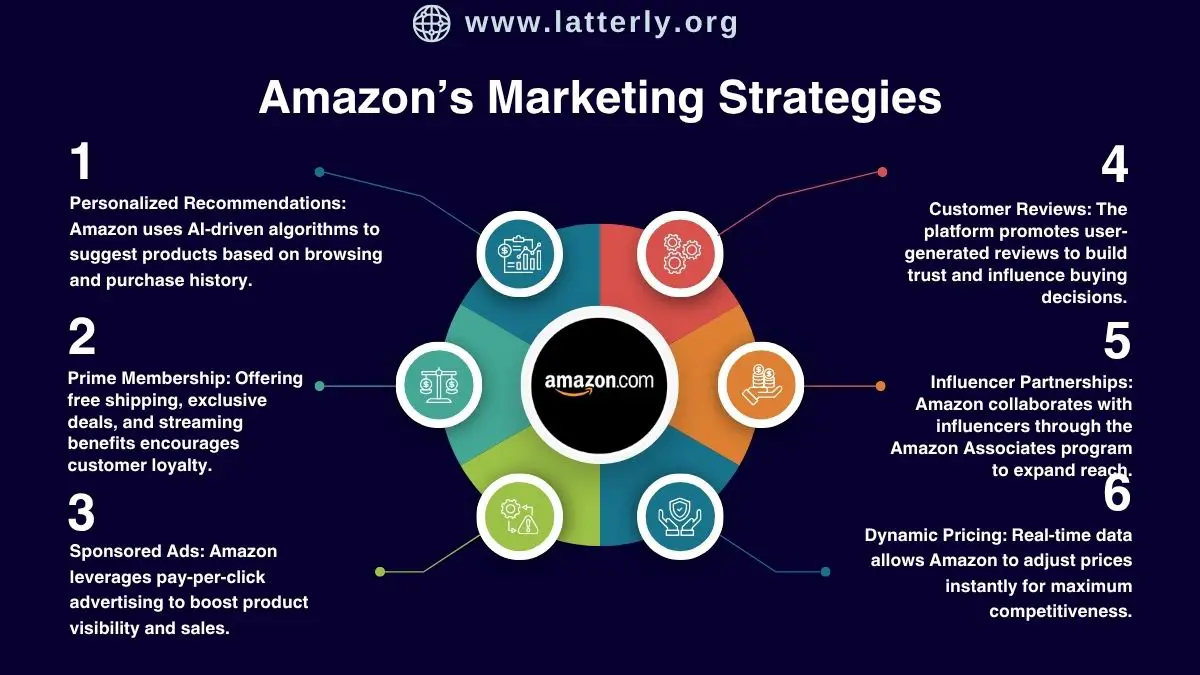
Amazon’s marketing success stems from its ability to orchestrate full-funnel strategies that blend traditional search optimization with AI-powered discovery, personalized customer experiences, and data-driven advertising platforms that generate over 12.5% of total digital advertising revenue in the United States. This integrated approach allows the company to capture customer attention at every stage of the buying journey while continuously refining its targeting and conversion capabilities through advanced analytics and machine learning.
The company’s marketing framework provides valuable insights for businesses seeking to understand modern e-commerce strategies, from market segmentation and brand positioning to pricing optimization and competitive differentiation. Amazon’s approach demonstrates how technology, customer experience, and operational excellence can be synchronized to create sustainable competitive advantages across diverse product categories and geographic markets.
You may also find these guides helpful:
1. Amazon Branding Strategy
2. Amazon Marketing Mix
3. Amazon SWOT Analysis
4. Amazon Business Model
5. Amazon Competitors
6. Amazon Branding Strategy
Understanding Amazon’s Marketing Strategy
Amazon’s marketing strategy operates on fundamental principles that prioritize customer satisfaction, data-driven decisions, and seamless shopping experiences across multiple channels. The company leverages its deep understanding of consumer behavior to create personalized interactions while maintaining consistent brand presence both online and offline.
Core Principles and Objectives
Amazon’s marketing strategy centers on four primary objectives that drive all business decisions. The company prioritizes customer satisfaction through excellent service and user-friendly experiences across all touchpoints.
Market expansion represents another core objective. Amazon continuously enters new geographic regions and launches additional product categories to broaden its reach and capture untapped customer segments.
The e-commerce giant focuses heavily on brand loyalty development. Amazon Prime serves as the cornerstone of this strategy, offering exclusive benefits like faster shipping, streaming services, and special discounts to create stronger customer retention.
Innovation investment forms the fourth pillar of Amazon’s approach. The company allocates significant resources toward developing cutting-edge technologies that enhance operational efficiency and improve customer interactions.
These objectives work together to create a comprehensive framework. Each marketing initiative must align with at least one of these core principles to receive implementation approval and resource allocation.

Customer-Centric Philosophy
Amazon’s customer-centric philosophy shapes every aspect of its marketing strategies. The company analyzes customer behavior, purchase history, and browsing patterns to create highly personalized shopping experiences tailored to individual preferences.
The personalized recommendation system exemplifies this approach. Amazon’s algorithms suggest products based on previous purchases and viewing history, increasing cross-selling opportunities while enhancing customer satisfaction.
Customer service excellence reinforces the customer-centric model. Amazon maintains multiple support channels including phone, email, and live chat to address concerns promptly and effectively.
The company implements a generous return policy that reduces purchase anxiety. This hassle-free returns process builds customer trust and encourages repeat business by minimizing perceived shopping risks.
Amazon segments customers based on demographics, buying behavior, and preferences. This segmentation enables targeted marketing campaigns that resonate with specific audience groups and improve conversion rates.
Omni-Channel Approach
Amazon’s omni-channel approach integrates multiple touchpoints to create seamless customer experiences. The strategy combines online platforms, physical stores, mobile applications, and voice-activated devices to reach customers wherever they prefer to shop.
Digital channels form the foundation of Amazon’s distribution strategy. The company’s website and mobile applications serve as primary customer interaction points, supported by robust logistics networks and fulfillment centers.
Physical retail presence expands through Amazon Go stores and Whole Foods Market locations. These brick-and-mortar establishments allow customers to experience products firsthand while maintaining connection to Amazon’s digital ecosystem.
Voice commerce through Alexa-enabled devices represents Amazon’s innovative channel expansion. Customers can place orders, track shipments, and manage accounts using voice commands, creating convenient shopping experiences.
The integration between channels ensures consistent pricing, inventory availability, and customer service quality. This unified approach strengthens Amazon’s competitive position in the e-commerce marketplace while meeting diverse customer preferences.
Market Segmentation and Target Audience
Amazon employs sophisticated segmentation strategies across demographic, geographic, and psychographic dimensions to reach its diverse global customer base. The company places particular emphasis on Amazon Prime members, who represent the highest-value segment with significantly greater spending patterns and loyalty metrics.
Demographic and Geographic Segmentation
Amazon’s demographic segmentation spans multiple age groups, with 85% of consumers aged 18-32 shopping online frequently, while 65% of those aged 33-40 visit Amazon regularly. This millennial-focused approach drives much of the platform’s engagement strategy.
The company serves customers across varied income levels, with small and medium-sized businesses accounting for approximately 60% of retail sales on the platform. This diversity allows Amazon to offer both budget-friendly options and premium products.
Geographic segmentation operates across more than 100 countries, with tailored approaches for urban and rural markets. Urban customers receive emphasis on rapid delivery services and broader product selection. Rural customers see focus on accessibility and value-oriented offerings.
Amazon adapts pricing strategies, product availability, and promotional campaigns based on regional market dynamics. Local preferences influence everything from payment methods to product categories featured prominently in each market.
Psychographic Segmentation Insights
Psychographic segmentation categorizes Amazon customers based on lifestyle preferences, values, and purchasing motivations. The platform serves diverse social classes from budget-conscious shoppers to premium buyers seeking luxury products.
Amazon identifies several lifestyle categories including Mainstreamers, Aspirers, Succeeders, and Explorers. Each group exhibits distinct shopping behaviors and product preferences that influence personalized recommendations.
Behavioral segmentation focuses on purchase patterns and platform engagement levels. Amazon tracks browsing history, wish list activity, and purchase frequency to understand customer readiness to buy.
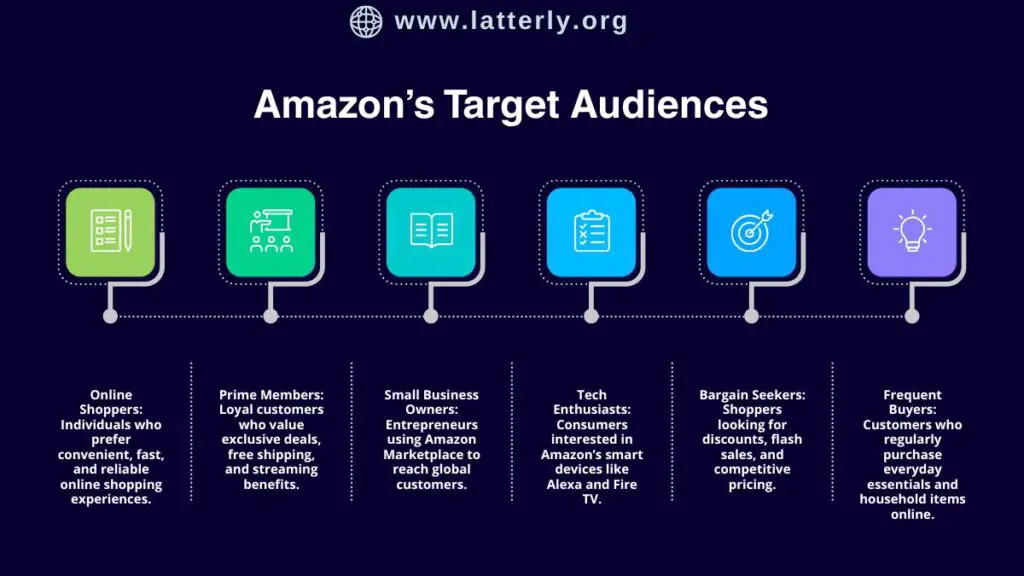
The company distinguishes between casual shoppers and frequent buyers, with personalized product recommendations contributing to approximately 35% of total sales. This data-driven approach creates tailored experiences that increase customer loyalty and repeat purchases.
Prime Members and High-Value Customers
Amazon Prime members represent the most valuable customer segment, spending approximately $1,400 annually compared to $600 for non-members. This 2.3x spending difference makes Prime membership central to Amazon’s revenue strategy.
Prime customers demonstrate higher customer loyalty through increased purchase frequency and platform engagement. They utilize multiple Amazon services beyond shopping, including streaming, cloud storage, and same-day delivery options.
The customer experience for Prime members includes exclusive deals, early access to sales, and expedited shipping benefits. These perks create a premium service tier that encourages long-term platform commitment.
Amazon leverages Prime member data to refine targeting strategies and develop new services. The subscription model provides predictable revenue while enabling deeper personalization across all customer touchpoints.
Brand Positioning and Identity
Amazon’s brand positioning centers on utility and reliability rather than flashy marketing or lifestyle appeals. The company has built its identity around three core elements: a distinctive visual brand that has evolved strategically over time, clear value propositions focused on customer convenience, and messaging that emphasizes simplicity and trust.
Unique Selling Proposition
Amazon’s unique selling proposition revolves around being a utility brand that prioritizes customer obsession over competitor focus. Jeff Bezos established this foundation with the principle “We’re not competitor-obsessed, we’re customer-obsessed,” which drives every business decision.
The company positions itself as the reliable choice that “just works.” This positioning differentiates Amazon from retailers trying to be trendy or lifestyle-focused. Instead, Amazon focuses on three core promises:
- Speed: One-day and same-day delivery through Prime membership
- Selection: Millions of products across every category
- Simplicity: Frictionless shopping and no-questions-asked returns
Amazon’s customer experience strategy uses data from billions of interactions to personalize shopping without making the technology feel intrusive. The brand promise centers on dependability rather than excitement.
This utility positioning allows Amazon to serve 300 million active users while maintaining a personal feel through AI-powered recommendations and location-aware services.
Amazon Logo Evolution
The Amazon logo has undergone strategic evolution to reflect the company’s growth from bookstore to everything store. The original 1995 logo featured the company name with a curved line underneath, emphasizing the river metaphor.
The current logo introduced the distinctive arrow pointing from “A” to “Z,” symbolizing that Amazon sells everything from A to Z. This arrow also forms a smile, subtly suggesting customer satisfaction and friendliness.
Logo Design Elements:
- Arrow direction: A to Z coverage
- Smile curve: Customer happiness
- Orange color: Warmth and optimism
- Clean typography: Simplicity and clarity
The logo’s simplicity aligns with Amazon’s overall brand strategy of avoiding flashy design in favor of functional clarity. The brown packaging and minimal website design reinforce this utilitarian approach.
Brand Messaging and Taglines
Amazon’s brand messaging avoids traditional advertising slogans in favor of functional communication. The company rarely uses catchy taglines, instead focusing on clear value propositions in its marketing.
Key messaging themes include:
- “Earth’s Most Customer-Centric Company” – Internal mission statement
- Prime membership benefits – Fast, free delivery emphasis
- “Customers who bought this also bought” – Social proof messaging
The messaging strategy emphasizes what customers get rather than how they should feel. Product descriptions focus on specifications, delivery dates, and return policies rather than emotional appeals.
Amazon’s tone across all communications remains straightforward and informative. Customer service messaging prioritizes problem-solving over brand personality, reinforcing the utility positioning that Jeff Bezos established as the company’s core identity.
Amazon’s Product and Service Ecosystem
Amazon has built a comprehensive ecosystem spanning retail, digital services, and enterprise solutions. This integrated approach creates multiple customer touchpoints that reinforce loyalty and generate diverse revenue streams across consumer and business markets.
Product Mix and Market Expansion
Amazon’s product mix has evolved from a single-category bookstore into a massive retail platform with millions of products. The company operates as both a first-party seller and a marketplace for third-party vendors.
The retail division encompasses electronics, clothing, home goods, groceries, and specialty items. Amazon manufactures its own devices including Echo smart speakers, Fire tablets, and Ring security systems.
Physical retail expansion includes Whole Foods Market acquisition and Amazon Go stores. These brick-and-mortar locations integrate with digital services for seamless omnichannel experiences.
Amazon Marketplace allows external sellers to reach customers through Amazon’s platform. This model generates commission revenue while expanding product selection without inventory investment.
The company continuously enters new markets and product categories. Recent expansions include pharmacy services, automotive parts, and business supplies targeting specific customer segments.
Amazon Prime, Kindle & Entertainment
Amazon Prime launched in 2005 as a shipping service but transformed into a comprehensive membership program. Prime members receive free shipping, exclusive deals, and access to digital entertainment services.
Prime Video competes directly with Netflix and Disney+ through original content production and licensed programming. The service includes movies, TV series, and live sports content.
Amazon Music offers streaming services with multiple tiers from ad-supported free versions to high-definition premium subscriptions. Integration with Alexa devices creates voice-controlled music experiences.
The Kindle ecosystem includes e-readers, digital books, and self-publishing platforms. Kindle Direct Publishing allows authors to publish and distribute books globally through Amazon’s marketplace.
These entertainment services create sticky customer relationships. Prime members typically spend more annually and maintain higher retention rates compared to non-Prime customers.
AWS and Cloud Computing
Amazon Web Services represents Amazon’s largest profit center, generating billions in annual revenue. AWS provides cloud computing infrastructure, storage, and software services to businesses worldwide.
Core AWS services include EC2 computing instances, S3 storage solutions, and database management systems. These foundational services support everything from startup applications to enterprise-level operations.
AWS serves major corporations, government agencies, and small businesses. Netflix, NASA, and countless other organizations rely on AWS infrastructure for their digital operations.
The platform offers over 200 services including artificial intelligence, machine learning, and analytics tools. This comprehensive service portfolio positions AWS as a one-stop solution for business technology needs.
AWS market leadership in cloud computing provides Amazon with significant competitive advantages and recurring revenue streams independent of retail operations.
Customer Experience and Loyalty Programs
Amazon builds customer loyalty through sophisticated personalization systems, exceptional service standards, and exclusive membership benefits that create lasting relationships with shoppers. The company’s Prime membership program serves as the cornerstone of its retention strategy, combining convenience with exclusive access to drive repeat purchases.
Personalization and Recommendations
Amazon leverages advanced algorithms to analyze customer behavior and purchase history, creating highly targeted product recommendations. The “Customers who bought this also bought” feature appears on product pages, exposing shoppers to related items they might find interesting.
This personalized approach extends beyond simple suggestions. Amazon’s recommendation engine considers browsing patterns, seasonal preferences, and demographic data to curate individualized shopping experiences. The system continuously learns from user interactions, refining suggestions to match evolving customer preferences.
Key personalization features include:
- Tailored homepage displays
- Customized email campaigns
- Category-specific recommendations
- Price tracking notifications
The company reports that its recommendation system drives a significant portion of sales. Prime members receive additional personalized benefits, including early access to deals and content suggestions across Prime Video and other services.
Customer Service Excellence
Amazon maintains multiple customer support channels to ensure prompt assistance across all touchpoints. The company offers phone support, email communications, and live chat features to address customer concerns quickly and effectively.
The returns process exemplifies Amazon’s customer-first philosophy. Customers can return most items within 30 days through a streamlined online system. Many items qualify for free return shipping, reducing friction in the return experience.
Amazon’s A-to-Z Guarantee protects customers when purchasing from third-party sellers. This program covers items that arrive damaged, defective, or significantly different from the product description. The guarantee builds trust in Amazon’s marketplace ecosystem.
Customer service representatives receive training to resolve issues on first contact. The company tracks metrics like response time and resolution rates to maintain service quality standards across all support channels.
Prime Day and Exclusive Events
Prime Day serves as Amazon’s signature loyalty event, offering exclusive deals to Prime members for 48 hours annually. The event typically generates billions in sales while reinforcing the value of Prime membership.
Prime member benefits include:
- Early access to Lightning Deals
- Exclusive discounts on Amazon devices
- Free same-day delivery in select areas
- Access to Prime Video content
The company runs additional exclusive events throughout the year, including Early Black Friday deals and member-only sales. These events create urgency while rewarding customer loyalty with genuine savings.
Prime members also receive exclusive access to new product launches and limited-time offers. Amazon uses these events to introduce customers to new product categories and drive cross-selling opportunities across its ecosystem of services.
Digital and Performance Marketing Strategies
Amazon’s digital marketing ecosystem centers on three core advertising pillars that drive visibility and sales. These performance-driven strategies leverage Amazon’s vast data network and first-party insights to target customers at every stage of the buying journey.
Amazon Ads and Sponsored Products
Sponsored Products form the foundation of Amazon advertising campaigns. These ads appear directly in search results and product detail pages, targeting customers actively searching for specific items.
The platform operates on a pay-per-click model where advertisers bid on relevant keywords. Higher bids and better relevance scores improve ad placement and visibility.
Campaign types include automatic targeting, which uses Amazon’s algorithm to match products with relevant searches, and manual targeting for precise keyword control. Brands typically start with automatic campaigns to gather keyword data.
Sponsored Brands campaigns showcase brand logos and multiple products simultaneously. These ads appear at the top of search results and drive traffic to custom storefronts or product collections.
Performance optimization requires continuous keyword research and bid management. Successful campaigns balance cost-per-click with conversion rates to maximize return on ad spend.
Amazon Attribution tracks how external traffic from social media and other channels converts on Amazon. This data helps brands understand the full customer journey across multiple touchpoints.
Amazon DSP and Media Buying
Amazon DSP (Demand-Side Platform) extends advertising beyond Amazon’s marketplace to reach customers across the web. This programmatic platform accesses premium inventory on Fire TV, Twitch, and third-party websites.
The system leverages Amazon’s first-party shopping data to create detailed customer segments. Advertisers can target users based on purchase history, browsing behavior, and demographic information.
Campaign objectives range from brand awareness through video ads on streaming platforms to retargeting website visitors with display banners. DSP supports both Amazon and external website traffic goals.
Creative formats include display banners, video ads, and audio advertisements across Amazon’s ecosystem. Video content performs particularly well on Fire TV and streaming services.
Advanced targeting options enable brands to reach competitors’ customers or similar audiences based on purchase patterns. This audience expansion capability helps brands scale beyond their existing customer base.
Measurement tools within DSP provide detailed attribution reports showing how upper-funnel exposure influences lower-funnel conversions. This data proves the value of brand awareness campaigns.
Amazon Influencer Program
The Amazon Influencer Program connects brands with content creators who maintain dedicated storefronts featuring their recommended products. Influencers earn commissions on qualifying purchases through their unique links.
Eligibility requirements focus on creators with substantial followings on YouTube, Instagram, TikTok, or Facebook. Amazon evaluates follower count, engagement rates, and content quality before approval.
Storefront customization allows influencers to organize products by category and add personal recommendations. These curated collections help followers discover relevant items while building trust through social proof.
Commission structures vary by product category, with rates ranging from 1% to 10% of qualifying purchases. Electronics typically offer lower rates while luxury beauty products provide higher percentages.
Brands benefit from authentic product endorsements without direct advertising costs. User-generated content from influencer posts often gets repurposed across other marketing channels for additional value.
Performance tracking shows which influencers drive the most sales and engagement. This data helps brands identify high-value partnerships for long-term collaboration agreements.
Conversion Rate Optimization and Social Proof
Amazon sellers can increase their conversion rates through strategic optimization techniques and social proof implementation. Product reviews and user-generated content build trust while social media engagement creates authority signals that influence purchasing decisions.
Conversion Rate Optimization Techniques
CRO on Amazon requires systematic optimization of product listings, pricing strategies, and visual elements. High-quality product images with clear differentiators like “30g Protein per Serving” or “Clinically Tested” improve click-through rates significantly.
A+ Content serves as a conversion driver by providing detailed product information and addressing customer concerns. Enhanced brand content should include infographics with rich metadata that explicitly highlight features and benefits.
Strategic pricing consistency affects Buy Box performance and conversion rates. Amazon’s algorithms reward price stability and promotional agility through lightning deals, coupons, and tiered discounts.
Product titles must balance keyword optimization with conversion-focused messaging. Clear benefit statements in titles and bullet points help customers understand value propositions quickly.
Video content showcases lifestyle usage and product demonstrations. Including subtitles and transcript files improves crawlability while providing multiple touchpoints for customer engagement.
Product Reviews and User-Generated Content
Product reviews provide essential social proof that directly impacts conversion rates on Amazon. Reviews demonstrate that other customers enjoyed products, creating one of the most effective evergreen marketing strategies available.
User-generated content from customers creates authentic testimonials that influence purchasing decisions. Repurposing UGC and influencer photos into product listings builds credibility and content diversity.
Review generation strategies include post-purchase follow-ups through Amazon’s Manage Your Customer Engagement tool. Brands can trigger review requests after fulfillment to increase review volume systematically.
Visual reviews and customer photos add authenticity to product pages. These images show real-world usage and help potential buyers visualize products in their own context.
Responding to reviews professionally demonstrates customer service commitment. This engagement signals to potential buyers that the brand actively supports customers after purchase.
Leveraging Social Media and Communities
Social media integration amplifies Amazon conversion rates by building entity authority across platforms. Facebook groups and Reddit communities provide structured brand mention opportunities that influence AI-powered product recommendations.
Influencer partnerships create coordinated campaigns that drive traffic to Amazon listings. Using Amazon Attribution tracking measures how social content converts to Amazon sales, proving multichannel ROI.
Community seeding involves strategic brand mentions across Quora, niche Facebook groups, and creator blogs. These mentions should reference topical entities like “clean skincare that works” or “immune support supplements with clinically proven ingredients.”
UTM-tagged URLs from social campaigns provide attribution data that connects top-funnel awareness to bottom-funnel conversions. This tracking helps optimize social spend based on actual Amazon performance.
Cross-platform consistency reinforces brand positioning. Messaging alignment between Amazon listings, social bios, and influencer content strengthens entity recognition across discovery channels.
Pricing, Promotions, and Deal Strategies
Amazon’s pricing system operates through algorithmic adjustments that respond to market conditions in real-time, while promotional tools like coupons and lightning deals drive immediate conversions. Major retail events such as Prime Day and Black Friday serve as strategic revenue drivers that require coordinated promotional campaigns.
Dynamic Pricing and Algorithmic Adjustments
Amazon’s algorithms continuously adjust prices based on competitor analysis, inventory levels, and demand patterns. This dynamic pricing system can change product prices multiple times throughout a single day.
Key pricing factors include:
- Competitor pricing on identical products
- Historical sales velocity data
- Current inventory quantities
- Seasonal demand fluctuations
Sellers using automated repricing tools typically see 15-25% increases in Buy Box wins. The algorithm favors price consistency over frequent dramatic changes.
Competitive pricing strategies work best when:
- Products have direct competitor matches
- Profit margins allow for flexibility
- Inventory turnover rates are high
Value-based pricing focuses on unique product benefits rather than competitor matching. This approach works for differentiated products with strong brand recognition or exclusive features.
Coupons and Lightning Deals
Coupons provide immediate price reductions that appear directly on product detail pages. Amazon charges a $0.60 fee per redeemed coupon, making them cost-effective for higher-priced items.
Lightning deals create urgency through time-limited offers with limited quantities. These promotions typically last 4-12 hours and require inventory commitments.
Lightning deal requirements:
- Minimum 3.5-star product rating
- Deal price at least 20% below reference price
- Sufficient inventory to meet projected demand
Coupons convert at higher rates because they require no time pressure. Lightning deals generate more visibility through Amazon’s deal pages and mobile notifications.
Best practices for coupon optimization:
- Set discount percentages between 10-30%
- Target products with conversion rate challenges
- Monitor redemption rates daily
Event-Based Promotions
Prime Day occurs twice yearly and requires advance planning with inventory buildup and promotional scheduling. Sellers typically experience 200-400% sales increases during these events.
Black Friday and Cyber Monday follow traditional retail patterns with steep discounts across categories. Amazon promotes these events through email campaigns and homepage placements.
Event preparation checklist:
- Submit deal applications 6-8 weeks early
- Increase inventory by 300-500% of normal levels
- Optimize product images and descriptions
- Set up automated repricing rules
Holiday-specific strategies:
- Prime Day: Focus on exclusive member benefits
- Black Friday: Emphasize gift-worthy products
- Back-to-school: Target seasonal categories in July-August
Deal events require higher marketing spend but generate long-term customer acquisition benefits. New-to-brand customers acquired during major events show 60% higher lifetime values.
Fulfillment, Logistics, and Seller Enablement
Amazon’s fulfillment infrastructure provides sellers with sophisticated logistics capabilities and brand protection tools that directly impact product visibility and sales performance. The platform’s integrated approach combines warehousing services, algorithmic product placement systems, and trademark protection programs to create competitive advantages for participating merchants.
Fulfillment by Amazon (FBA) and Seller Central
Fulfillment by Amazon handles storage, picking, packing, and shipping for third-party sellers who send inventory to Amazon warehouses. Products enrolled in FBA automatically qualify for Prime shipping benefits, which increases conversion rates and customer appeal.
Amazon Seller Central serves as the primary dashboard where merchants manage their FBA operations. Sellers can monitor inventory levels, track shipment performance, and access detailed analytics about their fulfillment metrics.
Key FBA advantages include:
- Prime eligibility for faster shipping
- Amazon handles customer service and returns
- Access to Amazon’s global fulfillment network
- Reduced operational overhead for merchants
FBA sellers must comply with specific packaging requirements and labeling standards. Products require scannable barcodes without extraneous markings, and packaging must protect items during transit to distribution centers.
The service prioritizes Amazon marketplace orders over multi-channel fulfillment requests from other platforms. This ensures Amazon customers receive the fastest possible delivery times.
Buy Box Optimization
The Buy Box represents the featured merchant position that appears when customers click “Add to Cart” on product pages. Winning this placement significantly increases sales volume since most purchases occur through the Buy Box.
FBA participation improves Buy Box eligibility compared to merchant-fulfilled alternatives. Amazon’s algorithm considers fulfillment method as a key ranking factor alongside price competitiveness and seller performance metrics.
Critical Buy Box factors include:
- Shipping speed – FBA provides faster delivery options
- Price competitiveness – Competitive pricing relative to other sellers
- Seller metrics – Order defect rate, cancellation rate, late shipment rate
- Inventory availability – Consistent stock levels prevent Buy Box loss
Merchants using Fulfillment by Merchant (FBM) face disadvantages in Buy Box competition. Their shipping times typically extend several days longer than FBA alternatives, reducing their algorithmic favorability.
Seasonal inventory planning becomes essential for maintaining Buy Box positioning during high-demand periods like Prime Day or holiday shopping seasons.
Brand Registry and Seller Support
Amazon Brand Registry provides trademark owners with enhanced control over their product listings and brand representation. Enrolled brands gain access to powerful tools for combating counterfeit products and unauthorized sellers.
Brand Registry benefits include:
- Enhanced brand content capabilities
- Proactive brand protection monitoring
- Priority support for intellectual property issues
- Advanced advertising options through Amazon DSP
The program requires active trademark registration in eligible countries where sellers operate. Once approved, brands can create detailed product pages with enhanced images, videos, and comparison charts.
Brand Registry integrates with FBA services to provide comprehensive seller support. Registered brands receive dedicated account management assistance and faster resolution of policy violations or listing issues.
Amazon’s seller support system handles customer service inquiries for FBA products automatically. This includes processing returns, managing refunds, and addressing shipping-related complaints without requiring direct merchant involvement.
The combination of Brand Registry and FBA creates a protective ecosystem where trademark owners maintain brand integrity while leveraging Amazon’s logistics capabilities for optimal customer experience.
Technology, Data, and Innovation
Amazon’s marketing dominance stems from its sophisticated use of artificial intelligence, machine learning algorithms, and comprehensive data analytics systems. The company’s technology infrastructure enables personalized customer experiences while driving strategic business decisions through real-time data insights.
Machine Learning and Personalization
Amazon pioneered the use of artificial intelligence and machine learning in retail to create highly personalized customer experiences. The company’s recommendation engine analyzes customer browsing patterns, purchase history, and behavioral data to suggest relevant products.
This ML-powered system drives significant revenue through cross-selling and upselling opportunities. Amazon’s algorithms continuously learn from user interactions to improve recommendation accuracy.
The company employs a flywheel approach to AI strategy. This ensures machine learning insights and innovations are shared across all departments rather than confined to single business units.
Amazon’s personalization extends beyond product recommendations. The platform customizes homepage layouts, email campaigns, and promotional offers based on individual customer profiles and preferences.
Alexa and Voice Commerce
Alexa represents Amazon’s strategic entry into voice-activated commerce and smart home ecosystems. The voice assistant serves as both a product discovery tool and direct purchasing channel for Amazon customers.
Voice commerce through Alexa simplifies repeat purchases and routine ordering. Customers can reorder household essentials, add items to shopping lists, and track deliveries using voice commands.
Amazon integrates Alexa across multiple device categories including Echo speakers, Fire tablets, and third-party smart home products. This ecosystem approach expands Amazon’s reach into customer daily routines.
The Alexa Fund venture arm invests in voice technology startups and complementary innovations. These investments strengthen Amazon’s voice commerce capabilities and market positioning.
Data-Driven Decision Making
Amazon operates a comprehensive data infrastructure called the Galaxy data lake that stores enterprise-wide information in standardized formats. This system enables rapid analysis and informed decision-making across all business operations.
The company leverages multiple data analytics tools to extract actionable insights from customer behavior, market trends, and operational performance. These insights directly influence marketing campaigns, inventory management, and pricing strategies.
Amazon’s data-driven approach extends to warehouse optimization through robotics like Proteus and Cardinal. These AI-powered systems improve fulfillment speed and accuracy while reducing operational costs.
Real-time data analysis allows Amazon to adjust marketing strategies instantly based on performance metrics. The company continuously tests and optimizes campaign elements to maximize conversion rates and customer engagement.
Competitive Landscape and Future Trends
Amazon faces intense competition from established players like Alibaba and Walmart while navigating global expansion challenges and emerging AI-driven marketing technologies. The company’s strategic positioning against regional competitors and adoption of generative AI tools will shape its competitive advantage through 2025.
Amazon competes against diverse players across global ecommerce markets. Alibaba dominates Chinese online retail with over 50% market share, while Amazon holds approximately 38% of US ecommerce sales.
Walmart has emerged as Amazon’s primary US competitor through aggressive online retail expansion. The retailer leverages its physical store network for fulfillment advantages and grocery delivery services.
Flipkart controls India’s ecommerce landscape with significant market share in electronics and fashion categories. Amazon India competes directly through localized pricing strategies and Prime membership benefits.
Regional players like Shopee in Southeast Asia and MercadoLibre in Latin America challenge Amazon’s global expansion efforts. These competitors understand local consumer preferences and payment methods better than Amazon.
Groupon competes in the deals and promotions segment, though its influence has decreased significantly. Amazon’s Lightning Deals and Prime Day events have captured much of the promotional shopping market.
Global Expansion and Localization
Amazon’s international strategy focuses on adapting to local market conditions and regulatory requirements. The company customizes its platform for different languages, currencies, and cultural preferences in each region.
Payment method localization proves critical for market penetration. Amazon integrates popular regional payment systems like UPI in India and Alipay partnerships in global markets.
Supply chain infrastructure requires significant investment in emerging markets. Amazon builds fulfillment centers and delivery networks to match local logistics capabilities and consumer expectations.
Regulatory compliance varies dramatically across international markets. Data privacy laws, tax structures, and content restrictions force Amazon to modify its standard operating procedures for different countries.
Local competition often possesses superior market knowledge and government relationships. Amazon must balance its global platform advantages against competitors’ regional expertise and established customer bases.
Emerging Marketing Trends and AI
Generative AI transforms Amazon’s marketing capabilities through automated content creation and personalized customer experiences. The platform uses AI to optimize product descriptions, ad copy, and recommendation algorithms.
Amazon Marketing Cloud provides advanced analytics for brand decision-making. Advertisers gain deeper insights into customer journey mapping and cross-channel attribution through machine learning models.
Voice commerce through Alexa creates new marketing opportunities for brands. Amazon integrates voice shopping data with traditional ecommerce metrics to improve targeting accuracy.
Influencer marketing integration strengthens through Amazon Attribution tracking. Brands measure social media campaign effectiveness and optimize spend allocation across multiple platforms.
Video content becomes increasingly important for product discovery. Amazon prioritizes video-rich listings and invests in streaming advertising inventory across Fire TV and other properties.
