
AWS launched in 2006, and it quickly transformed how organizations build and run software. By turning compute, storage, and databases into on-demand services, it pioneered the modern public cloud model. Today, it is widely regarded for its scale, reliability, and relentless pace of innovation.
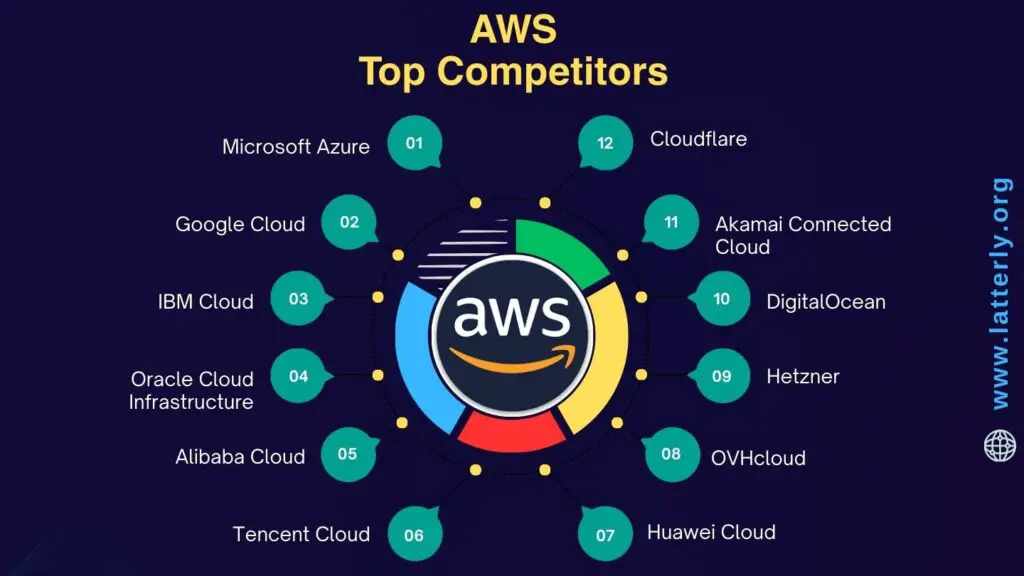
Its target market spans startups seeking speed, midsize companies modernizing IT, and global enterprises pursuing agility and cost control. Public sector agencies and nonprofits also rely on its security controls and global reach. This breadth of adoption reinforces AWS as a default choice for cloud-first strategies.
Backed by Amazon’s operational expertise, AWS is known for a vast catalog of services, deep integrations, and a mature partner ecosystem. Core offerings like EC2, S3, and RDS anchor workloads, while serverless and container options support modern architectures. Pay-as-you-go pricing, robust tooling, and extensive training resources further drive its popularity.
Key Criteria for Evaluating AWS Competitors
Choosing an alternative to AWS requires a clear evaluation framework that aligns with your technical goals and business constraints. Focus on measurable capabilities, total cost, and long-term fit. The right provider should support your roadmap, not constrain it.
- Pricing and total cost of ownership: Compare on-demand, committed use, and spot discounts, including egress fees and support plans. Model multi-year costs under realistic usage patterns.
- Compute options and performance: Assess instance types, GPUs, ARM and x86 choices, autoscaling, and performance consistency under load. Validate with benchmarks tied to your workloads.
- Global footprint, networking, and reliability: Review regions, availability zones, SLAs, peering, and private connectivity. Low latency and resilient architecture are essential for critical apps.
- Storage, databases, and analytics: Examine object, block, and file storage, plus managed databases, data lakes, and streaming. Look for performance tiers, lifecycle policies, and interoperability.
- Security, compliance, and governance: Confirm encryption, identity and access controls, logging, and audit readiness. Required certifications and data residency options must be available.
- Developer experience, ecosystem, and support: Evaluate consoles, CLIs, SDKs, IaC tooling, and observability. Strong documentation, training, and partner solutions accelerate adoption.
- Managed services, containers, and AI or ML: Check serverless runtimes, Kubernetes support, MLOps tooling, and model services. Managed offerings reduce overhead and speed delivery.
- Hybrid, multicloud, and edge capabilities: Consider on-prem extensions, consistent control planes, and edge computing. Smooth workload portability reduces lock-in risk.
Top 12 AWS Competitors and Alternatives
Microsoft Azure
Microsoft Azure brings deep enterprise DNA, broad global infrastructure, and tight integrations with the Microsoft stack. Its momentum spans startups to the Fortune 500, with strong hybrid capabilities through Azure Arc and Azure Stack. Organizations often shortlist Azure when they prioritize Windows Server, Active Directory, and Microsoft 365 alignment.
- Comprehensive portfolio across compute, storage, networking, databases, analytics, AI, and developer tools, comparable in breadth to hyperscale peers.
- Enterprise strength with seamless ties to Windows, SQL Server, and Active Directory, which reduces migration friction for Microsoft-centric environments.
- Hybrid and multicloud leadership via Azure Arc and Azure Stack HCI, enabling consistent governance and operations across on premises and clouds.
- Global reach with a wide region footprint and multiple availability zones, supporting data residency and high availability needs.
- Data and AI services such as Azure Synapse, Fabric, and OpenAI Service, which appeal to teams modernizing analytics and building generative AI workloads.
- Developer productivity through GitHub, Azure DevOps, and Visual Studio, improving CI/CD velocity and security with GitHub Advanced Security.
- Cost controls with Azure Reservations, Savings Plans, and spot capacity, offering paths to optimize long running and bursty workloads.
- Security and compliance depth through Microsoft Defender for Cloud and Purview, meeting strict regulatory frameworks across industries.
- Why it is considered an alternative, parity of core IaaS and PaaS services, rich managed databases, and proven enterprise migration programs.
Google Cloud
Google Cloud is known for data, analytics, and AI leadership, rooted in Google scale and open source influence. Many organizations choose it for BigQuery, Kubernetes, and modern application platforms. Its developer friendly experience and opinionated architectures help teams move fast.
- Standout analytics with BigQuery, Looker, and Dataflow, delivering serverless scale for real time and batch workloads.
- AI and ML leadership through Vertex AI, Generative AI Studio, and TPU options, making model training and inference accessible and efficient.
- Kubernetes pedigree with GKE, Anthos, and Cloud Run, simplifying container orchestration and microservices across hybrid and multicloud setups.
- Strong security posture with BeyondCorp, Chronicle, and Security Command Center, plus zero trust patterns baked into services.
- Open, developer focused services and managed databases, including Cloud SQL, AlloyDB, Spanner, and Firestore, covering transactional to global scale needs.
- Cost optimization via committed use discounts and sustained use discounts, paired with autoscaling serverless options that align cost to demand.
- Global network performance leveraging Google’s private backbone, which minimizes latency for distributed applications.
- Why it is considered an alternative, exceptional data estate modernization, AI acceleration, and cloud native tooling rivaling hyperscalers.
IBM Cloud
IBM Cloud appeals to regulated industries that value mainframe connectivity, security, and compliance rigor. Its portfolio includes advanced encryption options and confidential computing, backed by deep consulting through IBM Consulting. Financial services and government workloads often shortlist IBM for compliance aware architectures.
- Specialization in regulated sectors with IBM Cloud for Financial Services, policy controls, and industry frameworks out of the box.
- Confidential computing, Hyper Protect Crypto Services, and keep your own key capabilities that minimize data exposure risks.
- Hybrid approach with Red Hat OpenShift and IBM Cloud Satellite, enabling consistent container platforms across on premises and cloud.
- Strong integration with zSystems and Power Systems, which supports modernization paths for mainframe and AIX workloads.
- Data and AI offerings including watsonx, Db2, and event streaming, serving analytics, MLOps, and integration needs.
- Global data centers and compliance certifications to meet sovereignty requirements, particularly in finance and public sector.
- Why it is considered an alternative, security first posture, mainframe affinity, and turnkey controls for heavily audited environments.
Oracle Cloud Infrastructure
Oracle Cloud Infrastructure focuses on high performance compute, networking, and databases, with aggressive price performance claims. Enterprises running Oracle Database or ERP see clear advantages in OCI’s integrated stack. The cloud also caters to demanding HPC and data intensive workloads.
- Flagship database services, Autonomous Database and Exadata Cloud, streamline operations and deliver performance for mission critical systems.
- High performance networking with flat architecture and RDMA cluster networks, benefiting HPC and latency sensitive applications.
- Competitive pricing and predictable egress models, often lowering TCO for data heavy applications compared to some hyperscalers.
- Broad compute shapes including AMD, Intel, Arm based Ampere, and GPU instances, matching diverse workload profiles.
- Multicloud with Oracle Database@Azure and strategic partnerships, reducing data gravity friction for Microsoft customers.
- Security and governance capabilities with Cloud Guard and Vault, plus granular tenancy controls for large enterprises.
- Why it is considered an alternative, superior Oracle workload fit, strong performance for analytics and HPC, and cost efficiencies.
Alibaba Cloud
Alibaba Cloud serves as a leading cloud provider across China and much of Asia Pacific. Global brands entering China often rely on its regional infrastructure and compliance support. Its e commerce scale and engineering depth translate into robust cloud services.
- Extensive presence in mainland China with local partnerships, ICP guidance, and region coverage that meets residency requirements.
- Complete IaaS and PaaS portfolio, including ECS compute, OSS storage, ApsaraDB managed databases, and real time analytics.
- Strong e commerce and streaming heritage, offering services that handle massive scale and traffic volatility.
- Security and compliance aligned with Chinese regulations, plus international certifications for multinational operations.
- Competitive pricing, flexible burst capacity, and enterprise discounts that help optimize spend in regional deployments.
- Global expansion with regions in APAC, EMEA, and the Americas, enabling cross border architectures when combined with other clouds.
- Why it is considered an alternative, go to platform for China market entry, local compliance expertise, and mature core services.
Tencent Cloud
Tencent Cloud leverages strengths from gaming, social, and media platforms to deliver low latency infrastructure. It is a frequent choice for real time applications in Asia, including live video and mobile gaming. Developers value its media services and edge capabilities.
- Robust compute, storage, and CDN services with global acceleration, supporting latency sensitive workloads at scale.
- Media and gaming oriented services, including real time communication, live streaming, and game backend tooling.
- Presence across mainland China and key APAC markets, aiding localization and compliance for cross border businesses.
- Security features and DDoS protection informed by Tencent platform operations, offering resilience against large attacks.
- Managed databases, big data services, and AI toolkits for computer vision and speech, enabling modern application features.
- Cost effective packages and elastic scaling, paired with support for containers and serverless functions.
- Why it is considered an alternative, strong fit for interactive apps in Asia, content delivery, and real time experiences.
Huawei Cloud
Huawei Cloud has expanded across Asia, Latin America, and the Middle East, with a focus on price performance and industry solutions. It emphasizes AI, big data, and cloud native platforms. Organizations operating in these regions often evaluate it for local presence and economics.
- Broad service catalog covering compute, storage, networking, containers, databases, and DevOps, with competitive SLAs.
- AI focus with ModelArts, Pangu models, and Ascend based accelerators, supporting training and inference scenarios.
- GaussDB and distributed database offerings that target high availability and strong consistency for enterprise apps.
- Edge and IoT capabilities aligned to smart city, manufacturing, and telco use cases, delivered with regional partners.
- Regional data centers and compliance with local standards, helping meet residency and sovereignty mandates.
- Aggressive pricing and partner led solutions that lower barriers for digital transformation projects.
- Why it is considered an alternative, regional coverage, AI tooling, and price advantages for data heavy workloads.
OVHcloud
OVHcloud champions European sovereignty and transparent pricing for public and private cloud. It appeals to customers seeking open standards and data locality in the EU. The company operates a vertically integrated infrastructure with control over hardware and cooling.
- Public cloud with compute, storage, managed Kubernetes, and databases, alongside bare metal and hosted private cloud.
- European data residency and certifications, supporting GDPR and sector specific compliance needs.
- Predictable pricing with simple egress fees, making cost planning straightforward versus variable models.
- Open source leaning stack and managed Kubernetes services that avoid heavy vendor lock in.
- Global footprint with focus in Europe and expansion to North America and APAC, suitable for transatlantic deployments.
- Why it is considered an alternative, sovereignty, transparent costs, and flexible mix of IaaS and managed services.
Hetzner
Hetzner is admired for price performance and simplicity, especially among European developers and startups. Its combination of dedicated servers and cloud instances fits cost sensitive projects. Users appreciate straightforward billing and reliable networking.
- Competitive cloud instances and affordable dedicated servers, delivering strong performance per euro.
- European data centers with fast connectivity and optional private networking, supporting low latency apps.
- Simple services, managed Kubernetes, load balancing, and snapshots, without unnecessary complexity.
- Transparent pricing with low egress costs and clear resource based billing that keeps budgets predictable.
- Object storage compatible with S3 APIs, easing migration and multicloud storage strategies.
- Why it is considered an alternative, excellent value for money, straightforward operations, and reliable infrastructure in Europe.
DigitalOcean
DigitalOcean focuses on developers and small to midsize businesses that want simpler cloud operations. Its products emphasize clarity, speed to deploy, and predictable pricing. Teams building web apps, APIs, and databases often start here before scaling further.
- Droplets for compute, Managed Databases, Kubernetes, App Platform, and Spaces object storage, covering core app needs.
- Developer friendly experience with clean UI, APIs, and extensive tutorials, reducing the learning curve.
- Predictable pricing and bandwidth inclusions that simplify budgeting for growing apps and SaaS products.
- Regional presence suitable for many SMB workloads, with CDN and storage add ons for global access.
- Marketplace images and one click stacks accelerate deployment of popular frameworks and databases.
- Why it is considered an alternative, easier onboarding, transparent costs, and sufficient features for most early stage workloads.
Akamai Connected Cloud
Akamai Connected Cloud, built on the Linode acquisition, blends developer friendly compute with one of the world’s largest edge networks. It favors distributed architectures and cost effective instances. Organizations with latency sensitive apps or edge heavy footprints find it compelling.
- Core IaaS with compute, block and object storage, managed Kubernetes, databases, and load balancing.
- Massive global edge footprint for CDN, security, and compute at the edge, improving performance and reliability.
- Predictable, competitive pricing with simple egress tiers, appealing to cost conscious teams.
- Strong documentation and community support from Linode heritage, making it approachable for developers.
- Edge compute services that bring logic closer to users, reducing latency for APIs and dynamic content.
- Why it is considered an alternative, distributed delivery strengths, straightforward pricing, and a balanced developer experience.
Cloudflare
Cloudflare moves compute and storage to the network edge, shifting how modern apps are built and delivered. Its platform emphasizes security, performance, and global scale by default. Developers adopt Workers, Queues, and R2 to craft low latency, scalable services.
- Edge compute with Workers and durable primitives like Durable Objects and Queues, ideal for globally distributed logic.
- R2 object storage with no egress to Cloudflare services, reducing data transfer costs for common patterns.
- Global Anycast network with broad PoP coverage, accelerating content and APIs without complex configurations.
- Integrated security, WAF, DDoS protection, bot management, and Zero Trust services, reducing the need for multiple vendors.
- Developer toolchain with Pages, D1 database, and observability, enabling full stack apps with minimal ops overhead.
- Why it is considered an alternative, serverless by design, simplified scaling, and significant egress savings versus conventional architectures.
Top 3 Best Alternatives to AWS
Microsoft Azure
Microsoft Azure stands out for its deep enterprise integration, mature hybrid capabilities, and a broad service catalog that closely matches AWS. Its footprint spans global regions, robust governance, and extensive partner and ISV ecosystems.
Key advantages include tight alignment with Windows Server, Active Directory, and Microsoft 365, plus Azure Arc and Azure Stack for consistent hybrid management. Its expansive compliance portfolio and enterprise support options make migrations predictable and low risk. It best suits Microsoft-centric organizations, regulated enterprises, and teams running .NET or Windows-heavy workloads.
Google Cloud Platform
Google Cloud Platform stands out for data analytics, AI, and cloud-native engineering, supported by Google’s global network and Kubernetes leadership. It emphasizes performance, automation, and simplicity in building modern applications.
Key advantages include BigQuery for analytics at scale, GKE for managed Kubernetes, Vertex AI for ML, and Cloud Run for serverless containers. Per second billing and sustained or committed use discounts help optimize spend without heavy tuning. It suits data-driven teams, startups, and enterprises prioritizing analytics, ML, and modern microservices architectures.
Oracle Cloud Infrastructure
Oracle Cloud Infrastructure stands out for price-performance, high throughput networking, and first-class Oracle Database services. Its architecture favors predictable performance and straightforward resource design.
Key advantages include Autonomous Database and Exadata Cloud, flexible compute shapes, high IOPS storage, and RDMA cluster networking for HPC workloads. Pricing is transparent and predictable, with competitive egress rates that simplify budgeting. It suits enterprises running Oracle workloads, performance sensitive applications, and teams seeking consistent cost efficiency at scale.
Final Thoughts
There are many strong alternatives to AWS, each bringing distinct strengths in enterprise integration, analytics, hybrid operations, and cost control. Microsoft Azure, Google Cloud Platform, and Oracle Cloud Infrastructure frequently rise to the top because they cover the broadest range of enterprise and modern app needs.
The best choice depends on your workloads, compliance requirements, team skills, regions, and budget model. Start with a short pilot, validate performance and costs with representative workloads, and map services to your operating model. With a clear evaluation plan, you can select a platform that fits today’s priorities and scales confidently for tomorrow.
