
Dunkin’ Donuts is a coffee and bakery leader that has shaped on-the-go routines for decades, serving hot and iced coffee, espresso drinks, donuts, and breakfast sandwiches at scale. With a footprint spanning thousands of mostly franchised restaurants, the brand competes in a fast-moving category defined by convenience, value, and flavor innovation. Understanding its Marketing Mix clarifies how Dunkin’ Donuts aligns products, pricing, distribution, and promotion to win daily visits.
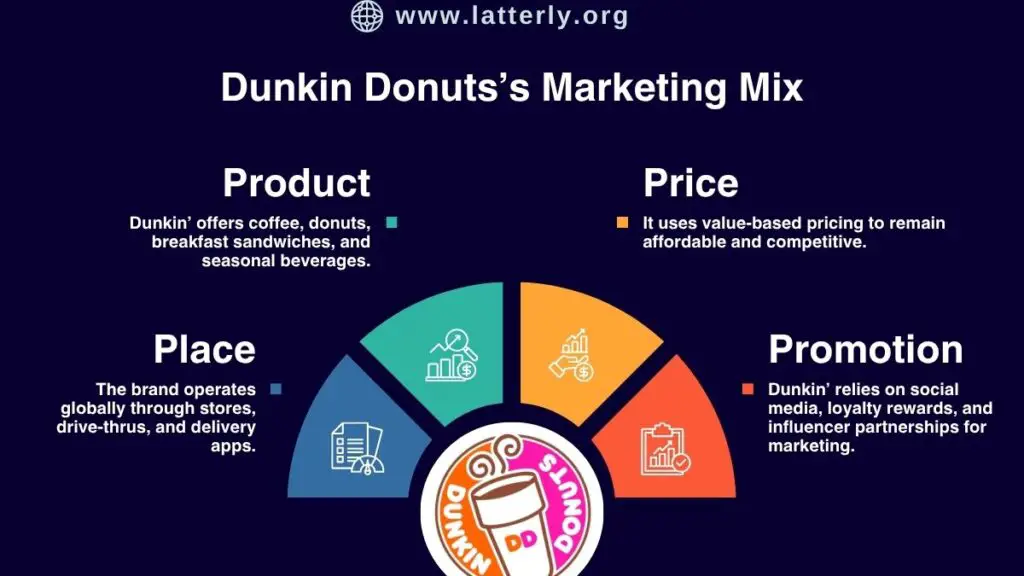
The Marketing Mix matters because growth in coffee-led quick service is propelled by repeatable decisions about what to launch, how to position it, and where to meet guests. From beverage customization to seasonal flavors and digital exclusives, each lever supports traffic and ticket. This article examines how Dunkin’ Donuts builds an advantage through focused product choices that match evolving tastes and daypart occasions.
You may also find these guides helpful:
1. Dunkin’ Donuts Marketing Strategy
2. Dunkin’ Donuts SWOT Analysis
3. Dunkin’ Donuts Business Model
4. Dunkin’ Donuts Competitors
Company Overview
Founded in 1950 in Quincy, Massachusetts, Dunkin’ Donuts scaled through franchising and became synonymous with everyday coffee and donuts. The company streamlined its brand to Dunkin’ in 2018 to emphasize beverages, while donuts remain a core equity and sales driver. In 2020, it joined Inspire Brands, gaining shared capabilities in technology, analytics, and procurement.
Dunkin’ Donuts centers its business on hot and iced coffee, espresso, flavor-forward specialty beverages, baked goods, and breakfast sandwiches geared to the morning and midday dayparts. The chain prioritizes speed, consistency, and value, supported by drive-thru, mobile ordering, and curbside in many markets. Its loyalty program, Dunkin’ Rewards, deepens frequency with personalized offers and member-only deals.
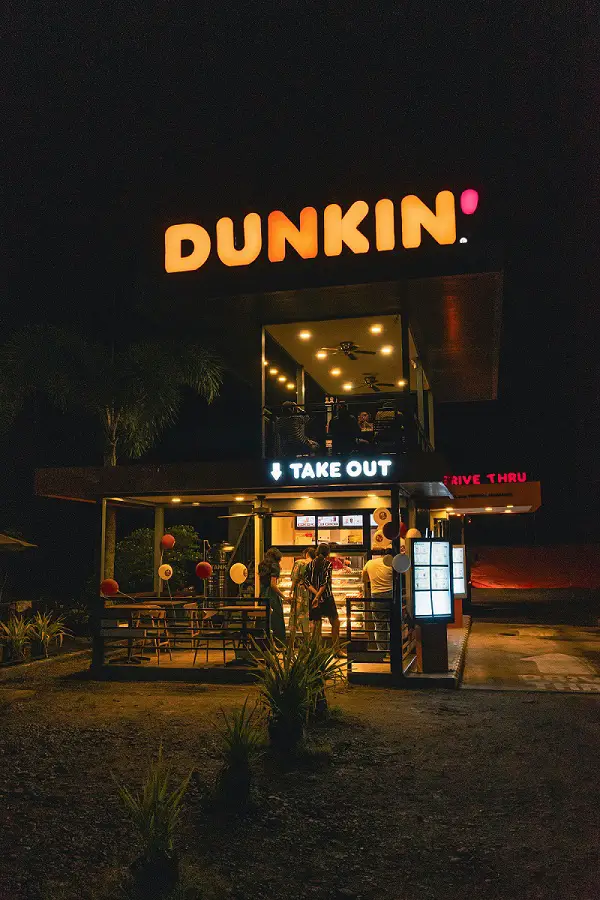
With a strong U.S. presence and restaurants across dozens of countries, Dunkin’ Donuts is one of the largest coffee-focused quick service brands. It competes with premium coffeehouses and mass quick service breakfast players, differentiating with convenience, customization, and approachable pricing. The system is predominantly franchised, enabling rapid local execution and menu flexibility under unified brand standards.
Product Strategy
Dunkin’ Donuts anchors its portfolio in beverage leadership, then layers bakery, breakfast, and snacking to raise average check and visit frequency. A steady cadence of innovation, localization, and licensing extends the brand into more occasions and channels while protecting speed and consistency.
Beverage-Led Core and Customization
Coffee is the center of gravity, with hot, iced, and espresso drinks designed for easy personalization. Guests can tailor flavor shots and swirls, dairy and non-dairy options, sweetness, and ice levels to create a preferred routine. This customization engine supports daily rituals, lifts attachment with bakery items, and keeps Dunkin’ Donuts competitive against premium coffee rivals.
Seasonal and Limited-Time Innovation
Dunkin’ Donuts programs a robust calendar of seasonal and limited flavors to spark trial and social buzz. Pumpkin-forward beverages in fall, holiday mochas, and rotating donut collaborations drive urgency and incremental visits. Limited runs allow rapid testing of flavors and formats, informing future core additions while keeping the menu fresh without operational overload.
Value Menu Architecture and Bundles
The brand uses tiered price points, pairing value beverages with donuts or breakfast sandwiches to create compelling bundles. Offers vary by market and season, often amplified through app-only deals to encourage digital ordering and loyalty enrollment. This structure protects accessibility for price-sensitive guests while supporting margin through mix management and add-ons.
International Localization and Menu Flexibility
Outside the United States, Dunkin’ Donuts adapts flavors, formats, and portion sizes to local tastes and dietary norms. Markets may feature regionally familiar ingredients, sweetness profiles, or halal-certified options, guided by franchisee insight and consumer research. Modular recipes and equipment standards enable localization without undermining speed or brand consistency.
Retail and Ready-to-Drink Extensions
Dunkin’ Donuts extends its product equity into grocery aisles with packaged coffee and ready-to-drink beverages through licensing partnerships. At-home formats let fans experience signature roasts beyond restaurants, reinforcing habitual consumption. These extensions broaden reach, diversify revenue, and keep the brand visible across dayparts when guests are not near a store.
Price Strategy
Dunkin’ positions itself as an accessible, beverage-led brand that competes on value while protecting margins through menu architecture and operational efficiency. Pricing is calibrated by daypart, product mix, and local market dynamics, with the app and loyalty program amplifying targeted offers to sustain frequency.
Value-led Everyday Pricing
Dunkin’ anchors its menu with approachable price points on core items like brewed coffee and classic donuts to encourage habitual visits. Everyday value builds trust and reduces price sensitivity on premium add-ons. By keeping entry prices competitive against convenience stores and QSR peers, the brand preserves traffic while upselling higher-margin espresso, cold beverages, and breakfast sandwiches.
Tiered Beverage Architecture
The menu employs a clear price ladder across sizes and beverage types, from hot coffee to cold brew, espresso, and specialty refreshments. Each tier reflects ingredient costs and perceived indulgence, guiding customers toward profitable choices. Seasonal flavors and cold beverage innovations justify premium pricing, while small-size options keep the category accessible for budget-conscious guests.
Regional and Franchisee-led Pricing
As a largely franchised system, Dunkin’ empowers operators to set prices within corporate guardrails, reflecting rent, labor, and competitive intensity. This localized approach allows tactical responses to inflation and market shifts without undermining brand-wide value perception. Franchisees test price points and measure elasticity, informing broader guidance across urban, suburban, and rural trade areas.
Bundles, Daypart Deals, and LTO Price Points
Combos pairing beverages with donuts or breakfast sandwiches deliver perceived savings while boosting average check. Time-bound offers, afternoon snack deals, and limited-time price points stimulate incremental visits outside the morning peak. Carefully structured bundle pricing protects margins by combining higher-margin beverages with popular food add-ons, balancing value with profitability.
Loyalty-driven Personalization and App Offers
Dunkin’ Rewards powers targeted discounts, bonus point events, and personalized pricing incentives based on purchase history. App-exclusive deals shift traffic to lower-cost digital channels and encourage larger orders through pre-commitment and upsell prompts. Data-informed offers reward frequency without blanket price cuts, helping the brand manage mix and repeat while tracking promotional ROI.
Place Strategy
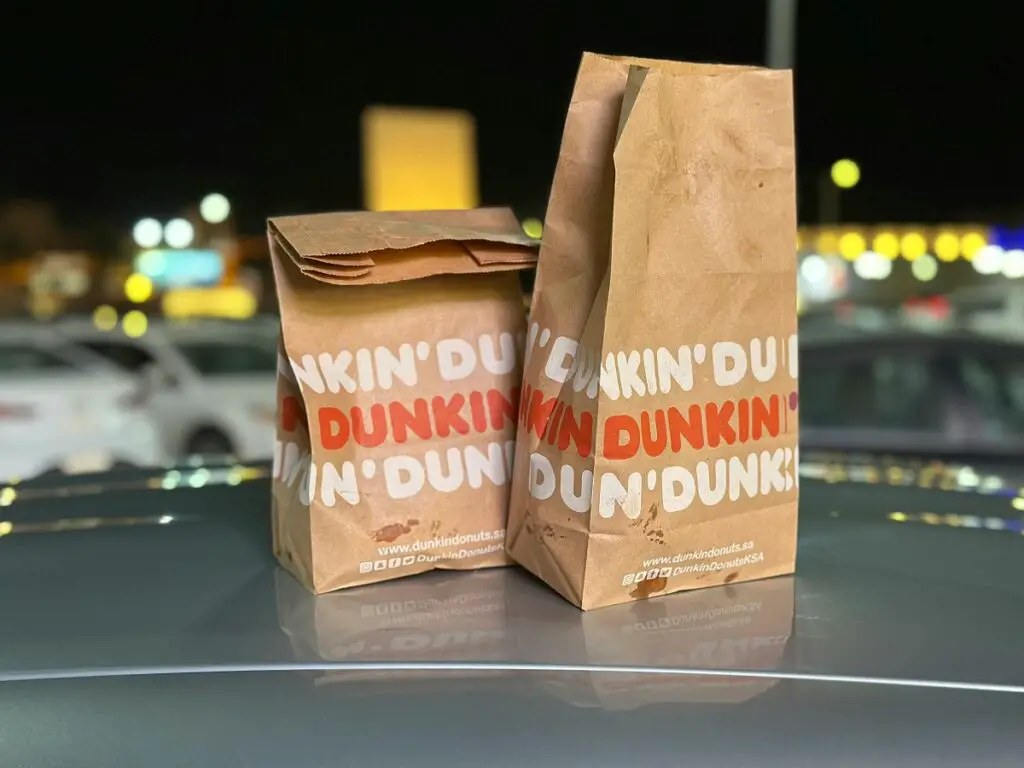
Dunkin’ optimizes reach through a franchise-led footprint, drive-thru centric formats, and robust digital convenience. The network spans more than 13,200 restaurants across nearly 40 countries, with formats tailored to local demand, urban density, and on-the-go consumption patterns.
Franchise-led Global Footprint
The brand’s growth model relies on experienced franchisees and master franchise partners who understand local real estate, labor, and tastes. This approach enables rapid scaling in the United States and internationally while adapting assortments and operations market by market. Local ownership ensures responsiveness to neighborhood traffic patterns and competitive dynamics.
Drive-thru and Next Gen Store Formats
Dunkin’ prioritizes drive-thru sites that capture morning commuters and deliver speed advantages. Next Gen designs add modern beverage tap systems, efficient makelines, and digital order status displays to reduce wait times. Select locations feature double drive-thru or dedicated mobile lanes, aligning physical layouts with beverage-forward demand and high-throughput peak periods.
Mobile Ordering and Curbside Pickup
The Dunkin’ app integrates On-the-Go mobile ordering, scheduled pickups, and curbside where sites allow. Digital orders are staged on pickup shelves for fast retrieval, smoothing production during rushes and improving order accuracy. This infrastructure supports loyalty engagement and reduces front-counter congestion, improving perceived convenience for repeat guests.
Delivery via Aggregator Partnerships
Dunkin’ extends access through leading delivery marketplaces, expanding reach beyond trade areas and off-peak occasions. Menu curation, beverage-friendly packaging, and operational batching protect quality in transit. Promotions with delivery partners drive trial, while data helps refine radius settings, prep times, and assortments that travel well, such as iced beverages and MUNCHKINS donut holes.
Retail and Non-traditional Channels
Packaged coffee and K-Cup pods are distributed through grocery, mass retail, club stores, and e-commerce, keeping the brand in home pantries. Non-traditional venues like airports, colleges, hospitals, and fuel stations add high-traffic access points. Co-branded sites with ice cream sister brand locations appear in select markets to optimize footprint economics and daypart coverage.
Promotion Strategy
Dunkin’ blends mass-awareness branding with highly targeted digital promotions to maintain daily relevance. The brand balances cultural moments, seasonal launches, and app-based rewards to keep the conversation fresh while driving measurable visits.
Masterbrand Platform: America Runs on Dunkin’
The long-running platform positions Dunkin’ as the fuel for everyday routines, emphasizing speed, value, and optimism. Consistent visual identity and tone unify national advertising, in-store messaging, and packaging. This recognizable promise anchors new product introductions and ensures that promotional bursts ladder back to a simple, repeatable brand idea.
High-profile Collaborations and Cultural Moments
Dunkin’ activates celebrity partnerships and pop-culture tie-ins to reach broad audiences and younger cohorts. High-visibility moments, including Super Bowl creative in 2023 and 2024, spark social conversation and PR lift. Limited drinks and merch tied to talent generate urgency, while scarcity and storytelling drive traffic to digital and retail channels.
Loyalty CRM and App-led Promotions
Dunkin’ Rewards enables personalized offers, bonus point events, and reactivation campaigns via push, email, and in-app messaging. Dynamic targeting recommends add-ons, size upgrades, and new flavors based on past behavior. App-exclusive deals and order-ahead incentives create measurable lift in frequency and check, while keeping promotions efficient and performance-driven.
Seasonal and Flavor-led LTOs
Rotating calendars feature early Pumpkin Spice, holiday flavors, and warm-weather refreshers to stimulate trial and repeat. Seasonal creative refreshes menu boards, digital assets, and delivery marketplace pages for consistent storytelling. Limited windows justify premium pricing on specialty beverages and motivate app engagement through time-sensitive rewards.
Local Marketing, Sponsorships, and Community
Franchisees execute localized promotions around schools, offices, and commuter hubs, supported by geo-targeted digital ads. Community initiatives and regional sports partnerships in core markets reinforce hometown affinity and drive event-based traffic. Grand openings, sampling, and fundraiser tie-ins create neighborhood relevance, converting awareness into habitual morning and afternoon visits.
People Strategy
Dunkin’ Donuts depends on people to deliver fast, friendly service at scale across a predominantly franchised network. The brand aligns hiring, training, and incentives to meet heavy morning demand while protecting consistency and hospitality. Continuous coaching and responsive feedback ensure the service culture keeps pace with evolving guest expectations.
Franchisee-Centered Operating Model
Dunkin’ Donuts grows through franchisees, so the brand invests in selection, onboarding, and field support to strengthen local leadership. Franchise business consultants share benchmarks, labor models, and playbooks tailored to daypart peaks. By empowering owners with data and coaching, Dunkin’ sustains uniform service standards while allowing operators to adapt staffing and community engagement to market nuances.
Dunkin’ University and Continuous Training
Structured learning begins with Dunkin’ University programs for franchisees and managers, then extends to crew through modular e-learning and in-store certification. Training emphasizes speed of service, beverage accuracy, food safety, and espresso execution. Refresher modules roll out with menu updates, ensuring new equipment and seasonal items can be produced consistently across locations with minimal ramp time.
Recruitment for Speed and Hospitality
Hiring profiles prioritize multitasking, accuracy, and warm communication suited to high-volume mornings. Managers use practical tryouts, scenario questions, and availability screening to build reliable shift coverage. Cross-training allows crew to flex between order taking, beverage stations, and finishing, reducing bottlenecks and improving guest interactions during peak traffic windows.
Incentives and Performance Accountability
Dunkin’ promotes a performance culture with clear metrics such as order accuracy, drive-thru times, and guest satisfaction. Franchisees typically layer bonuses, shift leader pathways, and recognition moments on top of brand programs. Visible scorecards and shout-outs reinforce best practices, while corrective coaching aligns behavior with standards without sacrificing morale.
Customer Feedback and Community Presence
Guest feedback from app ratings, post-visit surveys, and social channels informs staffing and service tweaks. Operators respond to local needs with tailored hours, community sponsorships, and crew participation in neighborhood events. This local presence humanizes the brand, builds loyalty beyond promotions, and provides practical insights that training teams fold back into service playbooks.
Process Strategy
Dunkin’ Donuts optimizes processes for convenience and throughput while protecting product quality. Standard operating procedures, digital ordering, and equipment layouts are engineered to handle spikes in morning demand. Iterative testing and data from loyalty transactions help refine workflows and reduce friction across channels.
Order Ahead and On-the-Go Mobile
The Dunkin’ app enables guests to customize, pay, and schedule pickup, smoothing demand across dayparts. Orders route to production queues based on promised times, helping managers stage beverages and sandwiches just in time. App-linked offers through Dunkin’ Rewards nudge repeat use, while stored preferences reduce order-entry friction for crew and customers.
Drive-Thru Optimization and Lane Design
Drive-thru processes use streamlined menus, confirmation screens, and headset protocols to cut seconds from each step. Many sites add dedicated order takers during peaks, while some markets deploy dual-lane or order-ahead priority lanes. Clear roles, timer dashboards, and re-route contingencies maintain flow when large or complex orders enter the queue.
Centralized Bakery Production and Delivery
Dunkin’ commonly leverages central manufacturing locations to produce donuts and bakery items to specification, then delivers to restaurants daily. This model preserves in-store space for beverage and sandwich assembly and improves speed. Standard freshness checks and rotation procedures ensure consistent quality while allowing stores to forecast based on historical sales patterns.
Beverage Station Workflow and Equipment Standards
Espresso machines, iced beverage taps, and brewed coffee towers are arranged for minimal movement and parallel preparation. Milk, syrups, and toppings are positioned within arm’s reach, and batch brewing schedules match daypart demand. Calibrations and cleaning checklists guard consistency, while recipe cards in plain sight speed onboarding and reduce errors.
Menu Engineering and LTO Playbooks
Seasonal items like pumpkin or holiday flavors are operationalized with clear build charts, prep guides, and supply forecasts. Dunkin’ tests new beverages for assembly time and station impact before national rollouts. When a limited-time offer launches, crew receive micro-trainings and visual aids so novelty does not slow the line or dilute core favorites.
Physical Evidence
Guests experience Dunkin’ Donuts through tangible cues that signal speed, freshness, and value. Store design, packaging, and digital touchpoints reinforce the pink and orange brand while guiding the visit. Every element from signage to equipment visibility is chosen to confirm that orders are made fast and correctly.
Next Gen Store Design and Visual Identity
Dunkin’s Next Gen design features bright lighting, clean lines, and the iconic pink and orange palette. Open views to beverage stations convey transparency and energy, while compact footprints underscore efficiency. Seating, flooring, and finishes are durable yet welcoming, projecting a modern, quick-serve atmosphere aligned with busy morning routines.
Digital Menu Boards and Confirmation Displays
Digital menu boards highlight core items, limited-time offers, and value combos with high legibility. At drive-thru and counter, order confirmation screens reduce misunderstandings and reinforce perceived control. Dynamic content enables quick pricing or promo updates, ensuring what guests see matches availability without manual poster swaps.
Mobile Pickup Shelves and Clear Signage
Dedicated shelving near the entrance, labeled by name or code, makes app pickups unmistakable. Floor decals and wall markers guide traffic between order, pay, and pickup zones to minimize cross-traffic. This physical organization reassures guests that mobile orders are prioritized and ready on time, strengthening adoption of order-ahead behavior.
Packaging, Cups, and Sustainability Signals
Dunkin’ eliminated foam cups and shifted to more sustainable materials, including double-walled paper hot cups and sip lids in many markets. Bright branded cups act as moving billboards while protecting temperature and taste. Recycling and sustainability messages, where infrastructure permits, communicate responsibility without compromising the on-the-go experience.
Bakery Displays and Sensory Cues
Glass cases showcase donuts and bakery items, signaling freshness and variety at a glance. The aroma of brewed coffee and espresso, along with visible tap systems for cold beverages, reinforces product credibility. Clean counters, organized condiment stations, and readily available napkins confirm attention to detail and make the fast visit feel effortless.
Competitive Positioning
Dunkin’ positions itself as a beverage-led, value-forward brand that wins on speed, convenience, and everyday affordability. Under Inspire Brands, the chain has sharpened its cold coffee, espresso, and breakfast pairing strategy while scaling digital convenience. The result is a high-frequency destination with strong regional density and broad national reach.
Value-First, Speed-Oriented Beverage Platform
Dunkin’ competes by offering familiar coffee and breakfast at approachable price points and with fast throughput. Drive-thru, efficient equipment layouts, and standardized beverage builds keep service times tight and labor predictable. Combo deals and limited-time price promotions reinforce value perception without diluting the core menu. This pragmatic positioning resonates with commuters and on-the-go guests who prioritize consistency and convenience over prolonged in-store experiences.
Dense Regional Footprint and Franchise Scale
With over 13,200 locations across nearly 40 countries and a particularly dense footprint in the U.S. Northeast, Dunkin’ benefits from brand ubiquity and habitual morning visits. A predominantly franchised system accelerates local market penetration and capital-light growth. Scale advantages in distribution, procurement, and media buying are amplified under Inspire Brands, supporting competitive pricing and national campaigns while enabling regional tactics tailored to local tastes.
Expanding Cold Coffee and Espresso Credentials
Dunkin’ has invested in elevating beverage credibility, notably in iced coffee, cold brew, and flavored espresso. Next Gen restaurant designs add cold beverage taps and modern espresso platforms that improve quality and speed. Seasonal signatures, Cold Foam, and Refreshers broaden the audience. Ready-to-drink iced coffee in grocery, via a partnership with The Coca-Cola Company, extends brand reach beyond the restaurant and reinforces cold leadership.
Breakfast Food Pairing and Daypart Ownership
The brand anchors the morning daypart through breakfast sandwiches, bakery staples, and limited-time flavors that pair naturally with coffee. Iconic donuts deliver recognition and impulse, while savory options such as bagels and wraps lift average checks. Seasonal flavors like pumpkin and peppermint create timely spikes in demand. This food-beverage synergy strengthens loyalty and increases visit frequency among habitual morning guests.
Digital Loyalty Flywheel with Dunkin’ Rewards
Dunkin’ Rewards underpins a growing digital ecosystem with order-ahead, curbside, and personalized offers. Millions of members receive targeted promotions and point-based incentives that drive incremental visits and mix shift toward beverages. The app improves throughput by moving transactions off the counter and into mobile. Data from digital orders informs merchandising, flavor innovation, and localized pricing to sharpen competitive response.
Challenges and Future Opportunities
Dunkin’ faces a dynamic competitive set spanning premium cafes, QSR breakfast leaders, and convenience retailers. While the brand holds a strong morning position, evolving consumer tastes, cost pressures, and digital expectations require ongoing adaptation. Strategic opportunities remain in premiumization, daypart expansion, international growth, and sustainability.
Premium Differentiation Amid Specialty Coffee Competition
Elevating beverage craft without sacrificing speed is a delicate balance. Customers increasingly expect barista-like quality, layered flavors, and attractive cold presentations. Continued equipment upgrades, training, and limited-time signatures can justify selective premium pricing. Showcasing espresso quality, artisanal syrups, and foam textures in simple, repeatable builds helps Dunkin’ compete with specialty players while maintaining its hallmark efficiency.
Cost Pressures, Value Architecture, and Margin Protection
Volatile coffee, sugar, and dairy costs, plus tight labor markets, challenge franchisee margins. Dunkin’ can refine laddered pricing, bundles, and portion sizes to protect value perception while preserving profitability. Procurement scale under Inspire Brands, smarter demand forecasting, and kitchen workflow automation can offset inflation. Thoughtful price cadence and localized offers help sustain traffic against budget-oriented competitors and convenience stores.
Afternoon and Late-Day Traffic Acceleration
Growth beyond breakfast remains a core opportunity. Expanded snacking, indulgent limited-time donuts, protein-forward bites, and refreshment-forward beverages can energize afternoons. Cold beverages, Refreshers, and emerging energy offerings broaden appeal in warmer months. Marketing that reframes Dunkin’ as an all-day stop, paired with drive-thru menu board optimization, can lift later-day checks without diluting morning strengths.
Global Growth, Franchising, and Localization
International whitespace requires localized beverages, bakery formats, and savory flavors attuned to regional preferences. Flexible asset models, including small-format drive-thrus and co-branded stores, can unlock real estate. Strong master franchise partners, rigorous site selection, and menu adaptation around tea, cold coffee, and value sets are critical. Efficient supply chains and digital payments help accelerate adoption in high-growth markets.
Sustainability, Packaging, and ESG Expectations
Consumer expectations on sustainability continue to rise. Dunkin’ has eliminated foam cups and can advance recyclable and fiber-based solutions, responsible coffee sourcing, and waste reduction. Progress on cage-free eggs and broader animal welfare commitments builds trust. Reporting credible milestones, piloting reusable cup programs, and optimizing energy usage across Next Gen restaurants can reduce costs while strengthening brand reputation.
Conclusion
Dunkin’ has carved a durable position by pairing value, speed, and beverage-forward innovation with a dense footprint and digital convenience. Its franchise scale, cold coffee strength, breakfast pairings, and data-driven loyalty program create a resilient engine for high-frequency occasions, particularly in the morning daypart.
Looking ahead, sustained momentum depends on balancing premium beverage upgrades with affordability, building afternoon relevance, and expanding internationally with localized menus. Continued investment in technology, operations, and responsible sourcing can protect margins and enhance brand equity. By executing against these priorities, Dunkin’ can extend its leadership as an accessible, everyday coffee destination.
