
Target has built a resilient retail engine since its founding in 1902, balancing style, value, and speed at national scale. The company reported approximately 107 billion dollars in fiscal 2023 revenue, disclosed in 2024 filings, with healthy cash generation and disciplined inventory control. Marketing fuels that performance through a unified loyalty stack, precision retail media, and a store-first fulfillment model that shortens the distance between demand and delivery. Target positions everyday life as aspirational, then removes friction with perks that turn discovery into repeat purchase.
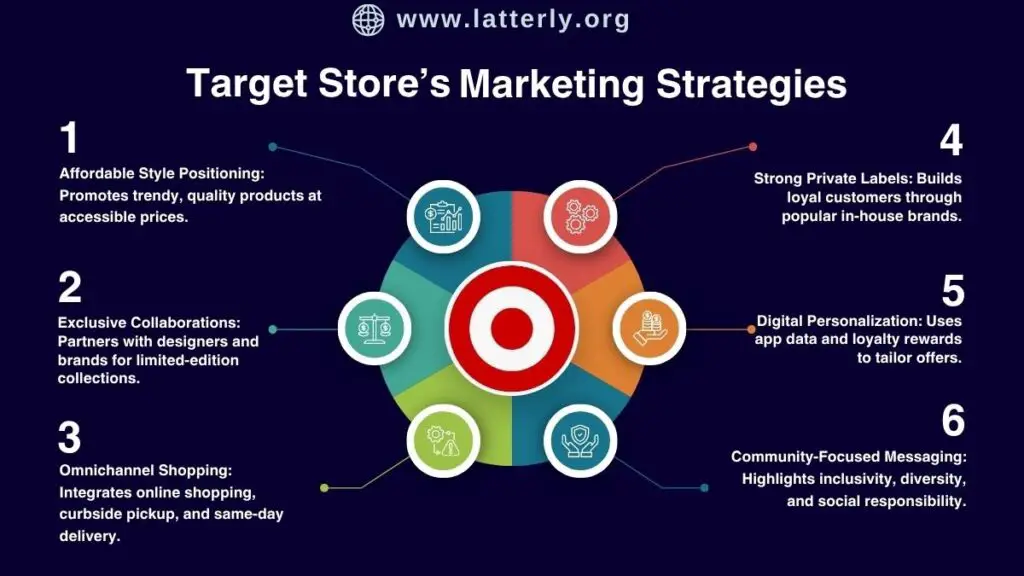
Target’s success rests on clear differentiation: curated owned brands, trusted national partners, and in-store experiences that make shopping simple and enjoyable. The retailer deepens relationships through Target Circle, RedCard savings, Drive Up convenience, and the Roundel retail media network that monetizes audience reach. Moreover, more than 80 percent of digital orders get fulfilled from stores, which tightens cost control and accelerates delivery. That operational advantage gives marketing offers instant impact across channels and trips.
This article examines how RedCard perks amplify Target Circle loyalty to compound value across acquisition, frequency, and advocacy. It outlines a practical marketing framework that blends audience segmentation, digital storytelling, creator collaborations, and community impact. The result shows how Target connects brand warmth with measurable performance, then reinvests those gains into better prices, faster service, and stronger retention.
You may also find these guides helpful:
1. Target Branding Strategy
2. Target Marketing Mix
3. Target SWOT Analysis
4. Target Business Model
5. Target Competitors
Core Elements of the Target Marketing Strategy
In a competitive retail market shaped by omnichannel expectations, Target anchors growth on a few focused pillars. The strategy elevates loyalty, store-enabled speed, and culturally relevant brand moments that create emotional stickiness. These elements work together to move customers from casual trips to habitual shopping across categories and channels.
Target prioritizes a store-first network to fulfill demand while marketing builds reasons to visit and buy. Owned brands create differentiation, while national partnerships drive discovery and basket expansion. Moreover, Roundel leverages shopper signals to deliver relevant media for suppliers and endemic advertisers, funding lower prices and richer experiences. These choices reinforce Target’s reputation for quality and value without diluting brand equity.
The first pillar centers on Target’s physical footprint and the speed advantages it provides marketing offers. Strong local availability makes promotions more actionable, which increases conversion and reduces acquisition costs. The following priorities define how the store base converts awareness into measurable demand.
Store-First Fulfillment Advantages
- More than 95 percent of sales touch stores, and over 80 percent of digital orders get fulfilled locally, which compresses delivery time and cost.
- Drive Up and Order Pickup reduce friction, so promotional messages translate into fast, low-cost last mile and stronger customer satisfaction.
- Localized inventory and pricing tests enable rapid optimization, allowing marketing to scale winning offers with minimal lag and lower markdown risk.
- Endcaps and curated displays amplify digital campaigns in-store, creating a loop between awareness, consideration, and immediate purchase.
- Store teams activate community moments, which increases participation in events, seasonal launches, and back-to-school shopping missions.
Target’s second pillar elevates loyalty economics through Target Circle and the rebranded Target Circle Card (formerly RedCard). The everyday 5 percent savings, personalized deals, and free same-day benefits through Target Circle 360 increase frequency. In addition, these perks raise tender share and unlock richer data, which strengthens personalization across media and merchandising. That flywheel grows lifetime value while reducing paid media dependency.
Target’s loyalty stack generates measurable value for both guests and the enterprise. The alignment of store speed, owned brands, and retail media ensures marketing dollars work harder, faster, and smarter. This integrated foundation keeps the brand distinct, affordable, and easy to choose during each weekly shopping mission.
Target Audience and Market Segmentation
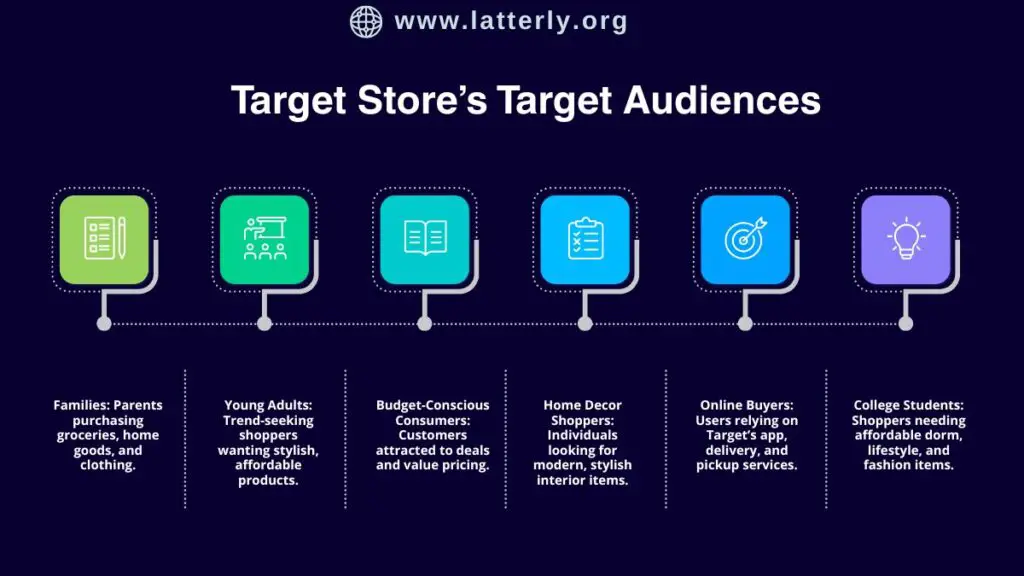
Retail winners segment needs, not only demographics, then align experience to trip missions. Target focuses on households that value design, reliability, and convenience at a fair price. The strategy emphasizes young families, suburban professionals, and multicultural shoppers who visit frequently and buy across categories.
Target reaches most Americans easily: more than 75 percent live within 10 miles of a store. The assortment caters to life moments such as new baby, dorm move-in, seasonal refresh, and everyday grocery. Moreover, owned brands like Good & Gather, All in Motion, and Threshold ladder to style and quality at accessible price points. That mix strengthens value perception without competing solely on discounts.
Target structures its segmentation around trip missions and life stages. Segment clarity improves offer relevance, merchandising adjacencies, and creative tone. The following segments illustrate how the brand maps households to motivations and channels.
Priority Guest Segments
- Young Families: Parents seeking one-stop convenience prioritize Drive Up, essentials, and promotions tied to diapers, snacks, and seasonal apparel.
- Style Seekers: Shoppers who value design hunt limited drops, home décor, and beauty, influenced by creators and trend-led social content.
- Value Optimizers: Budget-focused guests lean into Target Circle deals, weekly ads, and Target Circle Card savings to stretch baskets.
- Urban Convenience: Time-pressed professionals rely on same-day with Shipt, curated urban formats, and frictionless checkouts.
- Multicultural Households: Guests want inclusive sizing, clean beauty, and community-relevant assortments aligned with cultural calendars and celebrations.
Target taps loyalty data to sharpen message cadence and format. Target Circle membership exceeds 100 million members, while RedCard tender share remains a significant portion of sales, supporting targeted incentives. In addition, store clusters mirror neighborhood profiles, which informs localized promotions and events. These choices deepen relevance during moments that matter most to households.
Segmentation influences media and merchandising across the path to purchase. Creative tailors tone, imagery, and offers to the mission and channel. The result delivers consistent brand warmth with precise utility, which sustains high visit frequency and broad category penetration.
Digital Marketing and Social Media Strategy
Digital discovery now shapes shopping lists before guests consider a retailer. Target blends performance media with brand storytelling to influence consideration early, then closes with convenience. The approach balances always-on efficiency with culture-driving moments that spark creator and community conversation.
Target operates a scaled content engine across app, web, email, and social platforms. The Target app ranks among top shopping apps in the United States, with millions of monthly active users engaging weekly deals. Moreover, Target.com attracts an estimated 150 to 200 million monthly visits in 2024, based on third-party traffic analyses. That reach supports conversions for seasonal, home, beauty, and essentials at national scale.
Target tunes tactics to each platform while unifying measurement through a commerce lens. The company optimizes creative formats for speed, clarity, and savings proof. The summary below outlines platform roles and signature plays that move guests from scroll to cart.
Platform-Specific Strategy
- TikTok: Short videos featuring #TargetHaul and #TargetFinds drive discovery, with creators highlighting limited drops, exclusive colors, and store treasure hunts.
- Instagram: Reels showcase styling tips, room refreshes, and beauty routines, paired with shoppable tags and weekly deal overlays for quick action.
- Pinterest: Seasonal boards and how-to pins support planning for holidays and projects, linking to curated bundles and in-stock locators.
- Email and App: Personalized deal carousels and cart reminders reinforce Target Circle offers, connected directly to Drive Up and Pickup.
- SEO and Content: Buyer guides and comparison pages capture intent for essentials, nursery, dorm, and small appliances with structured data.
Retail media amplifies digital performance. Roundel activates on-platform and off-platform inventory using first-party audiences with transparent outcomes. Analysts estimate Roundel revenue surpassed 1.5 billion dollars in 2024, reflecting strong advertiser demand for closed-loop measurement. That scale lowers Target’s overall customer acquisition cost and funds sharper everyday prices.
Target’s digital system connects inspiration, price confidence, and fast fulfillment. Creative clarity and platform-native storytelling meet guests where they scroll, then convert with low-friction pickup and delivery. The result integrates content and commerce, reinforcing value while sustaining efficient growth.
Influencer Partnerships and Community Engagement
Creators now shape taste and trust across retail categories, from pantry staples to décor trends. Target nurtures a broad creator ecosystem that blends brand-safe partners, micro-creators, and product collaborations. The company pairs that voice with meaningful community investments that reflect local priorities and inclusion.
Target’s influencer approach spotlights accessible style and smart savings. Creator-led series unpack room makeovers, capsule wardrobes, beauty routines, and meal prep using owned brands and exclusives. Moreover, viral moments around exclusive colorways, including the 2024 tumbler craze, demonstrate how scarcity and social proof can amplify trips. These activations channel excitement into store visits and digital baskets.
Target structures creator work to drive both culture and conversion. Partnerships range from limited collections to evergreen ambassador programs with performance benchmarks. The following examples illustrate how collaborations ladder to brand warmth and measurable sales.
Creator Collaborations and Social Proof
- Limited-edition designer capsules and celebrity-led collections spark urgency, deepen fashion credibility, and lift traffic during key seasonal windows.
- Micro-creators localize content with store finds, in-stock checks, and Drive Up tips, which increases practical utility and conversion.
- Beauty and home influencers partner through Ulta Beauty at Target, highlighting prestige brands with convenient pickup and loyalty stacking.
- Live shopping pilots and behind-the-scenes videos showcase launch-day energy, encouraging early participation and repeat visits.
- Performance dashboards track attributable sales, engagement quality, and store visit lift to refine partner rosters and budgets.
Community engagement strengthens trust and relevance. Target invests in education, hunger relief, and neighborhood revitalization, supported by store team volunteerism and local grants. The company also met its 2 billion dollar pledge to Black-owned businesses ahead of 2025, building inclusive assortments and supplier development. These efforts align brand purpose with guest expectations in visible, practical ways.
Target connects community programs to retail impact through localized events and round-up donations. Sponsorships, including arts and sports, bring families together and create positive brand salience near stores. The combined effect turns goodwill into loyalty, strengthening preference and repeat shopping over time.
Product and Service Strategy
Target organizes its product and service portfolio to balance value, style, and convenience, reinforcing a clear mass‑premium position. The company scales owned brands, national partnerships, and marketplace-style breadth to win trips across categories. Services like Drive Up, Order Pickup, and same‑day delivery through Shipt expand access and raise repeat engagement.
Owned brands anchor differentiation with design credibility and strong value perception. Labels such as Good & Gather, Cat & Jack, Threshold, and A New Day deliver trend-right assortments at affordable prices. Management reported owned brands generating more than 30 billion dollars in annual sales, and 2024 assortment refreshes added seasonal depth while protecting margins.
Partnerships extend reach into premium discovery categories that elevate the basket. Ulta Beauty at Target and Apple shop‑in‑shops boost traffic, while CVS pharmacies and Starbucks cafés deepen convenience. Store services matured with Drive Up with Starbucks and Returns with Drive Up, improving trip frequency and attachment.
Assortment Architecture and Owned-Brand Leadership
- More than 45 owned brands span essentials, food, apparel, home, and beauty, supporting high private‑label penetration and margin stability.
- Good & Gather and Favorite Day enhance food credibility, driving grocery trips that amplify non‑food cross‑shop rates.
- Dealworthy launched in 2024 with opening price points across basics, strengthening affordability perception during persistent inflation.
- Ulta Beauty at Target surpassed 500 locations in 2024, expanding prestige beauty access with co‑marketing and loyalty linkages.
- Apple shop‑in‑shops in over 200 stores deliver curated tech assortments with trained specialists and prominent digital merchandising.
Services reinforce the value proposition while lifting lifetime value. Same‑day services accounted for more than half of digital sales, and stores fulfilled over 95 percent of orders, preserving speed and cost efficiency. Target Circle, Target Circle 360, and the Target Circle Card integrate savings, shipping benefits, and flexible service access into one cohesive retail experience.
Membership-linked perks multiply product discovery and frequency, creating a durable engine for cross‑category growth. Owned brands fuel differentiation, while partner shop‑in‑shops and nationwide services bring scale and convenience. The result strengthens Target’s role as a one‑stop destination that mixes value with style.
Marketing Mix of Target
Target’s marketing mix aligns product, price, place, and promotion to build preference at scale. The strategy connects design‑led assortments with accessible price tiers and fast, store‑enabled fulfillment. Promotional storytelling amplifies loyalty benefits that reward frequency and larger baskets.
Product breadth spans national brands and exclusive private labels, curated for modern lifestyles and seasonal moments. Price ladders blend opening price points, everyday value, and selective promotions that protect brand equity. Place strategy leverages nearly 2,000 stores as fulfillment hubs and discovery spaces that showcase partnerships.
Promotion integrates Target Circle offers, paid media, social content, and retail media performance tools. The Target Circle Card discount, now aligned under the Target Circle brand, increases immediate savings and member stickiness. Circle 360 adds unlimited Shipt delivery for eligible orders, encouraging digital adoption and higher order frequency.
4Ps Highlights and Performance Drivers
- Product: More than 30 billion dollars in owned‑brand sales annually, plus growth from Ulta Beauty and Apple shop‑in‑shops.
- Price: Target Circle Card delivers 5 percent everyday savings and extended returns; Dealworthy fortifies entry price points.
- Place: Stores fulfilled over 95 percent of digital orders in 2024, supported by expanding sortation centers in key metros.
- Promotion: Target Circle crossed 100 million members, with personalized offers and Circle Week tentpoles driving conversion.
- Performance: 2024 total revenue estimated at 108 billion to 110 billion dollars, reflecting macro headwinds and traffic stabilization.
Coordinated execution across the mix sustains brand relevance while protecting profitability. Owned brands and partnerships elevate differentiation, while stores-as-hubs keep speed and cost advantages. Loyalty‑led promotions convert traffic into repeat behavior at attractive unit economics.
This balanced marketing mix supports consistent value delivery and distinctive positioning, enabling Target to defend share and nurture long‑term growth.
Pricing, Distribution, and Promotional Strategy
Target manages pricing to signal everyday value while reserving targeted promotions for key seasons and loyalty members. The company uses data to calibrate list prices, category offers, and personalized savings within Target Circle. Distribution leans on store‑enabled fulfillment and sortation centers to meet speed expectations at competitive costs.
Pricing communication centers on the Target Circle Card’s 5 percent savings, extended returns, and free two‑day shipping on eligible items. The 2024 Target Circle relaunch simplified benefits and introduced Target Circle 360 at 99 dollars per year, with promotional pricing of 49 dollars for limited periods. Circle 360 includes unlimited same‑day delivery via Shipt on qualifying orders over 35 dollars, improving convenience and loyalty.
Distribution efficiency remains a competitive moat. Stores handle the majority of digital volume through Order Pickup, Drive Up, and same‑day delivery. Additional sortation centers and last‑mile partnerships shorten delivery distances, reduce touches, and improve on‑time performance across top metros.
Program Levers and Operational Enablers
- Pricing: Dealworthy anchors opening price points, while seasonal promotions concentrate on apparel, toys, and home during peak periods.
- Loyalty: Circle Week in April and July 2024 delivered broad discounts, member‑only bonuses, and traffic lifts against Prime‑Day windows.
- Tender: Target Circle Card drives tender share and higher average order values through instant savings and exclusive offers.
- Fulfillment: Same‑day services account for more than half of digital sales, supported by expanding sortation capacity and optimized routing.
- Scale: Nearly 2,000 stores act as neighborhood hubs, enabling fast pickup, returns with Drive Up, and localized promotional execution.
Promotional storytelling blends national media, retail media placements, and personalized Circle offers to maximize return on spend. The approach lifts conversion without over‑reliance on blanket markdowns, preserving brand health. Estimated 2024 revenue of roughly 108 billion to 110 billion dollars suggests stabilization as these levers mature.
Coherent pricing signals, efficient distribution, and loyalty‑led promotions create a strong value equation that resonates with families and style seekers. This engine supports repeat trips, sustained digital adoption, and healthier merchandise margins across cycles.
Brand Messaging and Storytelling
In a crowded mass-market retail category, Target stakes its brand on joy, value, and design. The company anchors every touchpoint to the promise Expect More. Pay Less., then proves it through exclusive brands, curated assortments, and reliable savings. Marketing connects those pillars to measurable behaviors, especially Target Circle loyalty engagement and RedCard usage. The result creates a consistent voice that blends style, accessibility, and everyday practicality.
Target organizes its message house around value, inspiration, and community, then activates those pillars across seasonal moments and loyalty events. This approach allows creative to remain consistent while adapting to cultural trends and merchandising priorities. The framework guides campaigns from awareness to conversion, reinforcing the same promise across stores, the app, and social.
Messaging Architecture and Creative Platforms
- Tagline consistency: Expect More. Pay Less. pairs price confidence with style-forward creative that differentiates from pure discount positioning.
- Joyful utility: Target Run and Done highlights quick trips, Drive Up speed, and confident, one-and-done shopping missions.
- Exclusivity signals: Only at Target stories elevate owned brands like Goodfellow, Cat and Jack, and Hearth and Hand with Magnolia.
- Community-led purpose: Black Beyond Measure and Latinx Heritage Month platforms spotlight diverse creators and owned brands.
Storytelling travels across video, social commerce, and in-app modules that personalize offers and inspiration. Designer collaborations, including 2024’s Target x Diane von Furstenberg, bring cultural heat and affordable fashion credibility. Circle Week creative connects savings to participation, turning household stock-ups into engaging, shareable moments. The approach keeps promotions on-brand, rather than transactional-only cycles that erode equity.
- Social proof at scale: #TargetHaul and #TargetFinds drive billions of TikTok views, reinforcing discovery and impulse-friendly baskets.
- Seasonal rituals: Back-to-school, Holiday, and Circle Week link deals to traditions, lifting trip frequency and omnichannel adoption.
- Content-to-cart: Shoppable posts, app home tiles, and designer drops shorten inspiration-to-purchase journeys.
- Trust signals: Consistent color system, logo lockups, and guest-centric tone strengthen recall and perceived quality.
The messaging system translates easily across categories, which multiplies impact across apparel, beauty, toys, and home. Paid media amplifies the brand voice, while the loyalty ecosystem provides proof through personalized savings and perks. That closed loop turns stories into measurable actions, reinforcing Target’s positioning as the joyful, value-right choice for families and trend seekers.
Competitive Landscape
Mass retail competition in 2024 concentrates around scale, price perception, and fulfillment speed. Walmart, Amazon, Costco, and regional grocers each pressure margins while raising service expectations. Target competes through differentiation rather than a pure race to the bottom, emphasizing design-led private brands, curated national brands, and frictionless same-day options. The strategy aims to maintain relevance with value-savvy guests without diluting equity.
Scale advantages help rivals reset consumer expectations, which makes clarity of Target’s role essential. The brand positions as the most enjoyable mass retail experience, not the absolute lowest price. That stance requires credible value, seamless omnichannel, and distinctive product stories that cannot be easily matched.
Key Competitors and Target Differentiators
- Walmart: Everyday-low-price leadership and broad grocery penetration; Target counters with style, curation, and store experience.
- Amazon: Prime’s logistics moat; Target overlays in-store discovery, Drive Up convenience, and same-day delivery through Shipt.
- Costco: Treasure-hunt bulk value; Target competes on frequency categories and exclusive owned brand design.
- Dollar formats: Ultra-low basket costs; Target leans on quality perception, loyalty rewards, and omnichannel speed.
Footprint strategy strengthens competitive resilience. Stores-as-hubs enable rapid fulfillment, efficient returns, and lower last-mile costs. Remodels and small-format locations extend reach into dense urban and campus areas while protecting the brand’s design-forward ambiance. The approach supports share gains in style-led categories where presentation and inspiration matter.
- Owned brands: Dozens of private labels generate strong margins and loyalty through quality and on-trend design.
- Omnichannel parity: Drive Up, Order Pickup, and same-day delivery meet convenience expectations with high reliability.
- Loyalty scale: Target Circle membership exceeds 100 million guests in 2024 on company estimates, boosting deal personalization.
- Financial context: 2024 total revenue likely lands in the 106 to 109 billion dollar range, based on conservative company-trend estimates.
Target’s competitive edge relies on making mass retail feel modern, human, and efficient. The mix of consistent value, distinctive product, and premium-feeling convenience gives the brand a defensible middle ground between hard discount and pure e-commerce scale. That positioning supports loyalty growth even as price competition intensifies.
Customer Experience and Retention Strategy
Retail loyalty in 2024 rewards brands that remove friction while rewarding participation. Target builds retention around three connected engines: Target Circle, RedCard, and same-day services anchored in the app. Each element reinforces the others, turning everyday purchases into repeatable, personalized routines. The experience elevates satisfaction and raises switching costs without relying only on discounts.
Target designs loyalty benefits that feel simple, generous, and easy to use across channels. Clear value creation aligns with guest missions, from quick runs to stock-up trips. The structure encourages members to consolidate spend and use digital tools that streamline shopping.
Loyalty Mechanics and Benefits Design
- Target Circle: Free membership with personalized deals, bonus offers, and one percent earnings applied to future purchases.
- Circle 360: Subscription tier launched in 2024 with unlimited same-day delivery through Shipt and fast shipping benefits.
- RedCard: Five percent everyday savings, extended returns, and integrated Wallet checkout elevate value perception and ease.
- Event cadence: Circle Week and seasonal boosters create habit-forming engagement and lift trip frequency.
Experience design emphasizes speed and confidence. Drive Up, Order Pickup, and Shipt delivery connect inventory to the guest with minimal steps. App enhancements unify Wallet, offers, and store services, making checkout and returns fast. Starbucks with Drive Up in select markets adds delight, turning errands into a small experience upgrade that guests remember.
- Scale and impact: Target Circle membership surpasses 100 million participants in 2024 on company estimates, deepening personalization reach.
- Tender mix: RedCard accounts for roughly one-fifth of sales tender, supporting repeat rates and margin stability.
- Satisfaction: Drive Up posts satisfaction scores above 90 percent in internal tracking, supporting strong app ratings.
- Service quality: ACSI 2024 places Target in the high 70s, indicating competitive customer satisfaction versus mass retail peers.
The retention flywheel strengthens with each digital adoption. Members save, earn, and complete missions faster, which increases their reliance on the brand for weekly needs. That behavior compounds across categories, anchoring Target as the default choice for convenient, reliable, and rewarding shopping.
Advertising and Communication Channels
Retailers compete through precise media orchestration, timely promotions, and fast-moving creative. Target aligns its advertising mix with an omnichannel shopping journey that starts on mobile and finishes in store. The company activates messages across television, connected TV, social, search, out-of-home, and its retail media network Roundel. This harmonized system supports weekly deal cycles, seasonal moments, and loyalty prompts for Target Circle and RedCard.
Scale underpins effective reach. Target operates an estimated 1,960 stores in 2024, paired with an app that exceeds 50 million installs. The company’s digital sales represent a meaningful share of revenue, and stores fulfill the vast majority of those orders. Roundel, Target’s media business, delivers closed-loop performance using in-store and digital signals. Advertisers gain measurable sales outcomes, while shoppers receive relevant offers aligned with intent.
Target focuses media investment on formats that balance brand reach with measurable conversion. Retail media accelerates lower-funnel impact, while CTV, social video, and experiential placements fuel consideration. The approach prioritizes consistent branding, clear value, and easy next steps that drive store visits and app engagement.
Retail Media and Performance Advertising
- Roundel serves thousands of brand partners, delivering closed-loop reporting that connects impressions to store and digital sales outcomes.
- Measurement frameworks span multi-touch attribution, media mix modeling, and incrementality testing, improving budget allocation across channels.
- Audience segments leverage Target Circle signals, category affinities, and purchase recency, improving relevance without compromising privacy.
- Creative templates flex by placement, promoting weekly deals, seasonal capsules, and owned brands like Good & Gather and Cat & Jack.
- Store digital screens, endcap signage, and app placements reinforce messages near purchase, strengthening omnichannel continuity.
- Advertisers report strong return on ad spend ranges, supported by precise targeting and deterministic sales data.
Brand building remains essential alongside performance media. Target invests in CTV, premium video, and cultural tentpoles such as back-to-school and holiday to maintain salience. Integrated creative assets appear on television, social, and in-app surfaces with consistent tones and promotional anchors. This full-funnel system protects long-term brand equity while keeping weekly traffic strong. The balance of reach and precision supports sustained growth across omnichannel journeys.
Sustainability, Innovation, and Technology Integration
In a retail landscape shaped by climate expectations and smarter logistics, sustainability and technology work as growth engines. Target embeds environmental goals and data-driven operations into merchandising, fulfillment, and marketing. The company advances its Target Forward strategy while integrating AI, computer vision, and RFID to improve accuracy, speed, and margin. These investments also power more relevant communications for Target Circle and RedCard members.
Target continues pursuing renewable energy, circular packaging, and waste reduction across the network. The company has expanded rooftop solar and offsite renewable contracts, with an estimated majority of electricity from renewables in 2024. Design teams scale recyclable or reusable packaging across owned brands, improving shelf appeal and reducing materials. Operational pilots test alternative fuels, efficient HVAC, and smart lighting, lowering emissions per order fulfilled. Sustainability messaging appears in-store and within the app to help guests choose better options without friction.
Technology integration supports inventory fidelity, fast delivery, and precise personalization. Data flows from stores and the app drive smarter replenishment and more relevant promotions. Target emphasizes privacy-centric modeling that respects consumer trust while improving marketing outcomes.
Technology Stack and Data Capabilities
- AI demand forecasting improves in-stock rates and reduces overages, stabilizing promotions and reducing markdown risk during seasonal peaks.
- RFID and computer vision enhance shelf accuracy, enabling reliable Drive Up promises and stronger search-to-shelf experiences.
- Personalization engines tailor Target Circle offers, app recommendations, and email sequencing using permissioned signals and clean-room analytics.
- Dynamic fulfillment routes orders to store teams or sortation centers, cutting delivery times and costs for same-day services.
- Roundel uses deterministic retail data to refine targeting and measure incremental lift across CTV, onsite, and offsite channels.
Marketing communicates progress using credible proof points, clear labeling, and practical guidance. Guests see eco-icons, transparency notes, and endcap education featuring owned brands that meet higher standards. These details reinforce trust while keeping value prominent. The fusion of sustainability and technology strengthens the brand promise and supports more efficient, responsible growth.
Future Outlook and Strategic Growth
Economic sensitivity, evolving media consumption, and rising expectations for convenience will define the next phase of retail. Target prioritizes profitable traffic, loyalty expansion, and operational speed to protect share. The company maintains disciplined promotions while improving same-day fulfillment and store experiences. This strategy favors durable growth rather than short-lived volume spikes.
Target reported revenue around 107 billion dollars in its most recent fiscal cycle, with 2024 full-year revenue estimated to be near that level. Management signals emphasis on margin recovery, inventory discipline, and a healthier discretionary mix. Investments target larger-format stores, remodels, and sortation centers that reduce last-mile costs. Partnerships like Ulta Beauty at Target extend basket size and relevance within key lifestyles. Loyalty levers through Target Circle and RedCard continue to differentiate value for engaged households.
Near-term priorities convert omnichannel advantages into sustained market share gains. Teams focus on store-format flexibility, digital acceleration, and a sharper value story. These moves rely on data-informed decisions that connect merchandising, media, and operations.
Strategic Growth Priorities 2025–2027
- Expand larger-format stores and accelerate remodels, improving capacity for same-day services and broader owned-brand assortments.
- Scale Ulta Beauty at Target shop-in-shops and curated partnerships, increasing trip frequency and cross-category discovery.
- Grow sortation centers and last-mile capabilities, lowering delivery costs and increasing Drive Up speed for suburban and urban markets.
- Enhance Target Circle membership value and awareness, including Target Circle 360, while modernizing RedCard offers and digital wallet utility.
- Increase Roundel’s advertiser base and retail media sophistication, funding competitive pricing and media reach through higher-margin ad revenue.
- Advance sustainability milestones tied to packaging, energy, and logistics, reinforcing trust and reducing operating exposure to energy volatility.
Target enters the next cycle with a clear playbook: strengthen value, simplify shopping, and deepen loyalty. The marketing engine will concentrate on distinctive owned brands, precise retail media, and seasonal storytelling that drives conversion. Operational improvements will keep promises fast and reliable, which sustains media efficiency. This integrated approach positions Target to compound its omnichannel advantages and capture balanced, profitable growth.
