
Founded in 1923 by Walt and Roy O. Disney, the company has grown from a modest animation studio into a global entertainment powerhouse. Its mix of beloved characters, pioneering technology, and diversified businesses has shaped popular culture for a century.
Disney targets families, kids, and multi-generational audiences, delivering stories and experiences that cross age, language, and borders. From theatrical releases and television to streaming, theme parks, consumer products, and games, it meets fans wherever they are.
The brand’s strength comes from consistent storytelling quality, a deep library of franchises, and the ability to connect emotion with spectacle. Disney’s integrated model, content creation paired with world class distribution and real world experiences, creates powerful flywheel effects. This positioning, trusted family entertainment with global reach and premium experiences, keeps Disney at the center of the media and leisure landscape.
Key Criteria for Evaluating Walt Disney Competitors
When comparing Disney to other entertainment companies, focus on the factors that directly influence audience reach, engagement, and profitability. These criteria help separate broad competitors from true alternatives across content, platforms, and experiences.
- Content portfolio and IP strength: Assess breadth and durability of franchises, characters, and worlds. Long lived IP powers sequels, licensing, and cross platform experiences.
- Audience reach and demographics: Consider global scale, age range, and cultural relevance. Family appeal and cross generational engagement drive sustained demand.
- Distribution ecosystem and synergy: Evaluate theatrical, streaming, broadcast, parks, products, and gaming touchpoints. Owned channels and cross promotion amplify each release.
- Pricing and value: Compare subscription tiers, ticket prices, bundles, and promotions. Clear value per hour or per visit, with transparent terms, is essential.
- Product experience and ease of use: Review app performance, discovery tools, accessibility features, and in park technologies. Frictionless experiences boost engagement and retention.
- Innovation and technology: Look at animation pipelines, production tools, personalization, and interactive formats. Continual innovation supports quality and efficiency.
- Brand trust, safety, and privacy: Family friendly curation, ratings, ad policies, and data protection matter. Competitors need visible safeguards and transparent privacy practices.
- Customer support and community: Assess responsiveness, resolution, refunds, and loyalty programs. Active fan communities and creator ecosystems increase lifetime value.
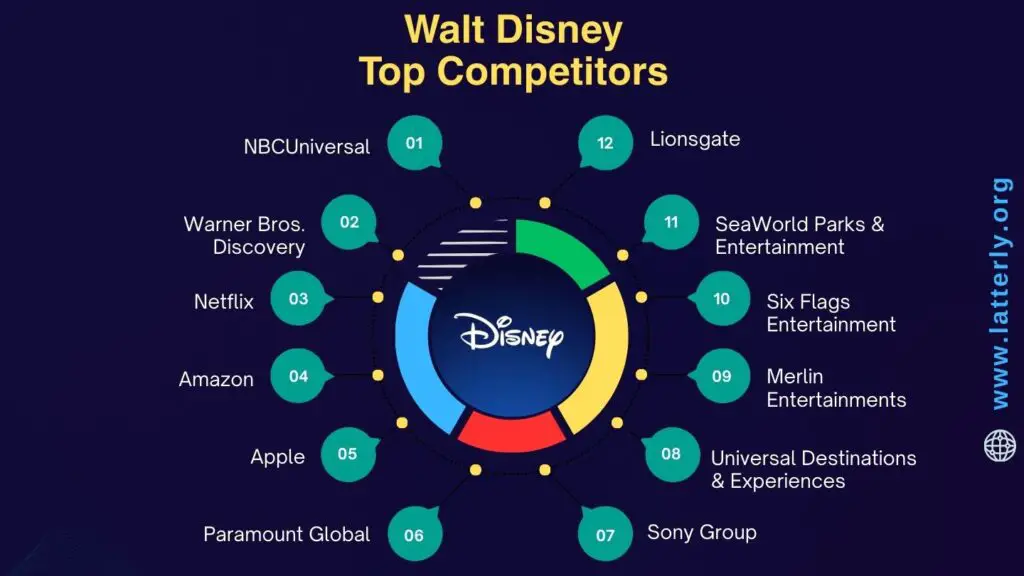
Top 12 Walt Disney Competitors and Alternatives
NBCUniversal
NBCUniversal is a diversified powerhouse spanning film, television, streaming, and theme parks. The company unites Universal Pictures, Illumination, DreamWorks Animation, and the Peacock platform under Comcast ownership. Its family franchises, plus globally visited parks, place it head to head with Disney across multiple touchpoints.
- Market presence includes NBC broadcast, cable networks, Peacock streaming, Universal Pictures, and a robust parks portfolio in Orlando, Hollywood, Japan, and Beijing.
- Family hits such as Despicable Me, Minions, How to Train Your Dragon, and The Super Mario Bros. Movie mirror Disney’s appeal to multigenerational audiences.
- Universal Destinations & Experiences drives destination travel through deeply themed lands like Wizarding World of Harry Potter and Super Nintendo World.
- Peacock gives NBCUniversal a direct streaming alternative to Disney+, offering originals, sports, news, and family libraries under a hybrid ad model.
- Content strategy blends four quadrant blockbusters with animation pipelines from Illumination and DreamWorks, supplying year round tentpoles.
- Consumer products and location based experiences convert screen IP into merchandise, events, and traveling exhibitions.
- Consumers compare it to Disney because it delivers films, shows, streaming, parks, and licensed goods under a unified entertainment ecosystem.
Warner Bros. Discovery
Warner Bros. Discovery brings together premium scripted brands and global nonfiction leaders. Its portfolio spans Warner Bros. Pictures and Television, HBO and Max, DC, Discovery, and CNN. The company competes for families and fandoms through iconic franchises and a broad streaming slate.
- Max offers a consolidated service with HBO originals, Warner Bros. films, DC series, unscripted Discovery titles, and kids content from Cartoon Network.
- DC, Looney Tunes, Wizarding World film rights, and classic library assets provide franchise depth comparable to Disney’s IP vault.
- Warner Bros. Pictures anchors theatrical with tentpoles, while WBTV supplies global hits for networks and streamers.
- Consumer products, gaming via Warner Bros. Games, and studio tours extend franchises into retail and experiences.
- Global channels and distribution give WBD reach across regions and formats, strengthening advertiser solutions and windowing.
- Families view it as a Disney alternative for superhero worlds, animation heritage, and premium series that span generations.
- Notable advantages include a mature adult prestige slate beside family brands, plus nonfiction volume that diversifies audience engagement.
Netflix
Netflix commands the largest global subscription streaming audience, shaping viewing habits in over 190 countries. Its kids and family catalog is expansive, and its originals frequently dominate cultural conversation. The service competes with Disney+ for screen time, loyalty, and franchise mindshare.
- Market presence is purely digital first, with robust personalization, kids profiles, and strong device coverage that makes access effortless.
- Animation and family originals, licensed preschool hits, and event films provide steady alternatives to Disney classics.
- Global production enables local language kids and YA series, giving families culturally relevant choices beyond Hollywood brands.
- Consumer products, live events, and pop up experiences turn streaming IP into tangible fan touchpoints.
- Ad supported and ad free tiers offer pricing flexibility that can undercut traditional bundle costs.
- Release strategies range from weekly series drops to blockbuster film debuts at home, which appeals to families seeking convenience.
- Differentiators include discovery algorithms, binge friendly catalogs, and rapid commissioning cycles that keep the slate fresh year round.
Amazon
Amazon competes through Prime Video, MGM, and a commerce ecosystem that links content to shopping and devices. Its reach touches hundreds of millions of Prime members worldwide. For families and genre fans, the bundle value rivals Disney’s subscription appeal.
- Prime Video offers originals, licensed films, kids programming, and live sports, integrated into the broader Prime membership.
- Ownership of MGM adds historic franchises like James Bond and Rocky, strengthening film library depth.
- An ad supported default tier with upgrade options balances reach and monetization for cost conscious households.
- Amazon Studios produces family features and series, while Amazon Kids+ extends curated content and apps for children.
- Commerce integration enables frictionless merchandise tie ins, benefiting franchises with strong retail potential.
- Free ad supported streaming through Freevee expands discovery for budget minded viewers.
- Consumers compare it to Disney due to a growing family catalog, blockbuster ambitions, and a seamless path from screen to store.
Apple
Apple TV+ focuses on premium storytelling with a curated library instead of volume. The service features acclaimed originals, family series, and films released via strategic theatrical partners. Device integration and bundles give Apple a distinct distribution edge.
- Apple TV+ is available across Apple devices and major TVs, with best in class app performance and parental controls.
- Family programming spans animated series, educational shows, nature docs, and specials that complement Disney’s family focus.
- Apple One bundles combine TV+, Arcade, Music, and iCloud, creating a high value alternative for households.
- Selective film slate and awards pedigree position Apple as a quality brand for co viewing and prestige releases.
- Originals leverage top tier talent, which drives cultural relevance without relying on massive back catalogs.
- Ad free simplicity differentiates the service experience, while pricing remains competitive.
- Parents view Apple as a safe, high quality environment for kids, supported by ecosystem level privacy features.
Paramount Global
Paramount Global blends theatrical strength with beloved kids brands and broad television reach. Families know Nickelodeon characters worldwide, and Paramount Pictures maintains franchise momentum. Streaming via Paramount+ and Pluto TV expands access across budgets.
- Nickelodeon, Nick Jr., and PAW Patrol anchor a deep preschool and kids pipeline that competes directly with Disney’s family portfolio.
- Paramount+ with Showtime delivers originals, film debuts, live sports, and kids hubs in one subscription.
- Pluto TV, a leading free ad supported service, fuels awareness and sampling among value seekers.
- Paramount Pictures supports global franchises like Transformers, Mission Impossible, Sonic co releases, and family animation partnerships.
- Consumer products and live events monetize characters across toys, apparel, and touring shows.
- Licensed attractions such as Nickelodeon Universe give the brand physical world visibility without owning parks.
- Households consider Paramount a Disney alternative for kid safe channels, recognizable characters, and a flexible streaming stack.
Sony Group
Sony operates across film, television, gaming, and music, creating a powerful cross media engine. Sony Pictures, PlayStation, and Crunchyroll each bring distinct audiences into the fold. The company competes with Disney for franchise fandom, animation, and game based storytelling.
- Sony Pictures Animation and Imageworks deliver hits like Spider Man Into the Spider Verse, redefining stylistic animation.
- PlayStation IP such as The Last of Us and God of War feeds screen adaptations and synergistic marketing.
- Crunchyroll leads in anime streaming and events, capturing youth and collector communities that value Japanese content.
- Without a general entertainment streamer in the U.S., Sony maximizes flexibility by selling shows and films broadly.
- Consumer products licensing builds franchises across collectibles, apparel, and gaming accessories.
- Global distribution and partnerships enable wide theatrical and home release windows.
- Fans compare Sony to Disney for superhero collaborations, cinematic universes, and a growing pipeline of game to screen projects.
Universal Destinations & Experiences
Universal Destinations & Experiences is the theme park division competing directly with Disney Parks. The brand is known for high energy rides, cutting edge tech, and deeply themed lands. Its expansion pace and IP choices draw thrill seekers and families alike.
- Resorts in Orlando, Hollywood, Japan, and Beijing deliver global scale, with hotels, CityWalk dining, and seasonal events.
- Epic Universe in Orlando is slated to open with multiple new lands, increasing capacity and multi day visitation.
- Signature areas like Super Nintendo World and Wizarding World offer interactive play and innovative ride systems.
- Express Pass and virtual queue options provide time saving advantages that many guests prioritize.
- Halloween Horror Nights drives shoulder season attendance and strong per cap spending.
- Merchandise programs around Mario, Jurassic, and Minions generate high retail conversion.
- Families view Universal as a Disney alternative for modern thrill design, shorter trip lengths, and competitive pricing on tickets and hotels.
Merlin Entertainments
Merlin Entertainments operates family focused attractions at global scale. Its portfolio spans Legoland Resorts, Peppa Pig parks, Sea Life aquariums, and Madame Tussauds. The company offers accessible, regional experiences that balance with destination travel.
- Legoland theme parks and Discovery Centres target families with children ages 2 to 12, complementing Disney’s family demographic.
- Peppa Pig Theme Park expands preschool appeal with gentle rides and interactive play.
- City centre attractions such as Sea Life and Madame Tussauds create high frequency, lower cost outings.
- Resort hotels and short breaks at Legoland add multi day value without long haul travel.
- Licensed IP collaborations, including LEGO brands and external characters, drive retail and repeat visits.
- Merlin’s regional footprint across Europe, North America, and Asia provides proximity convenience versus destination parks.
- Consumers consider Merlin an alternative to Disney for shorter, budget friendly trips and strong hands on family engagement.
Six Flags Entertainment
Six Flags Entertainment, now combined with Cedar Fair, forms a large North American park network. The company is recognized for high thrill coasters, seasonal events, and value pricing. Its expanded footprint introduces more local alternatives to Disney vacations.
- The combined portfolio includes icons such as Cedar Point, Knott’s Berry Farm, Six Flags Magic Mountain, and Great Adventure.
- Memberships and season passes offer budget friendly access for frequent regional visits.
- Signature events like Fright Fest and Holiday in the Park extend the operating calendar and boost merchandise sales.
- Ride innovation centers on record setting coasters and water parks that attract teens and young adults.
- Food and beverage upgrades, plus mobile ordering, improve guest spending and satisfaction metrics.
- Licensing with DC and Looney Tunes in select parks adds family IP recognition without owning film studios.
- Families view Six Flags as a Disney alternative for shorter drives, lower total trip costs, and thrill focused itineraries.
SeaWorld Parks & Entertainment
SeaWorld Parks & Entertainment balances animal experiences with a fast growing coaster lineup. The portfolio includes SeaWorld, Busch Gardens, Aquatica, and Sesame Place. Families appreciate the mix of education, rides, and water park options.
- Sesame Place and Sesame Street lands deliver preschool friendly attractions with trusted characters.
- Busch Gardens Tampa and Williamsburg offer lush theming, animal habitats, and record breaking coasters.
- SeaWorld has expanded beyond shows into major thrill investments, broadening its demographic reach.
- Aquatica water parks provide all day play at competitive pricing, especially for locals and weekend travelers.
- Conservation messaging and behind the scenes tours differentiate the experience from purely ride based parks.
- Annual passes and fun cards encourage repeat visits, offsetting the need for destination travel budgets.
- Consumers compare it to Disney for family co visiting in Central Florida and Southern California, often as part of multi park trips.
Lionsgate
Lionsgate is a nimble studio known for franchises that punch above their weight. The company couples theatrical releases with a strong television group and the Starz platform. Its approach to genre and YA storytelling resonates with global audiences.
- Franchise engines include The Hunger Games and John Wick, delivering reliable box office and licensing potential.
- Television production spans premium drama and unscripted formats for networks and streamers worldwide.
- Starz provides a targeted streaming home for originals and curated films, with international rollout in select markets.
- Live experiences, exhibitions, and international attractions extend IP into themed environments and retail.
- Lionsgate’s mid budget discipline allows frequent releases and risk diversification compared to mega budget slates.
- Distribution partnerships and agile windowing help maximize returns across theatrical, PVOD, and streaming.
- Viewers consider Lionsgate an alternative to Disney for event films and series that skew older while still appealing to teens and families.
Top 3 Best Alternatives to Walt Disney
Netflix
Netflix stands out as the global leader in subscription streaming, pairing a massive slate of originals with fast worldwide releases and strong personalization that keeps viewers engaged. Key advantages include a deep multilingual catalog, flexible ad supported and 4K plans, reliable apps, and robust downloads and profiles for households. It best suits streaming first families and cord cutters who want constant fresh series and films, and who value on demand convenience over live sports or theme park experiences.
Warner Bros. Discovery
Warner Bros. Discovery stands out by uniting Warner Bros. Pictures, HBO, DC, and Discovery into a single ecosystem that spans prestige dramas, blockbuster franchises, and broad unscripted. Its Max service delivers award winning HBO originals, popular IP like DC and Harry Potter, an expansive nonfiction library, and an optional B/R Sports add on for select live events. It suits franchise fans and households that want both high end storytelling and reality or lifestyle content in one place, with the flexibility of streaming plus traditional TV windows.
Comcast NBCUniversal
Comcast NBCUniversal stands out with a full stack of entertainment, combining Universal Pictures, Illumination, DreamWorks Animation, NBC, and Peacock with globally renowned Universal theme parks. Key advantages include major family franchises, cross platform promotion from theaters to TV and streaming, and strong live sports on Peacock such as Premier League, Olympics coverage, and WWE events, alongside rapid park expansion. It suits families seeking a theme park centric vacation alternative to Disney, sports fans who want live coverage, and viewers loyal to NBC and Universal brands.
Final Thoughts
There are many strong alternatives to Walt Disney across streaming, studios, and even real world attractions, which gives audiences more choice than ever. Netflix leads in pure on demand depth, Warner Bros. Discovery blends prestige storytelling with big franchises and sports add ons, and Comcast NBCUniversal pairs a major content pipeline with destination theme parks. Others like Amazon, Apple, Paramount, and Sony can also be smart picks for specific tastes or budgets.
The best choice depends on what you value most, whether that is family friendly parks, award winning originals, live sports, or an international catalog to binge. List your must haves, set a budget, and look for the ecosystem that covers the most boxes with the fewest compromises. With clear priorities, you can choose confidently and get maximum entertainment value without overpaying or juggling too many services.
