
McDonald’s is the world’s leading quick-service restaurant brand, serving millions daily across more than 100 countries. Its Golden Arches symbolize speed, consistency, and value, supported by a franchise-first model and a sophisticated global supply chain. As consumer expectations shift, the company continually evolves its menu, formats, and digital experiences to stay relevant.
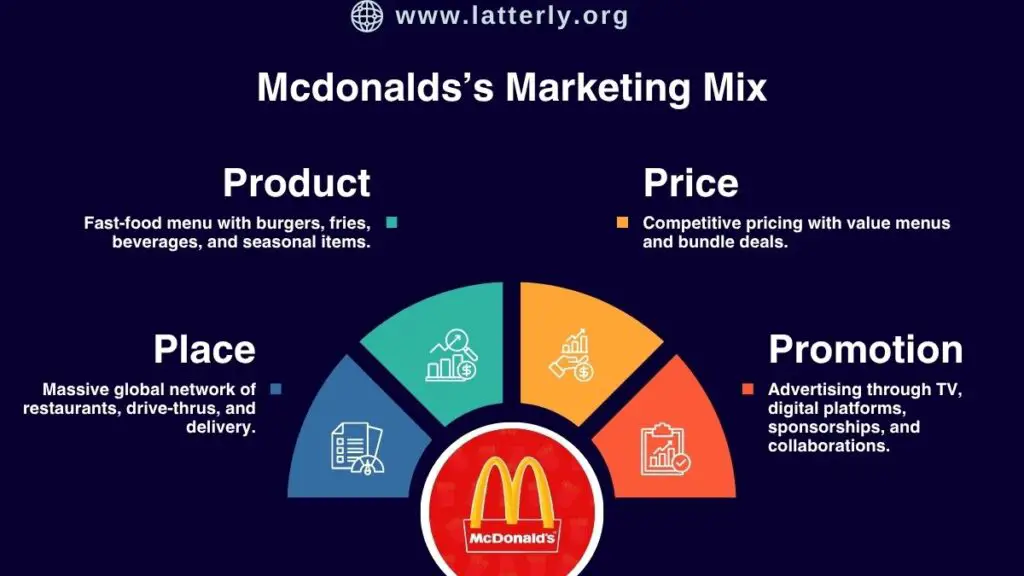
A Marketing Mix lens clarifies how McDonald’s orchestrates product, price, place, and promotion to maintain leadership. The framework connects core menu icons with local relevance, and links operational scale with brand storytelling. Understanding these levers explains how the brand sustains demand, builds loyalty, and launches new growth platforms across occasions.
This analysis focuses on the Product pillar, where menu architecture, quality standards, and innovation pipelines shape the customer experience. By mapping McDonald’s product choices to consumer needs and operational realities, we can see how the brand protects its core while creating room for experimentation and premiumization.
You may also find these McDonald's guides helpful:
1. McDonald's Marketing Strategy
2. McDonald's Competitors
3. McDonald's Branding Strategy
4. McDonald's SWOT Analysis
5. McDonald's Business Model
Company Overview
Founded in 1940 by Richard and Maurice McDonald, the brand pioneered a streamlined kitchen system that reimagined speed, standardization, and cost discipline in limited-service dining. Ray Kroc partnered with the brothers in the 1950s, professionalizing franchising and a real estate oriented model that unlocked national reach. That scale playbook soon traveled internationally, shaping expectations for convenient, consistent meals.
Today, McDonald’s core business centers on franchised restaurants serving burgers, chicken, breakfast, beverages, and desserts, complemented by the McCafé coffee platform and signature treats like McFlurry. The company emphasizes digital ordering through its app and kiosks, loyalty engagement, and robust drive-thru and delivery capabilities across key markets. Together, these strengths extend the brand across dayparts and occasions while reinforcing a reliable, familiar experience.

McDonald’s holds a leading position in global quick service, backed by unmatched brand recognition and scale advantages in supply, marketing, and operations that few rivals can match. Its Accelerating the Arches strategy prioritizes core classics, chicken, coffee, and the 3D growth drivers of digital, delivery, and drive-thru to deepen relevance. Continued menu modernization, kitchen investments, and restaurant innovation support profitable expansion and long term momentum.
Product Strategy
Product sits at the heart of McDonald’s competitive edge, blending iconic familiarity with disciplined innovation. The brand refreshes hero items, localizes flavors, and designs formats for on-premise, drive-thru, and delivery. This balance builds relevance without diluting consistency.
Iconic Core Menu and Best Burger
McDonald’s anchors its proposition in global icons such as the Big Mac, Quarter Pounder with Cheese, Chicken McNuggets, and World Famous Fries. The ongoing Best Burger initiative upgrades fundamentals like buns, cheese melt, patty sear, and onions placed on the grill for a richer taste. Standardized procedures and equipment investments safeguard the familiar flavor profile customers expect at scale.
Localized Menu Adaptation
Localization translates the core playbook into culturally relevant offerings without compromising brand identity. Markets introduce items such as the McAloo Tikki in India, teriyaki or Samurai burgers in Japan, shrimp or rice-based options in parts of Asia, and halal-certified products in the Middle East. These choices reflect local tastes, regulations, and sourcing realities while reinforcing trust and loyalty.
McCafé and Beverage-led Innovation
The McCafé platform extends the menu into espresso-based beverages, iced coffee, specialty cold drinks, and seasonal treats that lift afternoon traffic. New flavors and limited runs keep the beverage slate fresh alongside classics like shakes and McFlurry. In select markets, beverage-led concepts and upgraded equipment broaden choice and help capture high-margin, repeatable drink occasions. Coffee loyalty deepens habitual visits.
Limited-time Offers and Cultural Collaborations
Limited-time offers generate novelty and urgency, from recurring favorites like the McRib to regional seasonals and spicy variants. Cultural collaborations and celebrity meals spark social conversation and merchandising moments, amplifying reach without overhauling operations. A disciplined calendar, data-informed forecasting, and modular ingredients enable excitement while preserving kitchen simplicity and predictable service times. These drops also reengage lapsed users and drive app downloads.
Digital and Delivery-first Product Design
Digital ordering reshapes the product itself through app-exclusive items, customizable builds at kiosks, and delivery-only bundles sized for sharing. Packaging evolves for travel stability, with vented fry cartons, sealed carry bags, and stackable containers that protect temperature and texture. Dynamic menu boards and loyalty insights guide recommendations, aligning offerings to time, location, and preferences. This integration elevates convenience into a product attribute.
Price Strategy
McDonald’s prices are designed to balance affordability, scale economics, and brand consistency while adapting to local market realities. The company uses data to refine price points by channel, segment, and daypart, aiming to protect everyday value even as input costs and competitive dynamics shift.
Everyday Value and Entry-Level Pricing
McDonald’s anchors its menu with accessible entry prices that attract high-frequency visits and price-sensitive guests. Value menus, snack-sized items, and à la carte options maintain a clear path to purchase during inflationary periods. The brand uses its scale in sourcing and operations to defend sharp price points on core items like fries, burgers, and coffee, reinforcing a perception of reliable, everyday affordability.
Meal Bundling and Family Value
Bundled meals simplify decision-making and deliver perceived savings through curated combinations of entrée, side, and beverage. Family boxes and shareable formats in select markets increase average check while still undercutting the cost of purchasing items separately. Rotating bundle lineups let McDonald’s respond to seasonality and competitive activity, improving basket economics without eroding the clarity of flagship price points.
Market-Level Localization and Tiered Pricing
Price ladders are tailored to local purchasing power, taxes, and competitive sets, ensuring menus remain accessible from entry through premium tiers. Countries and cities adjust pricing and product mix within brand guardrails, adding regional items where relevant. This localization supports margin health while respecting consumer expectations across more than 100 countries, from value-driven markets to affluent urban centers.
Channel-Based Pricing for Delivery and Aggregators
Off-premise demand is monetized with channel-specific pricing that reflects third-party fees, packaging, and delivery service costs. Menu prices for delivery often sit above in-restaurant or drive-thru levels to preserve unit economics. By aligning price with convenience, McDonald’s sustains profitability while letting customers choose between speed at the counter, drive-thru value, or the premium of doorstep fulfillment.
Loyalty-Driven Personalization and Limited-Time Price Incentives
Through the McDonald’s app and MyMcDonald’s Rewards, the brand targets coupons, bonus points, and limited-time price offers based on behavior. Personalized deals move guests up the menu ladder and prompt add-ons, lifting frequency and check. Digital sales represent a large share in leading markets, enabling rapid A/B testing of offer depth, guardrails on discounting, and tight attribution to profit outcomes.
Place Strategy
McDonald’s distribution spans over 40,000 restaurants in more than 100 countries, built on a predominantly franchised model and a powerful real estate portfolio. The network prioritizes convenience across drive-thru, delivery, and digital pickup, with expansion plans targeting approximately 50,000 locations globally by 2027.
Global Franchising and Real Estate Optimization
More than 90 percent of restaurants are franchised, pairing local operator expertise with corporate scale. Site selection favors high-traffic corridors, corner parcels, and trade areas with strong daytime and family demand. McDonald’s leverages long-term leases and ownership positions to secure strategic locations, re-image aging assets, and densify successful trade areas for incremental market share and faster service times.
Drive-Thru Centric Footprint and Throughput Investments
Drive-thru remains a core strength, capturing a large share of transactions in markets like the United States. Investments in dual-lane layouts, digital menu boards, and kitchen sequencing software reduce friction at peak. Purpose-built layouts for staging and order accuracy help increase cars per hour, preserving the brand’s convenience advantage while improving labor productivity and guest satisfaction metrics.
Digital Order, Kiosk, and Pickup Formats
Self-order kiosks, mobile order and pay, and curbside pickup diversify access modes beyond the front counter. Dedicated shelving and numbered pickup zones streamline handoff for digital orders, reducing queue congestion. Smaller footprint restaurants, walk-up windows, and limited-seat formats appear in dense urban areas to maximize turns on compact sites while maintaining a consistent experience across channels.
Delivery Ecosystem and Aggregator Partnerships
McDelivery integrates with major platforms such as Uber Eats, DoorDash, and regional partners to extend reach. Menu, pricing, and packaging are tailored for travel integrity and ticket optimization. Many markets also develop direct delivery through the McDonald’s app, creating a hybrid approach that balances aggregator scale with first-party data advantages, loyalty accrual, and control over the guest journey.
Supply Chain and Distribution Efficiency
A sophisticated cold chain and regional distribution centers support consistent quality for beef, chicken, potatoes, and bakery items. McDonald’s partners with approved suppliers and logistics providers to manage demand variability, shelf life, and food safety. Scale purchasing and route optimization lower landed costs, enabling stable availability and competitive pricing while meeting rising expectations for traceability and responsible sourcing.
Promotion Strategy
McDonald’s marketing blends global brand consistency with agile, data-informed activation at the market level. The company invests in mass reach, digital performance, and retail media tactics to convert demand directly in app, while cultural moments and limited-time offers keep the conversation fresh.
Masterbrand Platform and Distinctive Brand Assets
The I’m Lovin’ It platform, arches, color palette, and sonic logo create instant recognition across markets. Consistent assets unify communications from TV to social video, increasing media efficiency and recall. Creative that leans into product crave, humor, and rituals around core menu items ties brand love to purchase intent, supporting both frequency and premium line trade-up.
MyMcDonald’s Rewards and CRM Personalization
The loyalty program powers targeted messaging, bonus points, and individualized deals that reduce reliance on broad discounting. With tens of millions of active members across key markets, McDonald’s uses recency, frequency, and basket signals to tailor offers. CRM journeys nudge lapsed guests, celebrate milestones, and coordinate with local store media to drive incremental visits and higher attachment.
Limited-Time Offers and Menu News
Rotating LTOs, seasonal flavors, and returning favorites create urgency and social conversation. Product news pairs with national media and app-exclusive offers to stimulate trial and upsell sides or beverages. By varying price points and portion sizes, promotions attract both value seekers and explorers, while supply planning ensures sufficient coverage during spikes in demand.
Collaborations and Cultural Partnerships
Celebrity meals, designer tie-ins, and music or gaming partnerships connect the brand to fandoms and younger audiences. These drops typically feature curated builds, themed packaging, and exclusive digital content that fuels earned media. Social-first creative and short video formats extend reach efficiently, turning limited runs into high-impact moments that also strengthen core menu relevance.
Community Impact and Local Store Marketing
Ronald McDonald House Charities, youth sports, and neighborhood events reinforce goodwill and local relevance. Franchisees activate street-level media, geo-targeted mobile ads, and tailored offers around trade areas and dayparts. This grassroots layer complements national campaigns, ensuring that brand presence translates into nearby visits, repeat behavior, and lasting relationships with families and commuters alike.
People Strategy
McDonald’s anchors its people strategy in consistent training, clear service standards, and strong alignment between corporate and franchise partners. The company prioritizes frontline capability, leadership development, and inclusive workplaces to deliver reliable customer experiences at scale across diverse markets.
Hamburger University and Continuous Learning
McDonald’s invests in formal learning through Hamburger University and robust digital training platforms that standardize skills globally. Crew members progress from station certification to shift leadership with bite sized modules, simulations, and assessments. This blended approach keeps procedures current, supports rapid onboarding, and ensures managers can coach teams to deliver speed, safety, and hospitality every shift.
Service Culture and Hospitality Standards
Service behaviors are codified into simple routines that emphasize friendly greetings, order accuracy, and proactive problem resolution. Store leaders model and reinforce these behaviors with daily huddles and in the moment recognition. Clear guest recovery steps empower crew to address issues quickly, maintain satisfaction scores, and protect loyalty in busy dine in, takeout, and drive thru settings.
Career Pathways and Education Support
Structured career pathways help employees move from crew to management through role based training and performance milestones. Education benefits, including tuition assistance and credential programs such as Archways to Opportunity in select markets, improve retention and skills. By connecting learning with advancement and pay progression, McDonald’s builds a stable talent pipeline and lowers turnover in high demand restaurants.
Diversity, Equity and Inclusion Practices
McDonald’s publishes DEI commitments, provides required training, and supports employee business networks where available. Inclusive scheduling practices, safety protocols, and fair treatment standards are embedded in manager expectations and audits. Supplier and franchise partnerships are encouraged to reflect community diversity, aligning people practices with local customer bases and regulatory requirements across regions.
Franchisee Alignment and Performance Coaching
Field service teams coach franchisees on staffing plans, labor modeling, and people KPIs like crew engagement and turnover. Incentives and recognition programs connect operational outcomes with team development and guest experience metrics. Regular business reviews, learning cohorts, and peer benchmarking share best practices that improve staffing stability and leadership depth system wide.
Process Strategy
McDonald’s processes are engineered for consistency, speed, and food safety while supporting digital growth. Standardized procedures, integrated technology, and rigorous supply chain controls enable predictable outcomes across multiple ordering channels and high volume dayparts.
Standardized Operations and Quality Control
Restaurants apply detailed station guides, timers, and checklists to maintain product build, temperature, and presentation. The Made For You production system sequences prep and assembly to minimize waste and keep food fresh. Managers verify compliance with shift level quality walks and corrective actions, sustaining repeatable results in peak periods.
Integrated Digital Ordering and Payments
Mobile app, kiosk, web, counter, and drive thru orders flow into a unified POS and kitchen display system. Loyalty identification and stored payments streamline checkout, reduce friction, and improve basket composition. Real time order status and confirmation screens increase transparency, while data feeds inform forecasting, staffing, and personalized offers.
Drive Thru Flow and Speed of Service
Dual lanes, order confirmation boards, and line busting roles move cars efficiently while preserving accuracy. Headset protocols and clear handoff zones reduce rework and miscommunication between order taking and assembly. Timers and dashboards highlight bottlenecks so crews can reassign tasks and protect service time targets during surges.
Supply Chain Planning and Inventory Control
Demand forecasting aligns restaurant orders with distributor deliveries to maintain freshness and minimize stockouts. McDonald’s Supplier Quality Management Systems and cold chain standards enforce traceability and product integrity. On site inventory counts, date rotation, and par level adjustments keep ingredients available without excess holding, supporting menu stability and limited time offers.
McDelivery and Order Handoff Protocols
Delivery orders are queued with clear prep tickets, sealed in tamper evident packaging, and staged by aggregator for rapid pickup. Dedicated shelves and courier verification steps reduce mix ups and delays. Estimated ready times synchronize kitchens with partner platforms, improving on time rates and food quality at the customer’s door.
Physical Evidence
McDonald’s physical evidence reinforces brand trust across touchpoints customers can see and feel. Restaurant design, signage, packaging, and digital interfaces signal cleanliness, speed, and modern convenience that match the brand promise.
Restaurant Design and Experience of the Future
Contemporary layouts feature zoned seating, warm materials, integrated power, and clear wayfinding from entry to pickup. Open views to the kitchen and visible sanitation stations convey transparency and care. Accessibility features and streamlined counters shorten journeys for dine in and takeout guests, reinforcing a consistent experience across new builds and remodels.
Iconic Golden Arches and Exterior Signage
Distinctive Golden Arches, pylon signs, and exterior color palettes provide instant recognition from the street. Consistent branding across façades, canopies, and drive thru elements guides traffic and sets expectations for speed. Night visibility, landscaping, and maintenance standards keep locations welcoming and on brand in varied climates and urban contexts.
Digital Menu Boards and Order Displays
High definition digital boards present pricing, imagery, and nutritional information with daypart and local offer flexibility. Order confirmation screens at kiosks and drive thrus reduce errors by displaying selections and customizations in real time. The cohesive visual system aligns with the app, creating familiarity whether customers order on site or remotely.
Packaging, Labeling and Sustainability Cues
Branded cups, clamshells, and bags use clear item labels, ingredient cues, and tamper evident seals for delivery. Many markets feature fiber based and recycled materials, with messaging about responsible sourcing and waste reduction. Consistent packaging sizes and icons improve assembly accuracy and help guests identify their orders quickly at pickup.
Uniforms, Cleanliness and Certifications On Site
Modern crew uniforms, name badges, and hygiene accessories present a professional, approachable image. Visible cleanliness in dining rooms, restrooms, and prep areas, supported by cleaning schedules, signals operational discipline. Health inspection postings, allergen guides, and customer notices near counters provide assurance about safety standards and product information.
Competitive Positioning
McDonald’s competes from a position of scale, brand familiarity, and operational rigor. Its strategy blends everyday value, convenience, and culturally relevant marketing to reach broad audiences. Recent investments in digital, kitchens, and product quality sharpen differentiation against both price rivals and fast casual players.
Global Scale and Real Estate Leadership
With more than 40,000 restaurants across over 100 countries, McDonald’s scale fuels brand ubiquity and negotiating leverage. The company’s real estate driven model places sites at high traffic, convenience oriented locations that support consistent volumes. Scale advantages flow through to advertising reach, supply contracts, and unit economics, reinforcing a durable competitive moat. Ambitious expansion plans to approach 50,000 locations by 2027 further harden this position.
Everyday Value and Smart Pricing Architecture
Value remains a core differentiator, anchored by affordable bundles, limited time offers, and clear price ladders across items and dayparts. McDonald’s uses rigorous menu engineering to protect margins while sustaining traffic, flexing price selectively by market and channel. The brand’s ability to pair entry price points with upsell options supports check growth without abandoning its mass market promise over time.
Digital Convenience, Loyalty, and Delivery Ecosystem
McDonald’s has built a powerful digital funnel through the app, loyalty, drive thru innovation, and delivery partnerships. In top markets, digital channels represent a significant share of sales, and active loyalty members exceed 150 million, enabling targeted offers and richer data. Integration of order ahead, curbside, and kiosks boosts throughput and repeat visits across occasions. Personalization deepens value perception while enhancing price realization.
Menu Consistency with Local Relevance and Quality Upgrades
A tight core menu delivers familiarity, while country level adaptations keep the brand culturally resonant. Initiatives like the Best Burger upgrade improve patties, buns, and assembly, sharpening taste credentials without slowing kitchens. Regular limited time items and chicken innovation refresh the offer, keeping attention high and protecting share against fast casual concepts and regional specialists. This balance sustains brand clarity while enabling local excitement.
Franchise Model and Supply Chain Efficiency
A predominantly franchised system aligns incentives, transferring capital intensity to owner operators while maintaining standards through training and analytics. Global procurement, category management, and long term supplier partnerships reduce volatility and secure consistent inputs. These structural advantages permit reliable pricing, marketing investment at scale, and reinvestment in kitchens and digital tools that competitors find difficult to match over cycles globally.
Challenges and Future Opportunities
McDonald’s must navigate shifting consumer economics, regulatory scrutiny, and technology transitions while sustaining growth. The brand’s scale provides resilience, yet it amplifies complexity. Addressing these challenges creates pathways to deepen loyalty, expand access, and protect margins in an increasingly digital, value sensitive quick service landscape.
Balancing Value Perception and Profitability
Inflation and consumer trade downs heighten sensitivity to price, increasing traffic risk if entry points drift upward. McDonald’s can mitigate pressure by sharpening bundles, leveraging loyalty funded offers, and optimizing price gaps by daypart and channel. A data led approach to elasticity, mix, and promotional cadence will be critical to defend both frequency and margins in key markets worldwide today.
Health, Nutrition, and Menu Transparency
Regulators and consumers expect clearer nutrition, sodium reduction, and responsible marketing to families. McDonald’s can lead by expanding choice architecture, reformulating core items where taste permits, and emphasizing portion guidance and balanced meals. Transparent sourcing and ingredient storytelling within the app and restaurants can reinforce trust while keeping the indulgent core positioned as an occasional treat for broad audiences globally.
Sustainability, Packaging, and Climate Goals
Progress toward emissions reductions, recyclable or reusable packaging, and waste diversion remains under public scrutiny. McDonald’s supply chain scale can accelerate pilots, such as fiber based packaging, renewable energy sourcing, and restaurant level recycling, then roll out proven solutions quickly. Clear interim milestones, supplier incentives, and consumer education will be required to translate commitments into measurable outcomes at scale globally.
Labor, Automation, and Restaurant Throughput
Tight labor markets and rising wages pressure speed and guest experience. McDonald’s has opportunities in kitchen simplification, AI assisted drive thru, computer vision for order accuracy, and workflow tools that reduce variability. Investments should prioritize technologies that pay back quickly, elevate crew roles, and create measurable gains in peak throughput, cleanliness, and hospitality scores across formats and geographic contexts too.
International Expansion and Portfolio Resilience
The company plans rapid unit growth, especially in high potential markets, yet geopolitical risk, currency volatility, and local competition can disrupt returns. Disciplined site selection, flexible formats, and localized digital partnerships will be key. Diversifying country exposure while comping mature markets through menu news and loyalty penetration helps smooth cycles and protect systemwide cash flows for franchisees and shareholders alike.
Conclusion
McDonald’s marketing mix combines a simple, familiar core with rigor in execution. Scale, real estate, supply partnerships, and a largely franchised model underpin strong unit economics. Menu focus, quality upgrades, and localized innovation preserve taste leadership while keeping operations tight. Consistent brand platforms and high reach media, amplified by loyalty and the app, translate value messaging into repeatable behavior across drive thru, delivery, and in restaurant occasions. The result is a broad based traffic engine that converts awareness into frequency.
Looking ahead, the growth algorithm depends on protecting value perception, accelerating digital personalization, and expanding internationally with disciplined site selection. Continued progress on sustainability, labor productivity, and kitchen modernization should enhance brand trust and throughput. If McDonald’s executes these priorities while maintaining price architecture and product relevance, it can extend leadership, grow systemwide sales, and deepen long term loyalty. Strategic partnerships across delivery, payments, and media can further increase convenience and reach.
