
Nike transformed from a 1964 running-shoe startup into the world’s most influential sports brand through relentless marketing, athlete partnerships, and product innovation. The company reported approximately 51.4 billion dollars in FY2024 revenue, with a market capitalization that hovered around 160 billion dollars through late 2024. The brand’s storytelling, data-driven retail, and athlete-led credibility fuel global demand while reinforcing category leadership. Marketing operates as a growth engine that connects performance, culture, and community at unmatched scale.
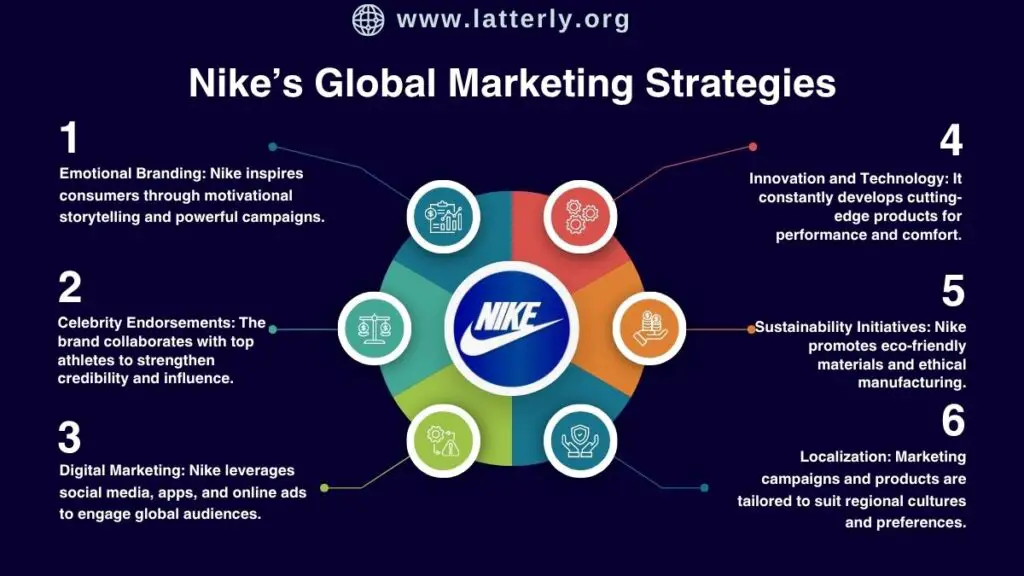
Nike codifies growth around clear pillars: performance innovation, cultural relevance, direct-to-consumer excellence, and member-centric digital experiences. The signature Just Do It platform unifies elite sport with everyday motivation, enabling consistent creative across geographies, sports, and demographics. The following framework examines the brand’s core strategy, audience segmentation, digital ecosystem, and community-led influence, showing how integrated marketing compounds value and drives durable advantage.
You may also find these guides helpful:
1. Nike Branding Strategy
2. Nike Marketing Mix
3. Nike SWOT Analysis
4. Nike Business Model
5. Nike Competitors
Core Elements of the Nike Marketing Strategy
In a category where credibility decides consideration, Nike aligns product innovation, athlete authority, and cultural storytelling to create distinctive demand. The brand’s marketing architecture connects performance benefits to personal ambition, then scales that message through owned platforms and retail. This system turns campaigns into commerce and transactions into membership, strengthening data loops and lifetime value.
Nike organizes its approach around several foundational pillars that keep the brand consistent yet adaptable across sports and markets. These pillars guide planning, creative development, and investment choices in both mature and emerging regions. The following elements define how Nike translates brand equity into measurable growth.
Pillars of Differentiation
- Performance leadership: Air, Zoom, and React platforms signal technical credibility that supports elite athletes and everyday consumers across run, basketball, and lifestyle.
- Iconic brand platform: Just Do It frames universal motivation, enabling seasonal stories like Dream Crazy and You Cannot Stop Us with high recall and shareability.
- Athlete and creator network: Long-term partnerships with Jordan, Serena Williams, LeBron James, and Kylian Mbappé anchor trust and accelerate product adoption.
- Direct ecosystem: Nike App, SNKRS, Run Club, and Training Club convert engagement into purchases, data, and repeat behavior across owned channels.
- Global yet local: Central brand codes adapt to local sport cultures, enabling relevance in football-led Europe, basketball-forward North America, and running growth in Asia.
Scale requires disciplined execution, so Nike balances breakthrough campaigns with rigorous calendar management and retail readiness. Seasonal floorsets, connected drops, and athlete moments coordinate traffic across stores, apps, and wholesale partners. The company’s FY2024 revenue reached about 51.4 billion dollars, supported by a resilient footwear mix and growing women’s and kids’ franchises.
Nike also embeds long-term brand investment alongside performance media to maintain salience. The approach funds cultural storytelling while optimizing conversion on product launches and member events. The mix preserves pricing power and reinforces the association between innovation and aspiration.
Operating Model and Investment Focus
- Full-funnel orchestration: Brand films build fame, while product stories, creator content, and app notifications drive intent and purchase.
- Member-first planning: Personalized offers, early access, and localized events lift conversion and retention within the Nike Membership base.
- Test-and-scale: Creative and merchandising tests inform broader rollouts across key geographies, protecting efficiency while accelerating winning ideas.
- Category offense: Priority placed on Running, Basketball, Football, Women, and Jordan delivers focus where Nike’s edge is strongest.
The result is a marketing engine that compounds advantage, turning innovation into desire and desire into measurable lifetime value. Nike’s clarity on pillars and operating discipline sustains leadership and stabilizes growth across cycles.
Target Audience and Market Segmentation
Sport participation and style culture increasingly overlap, creating blended audiences that want performance and expression in the same product. Nike segments with precision across life stages, sports, regions, and usage occasions to maximize relevance. This balanced approach lifts penetration in performance categories while expanding lifestyle share.

Segmentation begins with sport, then layers gender, age, and intent to shape product, pricing, and media. Nike prioritizes communities where athlete influence and innovation are most persuasive, then localizes messages by culture and city. The strategy ensures efficient spend and stronger merchandising alignment at the point of sale.
Primary Segments and Needs
- Elite and competitive athletes: Seek measurable performance gains, prefer technical narratives, and validate innovation through race results, stats, and endorsements.
- Everyday fitness enthusiasts: Value comfort, injury prevention, and guidance; respond to training content and coaching within Nike Run Club and Training Club.
- Lifestyle and culture seekers: Want design credibility and scarcity; engage deeply with SNKRS drops, collaborations, and city-led activations.
- Women and girls: Demand inclusive sizing, fit innovation, and sport-specific bras and leggings; represent a faster-growing revenue pool for Nike.
- Kids and parents: Need durability and value; respond to back-to-school timing and bundle offers that simplify outfitting.
Geographic segmentation recognizes that football anchors Europe and Latin America, basketball leads in North America, and running fuels growth across Asia. Nike aligns with key-city strategies in London, Paris, Shanghai, Los Angeles, and Mexico City to build cultural heat and retail momentum. This city-first approach informs partnerships, events, and localized content calendars.
Economic segmentation remains critical during fluctuating consumer confidence. Nike preserves premium tiers for halo innovations, then supports mid-tier franchises for value-conscious shoppers. Price ladders and outlet channels maintain accessibility without diluting core brand equity.
Data-Driven Personalization
- Membership insights: Engagement, purchase frequency, and sport interest inform tailored stories, improving relevance and response rates.
- Occasion-based messaging: Running plans, tournament windows, and school calendars shape content and offers that match real demand moments.
- Lifecycle journeys: Onboarding, reactivation, and loyalty tracks guide communications that steadily increase spend and tenure.
- Local nuance: City data identifies neighborhoods for events and same-day delivery zones that enhance convenience and conversion.
This segmentation framework helps Nike allocate media and merchandise with sharper precision across categories and regions. The result strengthens share with athletes and lifestyle consumers while advancing women’s and kids’ growth ambitions.
Digital Marketing and Social Media Strategy
Consumer journeys now move seamlessly between social discovery, creator validation, and app-led purchase. Nike treats digital as a unified ecosystem that blends content, community, and commerce under one brand experience. The approach accelerates launch energy and converts engagement into membership and sales.
Owned apps sit at the center of the model, ensuring control over data, storytelling, and access. Nike App and SNKRS deliver product discovery, exclusive drops, and member benefits, while Run Club and Training Club support daily habits. Estimates place Nike’s combined membership above 170 million globally, with digital contributing roughly a quarter of revenue.
Platform-Specific Strategy
- Instagram and TikTok: High-impact video, athlete stories, and creator collaborations drive awareness and product desire among Gen Z and Millennials.
- SNKRS and Nike App: Exclusive access, live streams, and draw mechanics fuel hype, improve fairness, and capture valuable first-party data.
- YouTube and long-form: Coaching content, documentaries, and brand films deepen engagement and position Nike as an authority in sport culture.
- Email and push: Personalized recommendations, fit tips, and replenishment nudges increase frequency and reduce acquisition reliance.
Measurement ensures that creative ambition translates into performance. Nike tracks engagement, click-through, conversion, and incremental lift across cohorts, then optimizes creative formats by sport and product tier. The company integrates merchandising calendars with media plans to ensure inventory alignment on high-demand launches.
Social commerce features and live shopping tests enhance conversion where attention already resides. Creators host drops, athletes lead challenges, and local teams spotlight community events that bring audiences into owned channels. This strategy unifies content and commerce to strengthen loyalty and profitability.
Creative and Content Operating System
- Always-on storytelling: Motivational narratives run year-round, complemented by seasonal campaigns and athlete milestones that spike attention.
- Localization at speed: Toolkits enable quick adaptation of global assets to local languages, sports calendars, and retail moments.
- UGC and challenges: Run streaks, training programs, and social hashtags encourage participation while generating authentic social proof.
- Brand safety and equity: Standards preserve tone and values, protecting reputation while enabling bold creative choices.
Nike’s integrated digital system turns reach into relationships, strengthening the flywheel that links inspiration, participation, and purchase. The result is a durable edge across channels where culture and commerce increasingly merge.
Influencer Partnerships and Community Engagement
Authenticity in sport begins with athletes who demonstrate performance and inspire participation. Nike structures partnerships to showcase innovation, expand cultural relevance, and anchor communities that live the brand daily. This network spans global icons, rising stars, creators, and local coaches who connect with specific audiences.
Long-term contracts with elite athletes validate technology and set trends that cascade into lifestyle. Jordan Brand alone has become a cultural force, with annual revenue estimated above 6 billion dollars in recent years. These relationships create moments that move product and reinforce Nike’s leadership across basketball, football, tennis, and running.
Influencer Portfolio Architecture
- Elite athletes: Michael Jordan, LeBron James, Serena Williams, Megan Rapinoe, and Kylian Mbappé anchor credibility and drive category heat.
- Next-gen talent: NIL partnerships and academy programs identify future stars early, shaping product stories and regional momentum.
- Creators and musicians: Collaborations with Travis Scott and NOCTA connect sport style to music culture and limited-drop economics.
- Local community leaders: Coaches and trainers host runs, clinics, and store events that translate national campaigns into neighborhood participation.
Community investment scales impact beyond endorsements. Nike’s Made to Play initiative supports youth access to sport, while local Community Impact Funds back nonprofits that increase physical activity. These programs fuel participation, build goodwill, and introduce families to the brand through experience rather than advertising alone.
Retail and digital activations link community to commerce in measurable ways. Member-only runs, training challenges, and city packs bring people into stores and apps, generating data and repeat visits. The strategy elevates influence from endorsement to ecosystem, turning cultural leadership into sustainable growth.
Measurement and Governance
- Performance dashboards: Track sell-through lifts, engagement rates, and member acquisition tied to specific partners and events.
- Risk management: Contract clauses, brand guidelines, and scenario planning protect reputation while enabling creative expression.
- Long-term value models: Evaluate lifetime impact across categories, regions, and demographics to inform renewal and portfolio mix.
Nike’s influence network and community programs create trust that media dollars alone cannot buy. This credibility powers product launches and sustains loyalty, reinforcing the brand’s advantage where sport and culture intersect.
Product and Service Strategy
Nike positions product excellence as the core engine of its growth, linking athlete insight with rapid innovation cycles and scalable manufacturing. The portfolio spans performance running, basketball, football, lifestyle, and women’s specific innovations, supported by timeless franchises that refresh annually. Services such as Nike Membership, SNKRS, and training apps extend utility beyond the purchase, creating value before, during, and after use.
The company advances cushioning, upper materials, and fit systems to improve measurable performance and everyday comfort. Signature lines, collaborations, and limited drops increase status signals while preserving scarcity for high-heat models. Women’s design receives dedicated investment in fit, bras, and footwear lasts, reflecting a strategic focus on a fast-growing segment. Jordan Brand deepens cultural relevance through retro storytelling and new performance models, strengthening multi-generational demand.
Nike uses athlete testing, biomechanics labs, and iterative prototyping to accelerate product breakthroughs. The brand integrates sustainability targets through recycled materials and design for disassembly where feasible, reducing environmental impact without sacrificing performance. Manufacturing partners scale innovations globally, enabling fast commercialization across key regions.
Innovation Pipeline and Portfolio
- Air Max Dn with Dynamic Air introduced in 2024, merging visible air with a new multi-tube system.
- Alphafly 3 and Vaporfly 3 leverage ZoomX foam and carbon plates for marathon efficiency gains.
- Pegasus 41 debuts ReactX cushioning, designed to increase energy return and reduce carbon footprint.
- FlyEase systems improve accessibility through hands-free entry and adaptive closures across categories.
- Women’s lines expand with Sabrina 1, Alate bras, and running footwear built on women-specific lasts.
Personalization strengthens perceived value through Nike By You customization and Member-exclusive colorways on the Nike App and SNKRS. Data-informed merchandising guides depth, color, and size runs, improving full-price sell-through and reducing markdown exposure. Limited access mechanics, including draws and shock drops, protect heat while keeping engagement high. This cadence turns launches into repeat traffic drivers across digital and stores.
Service layers drive retention and frequency across training, running, and style journeys. Member benefits bundle content, events, and early access, aligning utility with emotional connection. Integrated fit tools, order tracking, and seamless returns lower friction and increase purchase confidence.
- Nike Run Club and Nike Training Club provide coaching plans, challenges, and progress tracking.
- Member Days deliver exclusive products, rewards, and localized experiences across priority markets.
- SNKRS features storytelling, live sessions, and community tools that deepen drop participation.
- Nike Refurbished and recycling programs extend product life and support circular goals.
This strategy turns innovation into sustained demand across performance and lifestyle, reinforced through services that keep members active and informed. Nike reported approximately 51.4 billion dollars in fiscal 2024 revenue, reflecting durable category strength and premium positioning. Consistent product updates and service touchpoints compound brand equity over time. The result increases full-price sell-through and raises lifetime value across key segments.
Marketing Mix of Nike
Nike’s marketing mix integrates product leadership, value-based pricing ladders, omnichannel distribution, and culturally resonant promotion. The company aligns assortments with athlete stories and city-led energy moments to convert awareness into purchase. A clear flow from inspiration to transaction supports premium sell-through and strengthens membership growth across priority markets.
Product strategy prioritizes hero franchises, seasonal capsules, and technology platforms that span price tiers. Pricing ladders reinforce good, better, best tiers, protecting flagship innovation while offering attainable entry points. Place strategy blends owned stores, digital platforms, and strategic wholesale partners to maximize reach with controlled presentation. Promotion leverages athletes, creators, and community events to sustain attention throughout the calendar.
Nike maps the 4Ps to consumer missions, ensuring cohesive experiences across running, training, basketball, football, and lifestyle. The approach balances scale franchises with local energy and limited editions that spark conversation. Execution focuses on city hubs where trends start and spread, enabling global amplification after strong local proof.
Product, Price, Place, Promotion Alignment
- Product: Scalable platforms like Air, ZoomX, ReactX, and Flyknit anchor seasonal updates and storytelling.
- Price: Tiered structure maintains premium for innovations while sustaining accessible entries in core categories.
- Place: Nike App, SNKRS, flagship and factory stores, and selective wholesale deliver controlled breadth.
- Promotion: Athlete-led narratives, cultural collaborations, and event-based drops maintain high engagement.
Direct-to-consumer operations create tighter feedback loops for assortment, pricing, and service. Wholesale remains important for access and scale, with curated assortments that highlight innovation and protect presentation. Digital merchandising connects content and commerce, improving conversion and average order value. This integration supports faster reaction times to trends and localized demand signals.
Channel mix increasingly favors owned environments, where data enables sharper decisions and higher margins. Nike Direct generated an estimated 42 percent of fiscal 2024 revenue, reflecting continued progress toward a more controlled marketplace. Consistent alignment across the 4Ps preserves brand heat and pricing power. The mix ultimately converts cultural relevance into profitable growth.
Pricing, Distribution, and Promotional Strategy
Nike manages pricing through structured ladders, regional calibration, and disciplined markdown controls. Flagship innovations command premiums that signal performance advantages and scarcity. Entry lines deliver value while meeting brand standards for design and durability. Clear architecture helps consumers trade up within the brand without confusion.
Merchandising teams tie price points to technology stories, materials, and perceived benefits. Dynamic markdowns clear excess inventory in controlled channels, protecting halo products from overpromotion. Seasonal packs and limited editions maintain excitement while anchoring premium cues. Cost programs announced in late 2023 target approximately two billion dollars in savings over three years, supporting margin resilience and reinvestment.
Nike builds a diversified distribution network that balances reach, control, and brand elevation. Owned channels provide data-led curation and differentiated services, while wholesale offers scale and convenience in underserved areas. Marketplace discipline maintains consistent pricing and presentation across partners, reducing gray-market pressure.
Distribution Architecture
- Nike App and Nike.com integrate content, fit tools, Member access, and frictionless checkout across devices.
- SNKRS centralizes launches, draws, and storytelling for high-heat products with anti-bot protections.
- Flagship and House of Innovation stores showcase innovation and services, supported by factory outlets for value.
- Strategic wholesale partners include Foot Locker and Dick’s Sporting Goods, plus Tmall and selected regional platforms.
- Connected inventory and RFID enhance availability, speed, and pick-up options for members and partners.
Promotion centers on athletes, cultural moments, and Nike’s enduring Just Do It platform. Global events like the 2024 Paris Olympics, major football tournaments, and marathon majors drive seasonal peaks. Signature athletes and rising stars support product stories across key sports. Women’s initiatives expand visibility through tailored campaigns, community runs, and retail experiences designed for women.
Always-on and peak campaigns blend brand, social, and commerce objectives into measurable outcomes. Member Days, Air Max Day, and localized tentpoles stimulate traffic and participation with exclusive access and content. Regional calendars incorporate Singles Day, Ramadan, and back-to-school periods to align with local demand rhythms. Demand creation expense reached roughly 4.3 billion dollars in fiscal 2024, reflecting sustained investment in brand strength.
- Just Do It creative ties individual motivation to collective sport culture for broad resonance.
- Seasonal storytelling highlights tech benefits with athlete validation and social proof.
- Member-exclusive offers, early access, and events improve conversion and retention metrics.
- Retail theater, pop-ups, and city runs create shareable moments that amplify media efficiency.
The combined approach protects pricing power, elevates distribution, and translates cultural relevance into sales efficiency. Controlled availability, selective promotion, and strong storytelling preserve brand equity while serving diverse consumer needs. Discipline across these levers supports long-term profitability and deeper lifetime relationships. The outcome reinforces Nike’s status as the category’s premium benchmark for performance and style.
Brand Messaging and Storytelling
In a category where consumers reward authenticity and purpose, Nike maintains a clear narrative powered by elite performance and inclusive inspiration. The company anchors communications in the enduring Just Do It platform, first launched in 1988, and refreshes it with athlete moments, cultural relevance, and product innovation. With FY2024 revenue around 51.4 billion dollars, Nike funds storytelling at scale through significant demand creation investment, widely reported near the mid four billion dollar range.
Nike organizes brand messages around human potential, progress in sport, and credible innovation that improves performance. The approach uses hero campaigns to set the tone, then sustains momentum through always-on social, apps, and retail storytelling. This structure allows global consistency, while creative teams localize messages to fit regional sport passions and cultural context.
Messaging Pillars and Signature Campaigns
- Just Do It: The brand’s core promise elevates everyday courage and elite drive, enabling simple, powerful lines to travel across markets and generations.
- Dream Crazy and Dream Crazier: Athlete-led narratives champion bold ambition and equity in sport, generating large earned media and long engagement tails.
- You Cannot Stop Us: A split-screen film showcased perseverance and unity, exceeding 20 million views within days and winning top creative awards.
- Play New and Never Done: Programs encouraged trial and progress, particularly among women and youth, aligning with long-term participation growth goals.
- What the Football: A global football narrative surrounding major tournaments highlighted national pride, grassroots play, and product innovation in boots.
- Paris 2024 storytelling: Olympic uniforms, athlete profiles, and behind-the-scenes content connected performance engineering to national teams and fans.
Campaigns translate into digital formats that marry utility and inspiration, including athlete training tips, product breakdowns, and community challenges. Nike deploys bite-sized films on Instagram and TikTok, while longer features live on YouTube, the Nike App, and SNKRS. Editorial teams develop product origin stories, innovation labs content, and athlete diaries that deepen understanding of benefits and drive desirability across the funnel.
Narratives remain consistent, yet they adapt to local realities, sports calendars, and cultural moments to remain relevant and respectful. Creative leads collaborate with country teams to tailor language, imagery, and casting without diluting the global brand codes. This localization approach increases resonance and improves conversion, particularly for women’s and youth segments in fast-growing international markets.
Voice, Localization, and Cultural Relevance
- Consistent voice: Confident, optimistic, and athlete-first writing preserves Nike’s tone while allowing playful moments around sport culture and style.
- Regional storytelling: Local ambassadors and grassroots clubs carry messages in Brazil, China, and Europe, reinforcing credibility beyond global superstars.
- Women’s sport focus: Investments around the 2023 Women’s World Cup and ongoing leagues spotlighted performance footwear and bras with purpose-led stories.
- Community resonance: City-specific drops, pickup runs, and youth clinics turn digital narratives into offline experiences and measurable retail lift.
- Accessibility: Subtitles, multi-language captions, and creator partnerships broaden reach, especially across Asia Pacific and Latin America audiences.
Strong, repeatable brand codes, athlete equity, and product proof points keep Nike’s storytelling highly distinctive and commercially effective. The balance of universal inspiration and targeted localization protects pricing power and supports new category entries. This approach sustains cultural relevance while converting attention into product demand and long-term brand preference.
Competitive Landscape
Global sport and athleisure markets continue to fragment as performance, fashion, and wellness converge across channels and price points. Nike retains leadership with approximately 51.4 billion dollars in FY2024 revenue, while Adidas, Lululemon, Puma, and fast-growing challengers intensify competition. Regional brands in China and disruptive running specialists expand quickly, requiring agile assortment, channel discipline, and stronger storytelling.
Traditional rivals strengthen core franchises, rebuild innovation pipelines, and refine direct-to-consumer models. Adidas executes a revival across Originals and football, while Lululemon grows into men’s and footwear with premium positioning. Running leaders such as On and Hoka scale cushioning technologies and tightly curated distribution, influencing consumer expectations for comfort, design, and specialty credibility.
Nike evaluates competitors through their category momentum, digital capabilities, and wholesale dependencies, then calibrates product depth and pricing by channel. The company also tracks marketplace dynamics, including retailer consolidation and elevated demand for limited releases that drive traffic and margin. These insights inform investment in top franchises, from Air Force 1 and Pegasus to Mercurial and Metcon, while funding new platforms that defend share.
Key Competitors and Strategic Postures
- Adidas: Reenergized football and Originals franchises, improved inventory discipline, and selective collaborations support a brand rebound in 2024.
- Lululemon: Premium, community-led model with strong women’s loyalty and growing men’s penetration, plus disciplined experiential retail growth.
- Puma and New Balance: Style-driven performance portfolios, strong celebrity and athlete alignment, and sharp product storytelling in lifestyle running.
- On and Hoka: Rapidly scaling running specialists with proprietary cushioning, specialty retail credibility, and high full-price sell-through rates.
- Under Armour: Performance heritage with a refocus on core training and run, improved product clarity, and wholesale reset initiatives.
- Anta and Li-Ning: Chinese leaders leveraging national athletes, local speed, and competitive pricing, with growing premium innovation tiers.
- Skechers: Value-led comfort proposition with broad distribution and consistent volume growth across global family footwear channels.
Distribution strategies shape the playing field as brands balance profitable direct sales with marketplace scale. Nike prioritizes strategic wholesale partners that elevate presentation, supported by brand-owned digital and flagship concepts that deliver richer experiences. Competitors increasingly pursue similar mixes, placing pressure on differentiation, service levels, and inventory productivity across seasons.
Nike must guard share in running, football, and lifestyle classics while accelerating women’s, kids, and apparel. The company strengthens moats through innovation cadence, athlete visibility, and membership data used for targeting, allocations, and demand shaping. Continued discipline in product creation and channel segmentation remains essential as challengers compress innovation cycles and outpace trends regionally.
Nike Advantages and Pressure Points
- Scale and brand equity: Global awareness, athlete rosters, and cultural relevance deliver pricing power and consistent full-price sell-through on core icons.
- Innovation engine: Deep R&D, sport science labs, and rapid prototyping enable franchise renewals and platform breakthroughs across footwear and apparel.
- Digital ecosystem: Membership, apps, and first-party data sharpen allocations and storytelling, improving conversion and lifetime value relative to peers.
- China normalization: Local competitors grow fast, requiring sharper localization, speed-to-market, and balanced pricing to sustain momentum.
- Wholesale recalibration: Traffic shifts and promotional intensity require tighter partner curation and distinct assortments to protect margins and brand heat.
Competitive intensity will remain high, yet Nike’s combination of scale, athlete storytelling, and innovation provides durable advantages. Focused category leadership, disciplined distribution, and sharper localization can convert those advantages into sustainable market share and profitable growth.
Customer Experience and Retention Strategy
Leading sports brands win loyalty through utility, access, and community, not only discounting. Nike structures retention around Nike Membership, a free program connected to the Nike App, SNKRS, Nike Training Club, and Nike Run Club. Management has cited a base surpassing 170 million members globally, with members driving a majority of digital revenue and deeper cross-category engagement.
The company integrates content and commerce so athletes discover, learn, and purchase within connected experiences. Members receive tailored product recommendations, size guidance, and training plans that align with personal goals and seasonal sport calendars. Stores extend the ecosystem through scan-to-learn, app-enabled checkout, and services that make shopping faster and more personalized.
Nike designs membership benefits to emphasize access, guidance, and recognition over transactional points. The value exchange grows with richer content, more personalized drops, and services that remove friction across channels. This structure encourages frequent engagement and increases the probability of repeat purchases across footwear and apparel.
Membership Features and Value Exchange
- Exclusive access: Early product drops on SNKRS, Member Days, and local city exclusives increase excitement and perceived value.
- Personalization: Size and fit tools, style edits, and targeted offers align with browsing, workout behavior, and purchase history.
- Training and coaching: Nike Training Club and Nike Run Club provide guided programs that link progress to relevant product suggestions.
- Service benefits: App-enabled returns, receipt-free warranties, and reserved try-on services enhance convenience and trust.
- Community: Challenges, live sessions, and run clubs connect digital engagement to physical activity and retail participation.
Omnichannel features shorten paths to purchase and reduce friction that usually drives abandonment. Click-and-collect, store reservation, and curbside pickup complement delivery options tuned to local logistics realities. Nike App at Retail unlocks product information, scan-and-try, and self-checkout, while store associates use member profiles to recommend sizes and alternatives.
Nike measures retention through frequency, average order value, cross-category breadth, and engagement, then adjusts experiences accordingly. Digital represented roughly one quarter of total revenue in FY2024, with members contributing a majority of that mix and higher repeat rates year over year. Lifecycle programs reengage lapsing members with utility-led content before value offers, protecting margin while restoring activity.
Lifecycle Marketing and Retention Metrics
- Onboarding series: Progressive tips introduce app features, local events, and fit tools, lifting first-to-second purchase conversion.
- Behavioral triggers: Back-in-stock alerts, interest-based drops, and season transitions catch intent signals and time outreach effectively.
- High-value cohorts: SNKRS and performance runners receive deeper content and allocation priority, increasing satisfaction and advocacy.
- Performance tracking: Engagement and purchase recency inform personalized cadences that reduce fatigue and sustain open rates.
- Profitability lens: Models prioritize offers that drive incremental margin, not only near-term units, improving long-run customer value.
Nike aligns access, content, and service into a coherent membership flywheel that rewards activity and builds emotional connection. The result strengthens lifetime value, raises full-price sell-through, and reinforces a premium brand experience that keeps athletes returning across seasons.
Advertising and Communication Channels
In a marketplace where audiences fragment across platforms, effective brands orchestrate reach, frequency, and relevance with precision. Nike treats advertising as a performance asset that builds desire and converts intent across markets. The company anchors media around global sport moments that carry outsized cultural impact, including football championships and the 2024 Paris Games. This approach links brand affinity to measurable commerce outcomes across owned, paid, and partner channels.
Nike scales investment across markets and formats to maximize incremental reach while protecting efficiency. The focus prioritizes channel roles: television and streaming for mass impact, digital video for storytelling, social for participation, and apps for conversion. The following media blueprint outlines how the brand blends channels to deliver efficient coverage and strong brand lift.
Media Mix and Global Reach
- Demand creation spending in FY2024 was widely reported above 4 billion dollars, supporting a sustained global presence across sport, culture, and lifestyle.
- Broadcast and streaming sports secure high-impact placements during football tournaments and athletics championships, complemented by localized out-of-home in host cities.
- Digital video and social concentrate on short-form storytelling across YouTube, TikTok, and Instagram, optimized for completion rate, lift, and cost per incremental reach.
- Owned apps, including Nike, NRC, NTC, and SNKRS, function as always-on communication channels with push, in-app stories, and live drops connected to inventory.
- Retail media in key partners and marketplace placements reinforce launches, while CRM and email deepen frequency with high-intent segments.
- Localized creative and multilingual assets adapt hero stories for regional federations, women’s sport, and city-specific running communities.
Creative consistency sustains memory structures that improve long-term effectiveness. Nike builds athlete-led narratives that celebrate progress, personal bests, and team identity under the enduring Just Do It platform. Stories ladder from elite athletes to everyday movement, supported by community films, behind-the-scenes content, and coaching tips. The following creative architecture demonstrates how message pillars translate across channels and moments.
Creative Platform and Athlete Storytelling
- Signature franchises feature LeBron James, Kylian Mbappé, Giannis Antetokounmpo, and Sabrina Ionescu, linking innovation to relatable training and game-day routines.
- Football federation kits receive documentary-style content that spotlights national pride, youth academies, and fan culture before, during, and after tournaments.
- Running launches connect carbon-plated innovations to course strategy, fueling product education with athlete pacing plans and coach tutorials.
- Women’s campaigns highlight fit, support, and versatility, with creators demonstrating styling across gym, pitch, and street for daily credibility.
- Member-first moments on SNKRS blend fairness tooling with community spotlights, rewarding participation and local sneaker culture.
- Retail theater integrates window takeovers, interactive screens, and RFID-enabled storytelling that links mannequins to product pages in the app.
This channel and creative system compounds brand equity while driving measurable traffic, engagement, and sell-through. Nike sustains cultural leadership through consistent presence, athlete authenticity, and shoppable storytelling that converts attention into commerce.
Sustainability, Innovation, and Technology Integration
Consumers increasingly reward brands that combine performance with responsibility. Nike frames sustainability as an innovation challenge that improves products, operations, and storytelling. The company advances Move to Zero goals while investing in materials science, digital design, and manufacturing efficiencies. This combined approach strengthens margins, reduces risk, and fuels distinct product narratives.
Material choices, circular services, and lower-impact operations underpin Nike’s roadmap. The brand references science-based targets to reduce Scope 1 and 2 emissions 65 percent by 2030, and lower Scope 3 intensity. Circular design principles now inform mainstream franchises, enabling scalable impact and compelling education at retail. The following initiatives represent priority workstreams that tie sustainability to performance and desirability.
Move to Zero and Circular Design
- Recycled polyester and nylon feature across core apparel lines, with scaling programs that divert billions of plastic bottles into yarn over time.
- Nike Grind and footwear recycling initiatives process manufacturing scraps and some post-consumer materials into surfaces, components, and retail buildouts.
- Packaging optimization reduces weight and inks, while consolidated shipments and smarter cartonization cut emissions per order in digital commerce.
- Nike Refurbished pilots extend product life through returns triage, cleaning, and resale, creating new value pools and lowering waste.
- Design-for-disassembly guidelines inform future models, enabling component separation, material labeling, and more efficient end-of-life processing.
- Supplier engagement programs support renewable energy adoption and process improvements across dyeing, finishing, and assembly partners.
Innovation remains the brand’s competitive engine, linking lab insights to athlete outcomes and market speed. The LeBron James Innovation Center houses the Nike Sport Research Lab, where motion capture, force plates, and environmental chambers shape performance briefs. Digital tools accelerate creation and testing, while factory technologies improve consistency and throughput. The following technology stack elements integrate design, supply, and demand to produce better products faster.
Innovation Engine and Tech Stack Integration
- 3D design, computational modeling, and virtual prototyping shorten concept cycles and reduce physical samples, improving time-to-market and cost.
- Advanced platforms such as Flyknit, Air, ZoomX, and updated plates deliver measurable gains in energy return, stability, and weight reduction.
- Enterprise order management links inventory to apps and stores, while RFID and computer vision enhance accuracy and product availability.
- Personalization models surface size, fit, and recommendation guidance, driving higher conversion and fewer returns in footwear and bras.
- SNKRS fairness tooling mitigates bots and improves access, while live-stream formats create urgency with transparent community engagement.
- Demand-sensing analytics align buys to regional trends, weather shifts, and event calendars, protecting sell-through and markdown profile.
Combining sustainability with technology-backed performance builds trust, relevance, and efficiency. Nike turns responsible design into visible product benefits, reinforcing leadership where consumers expect progress and proof.
Data Analytics and Performance Measurement
Modern marketing effectiveness depends on measurement that captures true incrementality, not just channel last-click. Nike operates at global scale, which enables controlled experiments and robust models that guide media and merchandising. The company pairs media mix modeling with in-market testing to calibrate investment by region, sport, and objective. Digital commerce represented an estimated 24 percent of Nike Brand revenue in FY2024, reinforcing the importance of precise attribution.
Effective measurement answers where to spend, what to say, and whom to reach. Nike balances long-term brand building with near-term sales activation through connected dashboards and disciplined testing. The following framework outlines how the brand quantifies impact and protects efficiency across the funnel.
Marketing Measurement and Incrementality
- Media mix models refresh multiple times per year, incorporating sales, seasonality, macro factors, and creative weights to guide budget shifts.
- Geo holdouts and audience-level experiments estimate incremental reach and conversion, improving confidence beyond platform-reported attribution.
- Search programs separate brand and non-brand intent, with match-type and creative controls that protect incrementality and unit economics.
- Streaming video lift studies validate mid-funnel effects, translating brand metrics into modeled downstream revenue contribution.
- Creator and affiliate tests measure content quality, audience overlap, and true incremental sales versus cannibalization of paid social.
- Always-on frequency management caps exposures across channels, sustaining impact while reducing waste at higher frequency bands.
Customer analytics and assortment insights amplify the value of media. Cohort tools reveal lifecycle stages, purchase cadence, and preferred categories that inform creative and offers. Assortment optimization and demand sensing align buys with regional preferences and emerging trends. The following data practices connect experience, product, and inventory decisions that support profitable growth.
Audience, Merchandising, and Lifecycle Analytics
- Lifetime value models segment members by predicted potential, informing early access, exclusives, and service tiers that reward engagement.
- Churn prediction triggers win-back journeys with fit guidance, training plans, or personalized bundles that reduce discount dependence.
- Dynamic recommendations surface complementary SKUs and size availability, raising units per transaction and lowering return probability.
- Store-level heatmaps and RFID analytics improve replenishment and presentation, elevating conversion in key traffic zones.
- SKU rationalization trims long tails with low velocity, protecting gross margin while concentrating design and marketing on winners.
- Supply chain dashboards tie weeks-of-supply and sell-through to creative rotation, ensuring media supports inventory reality.
This analytics discipline strengthens Nike’s ability to grow brand and sales simultaneously. The result improves marketing ROI, sharper storytelling, and better product availability where demand is strongest.
Future Outlook and Strategic Growth
Global sport cycles create repeatable opportunities to renew excitement and recruit new athletes. Nike intends to convert recent momentum into durable growth through product innovation, women’s expansion, and sharper marketplace execution. The company also targets operating efficiency through a multi-year program expected to deliver approximately 2 billion dollars in cost savings. With FY2024 revenue around 51.4 billion dollars, disciplined focus can unlock higher-quality growth in priority categories and regions.
Growth will concentrate on franchises, breakthrough platforms, and marketplace clarity. Nike aims to deepen leadership in running, basketball, and global football while scaling women’s apparel, bras, and lifestyle footwear. Wholesale partnerships will sharpen through curated assortments and brand presentation standards that protect pricing power. The following priorities map where the company plans to invest and how marketing will accelerate demand.
Strategic Priorities 2025–2027
- Launch a sustained innovation cadence in running and basketball, pairing performance benefits with accessible price points for broader adoption.
- Elevate women’s assortment with inclusive sizing, sport-specific fit, and solutions for training, pitch, and recovery that address unmet needs.
- Rebalance wholesale with key partners that deliver brand-right storytelling, digital shelf quality, and reliable sell-through analytics.
- Advance member ecosystems across Nike, NTC, NRC, and SNKRS, integrating rewards, services, and exclusive access to drive retention.
- Improve margin through tighter SKU discipline, better demand sensing, and continued logistics optimization across fulfillment nodes.
- Expand localized offense in football and running cities, linking community events with retail and digital commerce in synchronized calendars.
Long-term growth depends on managing external volatility and competitive intensity. Nike will navigate currency shifts, supply variability, and evolving privacy norms with flexible plans and diversified channels. The brand will also address rising competition in performance running and women’s training through clearer benefits and faster product cycles. The following levers mitigate risk while sustaining brand heat and operational agility.
Growth Drivers and Risk Mitigation
- Diversify sourcing and near-shore select product to reduce lead times, improve responsiveness, and limit exposure to single-country disruptions.
- Enforce privacy-safe targeting and measurement, strengthening consented data capture and modeled insights that maintain media effectiveness.
- Invest in grassroots sport, youth programs, and city runs that turn participation into pipeline demand for footwear and apparel.
- Maintain disciplined inventory positions, protecting full-price sell-through and reducing markdown reliance during macro softness.
- Differentiate versus challengers through verified performance claims, athlete validation, and credible sustainability progress that matters to consumers.
- Align launch calendars with retail theater and content series, ensuring every drop carries a clear story, service, and conversion path.
Nike’s future growth playbook centers on innovation, disciplined execution, and cultural leadership. This strategy keeps the brand essential to athletes and fans while reinforcing profitable scale across channels and regions.
