
McDonald’s, founded in 1955, converts playful branding into global scale, translating cultural moments into measurable sales and durable worldwide growth. The company serves roughly 70 million customers daily across approximately 41,800 restaurants, with an estimated 2024 revenue of $26.8 billion. Marketing that blends value, convenience, and entertainment encourages family routines, and the Happy Meal anchors that strategy with timeless play and discovery.
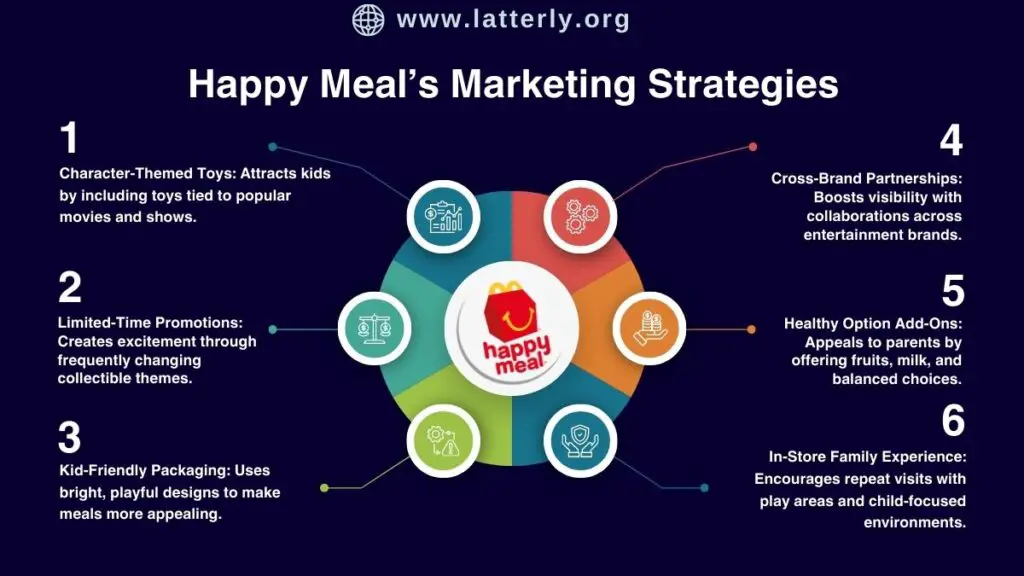
Since 1979, the Happy Meal has paired kid-sized portions with collectible toys, licensed characters, and reading programs in more than 100 countries. The format turns every visit into an event, while parents trade predictable value for delighted children and reliable dining routines. McDonald’s now layers limited editions, seasonal storytelling, and app-only offers, creating scarcity and anticipation that compound demand for family bundles.
This article maps core strategic elements, audience priorities, and channel execution behind Happy Meal growth at scale across global markets. The analysis covers social content, influencer collaboration, and community programs that elevate trust with parents and excitement for kids. A precise framework shows how McDonald’s converts playful equity into repeat visits, higher check sizes, and lifelong loyalty.
You may also find these McDonald's guides helpful:
1. McDonald's Competitors
2. McDonald's Branding Strategy
3. McDonald's Marketing Mix
4. McDonald's SWOT Analysis
5. McDonald's Business Model
Core Elements of the McDonald’s Marketing Strategy
Family dining now competes with streaming, delivery, and at-home entertainment, so brands must package value with experiences consistently. McDonald’s positions the Happy Meal as a ritual that blends food, play, and cultural relevance to motivate family visits. The following pillars summarize how the company organizes strategy to keep the format fresh and scalable across markets.

Strategic Pillars
These pillars connect pricing, partnerships, and operations with storytelling that parents recognize and children anticipate. The structure keeps execution repeatable while allowing local teams to adapt to culture or calendar moments. Clear roles for value, content, and distribution reduce risk and increase creative speed.
- Value architecture: Predictable bundles and kid-sized portions deliver perceived savings versus à la carte, with many markets maintaining $4–$6 entry price points.
- Licensing engine: Global partnerships with Disney and Pixar, Inside Out 2 activations, Pokémon, and 2024 Squishmallows extend reach and spark collectible demand.
- Digital flywheel: App-only offers, QR codes, and AR mini-games convert excitement into orders, while loyalty rewards reinforce visit frequency.
- Operational discipline: A roughly 95 percent franchised system standardizes rollouts, ensuring synchronized toys, packaging, and supply availability worldwide.
Results depend on consistency across store formats, crews, and calendars. McDonald’s synchronizes creative drops with movie releases, school holidays, and weekend peaks, which lifts family traffic without diluting everyday value positioning. Careful nutrition guidelines and transparent ingredient communication support parent trust alongside the playful promise.
Playful Equity in Action
Translating brand equity into measurable actions requires repeatable play patterns. Collecting, storytelling, and surprise reveal mechanics encourage kids to request visits and parents to approve. Campaigns earn attention first, then convert through convenience and localized media weight.
- Inside Out 2 Happy Meal toys in 2024 supported summer family attendance, pairing theatrical buzz with in-app deals that simplified order decisions.
- Squishmallows editions extended into 2024 across regions, delivering scarcity cycles that energized collectors and drove multi-visit behavior.
- Happy Meal Readers programs in select markets distributed millions of books over time, reinforcing an educational angle parents appreciate.
The strategy converts cultural heat into traffic while preserving brand safety and family trust. Each coordinated drop strengthens the Happy Meal as a dependable reward moment that fits budgets and schedules. That combination protects share in a crowded quick-service landscape and sustains long-term brand affection.
Target Audience and Market Segmentation
In a family dining market shaped by value concerns and convenience, clear segmentation directs the right message to the right household moment. McDonald’s uses the Happy Meal to satisfy parents seeking predictability and kids seeking entertainment. The approach aligns content, pricing, and channels to match family routines across weekdays and weekends.
Primary Segments and Needs
Successful planning starts with granular needs within broad family groups. Messaging adjusts to time pressure, budget, and play interests while honoring privacy standards for children. The segments below guide creative tone, promotional cadence, and channel mix.
- Parents of children 3–9: Emphasize value, nutrition transparency, and convenience, with toys tied to age-appropriate characters and simple app reordering.
- Older kids 10–12: Lean into collectible sets, gaming tie-ins, and creator-led unboxings that feel socially current without targeting minors directly.
- Collectors and nostalgia-seekers: Limited runs, retro toys, and reimagined characters encourage multi-visit behavior and social sharing.
- Budget-sensitive households: Clear bundle pricing and loyalty points reductions ease decision friction in inflationary environments.
Regional planning accounts for urban speed expectations and suburban family group orders. Markets calibrate Happy Meal price bands to local wages and competitor moves, typically within a $4–$7 range in the United States. Nutrition commitments, such as default water or milk options and fruit sides, help parents feel confident choosing the meal.
Occasions and Triggers
Occasion mapping links media and promotions with moments that naturally drive family dining. The company targets school events, birthday parties, movie weekends, and road trips, then layers limited items that match the calendar. This mapping maximizes conversion potential without overextending promotional frequency.
- Weekend lunch and early dinner: Heavier media pulses and app banners meet higher snack-to-meal demand among families on the go.
- Movie tie-in windows: Coordinated toy drops and short-form video clusters ride existing awareness, lifting visit intent during cinematic peaks.
- Back-to-school periods: Focus on routine, value, and easy ordering to reestablish weekly family habits.
Scale supports personalization at low marginal cost, powered by app data and loyalty behavior. McDonald’s estimates tens of millions of engaged families inside a global digital base that exceeded 150 million 90-day active users in 2023, with 2024 likely higher. That reach allows tailored offers that respect regulations while motivating family repeat visits.
Digital Marketing and Social Media Strategy
Digital commerce now shapes discovery, decision, and delivery for quick-service brands. McDonald’s connects the Happy Meal to a robust app, loyalty rewards, and social storytelling that travel across regions. These capabilities help the company convert culture into orders while capturing measurable engagement signals.
Platform-Specific Strategy
Each social platform plays a distinct role, from spark to conversion and community replies. Content respects kid-safety norms while inviting parents and older audiences to participate. Short, playful formats make unboxings and reveals feel natural within the feed.
- TikTok: Toy reveals, creator reactions, and soundtrack-led trends emphasize surprise, with clear parent-facing captions and links to app offers.
- Instagram: Carousel storytelling shows character sets, nutrition swaps, and local packaging art, paired with geotargeted store stickers.
- YouTube and YouTube Kids: Longer-form animations and family-safe ads build narratives around characters and responsible play.
The MyMcDonald’s app consolidates ordering, rewards, and limited drops that pair with social moments. Markets report rising digital mix, with top countries often seeing more than 40 percent of systemwide sales from digital channels. 2024 data points indicate continued growth, supported by faster checkout, location services, and time-limited collectibles.
Loyalty and Commerce Integration
A connected journey reduces friction and increases repeat behavior. The app nudges parents with timely reminders, while rewards make the next family visit feel earned. Simple UX details, like saved kid preferences, create convenient defaults.
- App-exclusive bundles: Limited Happy Meal sets and bonus points windows encourage orders during peak entertainment releases.
- AR and QR experiences: Mini-games and character portals extend playtime, helping toys live beyond the restaurant visit.
- Pickup choice: Drive-thru, curbside, and delivery integrations meet different family schedules without complicating the decision path.
Scale across social and owned channels turns playful moments into measurable revenue. McDonald’s likely exceeded 170 million global 90-day active users in 2024, based on growth trends from 2023 disclosures. That user base gives the Happy Meal a powerful stage to inspire excitement and close the loop with frictionless ordering.
Influencer Partnerships and Community Engagement
Creators now set tastes for families as much as traditional media. McDonald’s engages family-safe creators, toy reviewers, and parent educators to showcase Happy Meal stories responsibly. Community programs then reinforce trust, turning excitement into durable goodwill.
Creator Collaboration Framework
Partnerships focus on authenticity, brand safety, and measurable outcomes. Campaigns invite creators to unbox, demonstrate play patterns, or share family moments without directly targeting children. Clear disclosure and standardized briefs maintain compliance and creative clarity.
- Family and parenting creators: Practical reviews of nutrition swaps, value, and pickup options address real decision factors for parents.
- Toy and collectibles channels: Set completions, rarity tips, and display ideas encourage responsible collecting and repeat visits.
- Entertainment tie-ins: Inside Out 2 and Pokémon collaborations anchor cross-posted content that aligns with theatrical and gaming calendars.
Community engagement amplifies credibility beyond paid posts. Ronald McDonald House Charities supports millions of families annually with housing, meals, and services during pediatric treatment, deepening goodwill across markets. Happy Meal Readers programs and local school partnerships extend learning through branded books and events parents welcome.
Local Activation and Measurement
Local teams adapt influencer rosters and community touchpoints to culture, language, and seasonal priorities. Performance dashboards blend reach, saves, and store-level lift to verify impact. Partnerships scale when they demonstrate both emotional resonance and incremental sales.
- Geo-targeted creator content: Regional dialects, school calendars, and local charities make stories feel personal and relevant.
- Store events: Toy trade days and reading corners create safe, memorable experiences that convert directly into family orders.
- Outcome tracking: Unique links, time-bound offers, and app redemption data tie impressions to transactions with reasonable confidence.
Trust compounds when creators, charities, and stores operate as one ecosystem. McDonald’s balances playful surprise with transparent responsibility, which parents recognize and reward. That balance turns cultural participation into repeatable family loyalty anchored around the Happy Meal experience.
Product and Service Strategy
The Happy Meal product strategy blends collectible play, nutrition updates, and digital extras to keep families returning. McDonald’s builds variety through evergreen SKUs, seasonal rotations, and culturally relevant tie-ins that refresh perceived value. The company aligns menu engineering with operations, ensuring speed, consistency, and kid-friendly portions across markets. This approach safeguards brand trust while making each visit feel new.
Menu design centers on a simple bundle: entrée, side, drink, and a toy that anchors play value. Rotations feature global entertainment franchises and evergreen character sets that sustain anticipation. Regional variants reflect local tastes, such as corn cups in Asia or fruit pouches in Europe. Digital layers in the app extend the experience with mini-games, AR moments, and collectible trackers.
Portfolio Architecture and Limited Editions
McDonald’s uses limited editions to drive urgency, trading frequency, and social chatter. Franchise collaborations, movie launches, and gaming drops create predictable spikes without disrupting core operations.
- Franchise tie-ins in 2024 included Despicable Me 4 toys globally, with staggered waves to sustain footfall across summer vacation periods.
- Selective markets ran Pokémon and Squishmallows sets to activate collectors and parent nostalgia, lifting attachment rates for desserts and sides.
- Drop calendars align with school breaks and film releases, creating weekly storylines that encourage repeat visits during peak family windows.
- Evergreen rotations, such as animal or STEM-themed toys, backfill gaps between blockbusters and maintain baseline demand.
Nutrition commitments remain central to parent trust. The company expanded options like apple slices, milk, and reduced-sugar beverages to meet stricter guidelines. McDonald’s reported continued progress toward global Happy Meal nutrition goals, with major markets increasing compliant bundles year over year. Clear labeling and in-app education support confident choices at the counter and curb.
Nutrition, Packaging, and Sustainability
Packaging and materials strategy ties play to purpose, reducing environmental impact while preserving delight. McDonald’s advances toward its global goal to transition to more sustainable Happy Meal toys.
- UK and EU markets shifted primarily to fiber-based or recycled-material toys, with global progress targeting a significant plastics reduction by 2025.
- Kid-safe paperboard boxes carry puzzles and activities, turning packaging into an on-the-go play surface and learning tool.
- App experiences unlock AR or downloadable activities that replace plastic-heavy components with digital engagement.
- Nutrition prompts in-pack and in-app nudge fruit, milk, and water choices without removing agency from families.
Service integration completes the product story. Families order through kiosks, the mobile app, or crew-assisted counters, then receive consistent packaging that travels well in drive-thru and delivery. That reliability keeps the Happy Meal positioned as a dependable family treat, updated often enough to feel special without sacrificing convenience.
Marketing Mix of Happy Meal
The marketing mix for the Happy Meal balances classic four Ps with digital acceleration. Product, price, place, and promotion work together to create a playful family bundle at mass scale. Each lever supports loyalty, frequency, and margin while reinforcing McDonald’s role as a trusted family destination. Consistency across markets anchors the brand, while localized twists keep it culturally relevant.
Product leadership focuses on collectible play, nutrition improvements, and pack design built for delivery. Pricing reflects local income ranges, with tight control around entry-level affordability and occasional national value events. Place leverages approximately 42,000 restaurants globally in 2024, with drive-thru, delivery, and kiosk ordering expanding access. Promotion turns toys, packaging, and partners into media that converts excitement into visits.
Product and Place Highlights
Product and place pairings determine operational ease and perceived value. The following points summarize core strengths that keep families engaged and locations efficient.
- Product: Rotating toy lines, parent-approved sides, and kid-sized portions ensure novelty without retraining kitchens or confusing guests.
- Product: Digital add-ons through the McDonald’s app extend the play narrative and encourage repeat visits for set completion.
- Place: Drive-thru and curbside flow handle family orders quickly, supporting high-volume weekend traffic and after-school peaks.
- Place: McDelivery through partners like Uber Eats and DoorDash brings the full bundle home, with packaging that preserves temperature and fun.
Promotion and price maintain perceived value even during inflationary periods. Local operators calibrate price ladders, while global marketing amplifies licensed properties and seasonal moments. Loyalty benefits inside MyMcDonald’s Rewards encourage redemption loops that include Happy Meal add-ons. The combined effect raises basket size without eroding the family-friendly price image.
Price and Promotion Highlights
Price fences and promotional rhythms keep the offer compelling without over-reliance on discounts. These elements protect margins and drive demand around cultural events.
- Price: Typical U.S. price bands range roughly from 4 to 7 dollars depending on market, taxes, and protein choice.
- Price: Bundled value communicates savings versus a la carte purchasing, reinforced through menu boards and app price comparisons.
- Promotion: Movie and game collaborations, such as Despicable Me 4, create multichannel storytelling across TV, social, and in-store displays.
- Promotion: Packaging acts as media, carrying puzzles, scannable codes, and calls to action that extend engagement after the meal.
McDonald’s estimates 2024 digital sales across its leading markets approached the mid-twenties billions of dollars, reinforcing the mix’s strength in app-led journeys. The Happy Meal fits naturally into that ecosystem, converting licensed excitement into orders that sustain family loyalty and brand warmth.
Pricing, Distribution, and Promotional Strategy
The Happy Meal pricing, distribution, and promotion model prioritizes affordability, access, and excitement. McDonald’s manages price perception through consistent entry tiers and limited-time value messaging. Distribution spans dine-in, drive-thru, kiosk, and delivery, designed for family convenience. Promotions spotlight cultural moments that parents recognize and kids love.
Pricing flexes by market, food inflation, and local wage conditions, while protecting the family-friendly value proposition. U.S. ranges typically sit between 4 and 7 dollars, with regional variance and occasional local coupons. Value framing focuses on the complete bundle, emphasizing an entrée, side, drink, and toy for one price. This clear promise builds trust, especially during back-to-school and holiday periods.
Pricing Architecture and Value Levers
Price architecture uses tiers and guardrails to defend affordability and brand equity. These points summarize how McDonald’s turns pricing into a loyalty driver.
- Entry price points anchor perception, while protein swaps and beverage upgrades create premium steps without confusing guests.
- National value events run for limited windows, leaving core Happy Meal pricing stable and predictable for parents.
- Loyalty rewards in MyMcDonald’s Rewards allow targeted bonus points on family orders, reinforcing repeat purchase habits.
- Menu boards and app banners highlight bundle savings versus a la carte, improving price clarity and conversion.
Distribution scale provides reach that rivals cannot match. McDonald’s operated an estimated 42,000-plus restaurants worldwide in 2024, with strong suburban and highway coverage. Drive-thru handles a significant portion of U.S. transactions, supported by double-lane sites and order-ahead features. Delivery through aggregators maintains access for busy evenings, birthdays, and small celebrations at home.
Distribution Footprint and Promotional Cadence
Footprint and cadence turn availability into momentum. The following examples show how reach and rhythm convert interest into orders.
- Staggered toy waves extend campaigns for 4 to 6 weeks, creating return trips to complete sets and share on social.
- Promotions align with summer films, school calendars, and holiday gifting, concentrating media when family time peaks.
- In-app communications geo-target nearby families with time-sensitive offers, while push notifications highlight new toys on launch day.
- Co-branded creative with studios and game publishers delivers recognizable characters, lifting awareness without lengthy education cycles.
McDonald’s reported global revenue of approximately 25.5 billion dollars in 2023, with 2024 full-year revenue widely expected to rise modestly based on systemwide sales growth. The Happy Meal contributes to that momentum through repeatable pricing, unrivaled distribution, and timely promotions that keep families engaged all year.
Brand Messaging and Storytelling
In a category where convenience often defines choice, McDonald’s elevates emotion and play through the enduring Happy Meal story. The brand anchors its voice in simple joy, shared family moments, and the promise of surprise. That narrative keeps relevance across generations while supporting an estimated 2024 revenue of roughly 27 billion dollars, based on recent disclosures and growth trends.
McDonald’s builds storytelling around consistent visual and verbal codes that travel easily across markets. The red box, the arches that suggest a smile, and the I’m Lovin’ It sonic mnemonic create instant recognition. Limited-time toys and collectibility add tension and urgency, while parent-facing nutrition improvements convey responsibility.
Narrative Pillars and Visual Codes
The brand organizes its story around a few durable pillars that guide creative and retail execution. These pillars shape packaging, copy, and product tie-ins across the calendar. They also protect message consistency during frequent partner collaborations.
- Joy and play: Surprise toys, games, and characters position the Happy Meal as a family treat, not just a kids’ bundle.
- Collectibility: Rotating sets, checklists, and limited waves drive repeat visits and social sharing.
- Parental reassurance: Smaller portions, fruit sides, and milk choices signal responsible options.
- Instant recognizability: The red box, arches handles, and clean iconography reinforce memory structure in-store and on-screen.
Campaigns like Raise Your Arches and As Featured In strengthen a universal brand voice that complements child-focused storytelling. Happy Meal tie-ins with Pokémon and Disney titles, including 2023–2024 Squishmallows sets in select markets, extend reach to new cohorts. QR-enabled cards and digital extras create second-screen continuity without fragmenting the core message.
Content and Localized Storytelling
Global scale demands local nuance that respects culture and regulation. McDonald’s adapts stories through language, character choices, and educational twists. That flexibility sustains affinity in markets with stricter youth marketing rules.
- Books and learning: The UK Happy Readers program periodically offers children’s books instead of toys, boosting parent approval.
- Regional franchises: Local characters in Latin America’s Cajita Feliz or anime partnerships in Asia increase cultural relevance.
- Digital bridges: App stickers, mini-games, or music QR codes keep the narrative active after the meal.
A consistent tone of optimism, paired with collectible depth, turns simple meals into family rituals. The result strengthens familiarity and trust, which support repeat purchase and long-term brand equity for the Happy Meal platform.
Competitive Landscape
Family marketing in quick service remains highly contested, with licensing calendars dictating footfall spikes. Burger King, Wendy’s, and Chick-fil-A compete through kids’ bundles, healthier swaps, and entertainment tie-ins. Exclusivity windows, supply reliability, and merchandising speed separate leaders from challengers.
McDonald’s scale and distribution advantage enable global premieres and synchronized launches. The company operated more than 42,000 restaurants in 2024 by internal estimates, supporting fast rollout and replenishment. That footprint helps secure sought-after licenses and align media bursts with in-restaurant availability.
Comparative Advantages
Several structural strengths reinforce the Happy Meal’s edge across markets. These advantages reduce stockouts during viral moments and lift conversion in digital channels. They also expand the range of potential entertainment partners.
- Scale and access: A network exceeding 42,000 locations in 2024 estimates ensures distribution certainty for licensors.
- Digital reach: About 150 million global 90-day active loyalty members in 2024 estimates amplify launch messaging.
- Operational timing: Integrated packaging, POS, and crew playbooks speed toy set transitions and reduce downtime.
- Financial resiliency: Estimated 2024 systemwide sales above 135 billion dollars support sustained marketing weight and co-op media.
Health and marketing regulations shape competitive tactics, especially in Europe and parts of Latin America. McDonald’s prior nutrition commitments, like fruit sides and milk defaults, mitigate policy risks while meeting parent expectations. Competitors can match promotions, yet they struggle to replicate the trust built around responsible choices at global scale.
Risks and Competitive Responses
Rising licensing fees, toy sustainability demands, and digital privacy laws add complexity. Competitors use nostalgia and limited editions to challenge attention. McDonald’s counters through experience design and stronger data feedback loops.
- Regulatory headwinds: Tighter rules on kids’ marketing trigger more parent-centric creative and educational add-ons.
- Sustainability expectations: Shifts toward paper-first packaging and recycled materials protect brand goodwill.
- Data-informed calendars: Analytics guide set sizes, drop cadence, and replenishment to protect availability.
McDonald’s advantage rests on licensing breadth, operational certainty, and digital amplification, which together keep the Happy Meal culturally central and commercially resilient.
Customer Experience and Retention Strategy
Family loyalty grows when the journey feels easy, rewarding, and consistent. McDonald’s connects in-app discovery, order-ahead, and quick handoff with a playful Happy Meal reveal at the table or in the car. That loop turns short visits into repeatable rituals aligned with busy family schedules.
The MyMcDonald’s Rewards ecosystem deepens retention with convenience and value. Global 90-day active members reached an estimated 150 million in 2024, reflecting stronger app habit formation. Digital sales in major markets likely approached the mid‑40 percent range of sales in 2024, based on recent trends and company commentary.
Loyalty Mechanics for Families
Reward structures encourage bundled orders and campaign participation without overcomplicating the experience. Families see clear progress and timely reminders that favor repeat behavior. Select-market tests refine the model with gamified elements.
- Points clarity: Simple earn-and-redeem flows make Happy Meal purchases feel rewarding where loyalty applies.
- Bundle incentives: Family deals and limited bonus multipliers during toy drops increase basket size and visit frequency.
- Habit nudges: Saved favorites, reorder prompts, and location-based notifications reduce friction on busy days.
- Digital tie-ins: QR codes and app extras linked to toy sets extend engagement beyond pickup.
In-restaurant and drive-thru design reduce effort for caregivers. Self-order kiosks, dual-lane drive-thrus, and accurate order assembly protect trust during peak family windows. Packaging ergonomics and clear labeling help parents manage meals and toys quickly.
Service Design and Satisfaction Measurement
McDonald’s measures experience with a blend of speed metrics, mystery shops, and digital feedback. Cross-functional teams apply insights to menu boards, crew training, and inventory levels. That loop reduces missed expectations during high-demand promotions.
- Operational KPIs: Drive-thru times, order accuracy, and item availability receive weekly review and corrective playbooks.
- Experience signals: App ratings, OSAT surveys, and reorder rates reveal friction points for families.
- Digital consistency: The Google Cloud partnership supports personalization and kitchen coordination at scale.
A retention system that unites rewards, simple service, and playful reveals keeps families returning. The Happy Meal becomes a dependable promise, which strengthens lifetime value and reinforces McDonald’s leadership in family dining.
Advertising and Communication Channels
In a cluttered media landscape, attention follows brands that deliver clarity, safety, and delight. McDonald’s organizes its advertising for families around reach, relevance, and responsibility. The company balances national scale with local activation, using broadcast, digital video, out-of-home, and owned environments to spotlight the value and joy of the Happy Meal. Global footprint supports this approach, with an estimated 43,000 restaurants operating in more than 100 countries in 2024.
Strong creative platforms connect brand rituals with family moments through iconic cues like characters, jingles, and packaging. The brand uses consistent visual language so parents recognize offers quickly across screens and stores. That consistency helps a familiar promise stand out during movie tie-ins and seasonal promotions. The result is a dependable presence that motivates repeat family visits.
Platform and Channel Architecture
McDonald’s calibrates channels to match parental media behavior and child-safety standards. The mix prioritizes verified, family-safe environments and measurable outcomes across paid, owned, and earned touchpoints.
- Broadcast TV and connected TV deliver mass reach during family entertainment, with frequency controls to protect experience and optimize cost.
- YouTube Kids and premium publishers offer contextual placements near age-appropriate content, supported by brand-safety verification systems.
- The McDonald’s app uses push notifications and in-app placements to reach large loyalty audiences, estimated at 160 million 90-day actives in 2024 across key markets.
- Out-of-home aligns with retail corridors and transit hubs, reinforcing timing around school holidays and theatrical releases.
- Owned channels, including packaging, tray liners, and menu boards, extend storytelling moments at the point of purchase.
Pack design serves as a media format, turning the meal into a tactile moment. QR codes connect packaging to digital activities, scavenger hunts, or animated shorts. Campaigns often pair the box with characters and collectible inserts to encourage sharing. That combination strengthens recall without relying on long screen time.
Campaign Examples and Formats
Seasonal programs link Happy Meal play to major cultural moments. The brand emphasizes co-creation with IP partners to sequence reveal moments across trailers, teasers, and store activations.
- Inside Out 2 toys in 2024 aligned with theatrical momentum, using CTV cutdowns and app reminders to drive weekend family occasions.
- Pokemon card promotions sustained trading culture, supported by point-of-sale displays and social snippets that modeled responsible collecting.
- Squishmallows collaborations attracted tween excitement, with creator-led unboxings on Instagram Reels and TikTok in brand-safe formats.
- Shoppable CTV test flights prompted app downloads, linking geotargeted ads to nearby restaurants and measuring uplift in family bundles.
Advertising works because the channels reinforce a single promise of affordable fun. Consistent cues across screens and stores compress decision time for busy parents. Clear rules on safety and suitability protect brand trust. The approach keeps Happy Meal top of mind when families choose quick, joyful meals.
Sustainability, Innovation, and Technology Integration
Parents reward brands that reduce environmental impact without sacrificing value or delight. McDonald’s set a global ambition to reduce virgin fossil fuel–based plastic in Happy Meal toys by 90 percent by 2025 versus a 2018 baseline. Markets such as the United Kingdom shifted to paper-based or renewable-material toys earlier, giving the program tangible credibility. These efforts support broader science-based climate targets adopted by the company.
Innovation centers on turning simple packaging and play into interactive, low-waste experiences. Designers simplify material mixes, reduce inks, and favor reusable or recyclable components. The brand also folds learning and creativity into play patterns so families see educational benefits. That direction aligns sustainable design with the core promise of fun.
Sustainable Materials and Packaging
The company advances material changes alongside supply chain partners to maintain quality and safety. Progress varies by market, with pilots informing global scale-ups.
- Happy Meal toys transition toward fiber-based, recycled, or bio-based materials to meet the 2025 plastic reduction ambition.
- Markets including the U.K. and Ireland removed traditional plastic toys starting in 2021, validating alternative formats at scale.
- Guest packaging increasingly uses certified or recycled fiber, supported by supplier audits and chain-of-custody systems.
- Recycling and reuse pilots test clearer labeling and collection in select restaurants, improving end-of-life outcomes.
Technology turns the meal into a bridge between physical and digital play. QR codes unlock mini-games, story chapters, or augmented reality scenes that extend character worlds. Dynamic menu boards feature rotating family content during high-family traffic windows. These integrations transform small moments into sticky, repeatable rituals.
Digital and Operational Innovation
McDonald’s applies digital tools to upgrade both experience and efficiency. Teams test, learn, and scale based on measurable performance and guest feedback.
- The McDonald’s app curates family activities and offers under parental controls, aligning with COPPA and GDPR-K requirements.
- Digital menu boards and kiosks schedule Happy Meal creative programmatically, adjusting to daypart and local availability.
- A 2024 pause of an automated drive-thru voice ordering pilot informed the next iteration, focusing on accuracy and guest clarity.
- Kitchen automation and better forecasting shorten wait times for family orders, preserving freshness and predictability.
When sustainability and technology reinforce each other, families notice. Lighter materials, smarter content, and quicker service create visible improvements. Credible progress on plastics reduction strengthens parental trust. That trust anchors long-term loyalty to the Happy Meal experience.
Data Analytics and Performance Measurement
Effective family marketing depends on precise, privacy-safe measurement. McDonald’s blends brand tracking, media modeling, and real-time app analytics to guide decisions. Leadership monitors how Happy Meal promotions influence frequency among family segments, daypart mix, and attachment to core items. These insights direct toy lineup choices, media placement, and local merchandising.
Digital adoption enables faster optimization across markets. In 2024, digital sales in the top six markets represented more than 40 percent of systemwide sales, according to company reports. Loyalty scale lets the team read behavior changes quickly following creative shifts. That capability improves campaign pacing during theater release windows.
Measurement Frameworks and KPIs
Analytics teams align metrics to each funnel stage and channel. Privacy expectations shape methods, emphasizing parent audiences and aggregated insights.
- Upper-funnel: household reach, TV GRPs, CTV completion rates, and aided recall among parents of kids aged six to twelve.
- Mid-funnel: app installs, active users, offer views, and menu exploration tied to Happy Meal modules.
- Lower-funnel: offer redemption, repeat purchase within 30 days, and average check movements for family bundles.
- Meta-measurement: marketing mix modeling, incrementality tests, and brand lift studies across video and out-of-home.
Data governance follows strict rules for children’s content. Targeting centers on contextual signals and declared parent cohorts, avoiding the profiling of minors. Teams use clean rooms or aggregated reporting to match exposure with outcomes. This approach sustains performance learning while respecting regulations and family expectations.
Benchmarks and 2024 Indicators
Leadership tracks directional indicators to judge momentum and calibrate spend. Figures reflect public disclosures and cautious estimates where full-year data is not final.
- Digital sales surpassed 40 percent of systemwide sales in top markets across 2024, reinforcing the importance of app-led engagement.
- Loyalty audiences reached an estimated 160 million 90-day actives globally in 2024, creating strong reach for family messaging.
- Company revenue is estimated near 26.8 billion dollars for 2024, reflecting steady growth from 2023 levels.
- App channels produced the majority of offer redemptions for family bundles in many markets, improving measurement fidelity.
Analytics converts cultural heat into predictable sales results. The team reads response, rotates media, and tunes offers without losing the magic of play. Better measurement reduces waste and funds more meaningful experiences. That discipline keeps Happy Meal relevant and rewarding for families.
Future Outlook and Strategic Growth
Family dining will evolve with streaming franchises, healthier expectations, and tighter household budgets. McDonald’s plans to scale growth while protecting affordability and delight. The company aims to reach 50,000 restaurants globally by 2027, expanding distribution for seasonal Happy Meal programs. Continued investment in digital and loyalty will make these moments easier to discover and redeem.
Partnerships with leading entertainment studios and toy makers will deepen. Multi-year agreements create reliable tentpoles parents can anticipate. The brand will broaden local collaborations to reflect regional stories and characters. That balance preserves global excitement while honoring cultural nuance.
Strategic Priorities Through 2027
Leadership sets clear goals that link distribution, demand creation, and product joy. Each priority reinforces family trust and brand distinctiveness.
- Expand to approximately 50,000 locations by 2027, improving availability for timed movie tie-ins and school holiday programs.
- Grow loyalty scale and first-party data to deliver family-relevant offers, with simple journeys from ad to app to store.
- Strengthen multi-title partnerships with Disney, Nintendo, Mattel, and The Pokemon Company to secure year-round cultural beats.
- Modernize family zones and PlayPlaces where feasible, combining physical play with digital extensions and parental amenities.
Innovation will focus on lighter materials, smarter content, and faster service. Augmented reality and collectible digital layers can extend play without extra plastic. Menu and offer testing will refine value for families facing inflation pressure. These moves protect frequency while elevating experience.
Growth Risks and Mitigations
Several factors could challenge momentum, including regulation, supply, and platform shifts. The brand manages risks through compliance, diversification, and flexible planning.
- Marketing-to-children rules continue to expand; rigorous self-regulation and parent-focused targeting maintain compliance and trust.
- Supply volatility in fiber and inks requires dual sourcing, material simplification, and life-cycle assessments to protect availability.
- Price sensitivity grows under macro pressure; clear value architecture and family bundles preserve accessibility.
- Privacy changes limit targeting precision; contextual approaches and first-party data strengthen measurement and activation.
Happy Meal will remain a gateway to family loyalty as the brand scales reach and deepens relevance. Credible sustainability progress, playful storytelling, and precise digital execution anchor the path forward. This strategy keeps the promise of affordable joy fresh for the next generation of families. The outcome is durable preference that benefits both the brand and its guests.
